
When does the search for life become the end of the life of the one who still searches?
The Unbelievers by Nick Payne is a play that examines the unimaginable. A son and brother has suddenly vanished, and his family is torn apart, not only by the loss but by his mother's relentless search, which blurs the lines between faith and madness. The unfathomability of a human disappearing. A life vanished. No reason. No why. No body. No breath. Some hints, perhaps, but no real clues.
No words.
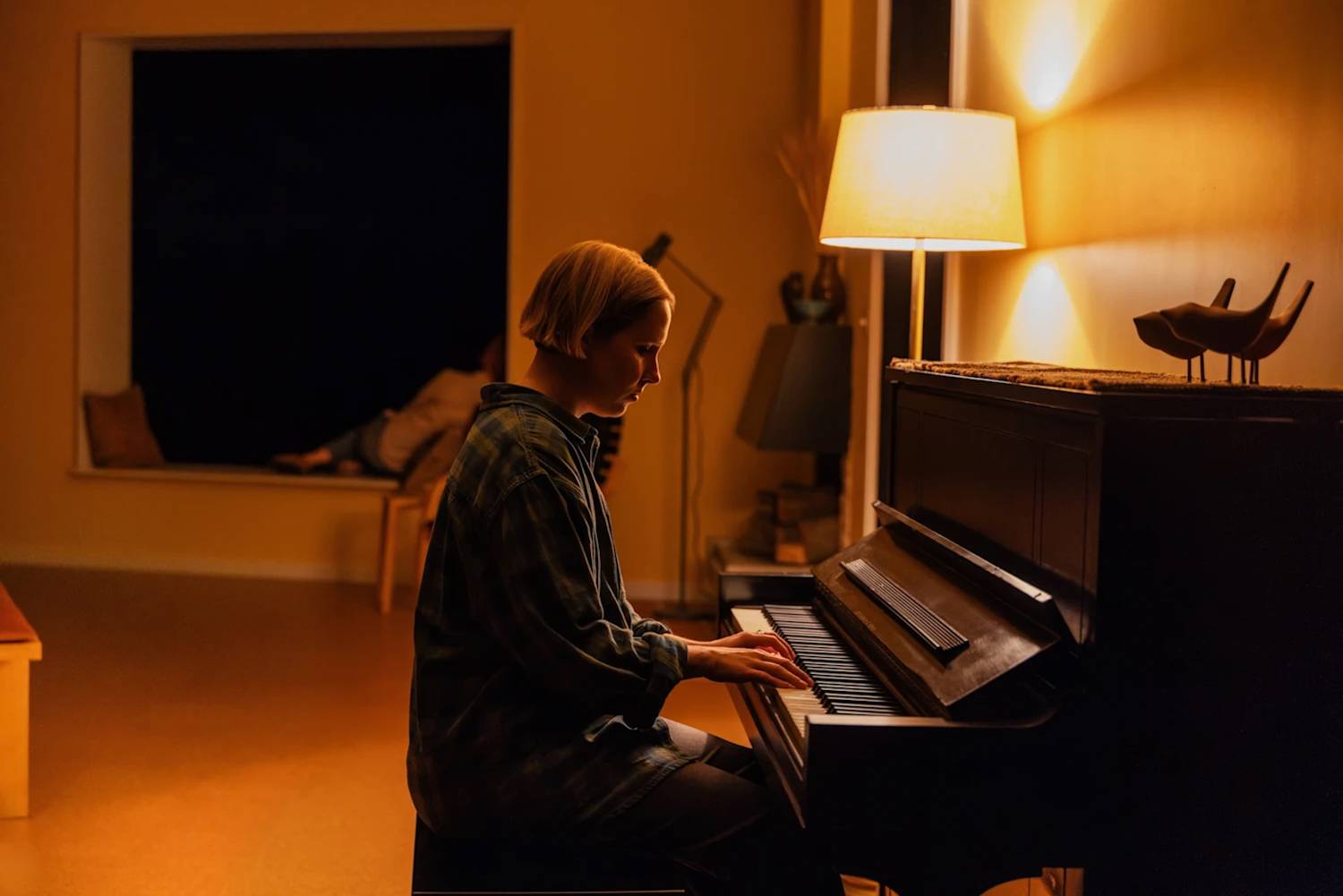
But let's up the stakes even more. What if that human is a child, as is the case in Nick Payne’s latest work? A 15-year-old boy is missing. The cold hand of dread pushes a parent forward, fueling an almost unbearable need to find, to demand answers.
Premiering in London at the Royal Court Theatre late last year, in 2025, the original production featured Nicola Walker as the mother, Miriam, and was directed by Marianne Elliott. Now courageously played by Lauren Ambrose, Miriam leads this stellar US premiere cast. The New York City production is directed by Knud Adams, a celebrated director known for his deeply emotional choices and fearless depth. The play has begun its inaugural Off-Broadway run, presented by Manhattan Theatre Club.
One of Nick Payne's stylistic trademarks is his manipulation of time and our relationship to numbers, something he explored beautifully in his play Constellations. Here, The Unbelievers unfolds across three intersecting and overlapping timelines:
The First Week
One Year Later
Seven Years Later
These are important pieces of information to follow and understand the play. With a 110-minute runtime, no intermission, no blackouts, no scene changes, and no transitions, the experience is as immediate as its message.
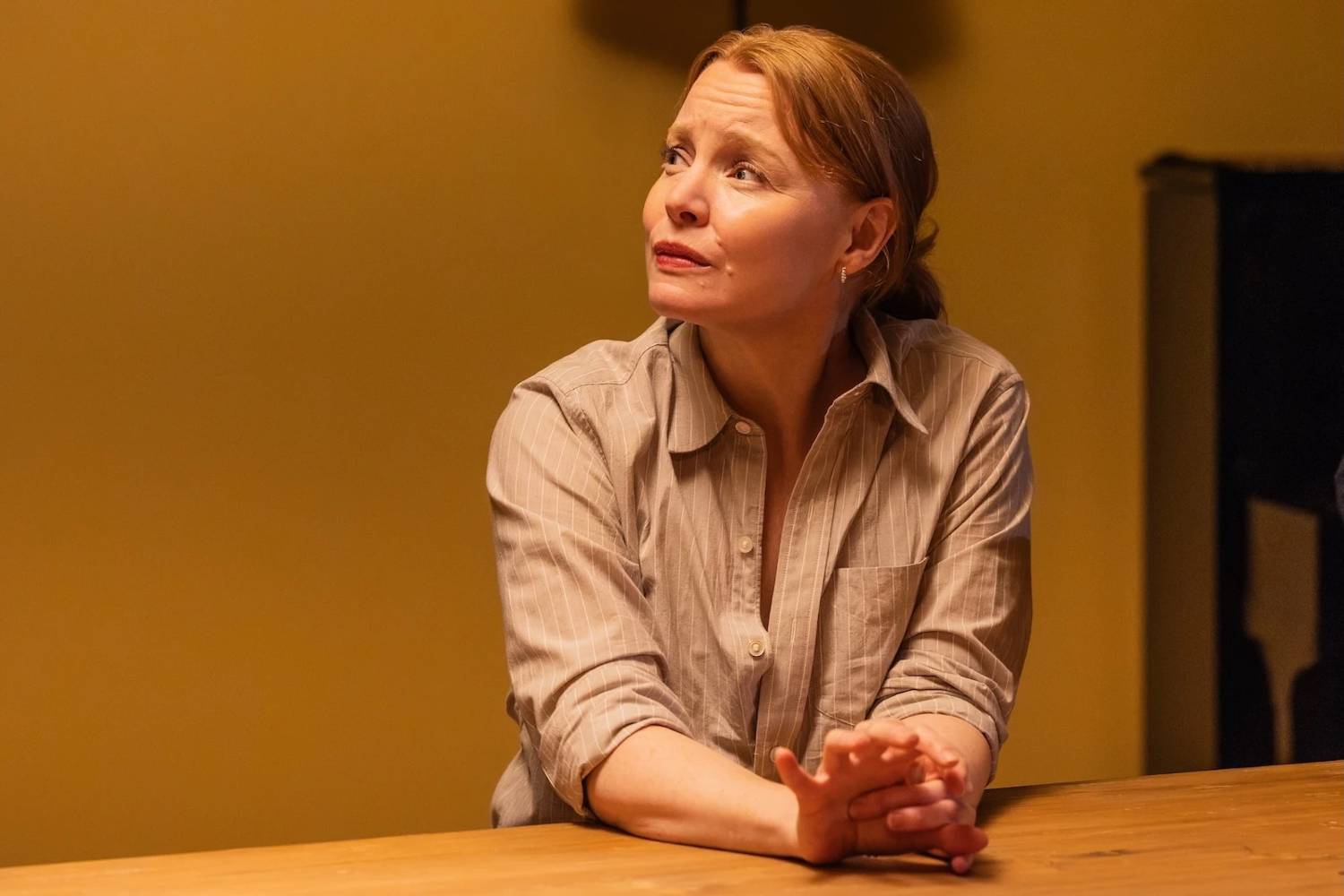
Sounds daunting? It could be. Fortunately, Adams' direction, Payne's exquisite writing, and Ambrose's ability to lead this cast create a complicated but never confusing picture of where we are and why we're there. This deserves to be recognized from the beginning.
Speaking about the character Miriam, Payne has said:
"It's mostly instinct in terms of the shaping of the character. I sort of wanted to make her, I suppose, as complicated as I possibly could and maybe even difficult to empathize with, but also hopefully as the play accumulates, you might think, 'Well, God, of course you'd be and that's how you'd carry it. What other choice would you have? She has to believe, you know.'"
Miriam (Ambrose), mother to the missing 15-year-old boy, Oscar, lights one candle that remains lit throughout the show, and we are off. The 110 minutes truly flies by. We immediately feel her consumed. As with all quests, the story begins with hope. One believes there will be an end, a finish line, and hopefully a celebration once the goal is achieved. This is not one of those stories.
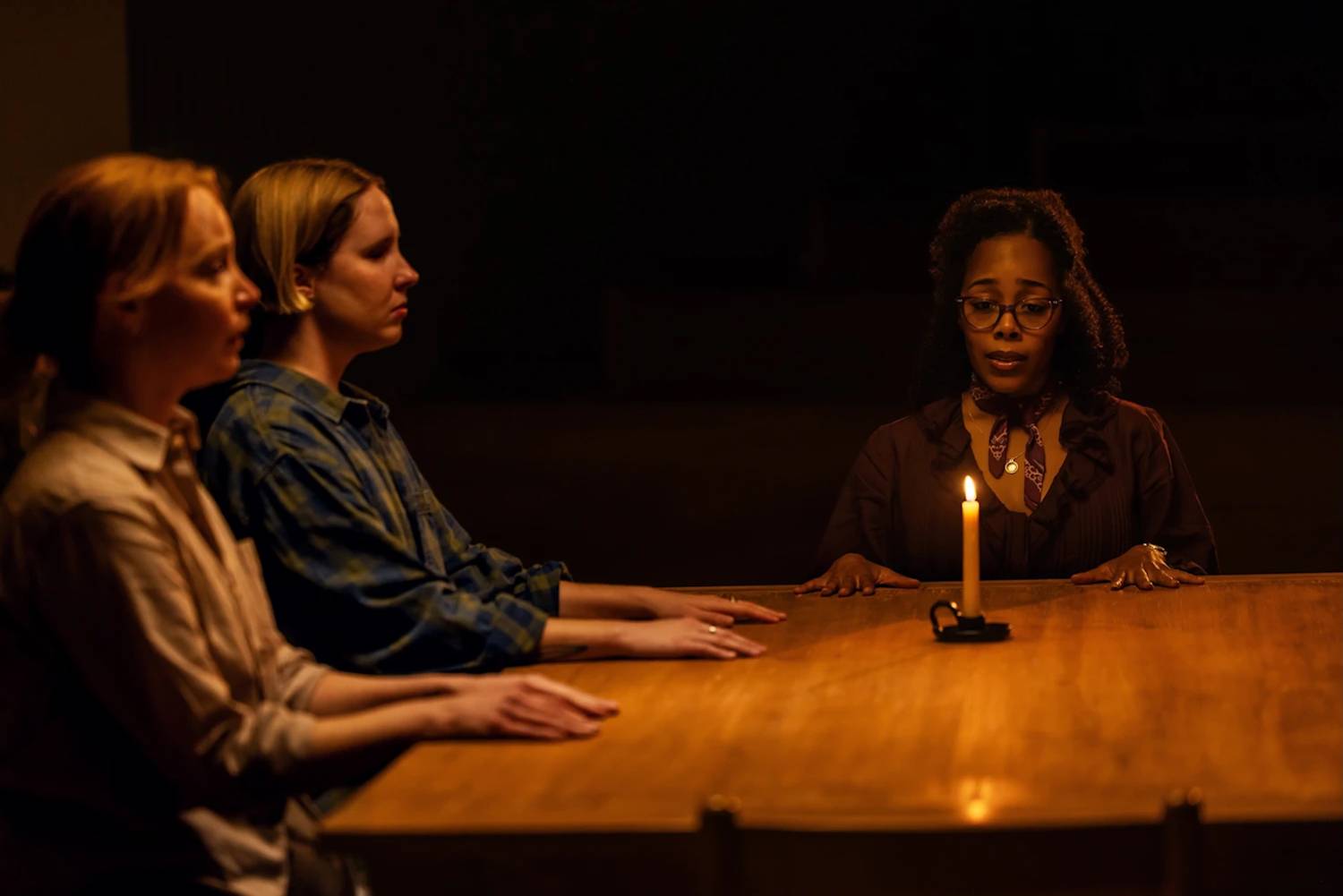
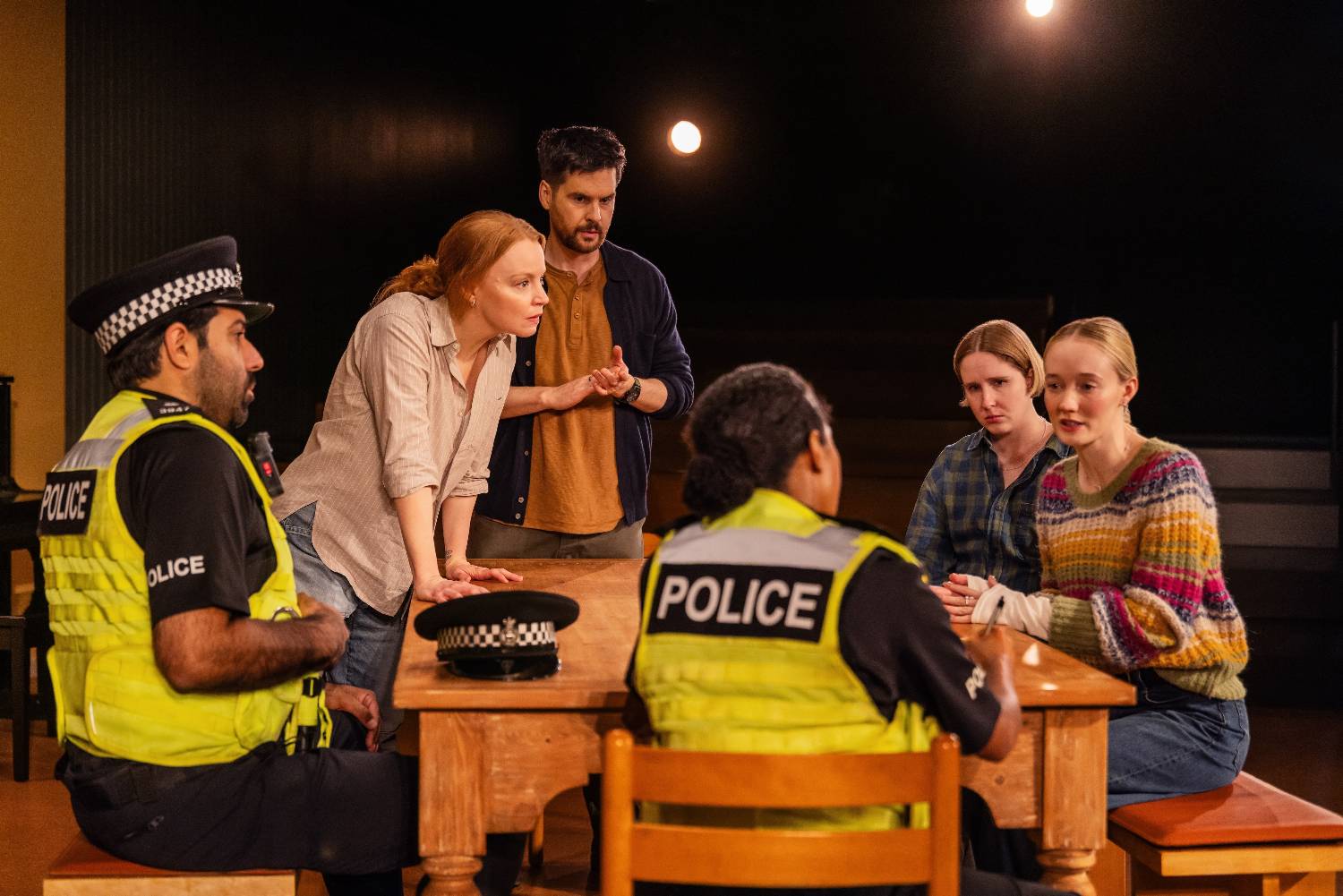
The play was originally presented in a proscenium style: the traditional stage presentation where the audience faces the stage directly through a "picture frame" arch. Adams, along with set designer Paul Steinberg, have offered audiences something truly unique. The theater is configured completely differently from how it has been arranged for decades. The audience is divided into two groups, with the stage at the center of it all. Half of the audience (myself included) are seated on what appear to be not only church pews but are actual church pews that once sat in a place of worship, hope, prayer, enlightenment, loss, grief, praise, and song. Not one audience member in that theater will have the same view of what is happening at any given time. It's exhilarating and intense. It works brilliantly!
Speaking of brilliance, the entire cast is fantastic, particularly Miriam's two daughters, played by Elizabeth Yeoman and Nina Ross (who also sings and plays piano and guitar beautifully, but I won't spoil that). Both actresses are heartbreaking and so honest in their connection with their parents, their own struggles, and the loss of the family connection. Truly beautiful performances.
When I was young, a classmate's older sister vanished without a trace, devastating their family and the entire community. The story was nationwide news. I remember being frantically divided into groups to go all over the city and post flyers with the young girl's photo. Her height, her hair color, her demeanor, etc. This beautiful young human was simply gone in an instant, but her family never stopped looking. That was 34 years ago.
For decades, her mother and father kept the investigation into their daughter's 1992 disappearance in the public eye. There has never been a formal memorial service for her, as she is still classified as a ‘missing person’. Her mother is now at an age when she can no longer continue the search, and her father passed away in 2024. At the time of his burial, he was laid to rest beside his daughter's empty memorial grave.
I find it so hard to wrap my head around a lifetime of searching, then leaving this earth never knowing what happened to your child. I'm in no way suggesting that I can truly relate. But if I feel the way I do after all these years, there is no amount of imagination that could bring me close to understanding that kind of pain.
Miriam, as we see in The Unbelievers, has become consumed by the very thing she wishes she could escape, control, or solve...the unknown.
Compassion is the key to everything with this play. Without the lens of compassion, I cannot see how one can watch this production and make sense of it all.
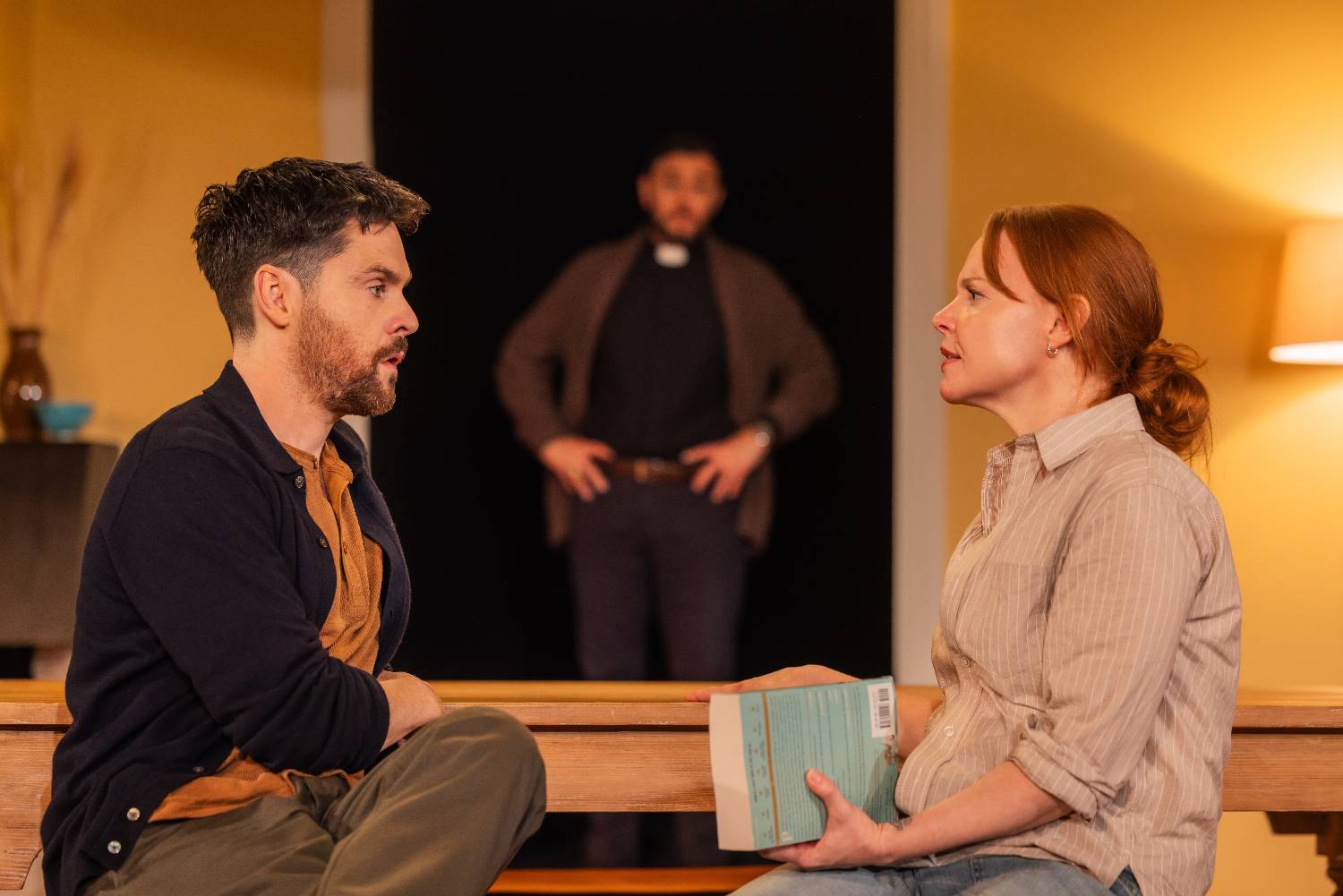
Sitting in that actual repurposed church pew, I couldn't help wondering how many people before me might have occupied that very spot, using every ounce of energy, joy, and faith they possessed to pray for answers, for a different outcome, for peace. Had someone sitting exactly where I was once prayed for the return of a lost child? And had they returned to that same pew, repeating the same words until they blurred together, until everyday life itself became consumed by the need for answers that might never come?
Miriam’s soul is being ripped in half. Two pieces, both wanting and needing the same thing. One side born of love and faith, the other of the torment and dread that come from not knowing. Fear and grief burn Miriam's determination and become the compass leading her to the most isolating of places...the mind, and the stories it weaves when we have no answers. I can only imagine that eternal flame of pain that never extinguishes, as it is constantly fed by the search, even when it becomes a solitary one. A destructive one.
Pema Chödrön the great bestselling author and a globally recognized spiritual teacher and speaker stated, “May we all remember that when we're hurting that we think of other people in the same boat who are also hurting. So rather than our hurt be a the thing that causes us to go inward and become more afraid, that very same suffering is a vehicle for causing us to realize our shared humanity” WatchingThe Unbelievers, this quote flooded my mind, and it broke my heart to want to shout this to Miriam, as she had already turned almost completely inward. But, I never believed that she was unreachable and lost forever.
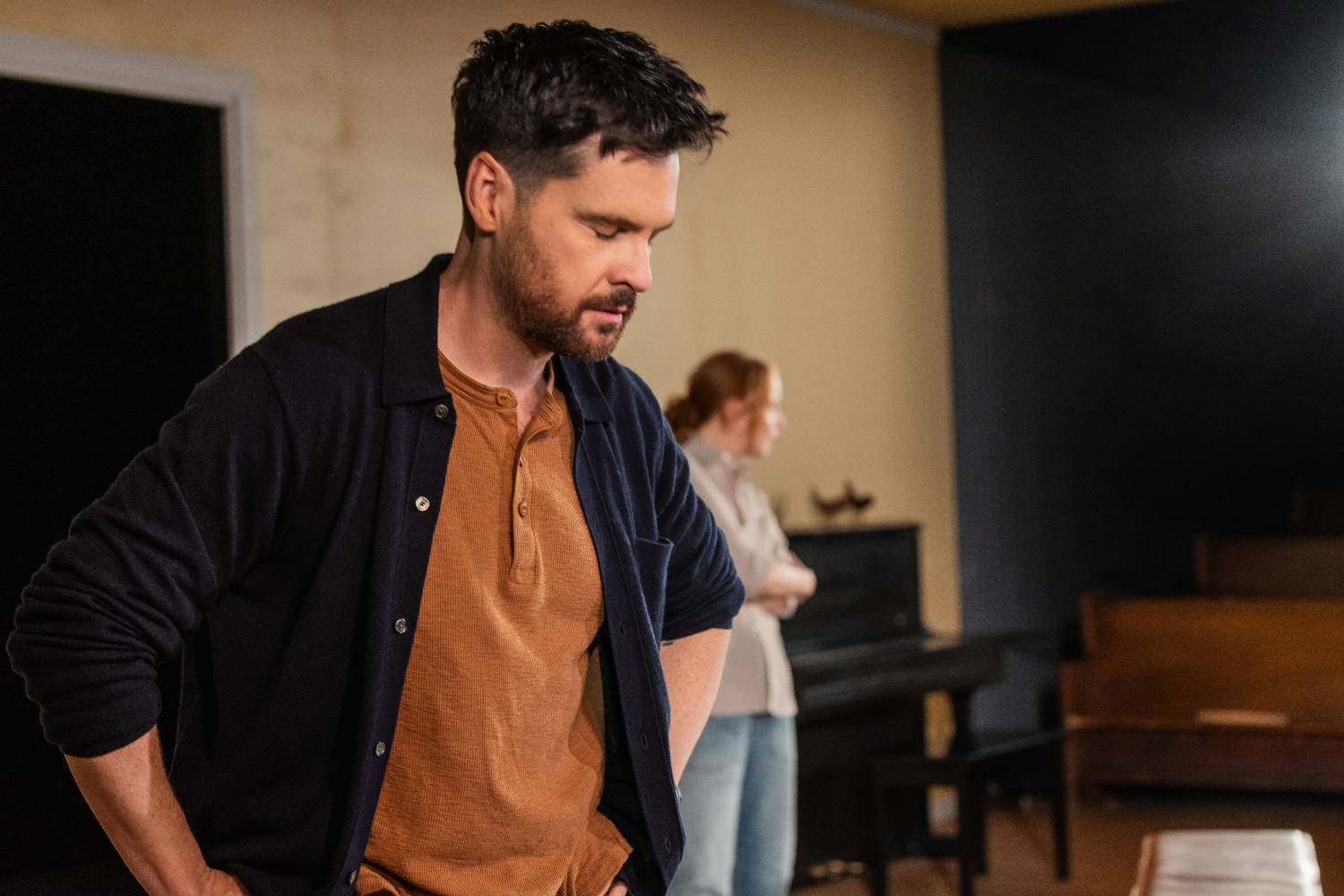
A journey that began with community, and needed that support to continue, can no longer survive as a solitary search. The rest of the "search party" (the family, in this case) has chosen to remember and try to move forward. When the person searching rejects that community, they begin to isolate themselves, leaving those still here to live with both the ghost of the vanished and the absence of the person who remains. And be damned if you are to tell them anything else, lest you be burned and lashed with incendiary words they can't take back.
It sounds crazy, but I truly left the theater thinking there was a note in my head saying, "If you have any information, please call..." But I didn't have a number, I didn't know a name, and I didn't know who to call. I just knew I wanted to. I knew I had to. I felt helpless.
That's the power of this great writing, extraordinary delivery, and soulful direction. Combine those qualities with fantastic lighting, sound design and original music and you are going to witness magic. Huge kudos to Masha Tsimring (lighting), Sinan Refik Zafar (sound), and Will Butler (original songs).
This brings us to our truth around living and being here for the short time we're here on Earth. They say nothing lasts. And if that's true, then what must the power be? Or is there any power greater than what lasts in the mind? Living in a perpetual dream state...a living nightmare. Does this mother instinctively know that her son can only hear her voice, can only feel her light? No other logic can make sense to anyone else but her. Is she living in a nightmare that is happening, is already over, or may even actually be...reality? No one can truly know.
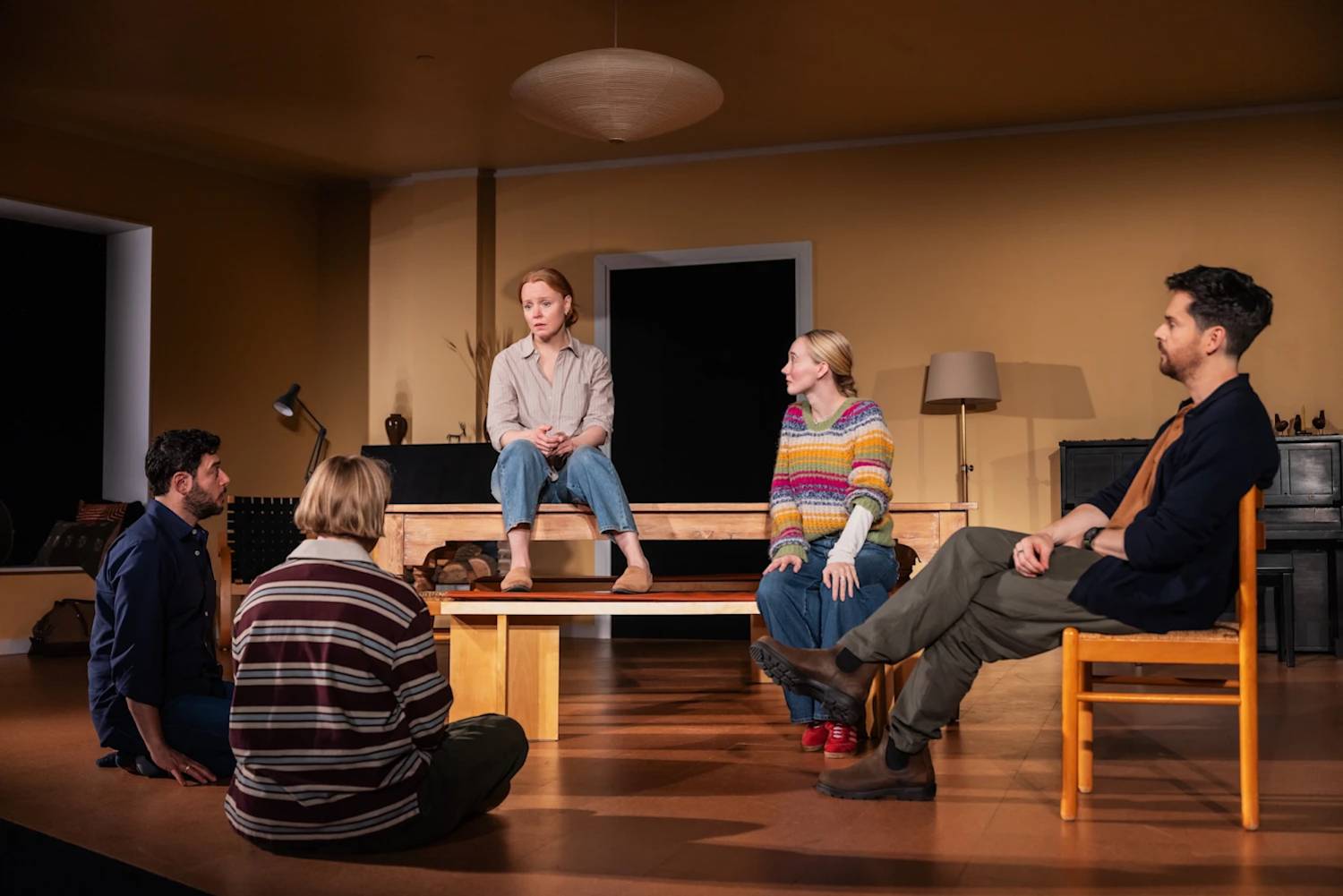
Payne has stated, "I've been writing it for a very, very long time, embarrassingly long, too long to admit.” But this makes sense to me. This is a complicated topic with very complicated characters, specifically Miriam.
I felt immediately, as the bows ended and the theater emptied out, that I needed to see this again, and again. Then I had to stop myself. I could watch this play 100 times over and see it differently every time, but what I came to accept was that, sitting onstage, in the pews, I got to witness the story, and that's that. To want more would, in this writer's humble opinion, put me neck and neck with Miriam and her obsessive need to know when there are no answers. I had to let that thought pattern go.
In this life we sometimes get one chance, but when we're standing at the crossroads that accompany that choice, we choose an endless loop instead. Because the alternative...acceptance...would be too high a price to pay.
The truth is out there, but where?
production photos ©Matthew Murphy
