


Standing before Declan's question asking what 'play', or 'theatre' is, I felt the theatre I thought I understood begin to come apart. What made the question so sharp wasn't the absence of an answer — it was that I had far too many. And every one of them was, in some small way, suspect.
The Grammar of Tragedy, or the Laziness of Convention
Why must the character who lived and breathed onstage in a play about social issues inevitably die at the end?
It's a question I've carried through years of reading plays and watching theatre.
The answer is simple. Because death is more provocative. Because it's more tragic. Because people who are shocked are more likely to take the issue seriously. Makers know this. The more pain is amplified, the more readily an audience's tears flow — and the more tears flow, the more a sense of having been understood fills the theatre. Because we see, hear, and breathe alongside a character made flesh by a living actor, that death lands with a force on stage that it never quite achieves on the page. It is the oldest and most convenient form of shock therapy.
But is that really true?
Having seen all of this, do we walk out of the theatre taking the problem seriously enough? There's a joke that circulates among regular theatregoers: "The casting board is basically a memorial portrait." It isn't really funny. Especially in plays about social issues — especially when the protagonist belongs to a vulnerable group — someone's death can feel like a foregone conclusion. And that death — that fictional death on a stage — is connected, somewhere, to the world of people actually living through that hellish reality. Are their suffering and their deaths fair game as raw material for narrative devices?
Taking someone's pain as material and fashioning it into something moving. When that is justified under the name of art, we sometimes call it "misery porn." Theatre is not exempt from that charge. Mouthpiece confronts the charge head-on and asks: does clearing yourself of the accusation actually solve anything? The play shares a grammar with the very works it calls into question — and departs from it at the same time.
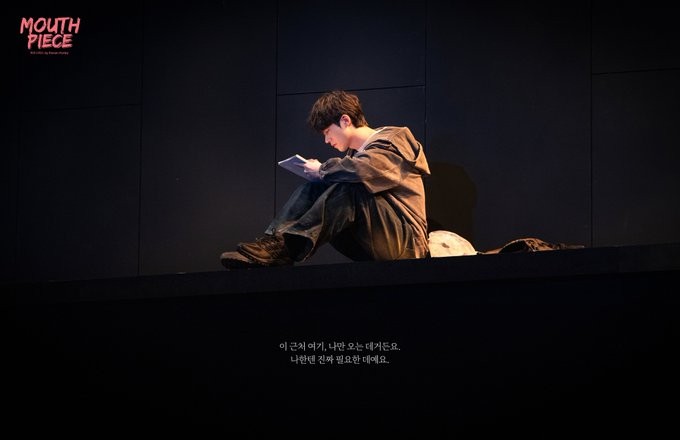
For Whom Does the Theatre Stagnate?
"This place is for everyone."
Hearing Libby say that, I paused for a moment. The statement isn't wrong in itself. There are certainly places where art has been genuinely opened up to everyone.
But as Declan's experience makes plain, the theatre is not one of those places. When you consider the ever-rising ticket prices, the sensibility shared among a niche audience of particular tastes, and the various conditions required simply to access that space — the question of whether theatre is truly "for everyone" doesn't go away easily.
In an age when a few clicks can bring you a story anywhere, what justifies paying a premium to sit in this particular physical space? Could it be that we invest the theatre with excessive meaning precisely in order to justify that choice to ourselves? When Libby calls theatre "a giant empathy machine," the ease with which theatre-loving audiences resonate with that phrase — perhaps that very resonance is already exposing something fragile.
Theatre is gradually stagnating. And in stagnant water, the desire for self-affirmation grows faster than the capacity for critical thought.
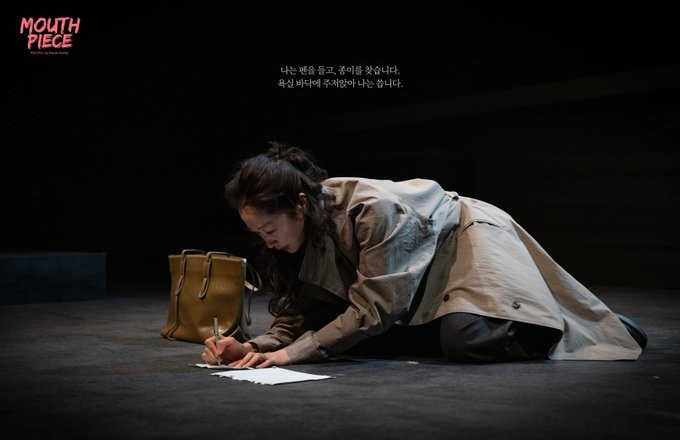
When You Take Someone's Life and Put It to Use
Where does the line lie when a work is based on a true story?
When a creator translates someone's life into the language of art, what responsibilities come with that?
Given that the phrase "based on a true story" has become a marketing point — one deployed to maximise an audience's emotional response — there is reason to look again at the ethics of creation.
Libby believed she loved Declan. Genuinely. But she loved theatre more than she loved Declan as a specific, concrete human being. And she loved the version of herself that theatre would allow her to prove even more than that. The hierarchy of those loves was the problem. There was no malice in her feelings. That is precisely what makes it frightening.
Exploitation wrapped in good intentions is the kind that goes unrecognised as exploitation for the longest time. Libby could believe, to the very end, that she was right — because her motives were pure. Pure motives do not erase the violence of outcomes. And yet we often make exactly that mistake. The violence that was on the verge of being erased — Declan forces us to look at it with wide-open eyes, from the stage and from the auditorium where he descends, hat pulled low.
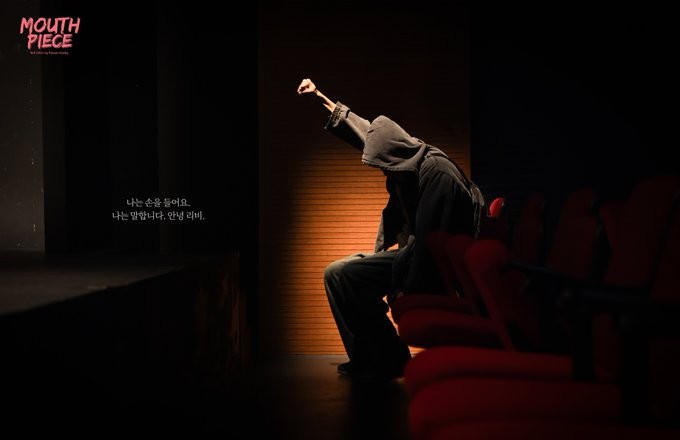
Are We Any Different?
The direction of this production guides us to view Libby as someone deserving of compassion. I think that is the right choice. The moment Libby is reduced to a simple villain, the audience grows comfortable. I'm not like that, they can tell themselves.
But when Libby is left as someone we can understand, the discomfort creeps into the auditorium as well.
Can Libby's story — which pushes Declan into tragedy until the very end — be justified? No. And are we, who paid for our tickets and sat there and left with a sense of having "empathised," any different from Libby? No, again. The gaze with which we love and consume theatre resembles Libby's own.
Libby invaded Declan's life and translated his pain into the language of art. The audience consumed that translation, elegantly, in a theatre. Both took something from Declan's suffering. The more you turn the structure of that transaction over in your mind, the more alike the two sides appear.
Mouthpiece is uncomfortable not because of what happens on stage. It is uncomfortable because the same thing is happening in the auditorium — and because it will be reproduced in the next production we go to see, on the next stage.
Is theatre really a giant empathy machine? Are we genuinely "empathising" at all?
Theatre may be a device that allows us to gaze at another person's suffering from the safety of the dark and call that gaze "empathy."
Is Mouthpiece free from the charge of being exactly such a safety device? No, it isn't.
And yet this work wears that charge openly, refuses to settle into the comfort of theatrical form, and throws its uncomfortable questions into the auditorium without restraint. In doing so, it invites the audience to look inside the "giant empathy machine" for themselves.
That, I think, is the play's most honest achievement.
