
Sammaekyung (三昧境) is a state of complete immersion, where all distractions vanish and the mind is wholly absorbed in a single object.
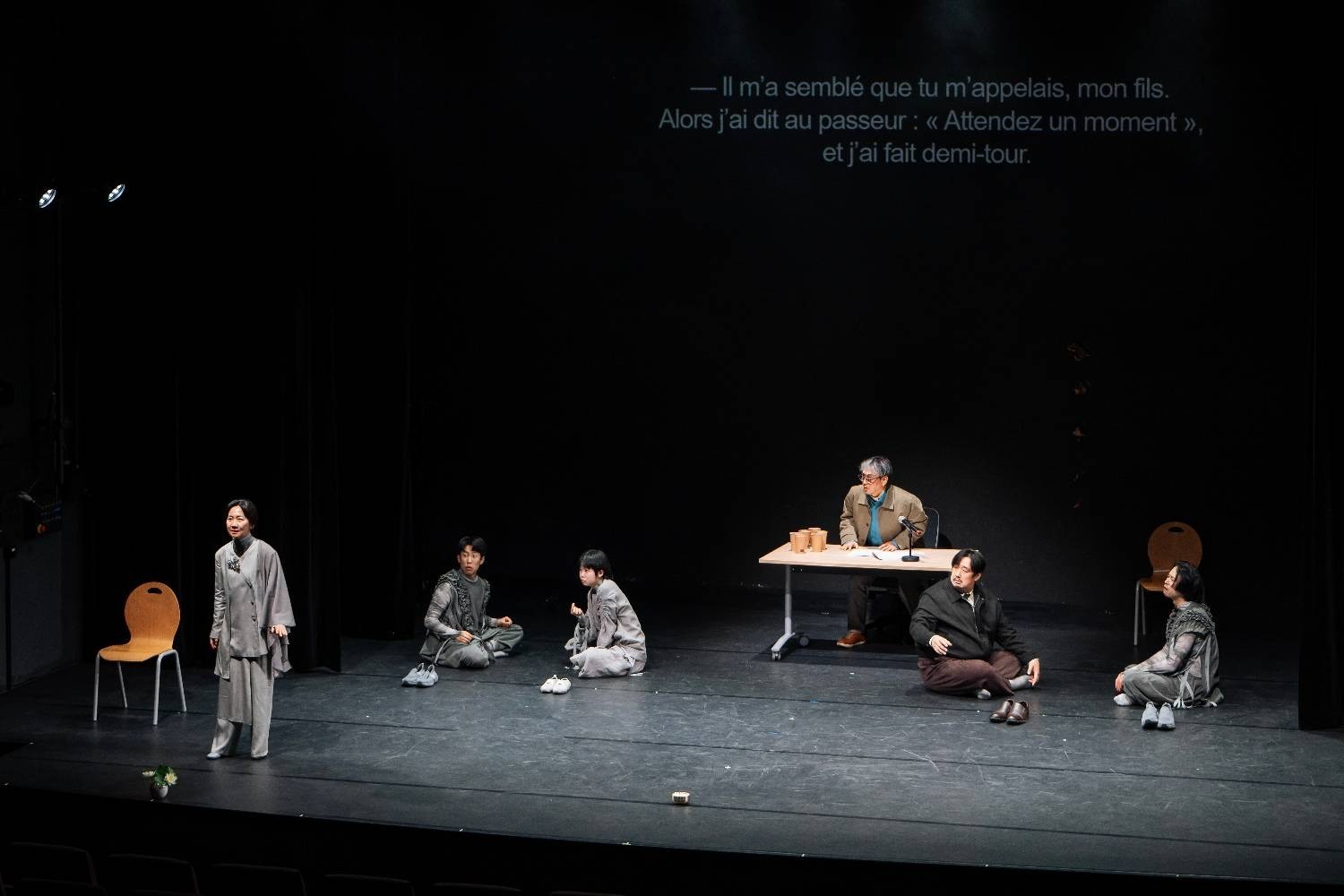
Reimagined by director Chulhui Lee from Sedeok Ham’s play A Little Monk (동승), the National Theater Company of Korea’s Sammaegyeong (삼매경) follows the consciousness of actors deeply immersed in theater, questioning how imperfect human beings endure life and find the strength to live again. Following its 2025 premiere and its 2026 run at Myeongdong Theater, the production staged a dramatic reading at the Guimet National Museum of Asian Arts in Paris, France, in celebration of the Year of Korea.
Carrying the time they spent on the Korean stage, the director and actors stood before an unfamiliar space and a new audience. From moments of deep immersion during rehearsals to the questions they hope to leave with French audiences, we share the stories they wrote down on their flight back to Korea.
As part of an effort to revisit Korea’s modern and contemporary repertoire, what does the original A Little Monk mean to you? Why do you think it still speaks to audiences in 2026 and transcends borders to connect with them?
Director Chulhui Lee:The Little Monk is a perfectly lyrical play. The restrained world the playwright creates is beautiful, and each character has a clear reason for being there. I find it surprising that a story with such balance—one that is perfectly measured—with nothing excess and nothing lacking —has gone so long without meeting audiences.
I think this is because Korean theatre has often focused on successful contemporary works from abroad, or on familiar classics by Chekhov and Shakespeare. As a result, precious Korean works from the modern and contemporary repertoire, like The Little Monk, have been overlooked and kept from contemporary audiences. In this context, bringing the 1939 play back to life and reimagining it for today carries particular meaning.
I also believe Sammaekyung, reimagined from the original, can reach audiences across borders because it asks questions about existence. In an age when life is increasingly individualised and people are losing their sense of self, asking why we exist is both a diagnosis of our times and a warning from the playwright and director. Audiences have connected with the work’s intentions. I believe that is what has allowed it to reach audiences beyond Korea.
In rehearsal, there are moments when you find yourself fully immersed in a work’s world. While preparing Sammaekyung, was there a particular moment when you felt completely absorbed—or, as the title suggests, entered a state of true Sammaekyung?
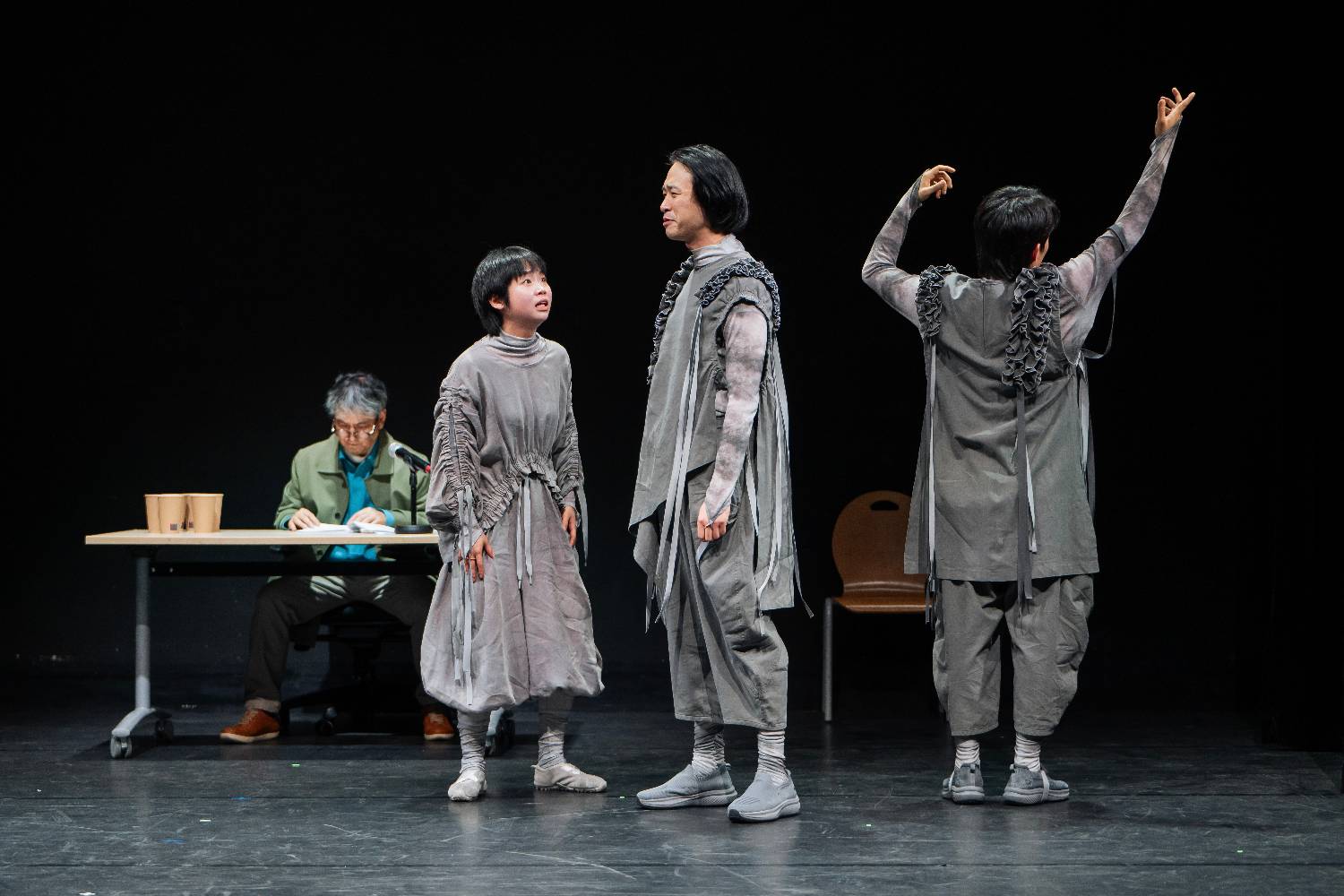
Actor Suhyun Kim: Unfortunately, that didn’t happen during rehearsals. Perhaps there was simply too much to prepare in too little time. But the final scene, in which I play three roles, is a moment when the boundary between actor and character becomes blurred. We barely worked on it in rehearsal and moved on, but I thought something would happen in performance—and it did.
Actor Seongyoon Jo: I find it difficult to say that such a moment happened. Our Sammaekyung holds the state of deep absorption a person experienced over an entire lifetime. Even after the premiere, the return engagement and the Guimet performance, I feel I haven’t lived long enough to say I reached it.
Still, my life seems to be moving towards Sammaekyung. The time I spent devoted entirely to becoming the young Donyeom, day and night, is a trace of that state. I don’t think it comes in one exceptional moment. It takes shape as time accumulates, becoming more meaningful as the years pass.
The 2026 production of Sammaekyung has now become part of the past. Looking back, what do you remember about the production in Korea?
Chulhui Lee: Rather than seeing anything new, my perspective has only grown sharper. The work is about theatre as an art form, but it also speaks to the imperfection of human beings and of life. Even now that the performances are over, I find myself living through a theatre of unanswered questions in my own life.
The Korean production of Sammaekyung was full of intensity. I especially remember how beautiful it was to see actors and staff from different generations bring their own life experiences to the work and create it together.
Seongyoon Jo: Through the return engagement, I finally accepted that I had to leave the young Donyeom unfinished, just as Donyeom leaves his younger self unfinished. During the premiere, I was determined to complete the role. That determination sometimes made me lose my way. Wanting to make the character complete kept me from facing many things. I came to understand that in life, too, our own thoughts can cloud our vision and make us stop listening. When we let those thoughts pass, we can come to recognise things we couldn’t see before.
When I look back on Sammaekyung in Korea, I remember myself standing right in the middle of that journey.
The staged in France offered a chance to encounter Sammaekyung again in an unfamiliar language and setting. What did you prepare or keep in mind as you brought the work to French audiences?
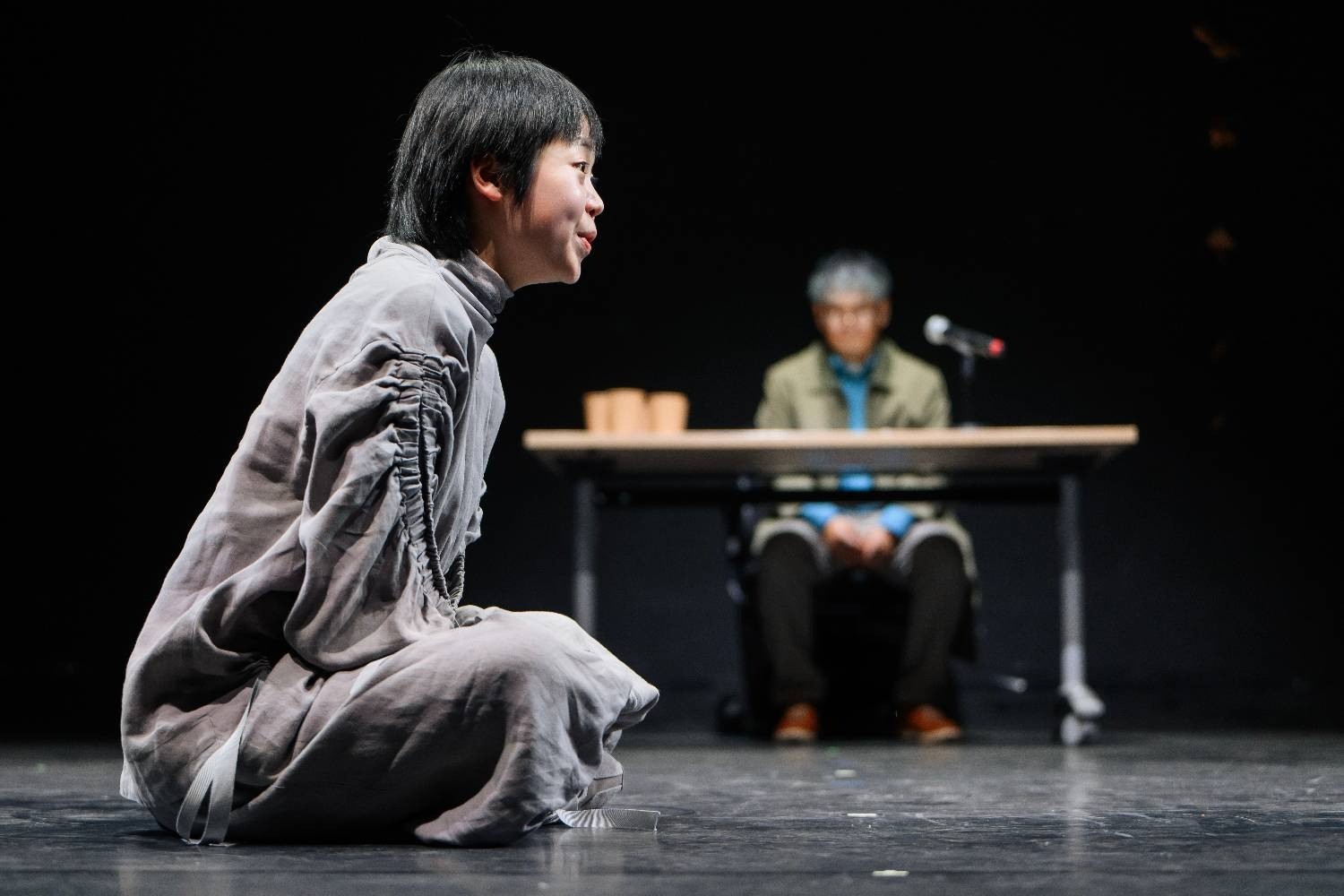
Chulhui Lee: Above all, I wanted the text to reach French audiences clearly. To do that, our six actors perform in a highly condensed version of the acting style we developed for the full production at Myeongdong Theater.
I would also point to something beyond the text itself. In the theatre lobby, surrounded by a rich collection of Asian artefacts, the actors use their bodies to evoke the serene landscape of an ancient mountain temple. I hoped this would let audiences sense something of the full production.
Seongyoon Jo: The Korean production and the Paris performance had one thing in common: both were opportunities to meet an audience. So I didn’t prepare anything differently or add anything specifically for the Paris performance. Instead, I focused on rebuilding each element so that the time and expression we had developed could be communicated clearly. I felt it was more important to convey the message shaped through the premiere and return engagement than to create something new.
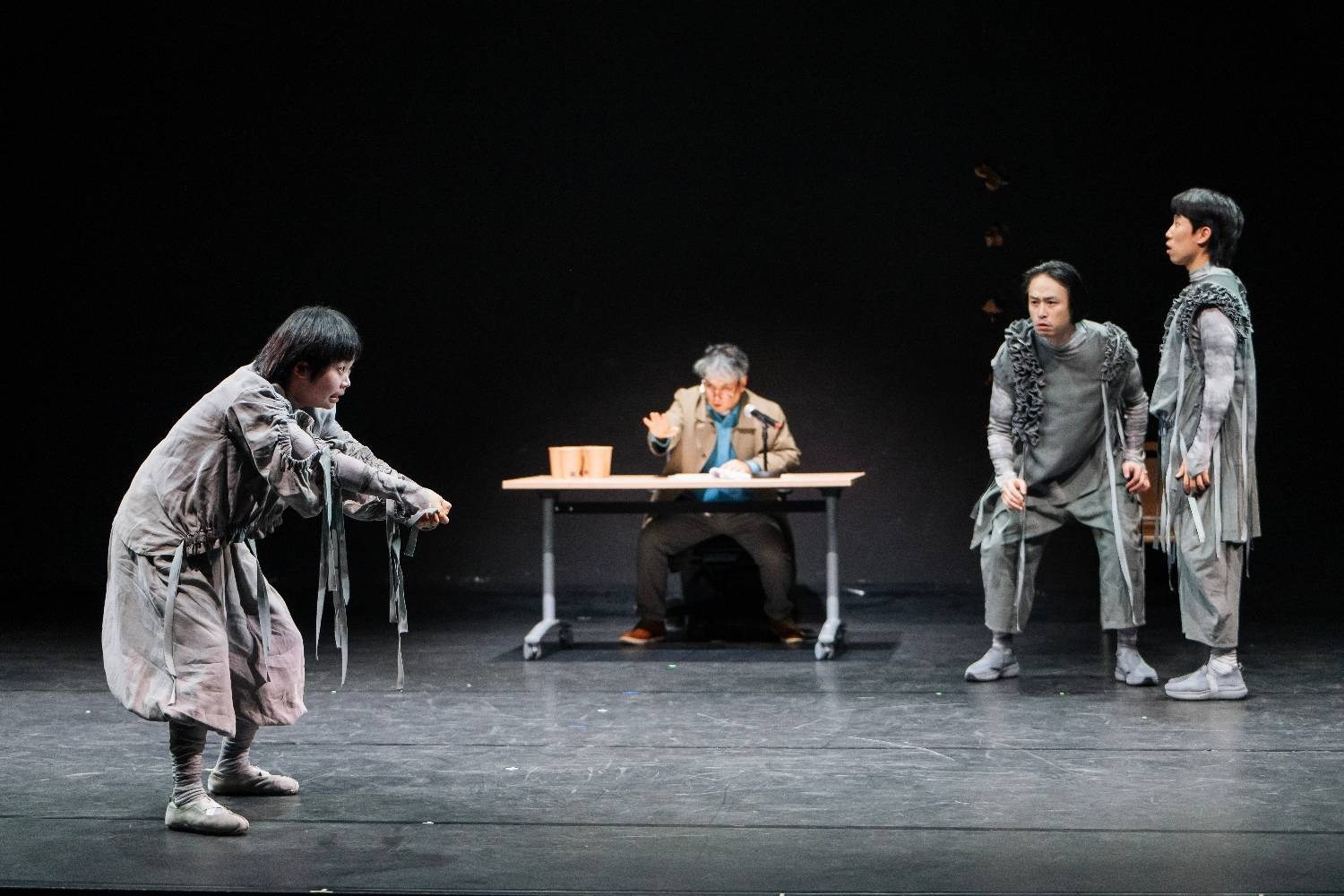
The original production featured 14 actors, while the French reading was adapted for a cast of six. What did you leave out and what might audiences enjoy in this new version?
Chulhui Lee: There were certainly challenges, but, as one of the lines says, “theatre is a world where anything is possible.” Looking back, those difficulties opened up new possibilities for the work. I’m certain they helped bring another version of Sammaekyung into being.
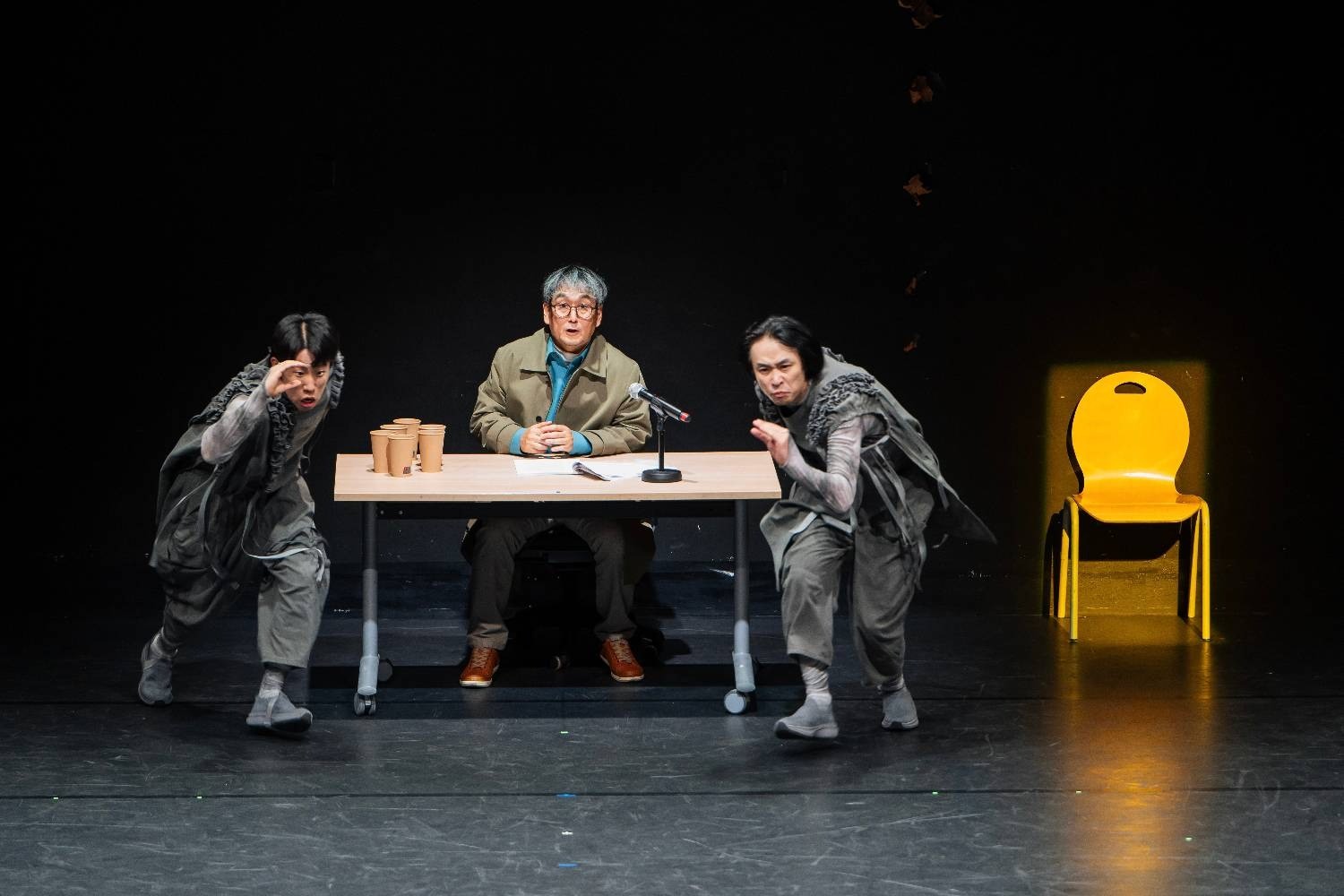
As I mentioned earlier, the staged reading needed to make the text as clear as possible, while concentrating the actors’ energy into a more tightly woven performance. We also boldly removed many of the movements performed by the larger cast in the full production, then reshaped and refined what remained. As in the original production, one of the pleasures of this new version is watching the actors embody nature.
The staged reading took place in the distinctive setting of the Musée Guimet. What felt unfamiliar about performing in a museum, and what moments did you especially look forward to in that space?
Suhyun Kim: When I first arrived, I saw a distinctive past coexisting with the present in the gallery on the first floor. The unfamiliarity of the space made me curious. The performance was taking place downstairs, which felt a little like peeking at something hidden away. I thought that connected in a fascinating way with the content and meaning of the work. For me, both the unfamiliarity and the anticipation the Guimet inspired came down to one word: mystery.
Seongyoon Jo: I was struck by the fact that the Musée Guimet was in Paris at all. That unfamiliarity soon became excitement. I looked forward tosee Sammaekyung bloom amidst the Asian heritage preserved in Paris.
I imagined that visitors to the Guimet would already feel some affinity with Asian and Korean culture. As a Korean actor, I was excited to share a new expression of Korea with them. It was also a special experience to perform the prologue, in which I portrayed a Buddha, beside an actual Buddha statue in the museum. That vivid encounter helped me immerse myself in the play.
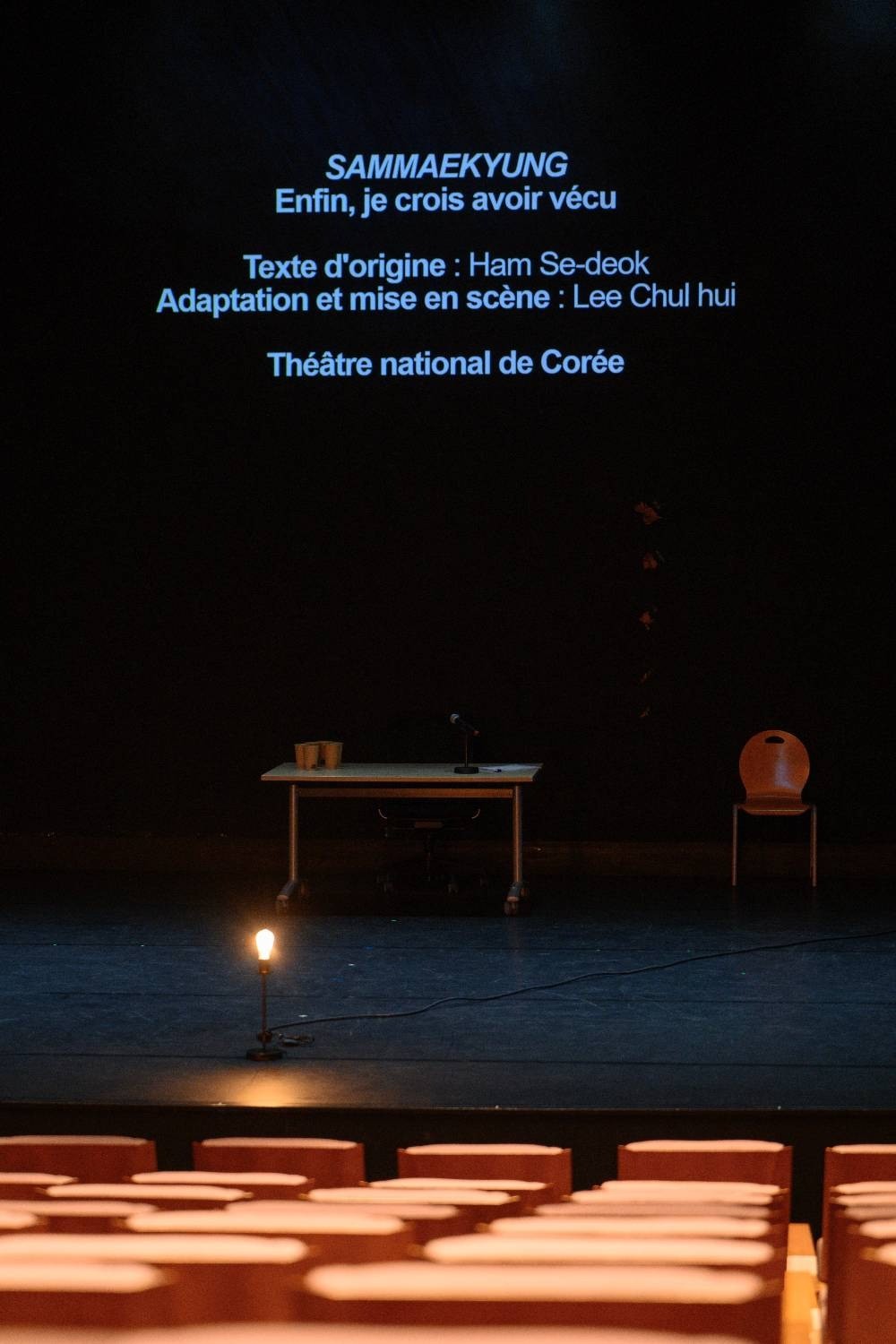
The Buddhist reflections in Sammaekyung invite us to consider the inner life and human experience. What do you hope will resonate with French audiences?
Chulhui Lee: Our nationalities may differ, but we are all human. I hope the work gives French audiences a chance to reflect on their finite lives in this moment in history. I also hope they might recognise that loneliness is part of being human, and think again about what it means to have someone beside them.
Suhyun Kim: No matter what I say, everyone who watches the play will build their own version of it in their minds. So I don’t think I need to say too much in advance. One thought did cross my mind after reading the play: “Let’s not become so obsessed with something that it devours us.”
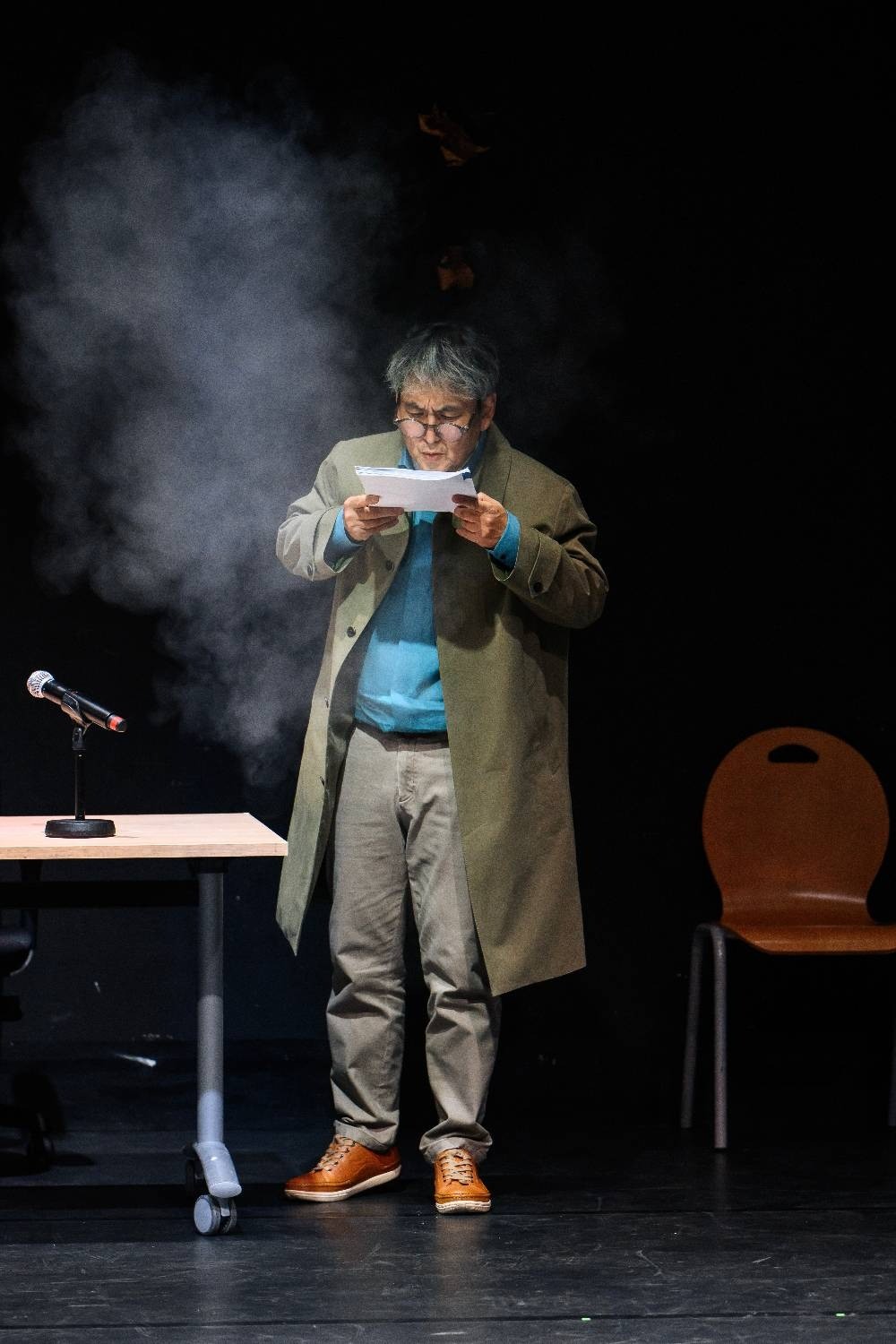
After the staged reading in France, where might Sammaekyung go next?
Chulhui Lee: The next chapters of Sammaekyung, and the long journey still ahead. Audiences in Seoul and France will hold the work in their hearts for a long time, like pine nuts a squirrel gathers for winter. On a long, sleepless night, they may take them out one by one and savour them. Sammaekyung will live on in the audience’s memories.
Finally, borrowing a line from Donyeom’s rehearsal notebook, we’d like to ask, "Can you really pull off the performance? Really?!"
Suhyun Kim: That’s something I kept thinking throughout rehearsals…It still gives me the shivers . But when it’s all over, I hope I can feel this way:
“Still, I don’t regret it. The life I spent searching for answers was fierce and full of fire.”
Seongyoon Jo: The question “Can you do the performance well?” makes me think of another: What does it mean to do well? I find it difficult to say whether there is an absolute answer, or who could give one. But if I changed the question to “Can you be honest with yourself?”, I think I could answer yes. During the preparation and the performances, I was breathing only for this work and this role.
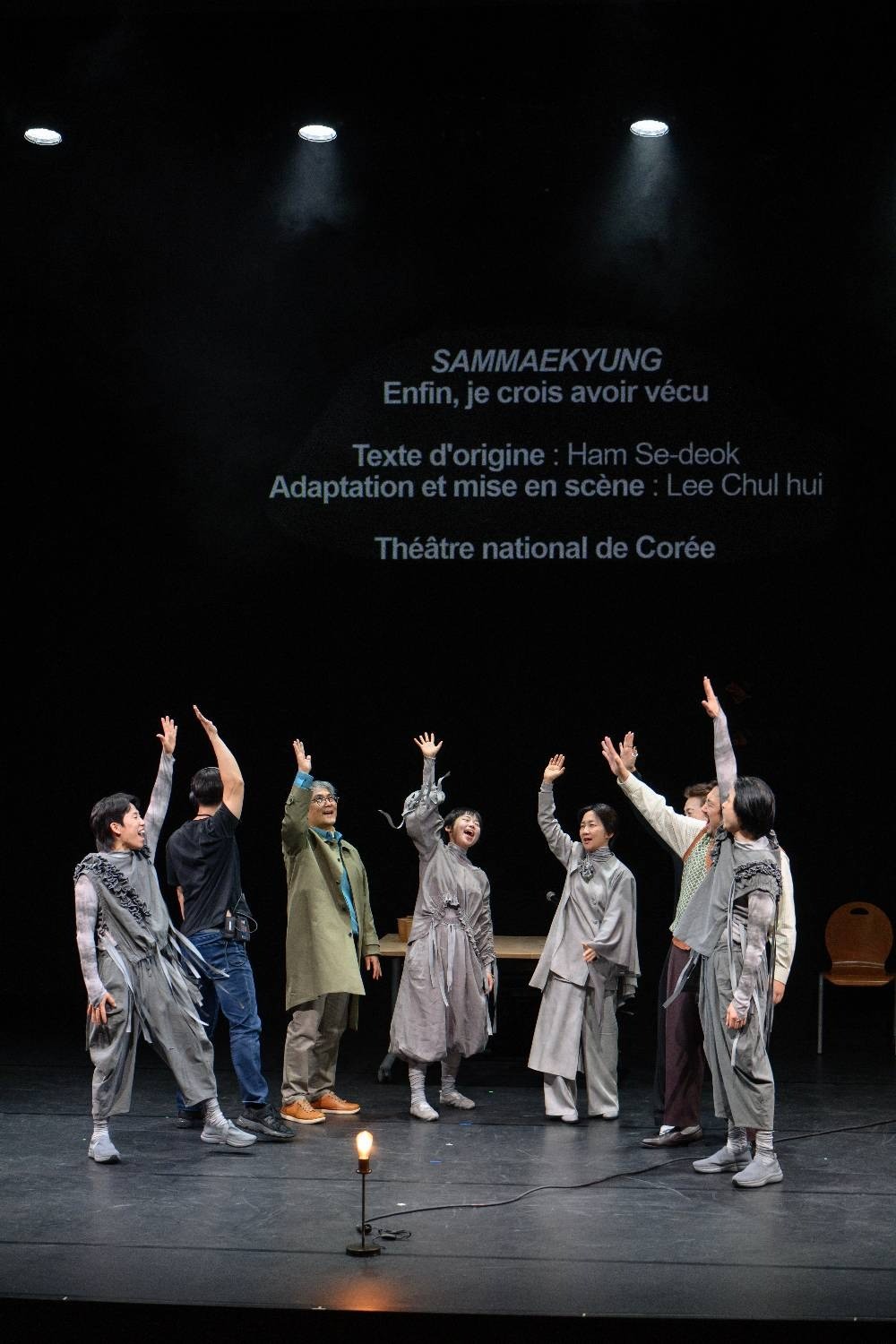
production photos ©Nicolas Fagot, Musée Guimet
