
A play-within-a-play that flips Madama Butterfly becomes a musical
Beijing in the 1960s. French diplomat René Gallimard meets Peking opera singer Song Liling through a performance of Madama Butterfly and falls in love. René spends twenty years believing Song is the submissive "Butterfly" of his dreams — only for the truth to emerge in a courtroom: Song is a Chinese spy, and a man. This play, drawn from a true story, has now become a musical for the first time in the world. The production places a play-within-a-play re-enacting Madama Butterfly at its center, and introduces a new character, "Pinkerton," who embodies René's inner self. The conflicts that once passed between characters as spoken dialogue are now carried by songs and choreography.
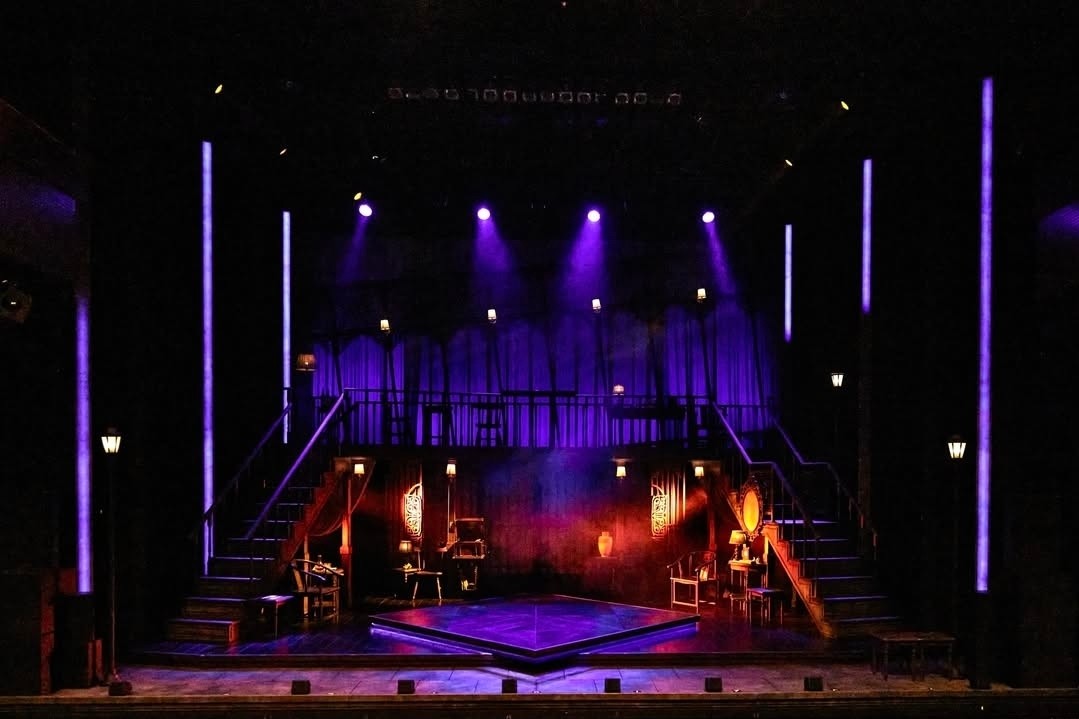
A character layered in concealment, a stage layered in depth
Director Minjeong Kim said she would peel back "a character who has hidden themselves layer by layer" through sensation, one layer at a time. This intention is most clearly legible in the stage design. A door that opens and closes at center stage becomes a small frame — summoning Butterfly, then revealing Song's true self. Through lighting and the placement of actors alone, the same space becomes an alley, a courtroom, a home, and the audience grasps each shift in an instant. The structure of frames within frames is the production's spatial translation of the work's central idea: a story that covers the truth.
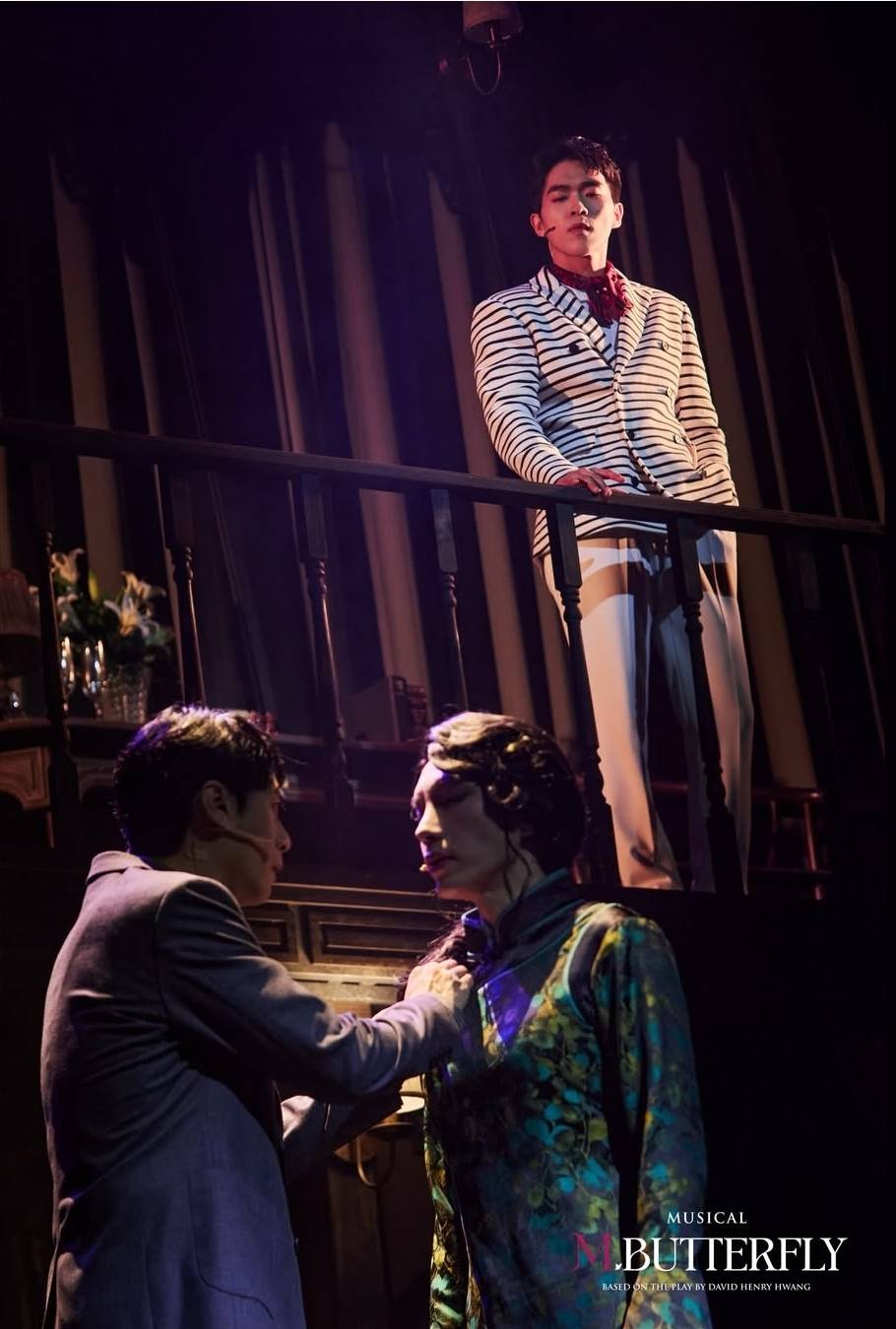
Why not turn on the light?
Lighting most sharply articulates the grammar of the play-within-a-play. Under a bloodless white light, René recounts his story to the audience as though it were an adventure; when warm yellow and red wash the stage, his love with Song flows by beautifully. Pinkerton, as the personification of René's inner world, unfolds the reality René wishes to inhabit. Song prefers the lights off whenever they are intimate — and it is Pinkerton, voicing what René cannot bring himself to say, who asks: "Why not turn on the light?" It is the moment René's doubt escapes from within. Yet even as René presses Song to show him the truth, he cannot bring himself to undress Song. The scene then rewinds to Song's perspective, and when Song moves to reveal the truth of the play, René calls for the lights — determined to preserve the perfect scene he has painted for himself. René was not a man who didn't know the truth. He was a man who knew, and chose not to turn on the light.
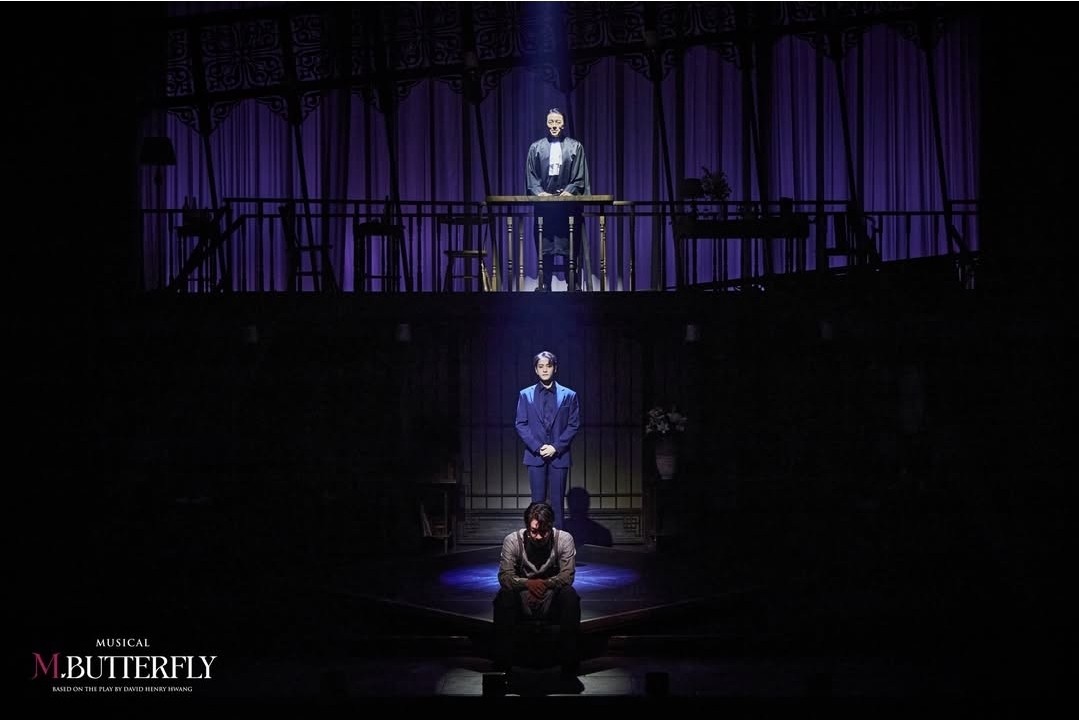
The gaze that consumes illusion
At the trial, Song asks: "Is what people really want just our sex?" It is a gaze that ignores what is actually being judged and chases only the salacious gossip. The Orientalism through which René saw Song as a submissive Asian woman, and Song's own exploitation of that prejudice by performing the role of the "fantasy Eastern woman" — the illusion was built from the interlocking desires of both. Playwright David Henry Hwang has said that the desire to confirm masculine and racial superiority is still very much alive today. Yet René's blindness is not only a desire for superiority; it is also loneliness.
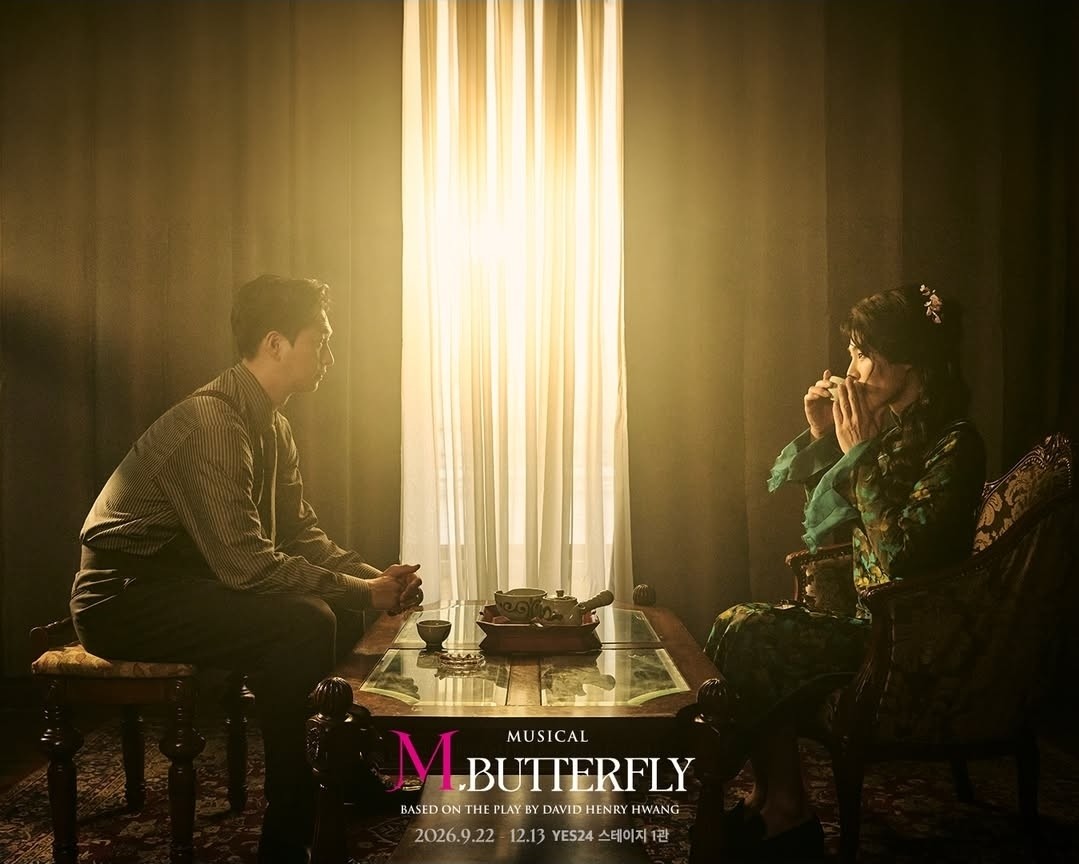
A stage that does not judge
This production does not put its characters on trial. Song chose the role the state demanded; René was captivated by Madama Butterfly and spent the rest of his life chasing that illusion alone. Rather than asking "why would that character do such a thing," the audience finds itself thinking, "so that's what they chose." When Song says that men are easily won over once you touch their desire and their lack, human frailty is laid bare without drama. In the reunion scene, "Letters" and "Dancing in the Dark" follow one after another, interweaving the moment of confronting truth with a scene that renders love beautifully. In the ending, René — his face painted white — becomes Butterfly and brings down the curtain himself. It is grotesque, yet it provokes neither bewilderment nor reproach. His blindness reads as the last way a lonely individual tried to protect himself. A beautiful grotesquerie that leaves behind not criticism, but compassion.
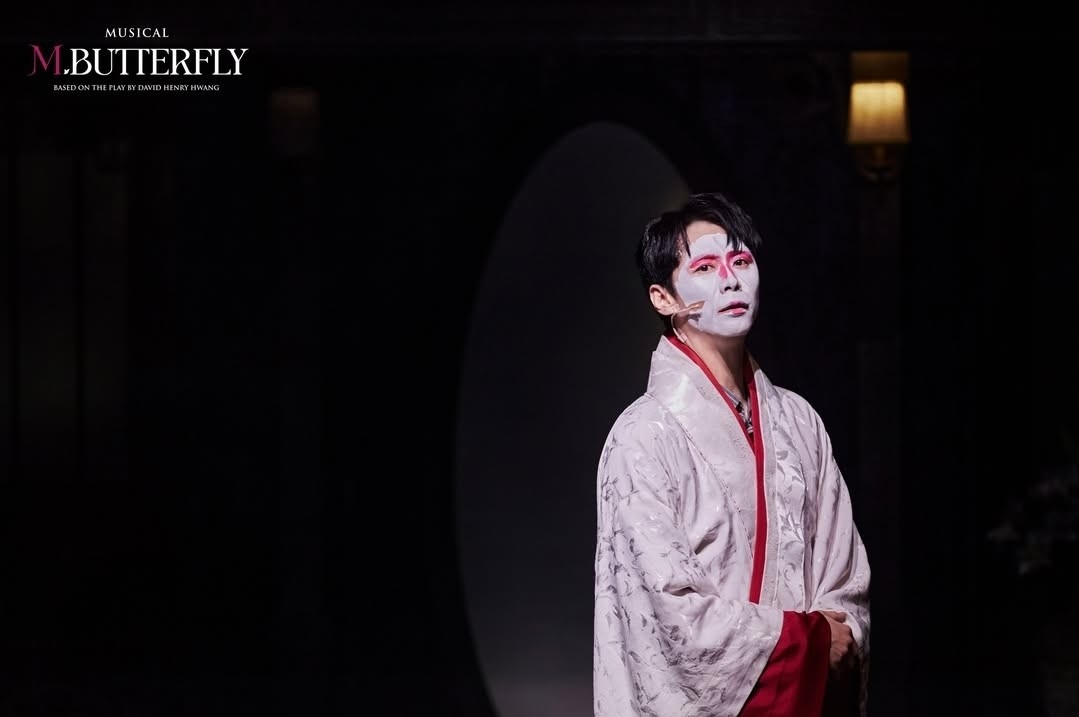
Who chose not to turn on the light
M. Butterfly is the first musical staging to sustain the architecture of illusion — through space, lighting, and music — all the way to the end. What this production leaves behind is less a condemnation than a question. Perhaps these lonely individuals live by using illusion to cover over, to look away from, the inadequacies they carry within themselves. Was René really the only one who chose not to turn on the light?
production photos ⓒThe Best Plays