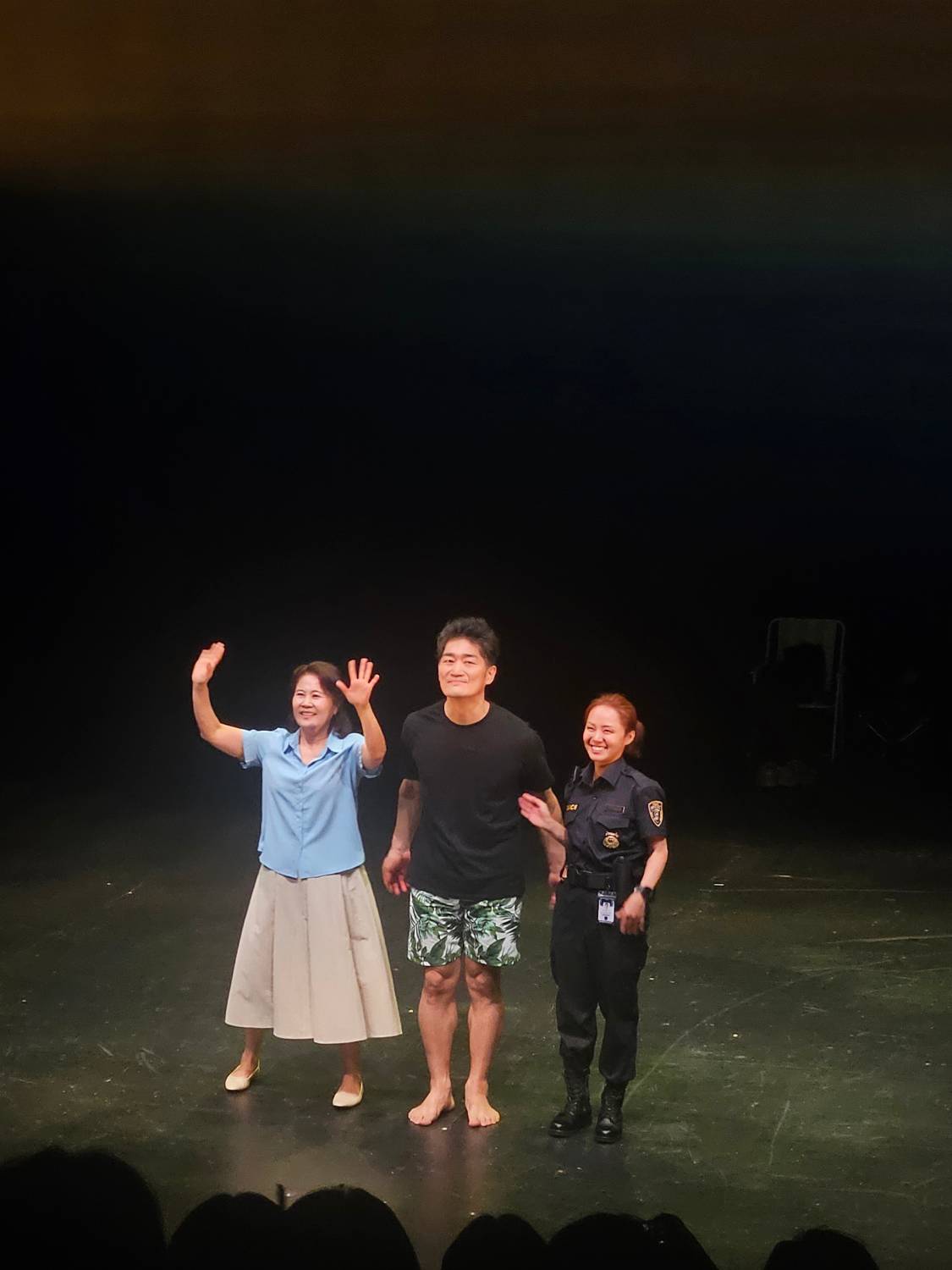
Am I being too sensitive?
I can't judge it objectively, so please tell me.
Because every minute, every second, I felt like my human rights were being obliterated.
Within the social consensus that sustains an organized society, people surrender certain rights. We accept this as a matter of course, and sometimes treat even tacit relinquishment as consent. In the name of protecting one's own country, people pass through immigration control. An "immigration inspection" is the procedure by which a foreign national proves that they pose no threat to the country they are entering, that they will stay for the stated purpose, and that they will duly return home. Only after establishing all of this is a time-limited permit granted to someone who is, by definition, expected to leave. Swept up in the excitement of travel, few people stop to think about immigration control in quite these terms. Most would readily call anyone who feels discomfort or raises questions about this "standard" procedure overly sensitive.
The play <Immigration> begins precisely at that standard procedure. Before the performance, an announcement reminiscent of pre-flight instructions plays over the speakers; as the show begins, the sound of an airplane fills the space, and the audience is drawn into the same procedure alongside the protagonist. Yet the play frames immigration control not as a routine administrative formality but as a moment in which state power can dismantle a person's life piece by piece. The instant that one person's past, relationships, values, and life's purpose all become subjects of interrogation, the audience is naturally led to ask: what rights did we give up, and for what? What did we consent to — and was that consent truly our own choice? Did we ever have the right to consent, or to refuse, in the first place?

This review contains spoilers for the full content of the play.
This piece is based on a viewing on July 18.
A Procedure You Can Only Pass by Proving Yourself
'Jaesang' travels to a country said to be beautiful — its skies, its trees, its sea. But during the entry process, he is made to wait over thirty minutes without being told why, then ordered to move to an enclosed space with the warning that failure to comply will result in deportation. Everything that happens there is being recorded, and the word "WARNING" is projected in large red letters via a beam projector. Questions are not permitted. He must answer only what is asked of him, and with the threat of deportation hanging over him, a police officer begins the interrogation.
His family's personal details. His salary. His bank balance. Whether he has participated in protests. His highest level of education. In the name of gaining entry, Jaesang is forced to lay bare his life — and his family's — to a complete stranger. The purpose of his trip — to see, on behalf of his son, the landscape his son had longed to see before dying as a result of illegal employment practices and an industrial accident — grows increasingly obscured throughout this process. He must prove his very existence, yet that proof depends on documents already produced through yet another set of procedures. The moment he cannot produce evidence, his truth is easily called into question.
How Far Can Questions Reach in the Name of "National Security"?
The questions gradually move into more sensitive territory. He is asked what he thinks of the September 11 attacks in the United States, and what his gender identity and sexual orientation are. Where the earlier questions had been about verifying facts, these now interrogate his personal beliefs and identity. Jaesang refuses to give clear answers, and is ultimately subdued by the officer on the grounds that he has violated the "warning."
Afterward, the officer states that "all of the questions are ones that have logically answerable responses." But what actually demands explanation is the questions themselves. Why have an individual's values and identity become information the state is entitled to verify? When did we allow that — and did we ever truly consent to it? Through the immigration inspection, the play exposes the possibility that state power can extend its reach to encompass even a person's inner life as a subject of scrutiny.
Power Does Not End with One Person
The play features three characters alongside Jaesang: a police officer and an interpreter. For ninety minutes, the only thing that unfolds is the immigration inspection. The officer questions and issues warnings; the interpreter, a Korean immigrant in that country, bridges the conversation between the two. Jaesang's words are rendered into English; the officer's into Korean. Just as the languages differ, meaning is never fully carried across. One moment that lingers in particular is when Jaesang's statement that he had been watching a protest is translated as "stalking." When his words — conveying a tone of reluctant acceptance — are rendered simply as "okay," Jaesang objects, saying that isn't what he meant. The translation is revised to "accept." The interpreter, who at first says she cannot help because she is employed by that country, gradually begins to empathize with Jaesang's feelings.
Yet is all of this solely the officer's fault? A voice — representing power, heard only offstage — orders the officer to subdue Jaesang on the grounds that he could pose a threat to the state. The voice then issues instructions that violate basic human rights; the officer pushes back, yet ultimately carries out the orders. And does so, as commanded, with a smile. It is not only Jaesang who is being recorded during the interrogation. The officer, too, is under constant surveillance. The officer is not simply a perpetrator — but a figure who, while exercising power over another, is simultaneously controlled by a greater state power.
Power Embedded in the Everyday, the Individual Reduced
A son's death from an industrial accident whose truth was never fully brought to light. Jaesang, subjected to injustice during the immigration process. The interpreter, who cannot intervene beyond a certain point. The officer, who must carry out the procedure. The play places these figures in parallel, using the particular situation of an immigration inspection to lay bare the violations of power embedded in everyday life. The state, the corporation, the institution — each takes a different form, yet the ways in which they control individuals and restrict rights are not so different. In the end, all of it is carried out under the name of procedure and consensus, in the service of maintaining society.
What was it that the state truly wanted to know? Presumably, to screen out danger and maintain order. Yet within the play, the purpose gradually disappears and only the procedure remains. Questions become a means of classification rather than understanding, and a life that cannot be proven is easily suspected. In the end, the individual is no longer a person with a life of their own, but an object to be assessed for passage or rejection.
Between the Border and the Horizon
And yet this play does not speak only of tragedy. The interpreter calls the Ministry of Foreign Affairs to explain Jaesang's situation and stays with him as his interpreter to the end. The Ministry does not fully grasp what violations Jaesang is experiencing within the machinery of inter-state procedure. The officer, too, promises to look again into why those particular questions were chosen, and says he will report his superior. He cannot step outside the regulations — but as in real life, revision is still possible.
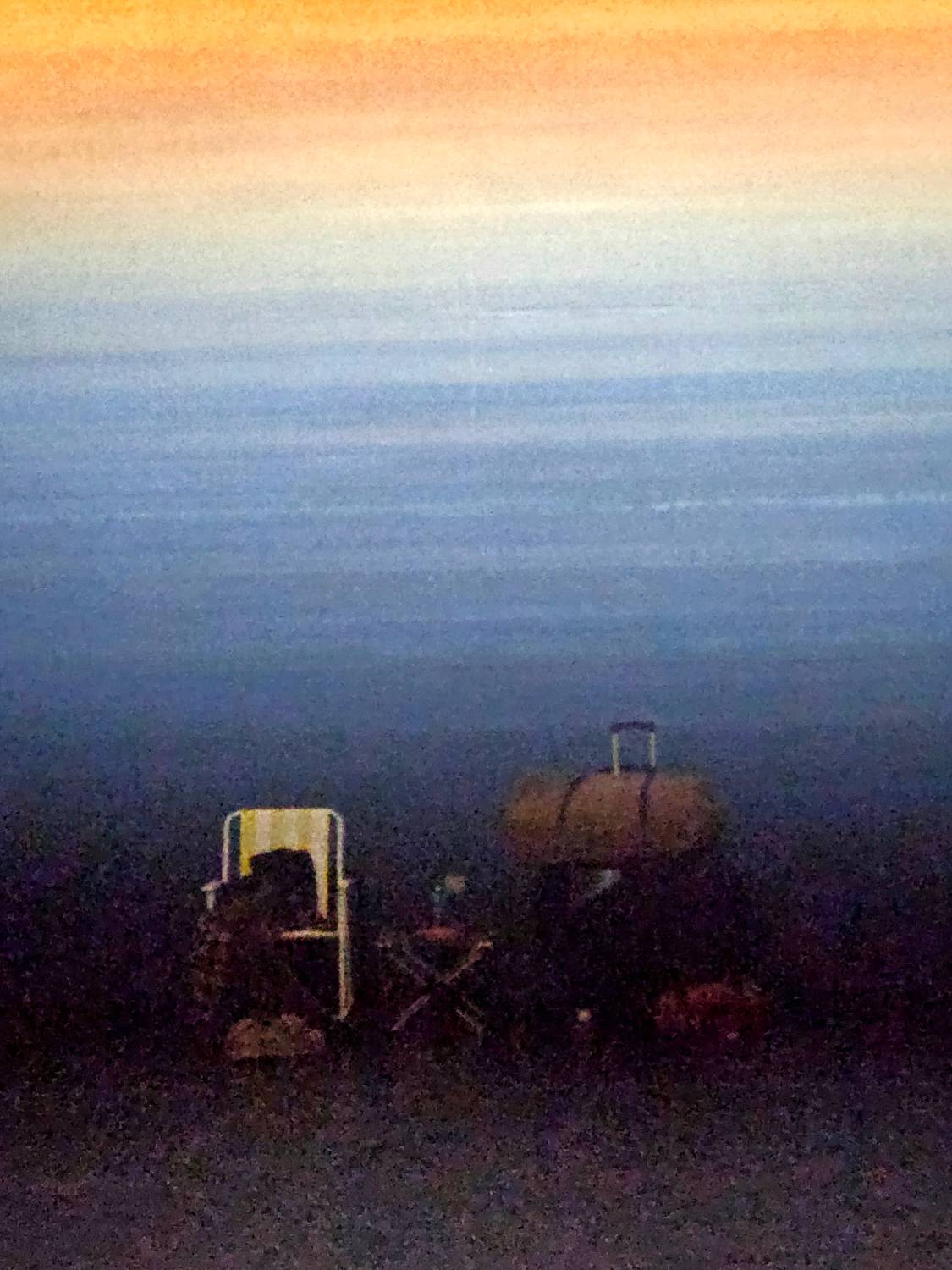
The trees, the sky, the sea change with the weather — but the horizon stays the same.
The horizon says it was always fine, it is fine, and it will always be fine.
The interpreter says that she used to love the trees, the sky, the sea — but now she loves the horizon, because it is level wherever you go. In the final scene, a horizon unfolds behind Jaesang. Does that mean its meaning has reached him too? In the play, I felt the horizon standing in contrast to the border. A border is an artificial line drawn by people in the name of order and safety — a line that determines entry or deportation, permission or refusal. The horizon, by contrast, stretches out the same way for everyone. By holding these two lines up together, the play asks us to reconsider who the boundaries we have built through social consensus were ever truly for.
What this play ultimately shows is the way power operates within our everyday lives. Procedures are necessary to sustain society, and those procedures are built through consensus. But in that process, some individual rights are inevitably curtailed. What matters, then, is not the existence of procedure itself, but the ongoing act of asking how far that authority can be exercised — and toward whom. Is feeling discomfort in those scenes an oversensitive reaction? Or is it the act of finally recovering a sense that had grown so familiar we had stopped questioning it altogether? <Immigration> illuminates the procedures and power that operate beneath the name of "the obvious," and in the end turns its question back on the audience: how is it that we came to accept all of this so naturally?