

It is crystal clear, at least to me, why A Trial – after An Enemy of the People is the hottest ticket at this year's European summer festivals. The buzz boils down to one monumental aspect: Wagner Moura's return to the stage.
Moura—who originally captured global attention as the terrifyingly hypnotic Pablo Escobar in Netflix's Narcos—is fresh off a history-making Hollywood awards run. He gave one of the best performances on screen last year in Kleber Mendonça Filho's masterpiece The Secret Agent (O Agente Secreto), sweeping Best Actor at Cannes, winning a Golden Globe, and earning a groundbreaking Academy Award nomination.
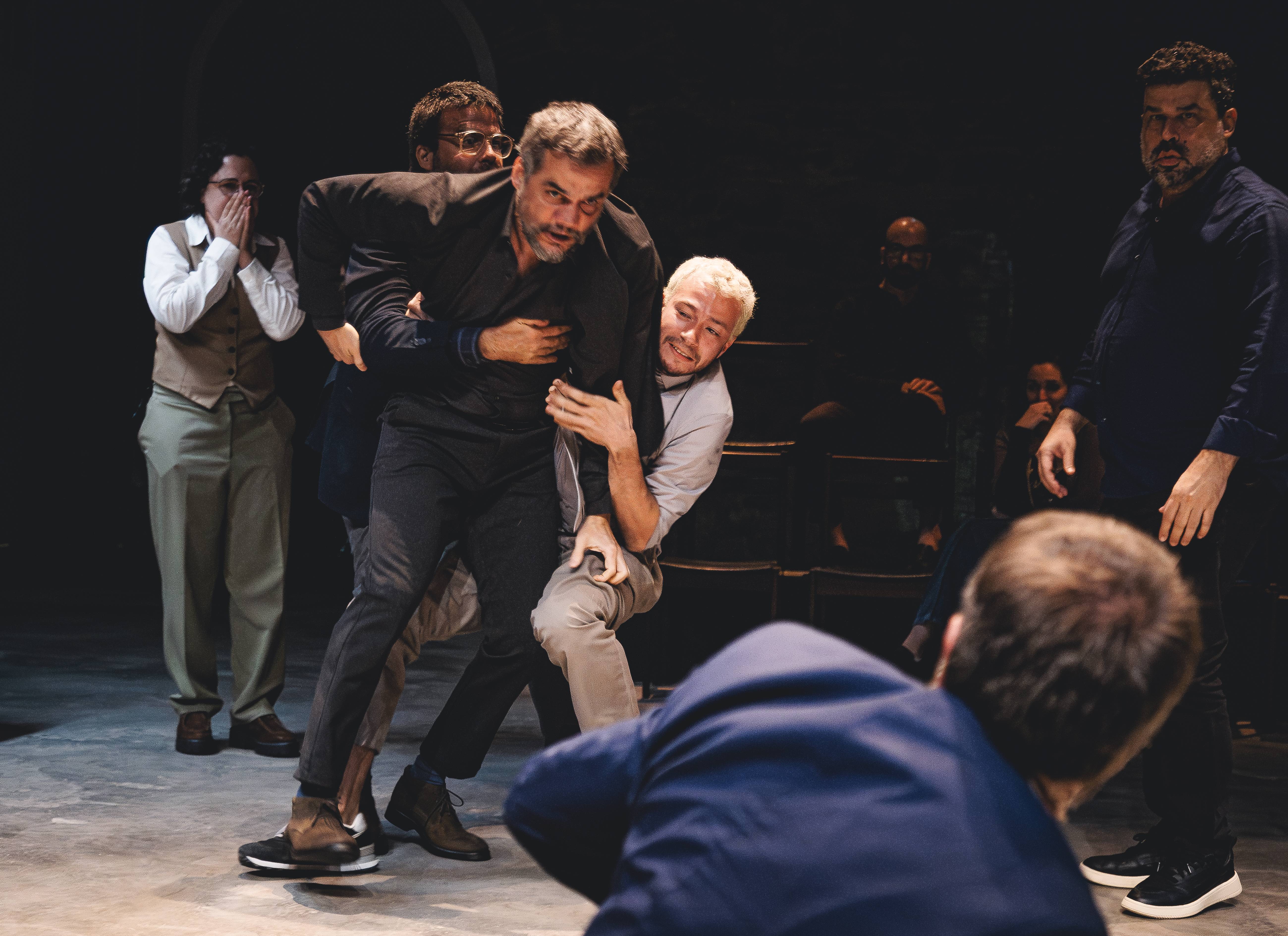
The seeds for this radical adaptation were planted in late 2022 in Los Angeles. Acclaimed Brazilian theatre director Christiane Jatahy—recipient of the prestigious Venice Biennale Golden Lion for Lifetime Achievement—was staging the final chapter of her trilogy on colonial violence, Depois do silêncio (After the Silence). Moura was in the audience. As the curtain came down, he went backstage with a singular mission: he wanted to return to the stage, and he would only do it with her.
Bonded by a shared urgency after living through the far-right authoritarianism of the Bolsonaro administration in Brazil, the duo found a perfect, bleeding-edge mirror in Henrik Ibsen's 1882 classic. Instead of a simple restaging, they gave it a much-needed revision and constructed a fierce, interactive sequel. Ibsen's original ends with Dr. Thomas Stockmann facing exile. A Trial picks up the pieces as Stockmann demands a public hearing. The setting is transplanted to a corrupt, modern-day small Brazilian spa town. By weaponising Ibsen's core themes, Jatahy and Moura deliver a direct hit to the present-day zeitgeist—tackling the climate crisis, severe political polarisation, the toxic warfare of fake news, and cancel culture.
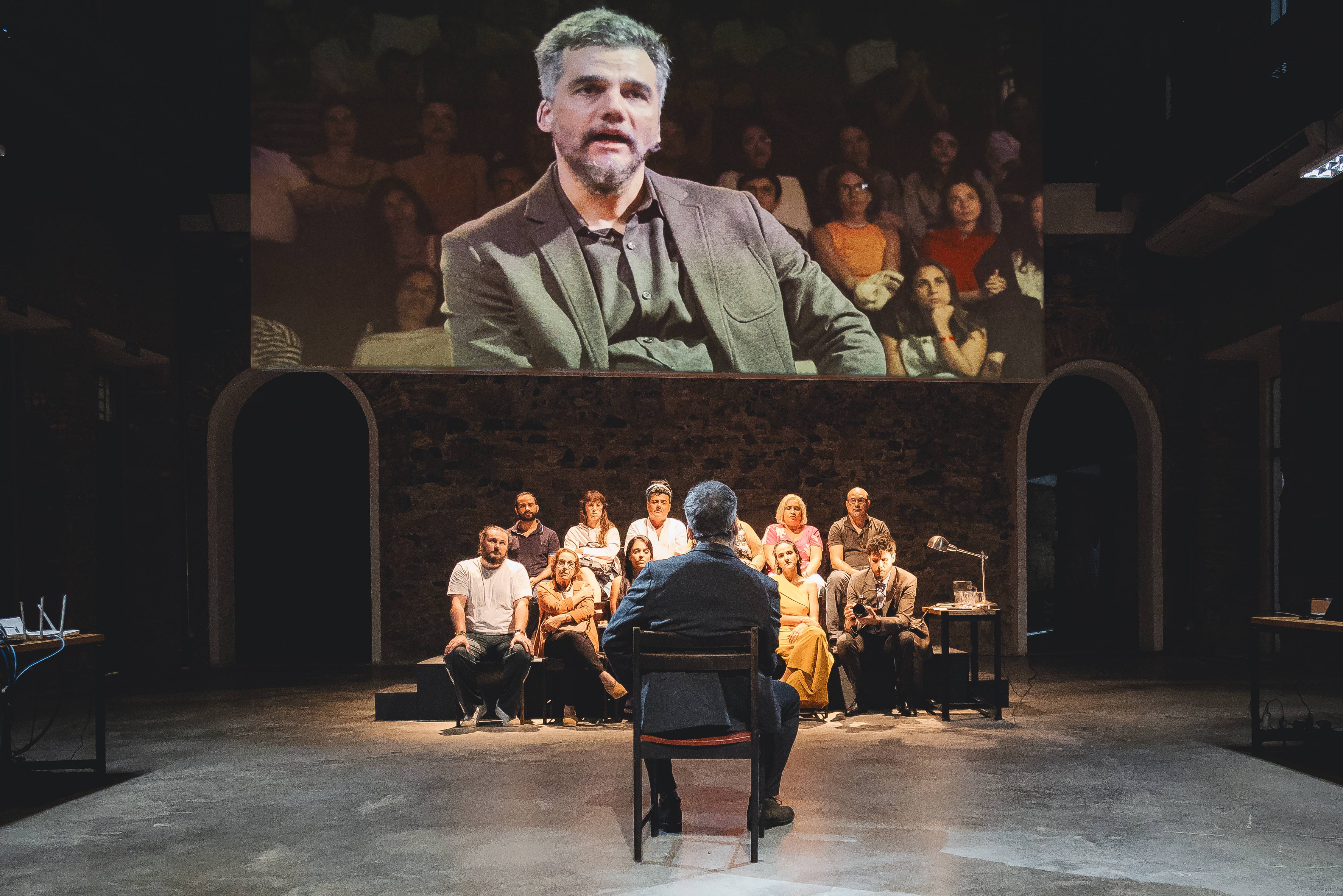
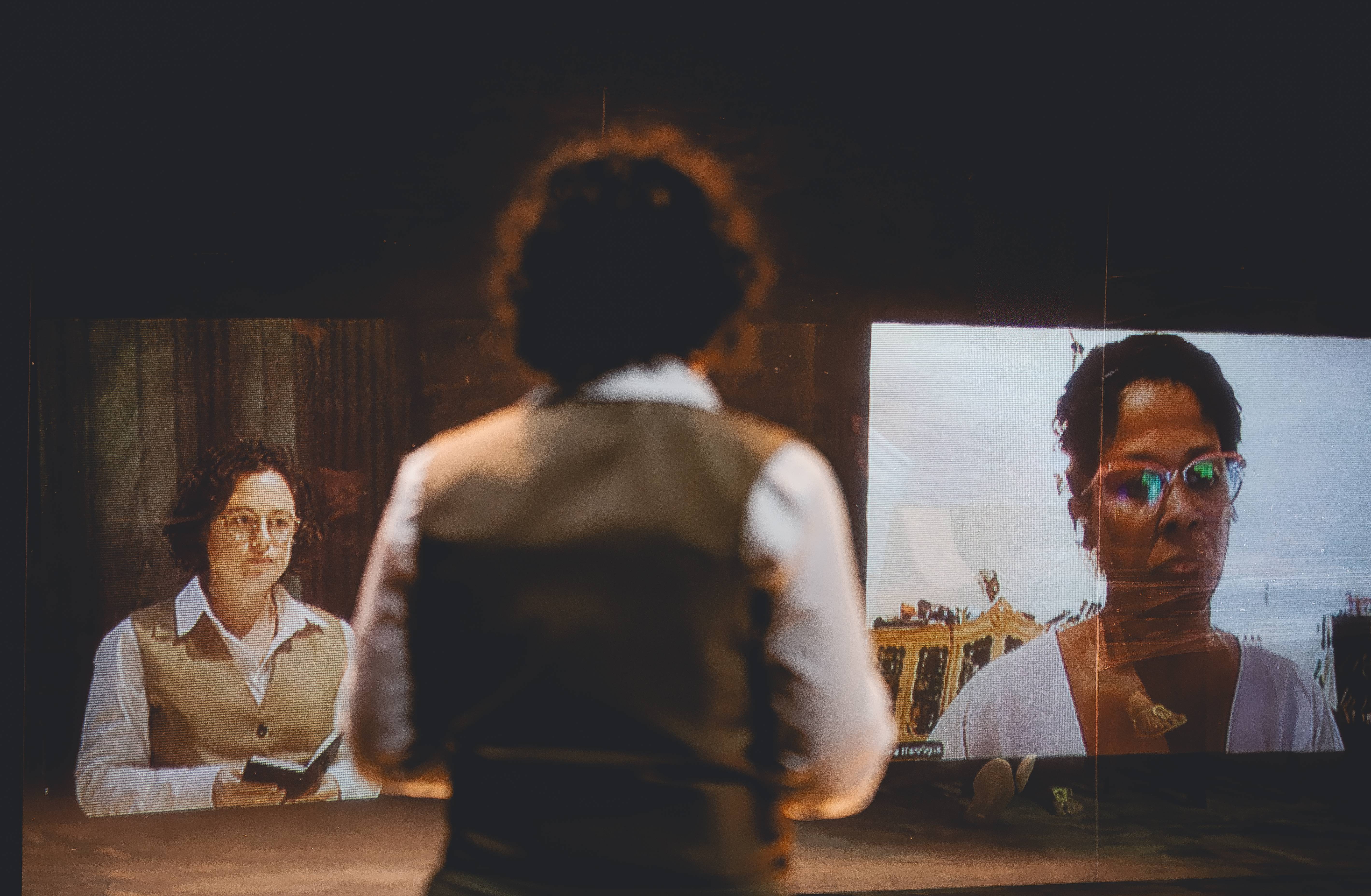
Operating as an interactive courtroom drama, the production boasts an unquestionably inventive structure, calling upon randomly selected audience volunteers to form a jury and determine whether Stockmann is "an enemy of the people". Jatahy’s signature multimedia framework masterfully shatters the fourth wall, juxtaposing live stage acting with pre-recorded cinema and active, real-time camera feeds. As scripted scenes, improvisation, and pure spontaneity collide, the lines between truth and artifice dissolve entirely, brilliantly evoking the dizzying uncertainty of our modern post-truth world.
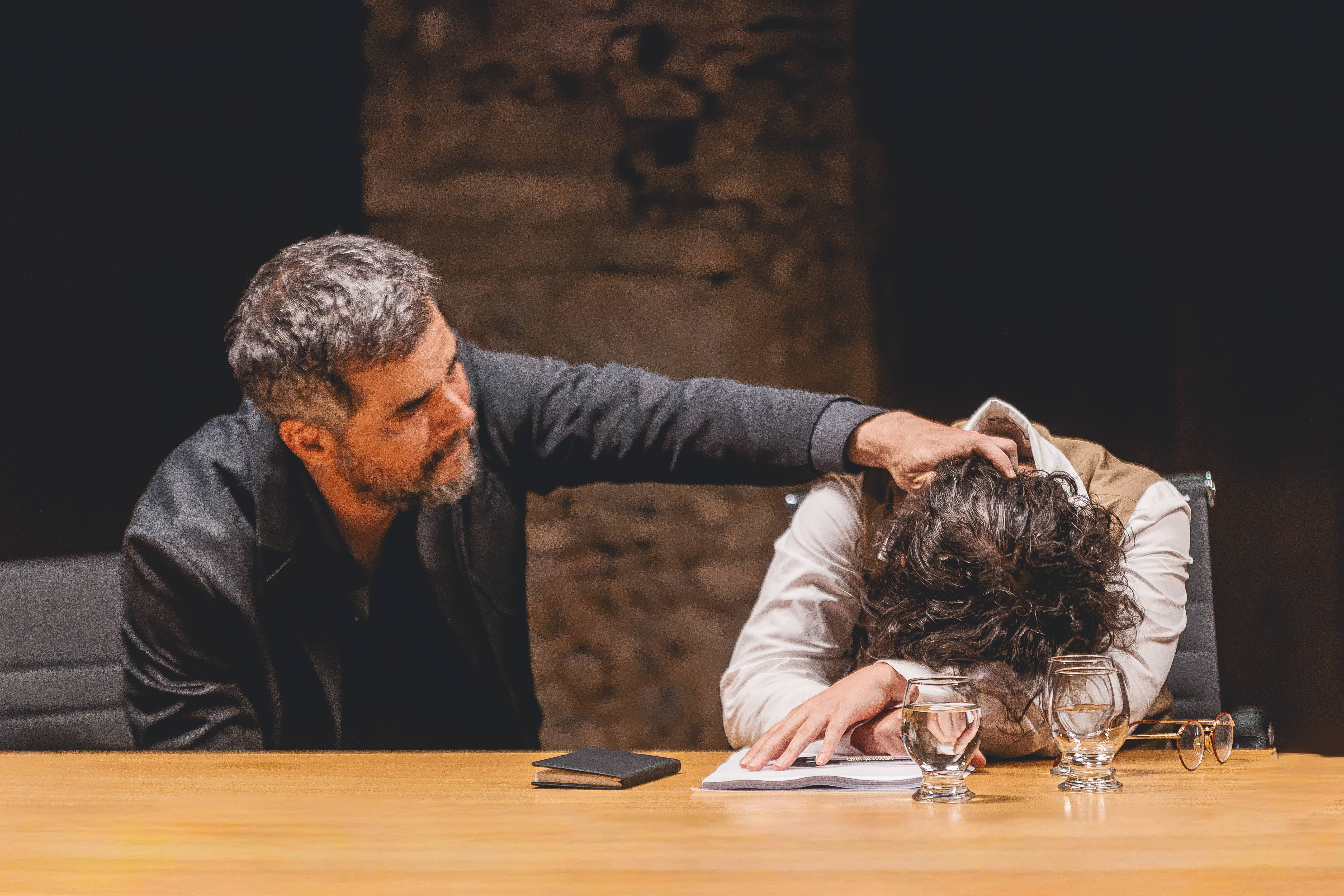
However, I was less convinced by the theatre laboratory aspect where the audience's verdict dictates the ending. From a 21st-century viewpoint—amidst a climate crisis where record-breaking temperatures are gripping Europe, and given that Stockmann is portrayed by one of the most convincingly magnetic actors today—would the nightly verdict ever truly change? Can the narrative within this context still genuinely challenge a European audience? While the framing of fascism undoubtedly strikes a raw nerve in Brazil, here the execution feels more like an intellectual, artistic experiment than the co-creators' intended onstage activism.
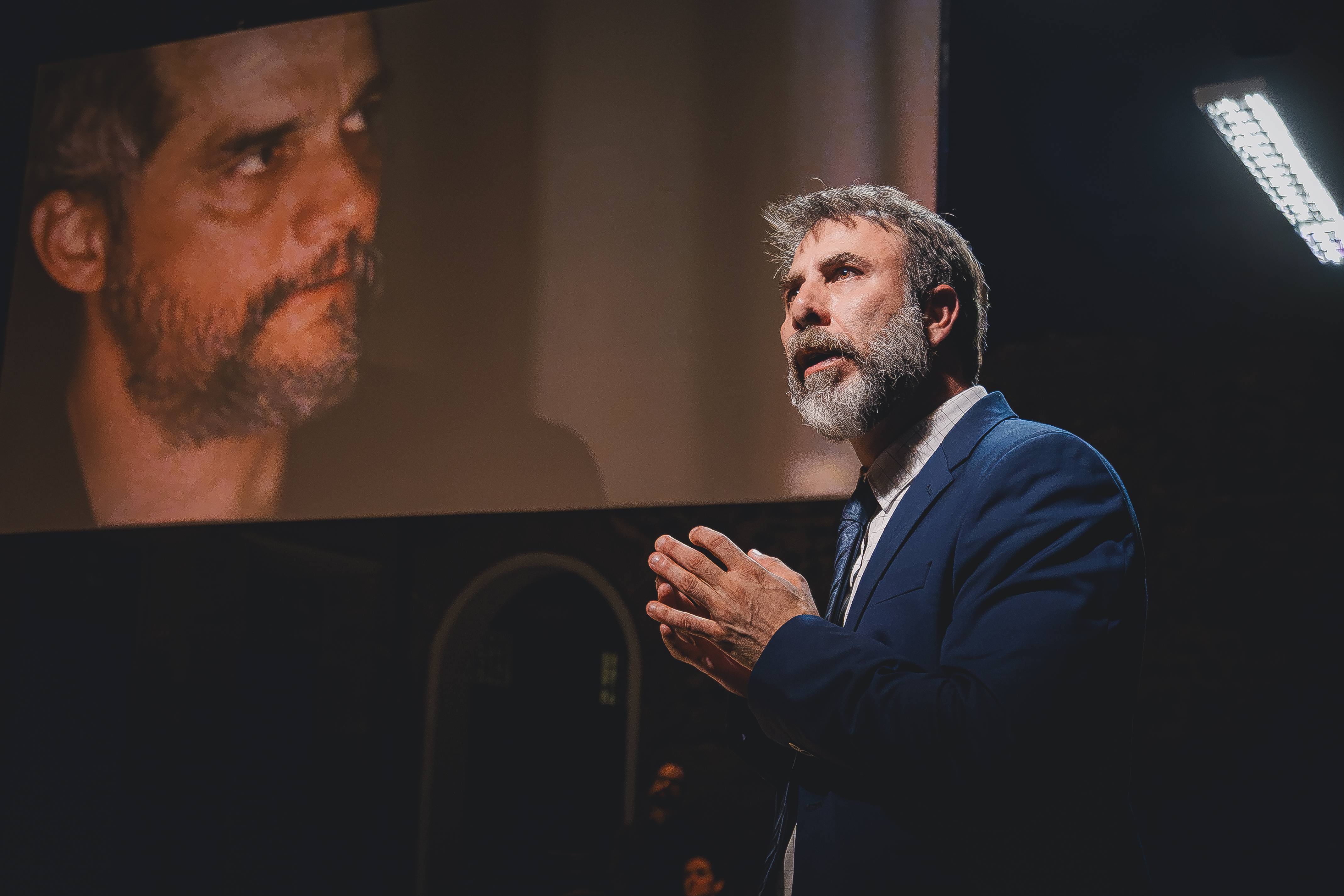
The production is propelled by a strong cast that navigates the text by shifting flawlessly between English and Portuguese. Danilo Grangheia, portraying the mayor Peter Stockmann, expertly sharpens the central fraternal friction; his measured, calculated performance briefly plants a seed of doubt, making us wonder if Thomas’s underlying motives are more complex than they seem. As Petra, Julia Bernat offers an equally fierce counterweight. Standing firm as her father’s defender, she never gets lost in the orbit of her two commanding male counterparts. Yet it is Moura who remains the gravitational centre. Exuding the raw intensity and magnetic, quiet charisma of The Secret Agent, his stage presence is a masterclass. Whether breaking the fourth wall to address the room or effortlessly toggling between the conflicted anti-hero and the meta-narrator, his energy is profoundly contagious, instilling a level of conviction that demands reflection on the sweeping societal fractures the piece uncovers.
Even if A Trial after An Enemy of the People falls short of the chaotic theatre roulette it sets out to be, the sheer scope of this endeavor remains monumental. The piece carries an immense historical lineage, co-commissioned by Europe's most venerable cultural institutions: the Holland Festival, the Edinburgh International Festival, and the Festival d'Avignon. Born in 1947, all three festivals began as a post-war mission to heal a fractured continent, revive cross-border artistic dialogue, and combat the rising tides of economic despair and far-right ideology. To realise, nearly eighty years later, that we have circled back to those very same fractures is profoundly poignant. Yet, despite the frightening urgency of the crises presented, the production uncovers a deep well of resilience. In Thomas Stockmann’s final address, as Moura subtly yet mightily evokes the transcendent power of the stage, we witness the true healing of the piece. It serves as a reminder that art is not merely a reflection of our political scars, but a vital sanctuary—a collective ritual that allows us to reflect, resist, and ultimately reshape the human soul.
production photos ©Caio Lírio
