

A one-person show that is not quite a one-person show.
A stage where thirty-five names on the casting board would feel entirely natural.
Doosan Art Center's final program in its series Doosan Humanities Theater 2026: New Taxonomy is I Am My Own Wife— a work that is already more than worthy of attention for the simple fact that a single actor plays thirty-five characters over 120 uninterrupted minutes.
Yet the questions this production raises go well beyond admiration — beyond "that must be exhausting" or "how remarkable."
If someone were to ask me what theatrical acting really is, I'd quietly press this work into their hands.
Thirty-Five Beings Inside One Person
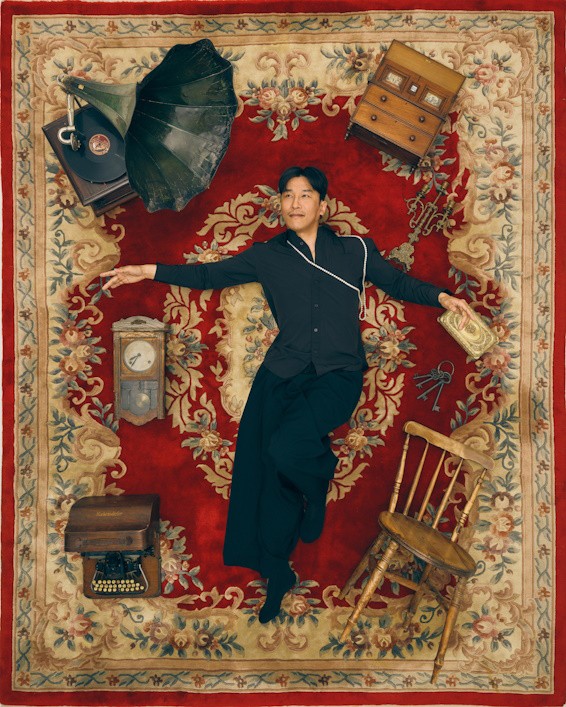
American playwright Doug Wright's signature work, I Am My Own Wife, is based on the life of Charlotte von Mahlsdorf, a real person from East Berlin.
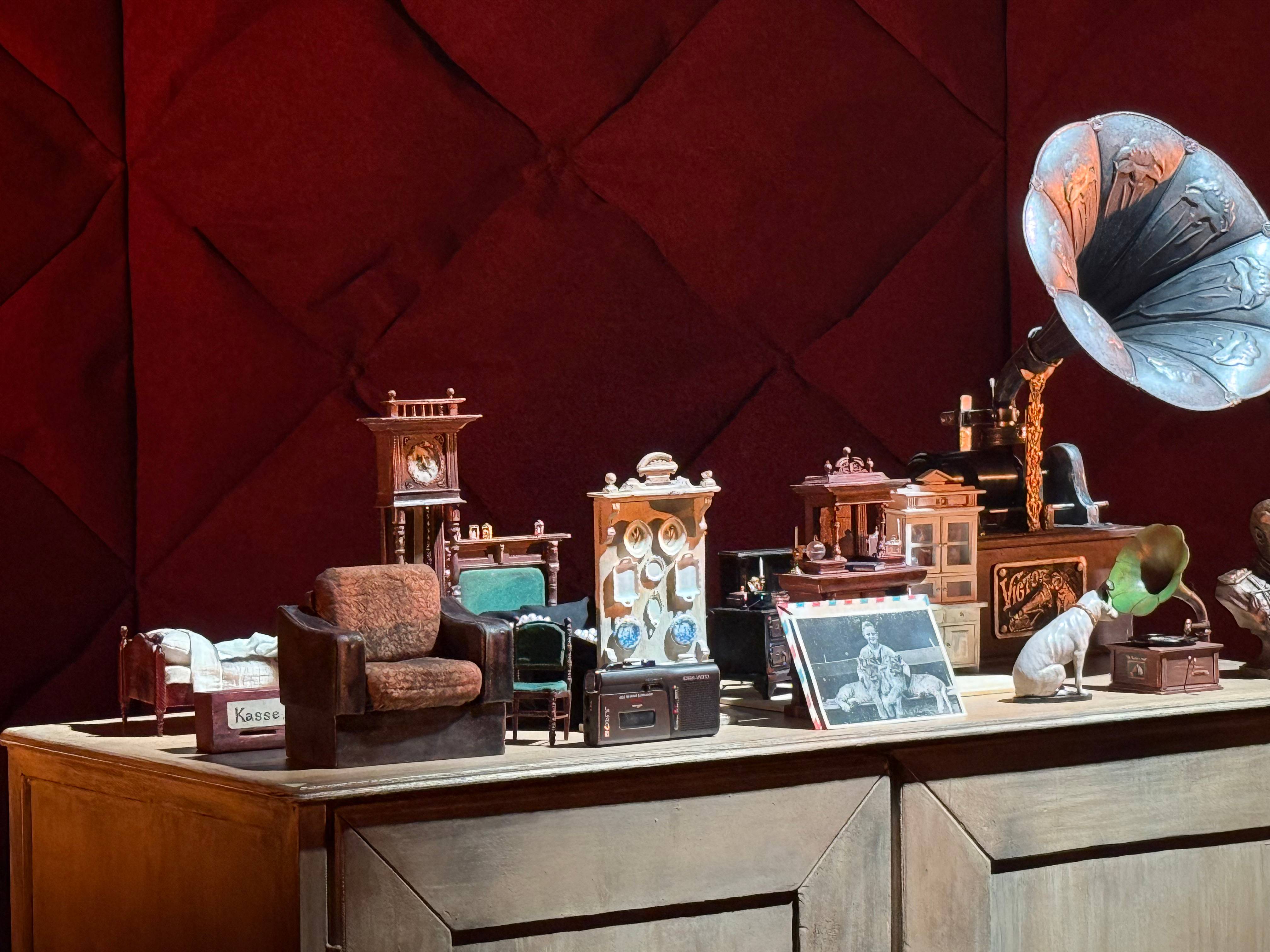
A transvestite who survived both Hitler's Nazi regime and East German socialism, Charlotte collected gramophones, clocks, and furniture from the 1890s, salvaged the cabaret "Mulackritze" — once a refuge for the LGBTQ community — and transformed her home into a museum she called the Gründerzeit Museum.
Writer Doug begins interviewing her in order to bring her life to the stage, but finds himself simultaneously captivated and confounded by Charlotte's ambiguous, astonishing existence — one that far exceeds any simple description of a survivor of Nazism and socialism.
The play swept the American awards circuit in 2004, winning the Pulitzer Prize for Drama, the Tony Award for Best Play, and the Drama Desk Award for Outstanding Play, earning widespread critical acclaim.
Doug Wright has continued to build his reputation with plays including Quills, Posterity, and Good Night, Oscar, as well as musicals such as Grey Gardens and War Paint.
In Korea, the play had its premiere in 2013 as part of the Doosan Humanities Theater 2013: Big History program, and was named one of the Korean Theatre Critics Association's "Best Three Plays of the Year." The actor who played Charlotte at the time, Ji Hyun-jun, won the Dong-A Theatre Award for Best New Actor and the Korea Theatre Award for Best New Actor.
Twelve years later, in 2026, Ji Hyun-jun returns to the same role, joined in a double-cast by actor Baek Seok-gwang, while director Kang Ryang-won, who helmed the original production, and translator-dramaturg Kim Ki-ran have also reunited for this revival.
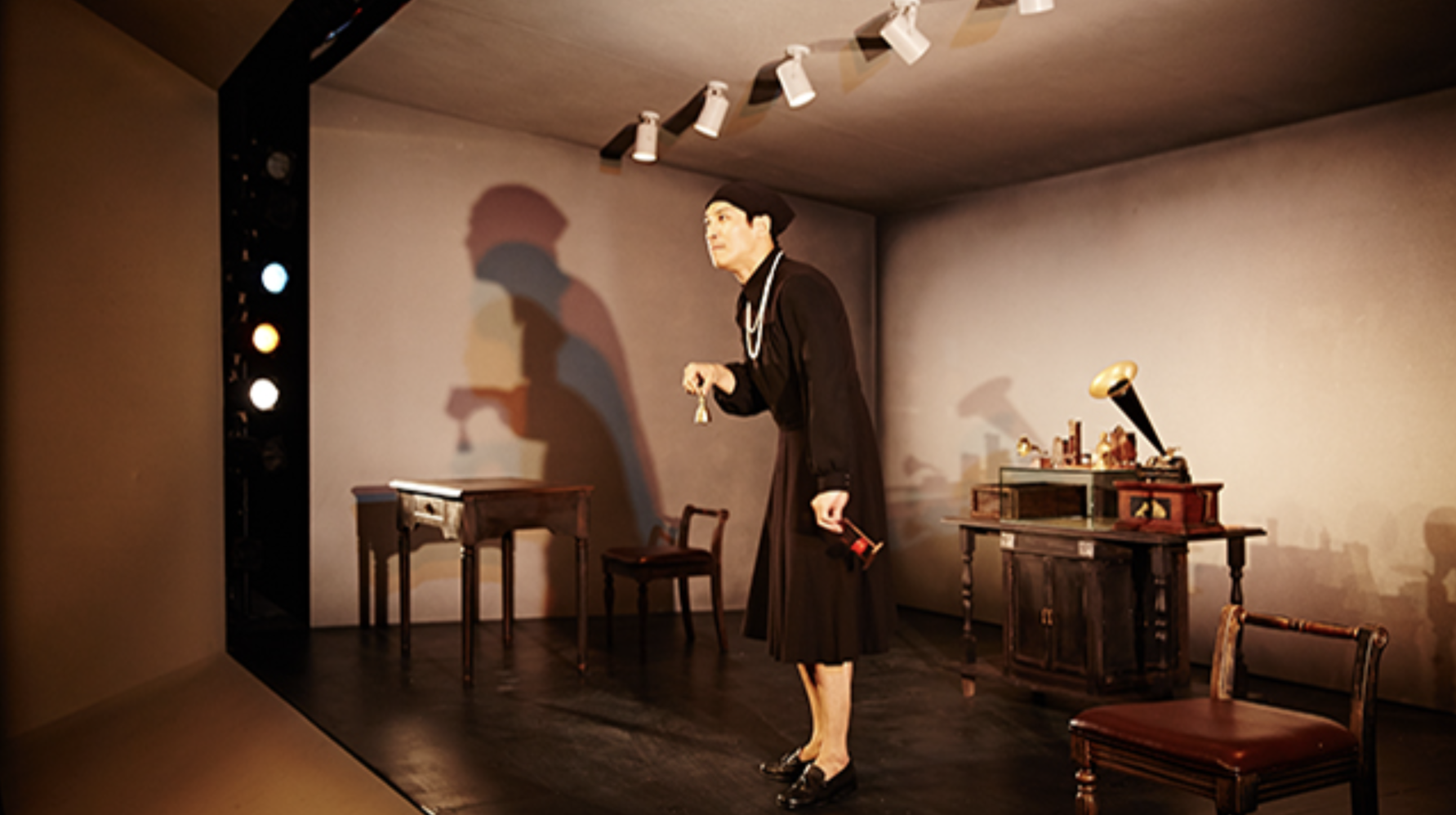
"Acting" is, at its core, the act of becoming someone else.
But becoming multiple people within a single performance operates on an entirely different level. It demands extraordinary concentration and sustained immersion.
I've seen many one-person-multiple-roles productions over the years, and to be honest, this format is not an easy one to stay immersed in. When the same face, the same clothes, and fundamentally the same voice — however modulated — move between characters, even a momentary lapse in attention can leave an audience confused, and the whole production risks becoming scattered.
And yet the Doug, Charlotte, John, Stasi officer, and Albert that actor Ji Hyun-jun brought to life were each, unmistakably, a completely distinct person.
A Body That Refuses to Be Fixed; a Stage That Becomes an Archive
In the words of Kim Ki-ran — translator and dramaturg, who has been with the production since its 2013 premiere* — working on that original run led her to understand that the body onstage should be seen not as "a fixed vessel for containing a character, but as an indefinable material," and that this body aspires to be "a sum of the human species that archives, without omission, those who were excluded or erased as base from the modern order and its history." (*I Am My Own Wife 2026 Program Book)
Precise emotional calibration and a clear sense of when to open and close each moment render the characters in three dimensions while keeping the audience from being swept entirely away — maintaining, in effect, a kind of omniscient vantage point. The direction assigns the audience no fixed role. Instead, it gives them the freedom to exist fully as observers, or at times as Charlotte, as Doug, even as a piece of furniture or a brick. This liberated, watchful gaze is what draws us along the story, the footsteps, and the music of I Am My Own Wife, and that current holds steady from beginning to end.
And because one person embodies all of those different characters, the work's central themes emerge all the more sharply.
Past and present, male and female, Germany and America, friend and lover, state and citizen, war and peace, matter and emotion, suffering and joy, human and non-human — every one of those boundaries collapses inside a single body.
Another Performer, Woven from Light and Shadow
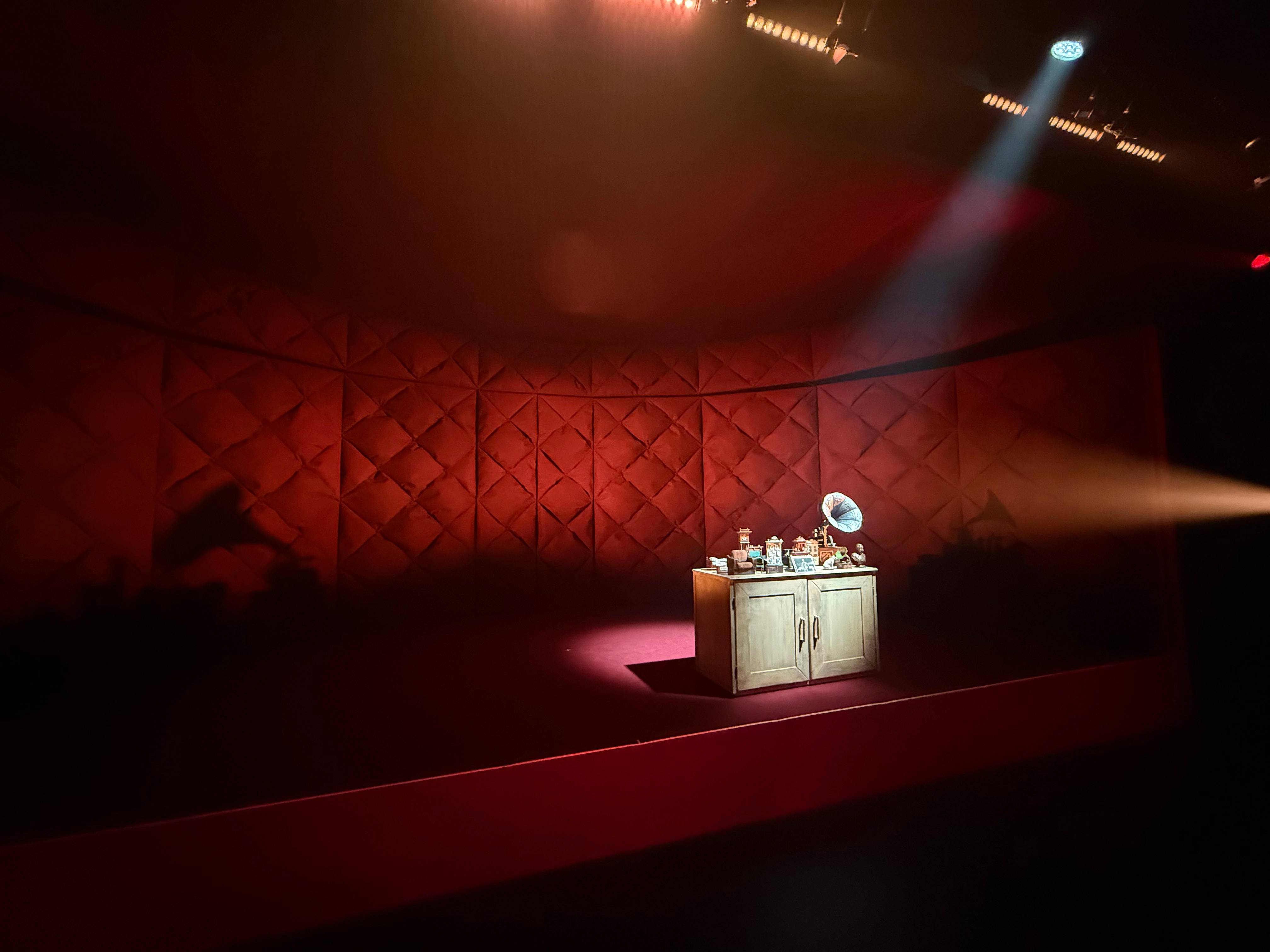
The stage is very small. Yet that small space transforms in an instant into many different places, much like the range of thirty-five roles. The spare staging — minimal props and devices — actually lets the acting breathe and stand out cleanly, and the absence of unnecessary objects works entirely in the production's favor.
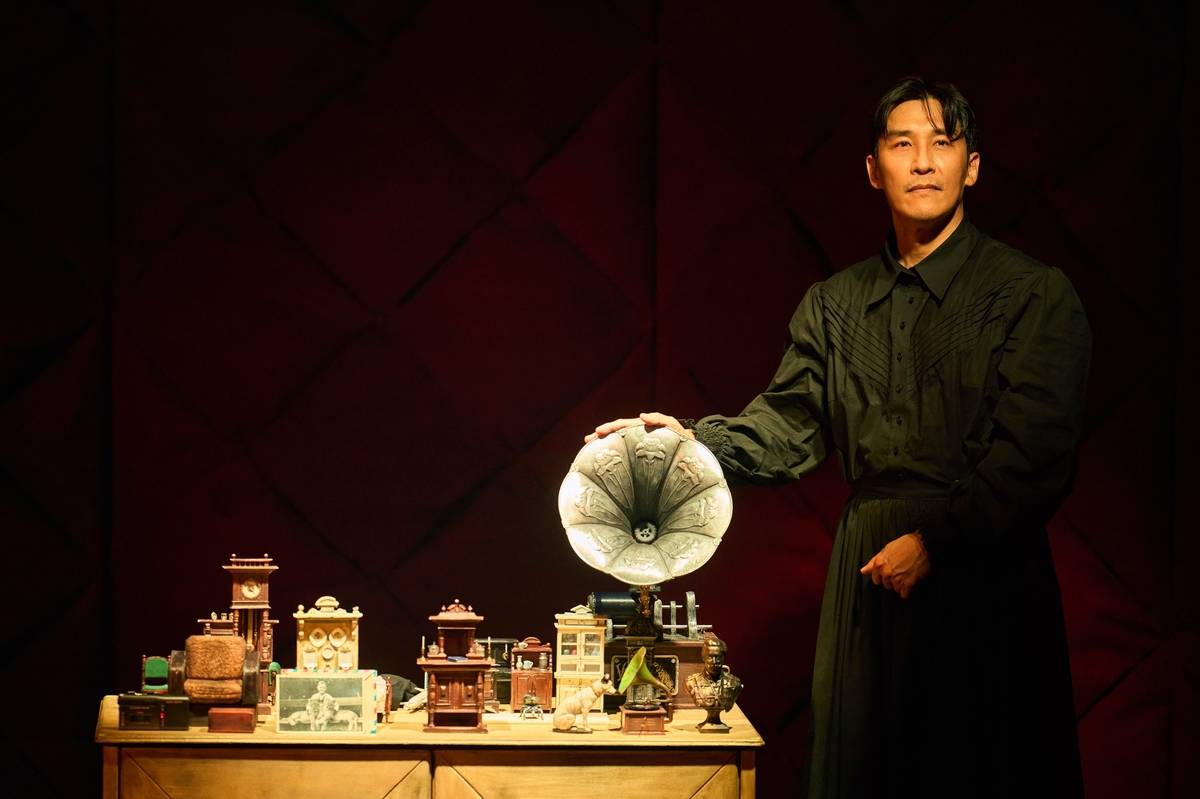
The set designed by Jang Ho functions, quite literally, as Charlotte's jewel box. The very fact that the story unfolds within it creates a deep sense of having been invited into Charlotte's life and memory.
The lighting is equally worth noting. Choi Bo-yun's lighting design moves in concert with the many identities held within a single actor playing many people, using light and shadow to give each its own texture. Light that falls and light that withholds sometimes captures that complexity, and sometimes feels like a medium through which the memories embedded in characters and objects are released. The lighting becomes a second performer, speaking the stories that the actor's gestures and words do not directly express — becoming the grain of memory and time, slowly following her.
If there is one obligation for an audience member of this production, it is to fully experience how space and character can shift in an instant — without any change of props or costume.
The same goes for watching a single Korean actor deliver, at speed, the German, English, unfamiliar place names, and rapid-fire dates that weave through the piece.
Who Am I, to Myself?
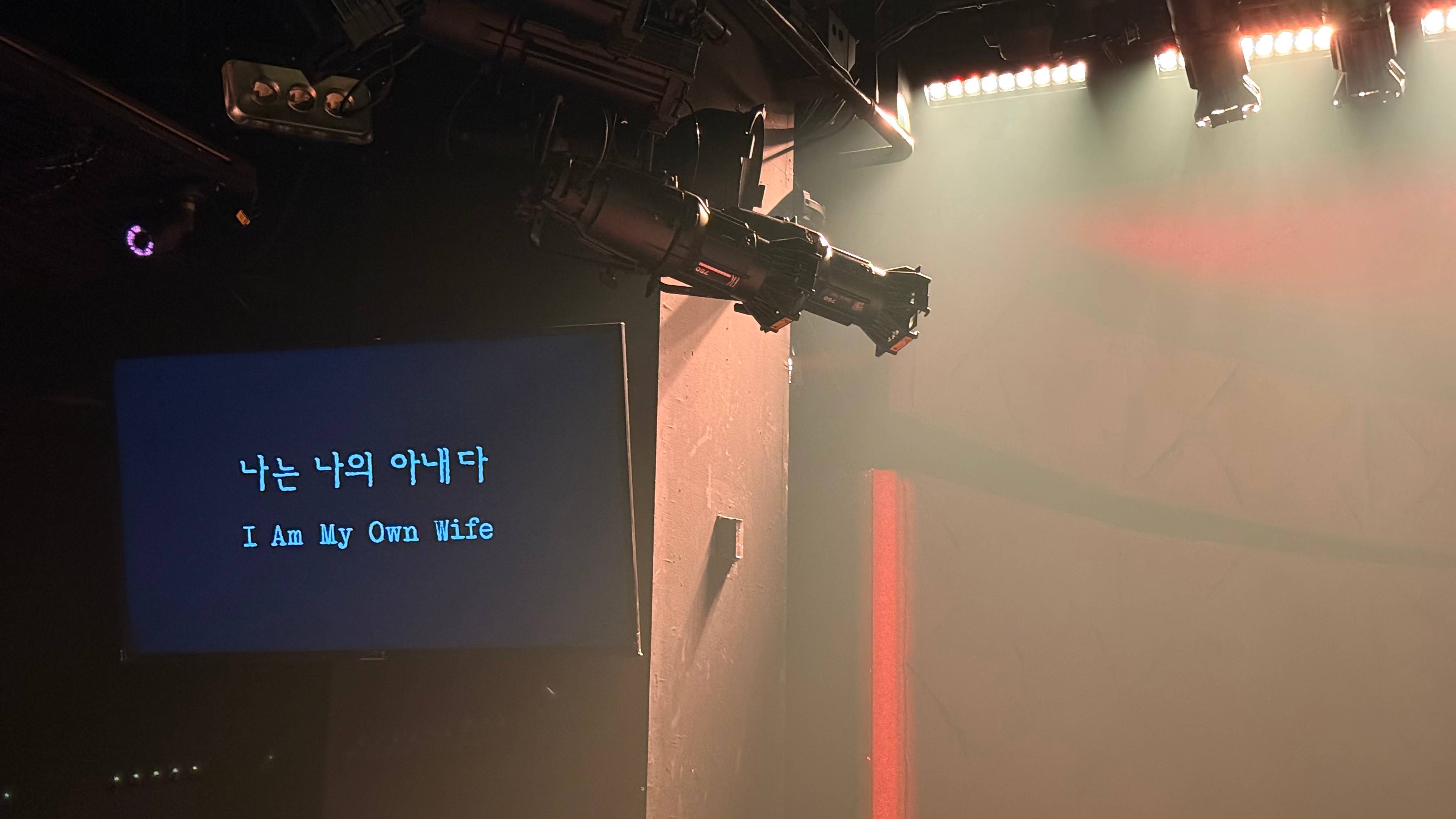
The title "I Am My Own Wife" is not a statement that defines the self. It is not a refusal — "I will never marry" — but a declaration of adding another, different being to oneself. That being can be anyone, and it doesn't matter who.
The question posed by this year's Doosan Humanities Theater theme, "New Taxonomy" — "By what criteria do you divide the world?" — loses its footing when confronted with Charlotte. The essential nature of this work is the liminal ambiguity of a being who cannot be defined by any system of classification, who is interpreted differently depending on history, relationship, and power.
Who am I, to myself? Who are you, to yourself?
<I Am My Own Wife> ends by leaving that question quietly in the house.
Doosan Humanities Theater 2026: New Taxonomy
The Doosan Humanities Theater is a humanities program that Doosan Art Center has run since 2013, presenting performances, exhibitions, and lectures each year under a single theme. This year's theme, "New Taxonomy," begins with the question: "By what criteria do you divide the world?" Starting from the premise that no classification can be complete and that its criteria are always arbitrary — yet that classification itself cannot simply be abandoned — the program's core aim is to look again at existing boundaries and systems, and to try drawing them anew.
This theme connects directly to the decision to close Doosan Humanities Theater 2026 with I Am My Own Wife. Charlotte — a figure who cannot be fully explained by any system of classification, who is neither simply male nor female, neither a straightforward survivor of an era of perpetration nor a simple victim — is perhaps the sharpest embodiment of the liminal ambiguity that "New Taxonomy" sets out to interrogate.
<I Am My Own Wife> runs through July 12 at Doosan Art Center Space111.
