
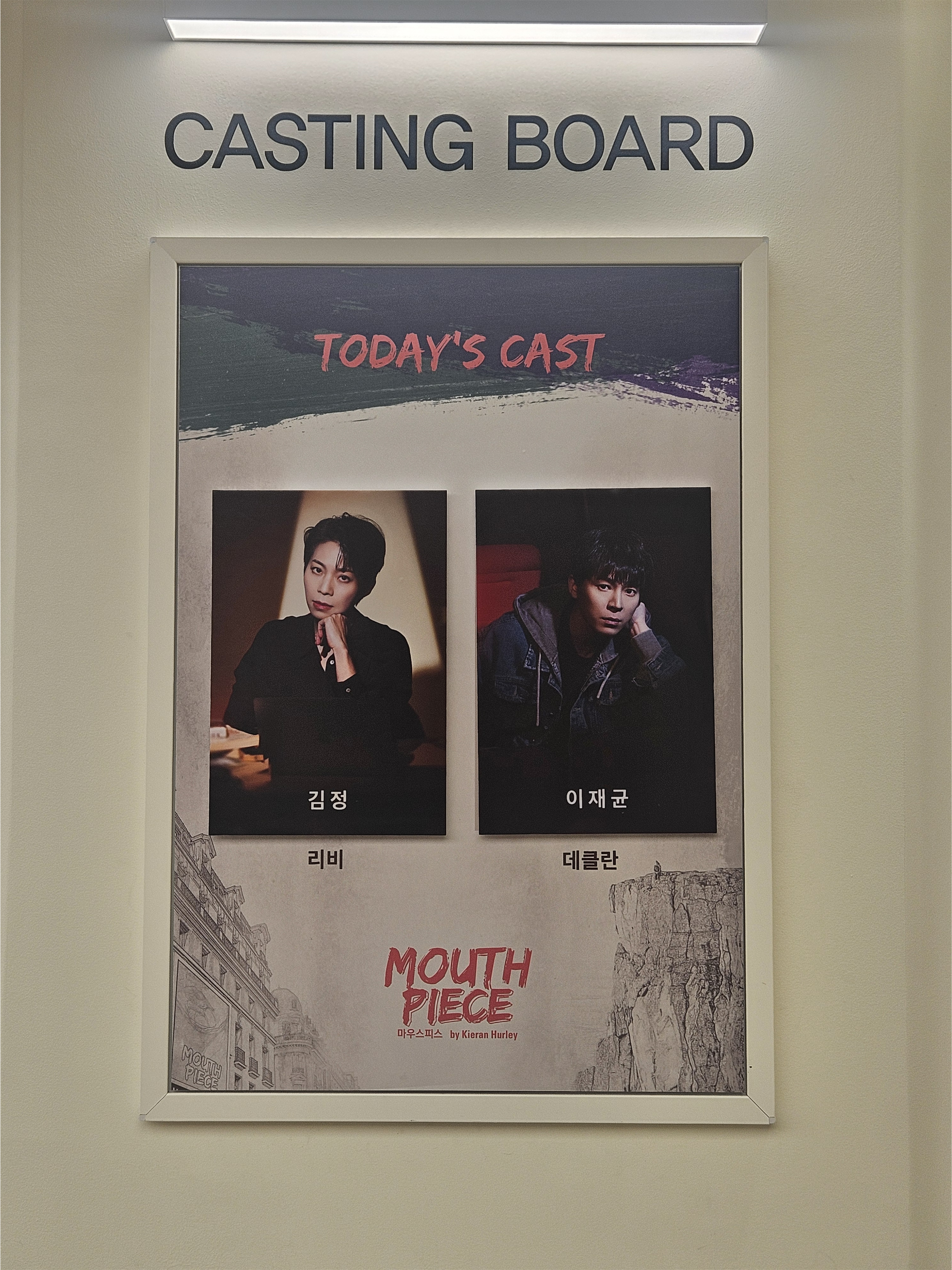
To watch a performance is to have your heartbeat fall into rhythm with others.
Libby, one of the play's central characters, describes the theatre as "a giant empathy machine" — a place where different people share the same space and the same moment, briefly passing through one another's lives and feeling the same pulse.
The phrase struck me as beautiful. And theatre does, in fact, carry audiences beyond their own lives, letting them briefly inhabit emotions they have never lived.
But Mouthpiece refuses to let that beautiful premise hold all the way to the end.
What lingers after the curtain falls is not the triumph of empathy, but a doubt cast over the very sensation of understanding another person.
Was what I witnessed truly one person's life — or a story that someone else had interpreted and constructed? And in being moved by that story, whose side was I really on?
Mouthpiece extends these questions beyond its characters to the medium of theatre itself.
* This review contains spoilers for the plot and ending of the production.
Libby is a playwright in her forties — once a rising talent, now deep in a creative slump.
Declan is a teenage boy living with domestic violence and poverty.
Beyond sharing the same city of Edinburgh, the two have no connection whatsoever.
Yet even that shared city explains less than you might expect.
People can exist as strangers within the very same space — passing each other without any knowledge of how the other spends their days, or what despair they carry inside.
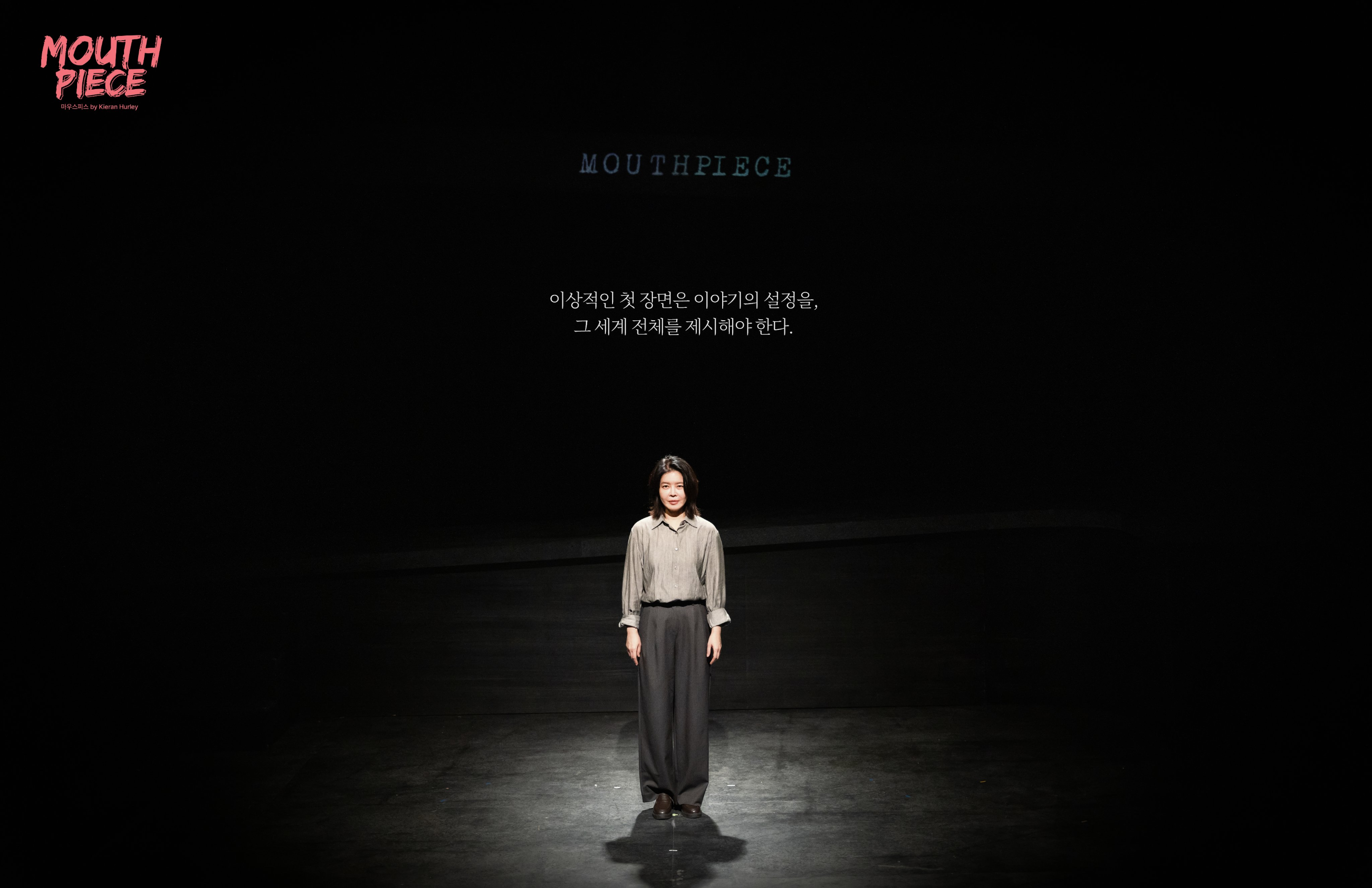
The opening scene —
It was striking that the place where the two characters meet is Salisbury Crags. On stage, a slope typically signals instability.
It is a visual device for a state of precarious balance, a state on the verge of collapse. Libby, mired in her slump, climbs the hill — and there she discovers Declan's luminous drawings.
At first it looked like a familiar redemption narrative: a character who has lost her sense of purpose finds a reason to go on through someone else's art.
But Mouthpiece seems to have been preparing a different question from very early on.
The play takes the form of metatheatre — beginning with an opening scene, passing through a midpoint, and ending in a blackout — constantly reminding us that what we are watching is a play.
Rather than following a life in its entirety, it shows the audience a portion of a story that has already been shaped by someone else.
The audience is not watching reality; they are stepping into a representation that has already been edited and arranged — and that raises a host of questions.
The midpoint —
Why must this character, who was happy just moments before, become unhappy here? Why must this relationship move in exactly this direction?
Libby would probably answer like this:
"Because it's a play. Because a play needs conflict and resolution."
And it is precisely at that moment that the discomfort sets in.
At what point did the life of Declan — a real individual — begin to follow the structure of what playwright Libby considers "good drama"?
Even so, I did not want to read this work simply as a story of exploitation — of someone borrowing another's voice to speak for a person who cannot speak for themselves.
Because it was hard to deny that Libby genuinely loved Declan.
The problem was that sincerity does not guarantee understanding.
What is interesting is that Declan is not a passive figure either.
When Declan eventually seeks Libby out, what he demands first and foremost is money.
What he wanted was not someone's interpretation or discovery of him — it was security. The certainty that he could survive the next month. The disconnect between the two characters becomes even sharper in the staging.
Whose story can be told — The play-within-a-play Mouthpiece, and the play Mouthpiece
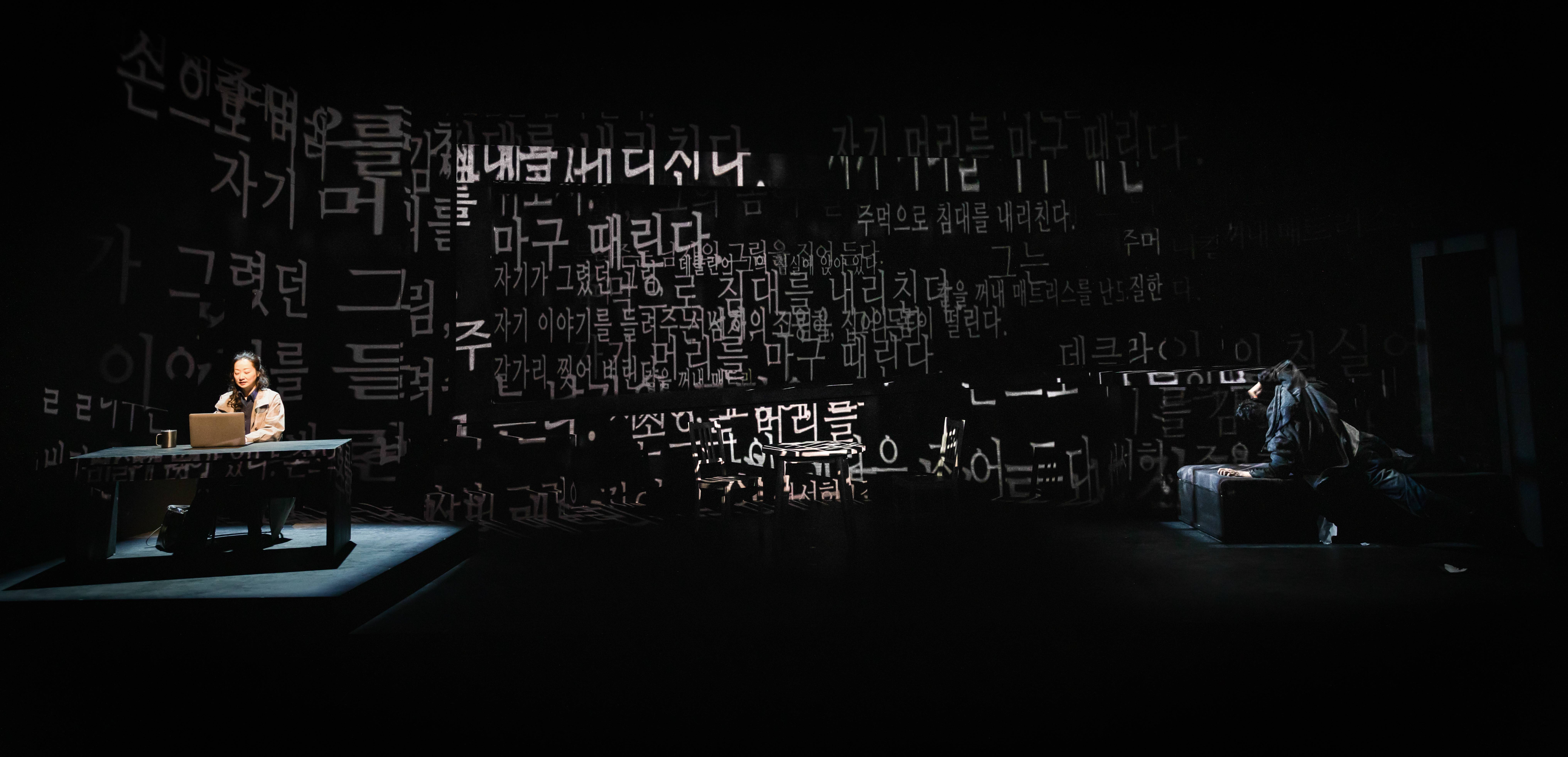
The most striking moment in the staging was when Libby's writing begins to take over the stage.
The text crowding the screen started to feel like an act of violence.
In that moment, as an audience member, I found myself wondering: was I watching Declan himself, or the Declan being transmitted through Libby?
Despite Declan's objections, Libby pushes ahead with the "dramatic" ending she wants.
It is clearly a wrong done to Declan — his own life, yet someone else is deciding its meaning and its conclusion.
But an uncomfortable question remains alongside that. Without Libby, could Declan's story ever have reached the world at all?
And ironically, the play born from that process receives glowing praise from critics and audiences alike.
Poverty on stage can be appreciated as art; actual poverty cannot. An audience can empathise with Declan's reality, but they cannot live it.
Something said at the post-show actor talk stayed with me. Playing Declan, the actor described feeling as though he had simultaneously become an actor playing Declan within the play-within-a-play.
When you think about it, Mouthpiece itself is not entirely free from the very structure Libby cannot escape.
The work critiques the violence and limitations of representing another person's life. It exposes the distortion and deception that arise the moment you speak in someone else's place.
And yet the very means by which it delivers that message is also theatre.
The actor is not Declan, and the audience does not experience Declan's life directly. We receive Declan once again through a body and a language that someone else has constructed.
It is a self-contradiction.
But Mouthpiece does not hide this limitation.
The fact that full transmission is impossible, that another person can never be wholly understood, that we have no choice but to borrow someone's mouth — all of this is left on stage, unresolved, to the very end.
And perhaps, by the final moment, even Libby finds herself in a position where she can no longer claim her own sincerity as genuine.
She can say she loved Declan — but she cannot prove that it remained, to the last, a love between one human being and another, or that what she did was truly for his sake.
Because she had already translated another person's life into her own language.
In the end, we never learn where Libby's play ends and where Declan's life begins.
And so the interpretations of this work become infinite. Theatre is, ultimately, representation. It cannot fully transfer a life; everything is, to some degree, a fabrication.
And yet — knowing that impossibility, still reaching out toward another person with words. Being aware of the violence in speaking for someone else, and attempting to speak anyway. Perhaps that is where theatre's truthfulness actually lives.
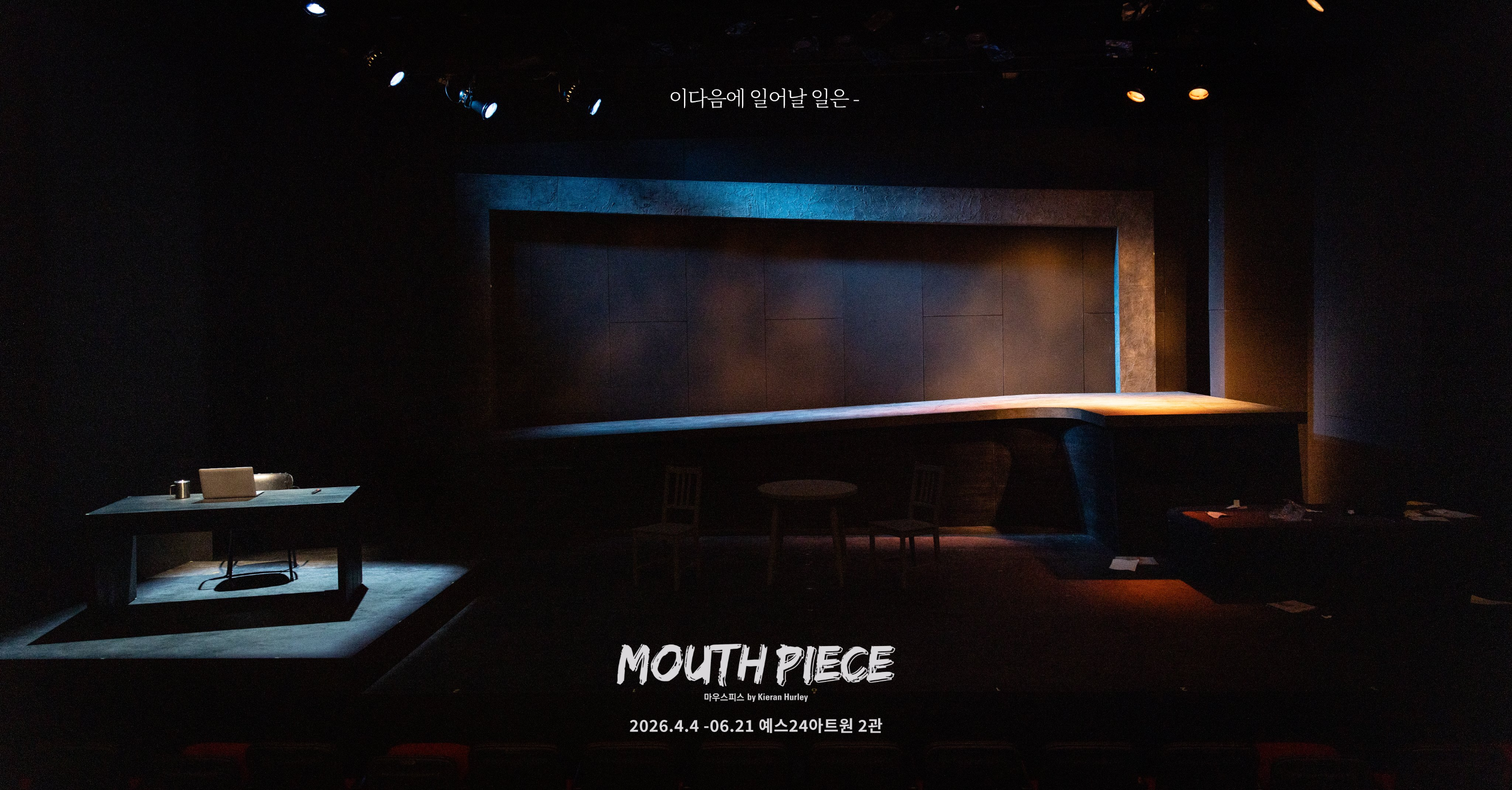
Just because you say the story is over doesn't mean it ends that way. The story keeps going — messy, but that's what makes it real. And there is no final scene.
The performance ended in a blackout — but don't we already know that life does not?
Production photos: Best Play(연극열전)
