
Who would have thought that the life stories of mathematicians and physicists could be so enticing and dramatic? While Christopher Nolan gave us a cinematic glimpse of this in Oppenheimer, Benjamín Labatut’s novel—which coincidentally debuted the same year—goes much further. It delivers a brilliant triptych of influential figures who shaped the history of science and technology across three distinct eras.
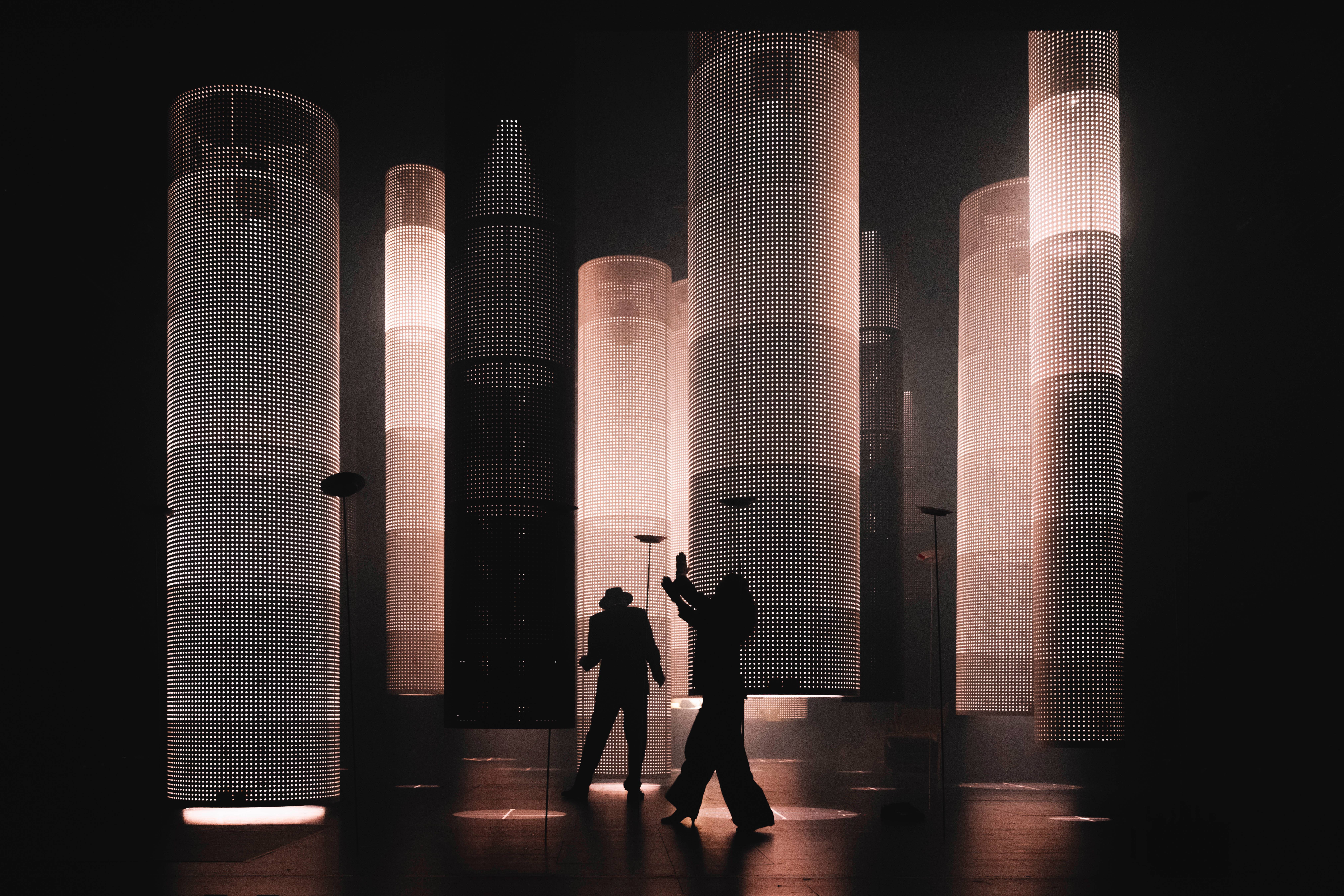
Labatut’s 400-page book has now been transformed into a stage production by the acclaimed Catalan director Calixto Bieito at the Schauspielhaus Zürich. Rumour has it that Labatut would only grant the rights if Bieito agreed to direct. The production condenses a massive narrative arc—following the evolution of artificial intelligence from a 20th-century concept to a 21st-century reality—into an intense, 90-minute sprint. It explicitly tracks the minds that grappled with the cold rationality of what machines can, and should, be allowed to do. However, the stage adaptation leaves the material somewhat stripped of its dramatic accents.
The play structures these epochs into rapid shifts. The narrative opens in the 1930s with Paul Ehrenfest, who tragically killed his son, who had Down syndrome, and then himself—driven to despair by a failing marriage, the unsettling dawn of quantum mechanics, and Europe's dark political slide under the Nazi party. The focus then shifts to John von Neumann, tracing his invention of game theory, his work on the atomic bomb at Los Alamos, and the creation of the MANIAC I computer up to his final battle with cancer. Finally, the story culminates in 2016 with the infamous Go match, marking AI's historic first victory over human champion Lee Sedol.
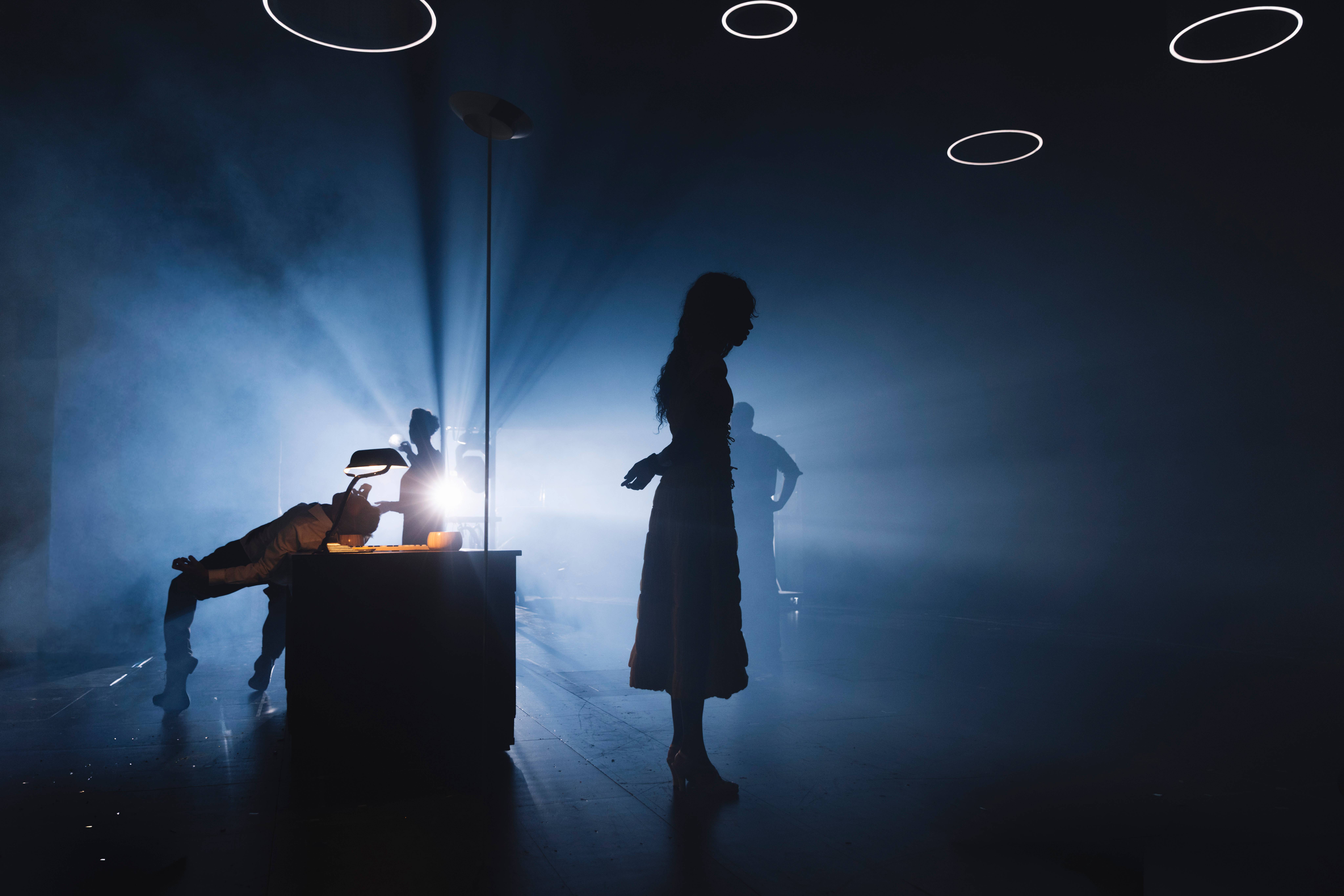
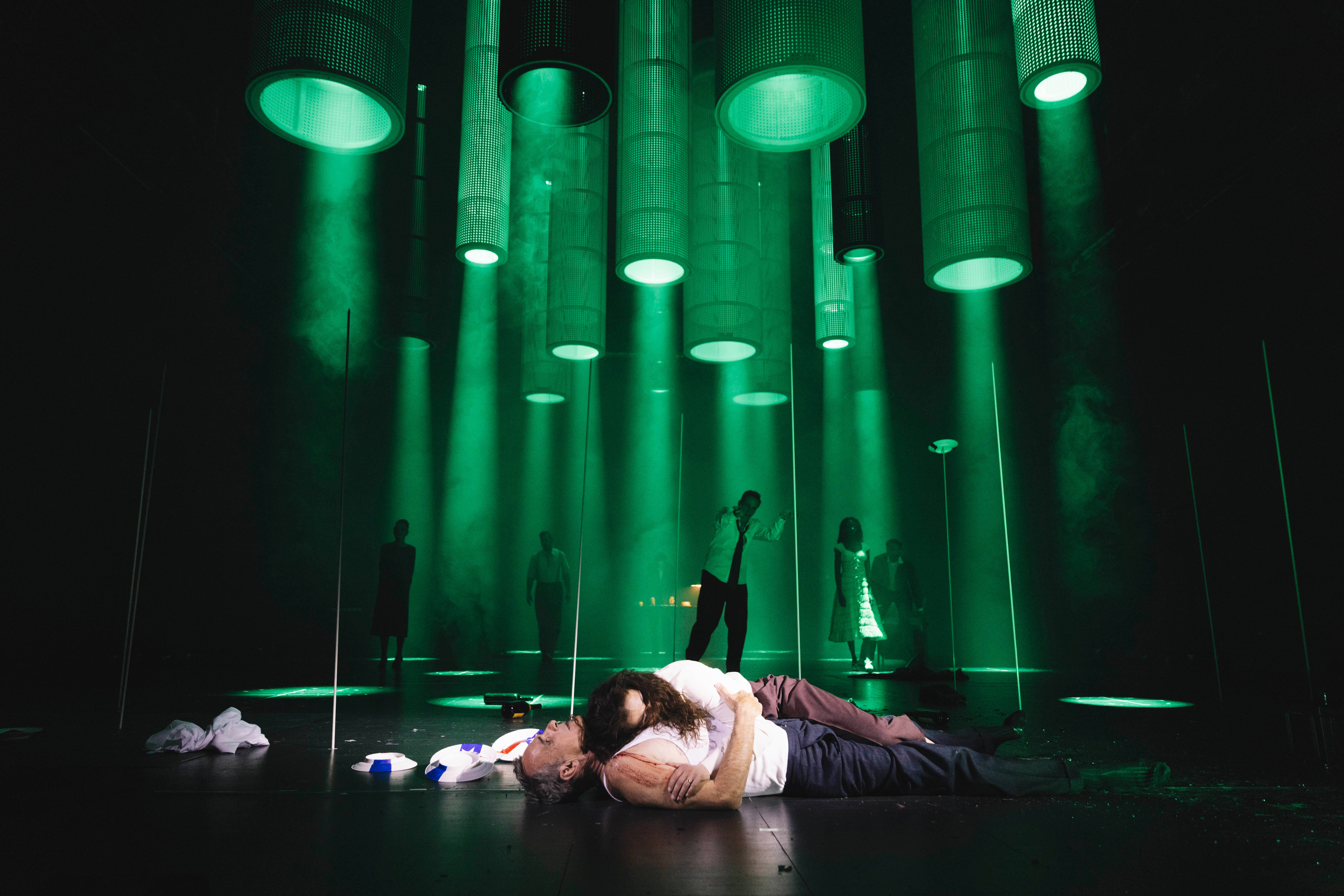
Bieito’s scenic design—co-created with set designer Barbora Horáková and lighting designer Markus Keusch—is remarkably atmospheric. It evokes a film-noir aesthetic peppered with clever visual nods, shifting from the analog world to radioactive greens. Unfortunately, the dramatisation remains largely superficial, preventing any deep psychological insight from fully developing.
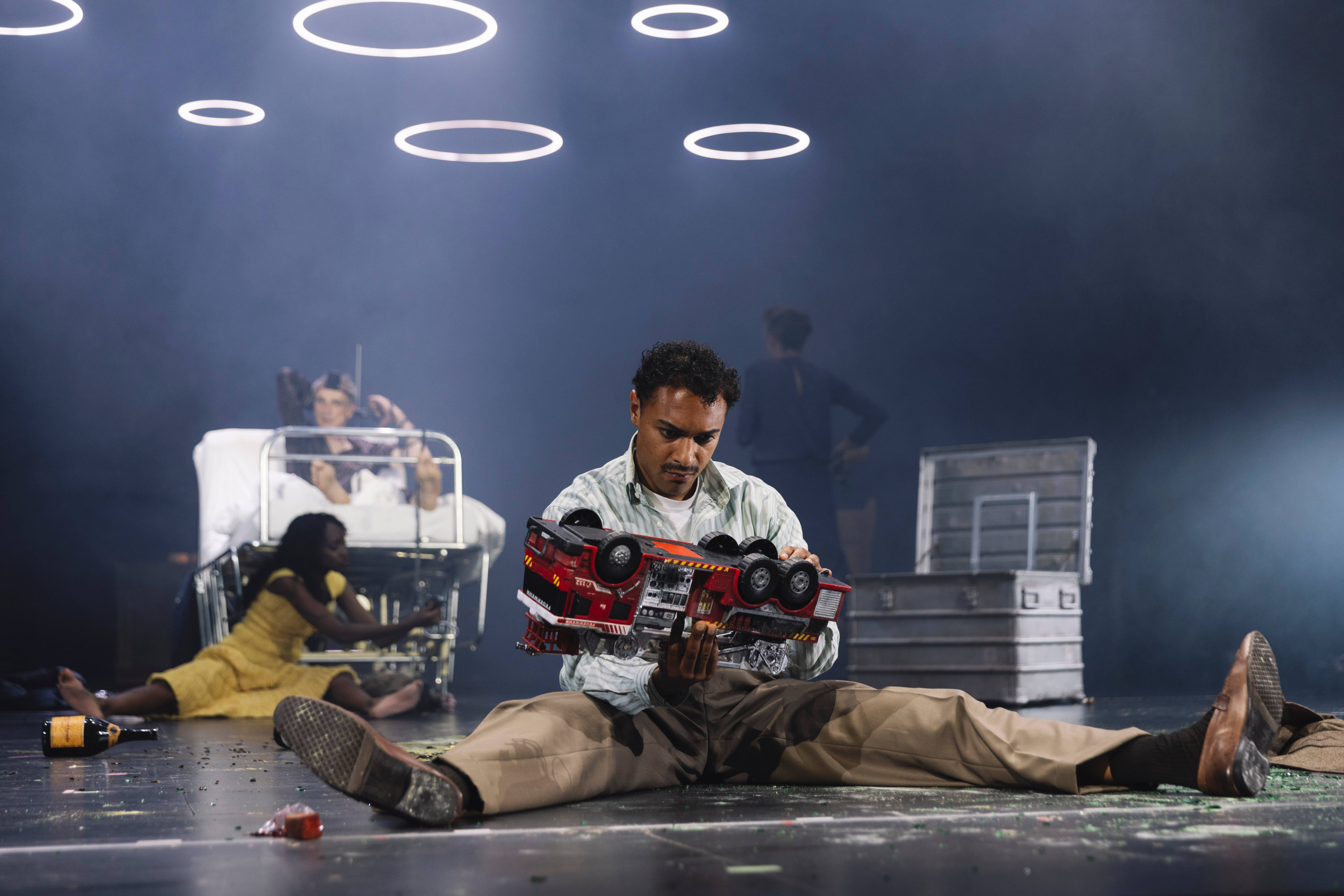
Fortunately, the ensemble salvages this narrative thinness with first-class performances. Having watched Markus Scheumann deliver a profound three-quarter of an hour closing monologue in Il Gattopardo just the night before, I was captivated as he dragged the audience back in time, plunging into the psychological darkness of Ehrenfest's final moments. He handles a demanding physical task flawlessly, ending his scene frozen at the edge of a desk in a stiff, haunting posture. Matthias Neukirch commands the stage with a magnetic portrayal of von Neumann. It was nearly impossible to tear your eyes away from Steven Adjei Sowah’s kinetic Richard Feynman or Alexander Angeletta’s quiet intensity as Lee Sedol. Lena Schwarz and Venera Jost both provide exceptionally strong, grounding performances as the two core women in von Neumann's life.
Ultimately, MANIAC unfolds as a fascinating mosaic of historical vignettes that feel alarmingly thought-provoking today, even if the theatrical result is somewhat underwhelming. As the play struggled to consistently hold my attention, my thoughts wandered to a question that kept echoing in my head while sitting in a half-empty auditorium: Why would one of Europe's most celebrated theatre companies present this world premiere without English surtitles? Zürich is home to Google's largest research and development hub outside the US, countless other tech giants, and a massive international expat community. To stage a piece based on an English-language bestseller about the dawn of AI, in a tech-saturated city, while locking out non-German speakers feels like a massive oversight. Surely, one doesn't even need to consult ChatGPT to know that was a bad idea.
production photos ©Eike Walkenhorst
