
The past two years have seen a surge of theatrical adaptations making their way to cinemas and streaming platforms — and the results range from record-breaking triumph to cautionary tale.
The relationship between Broadway and Hollywood has never been a simple one. For much of the twentieth century, the traffic flowed in one direction: studios mined the stage for material, optioned hit shows before they even opened, and delivered to audiences the song-and-dance spectacles that defined the golden age of the movie musical. Then the tide reversed. From the 1990s onward, Broadway increasingly began adapting films and beloved screen properties back into musicals, with over a quarter of shows playing on Broadway at any given time now based on films. The stage had become a kind of creative tributary of Hollywood, living off reflected light.
What is happening now, however, suggests the pendulum is swinging again. A new generation of stage-to-screen adaptations has arrived with serious financial ambition and, in at least one case, historic results. The question the industry is actively working through is whether Wicked's extraordinary success represents a durable shift in how audiences engage with theatrical material on film — or whether it is simply a singular phenomenon, unlikely to be replicated.
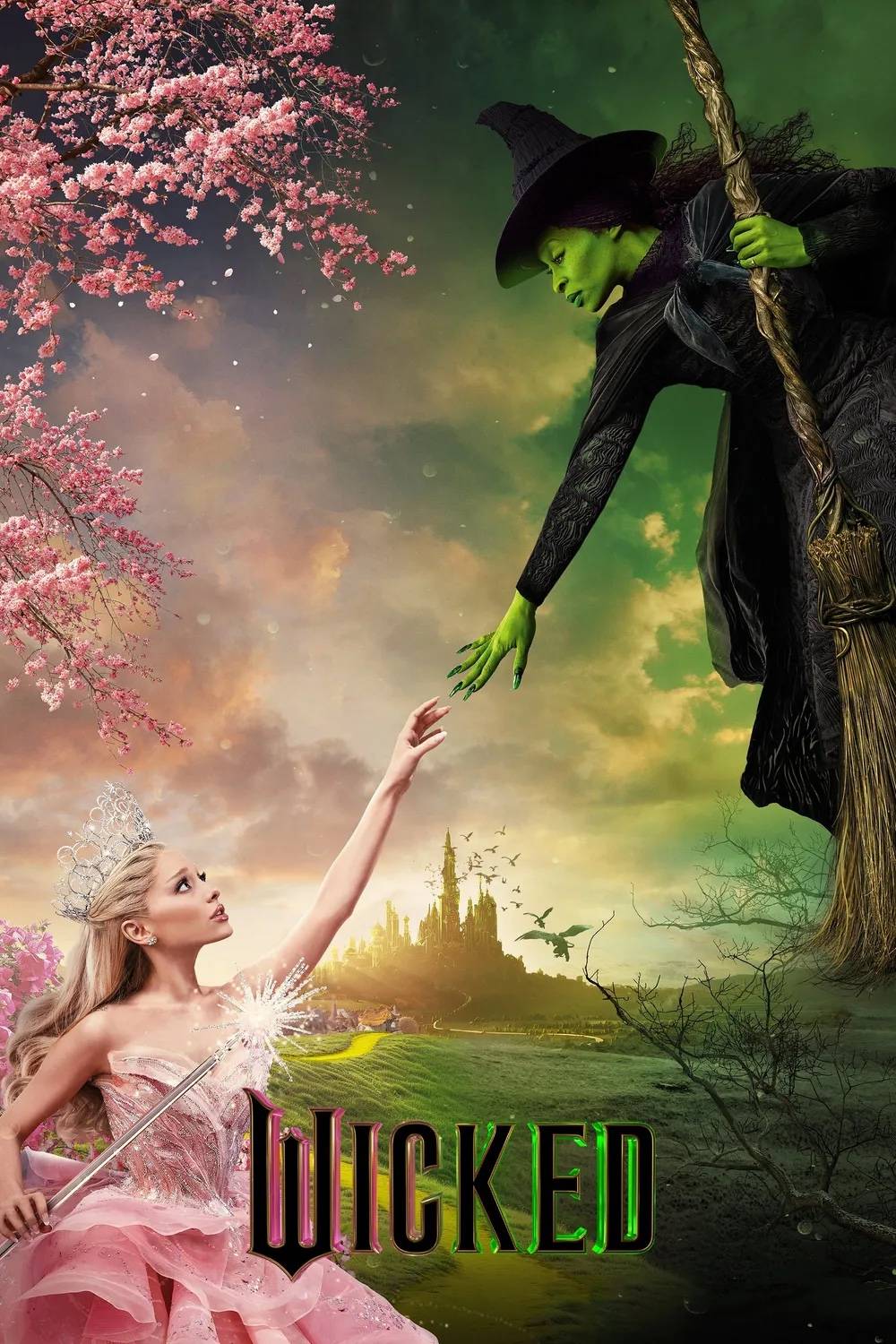
The Benchmark: Wicked Redraws the Map
Any honest discussion of the current moment has to begin here. Jon M. Chu's Wicked, starring Cynthia Erivo and Ariana Grande, became the highest-grossing film adaptation of a Broadway musical worldwide after surpassing $634 million in global ticket sales. That figure displaced Mamma Mia!, which had held the record since 2008, and the margin was not close. The film opened to an estimated $114 million domestically over its opening weekend — the biggest box office launch of all time for a Broadway adaptation by a wide margin, with the previous record holder, Into the Woods, having opened to $31 million in 2014.
The scale of this success is worth pausing on. Hollywood has faced what some describe as "musical fatigue," with studios sometimes deliberately obscuring the musical nature of their films in trailers — a phenomenon called "musicalfishing" — out of concern that audiences have pre-formed negative opinions about the genre. Wicked ran directly counter to that logic. Its marketing was unambiguous, its stars were omnipresent, and audiences rewarded the transparency in kind.
Its sequel, Wicked: For Good, directed again by Jon M. Chu, grossed $525.8 million worldwide — placing it third on Billboard's all-time list of top-grossing Broadway musical film adaptations. Together, the two films have transformed the commercial calculus around theatrical IP in Hollywood, and their combined performance will inevitably influence which projects get greenlit in the years to come.
What made Wicked work where so many others have stumbled? The answer lies partly in the source material's unusual position: Wicked was based on the 2003 Broadway musical of the same name, with music and lyrics by Stephen Schwartz and a book by Winnie Holzman, which in turn was based on Gregory Maguire's 1995 novel. By the time the film arrived, the stage production had accumulated more than two decades of devoted fans who had never had the chance to see it. The film did not so much replace a theatrical experience as finally grant access to one.
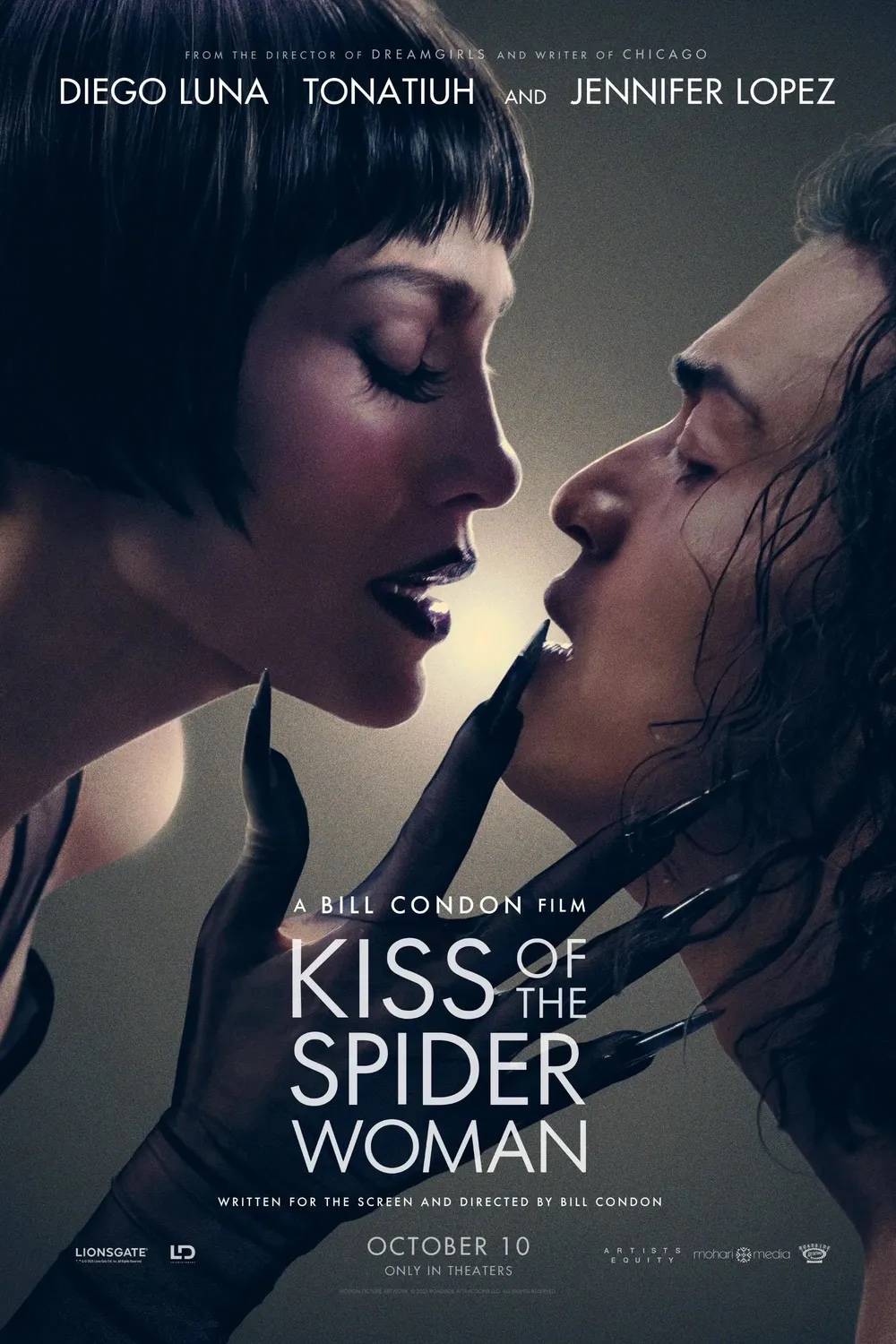
The Complicated Case: Kiss of the Spider Woman
Where Wicked offered unambiguous triumph, the 2025 film adaptation of Kiss of the Spider Woman offered something more instructive: a reminder that critical enthusiasm and commercial success are not the same thing, and that even a distinguished pedigree cannot guarantee an audience.
Directed by Bill Condon and based on the 1992 Tony Award-winning stage musical — itself drawn from Manuel Puig's 1976 novel — the film stars Diego Luna, Tonatiuh, and Jennifer Lopez, and had its world premiere at the 2025 Sundance Film Festival, where it received a standing ovation. The property's lineage is formidable: the 1985 film adaptation of Puig's novel received four Oscar nominations including Best Picture, and the 1993 Broadway musical took six Tony Awards.
Director Condon went back to Puig's original novel to realize its intent as a love story, creating a dual-world structure that alternates between a gritty Argentine prison drama and a full-color MGM-style fantasy musical featuring Lopez as a fictional silver-screen diva. Critics who championed it praised the film's sense of invention and a star-making performance by Tonatiuh, who avoids letting the flamboyant Molina become a caricature and instead creates a genuinely moving character. On Rotten Tomatoes, 76% of 151 critics' reviews were positive, with the consensus describing it as "visually sumptuous" and citing strong performances from all three leads.
And yet, commercially, the film was a significant disappointment. It was a box-office bomb, grossing $2 million against a production budget of $30 million. The gap between the film's festival reception and its theatrical performance illustrates one of the persistent tensions in bringing stage material to screen: the audiences most likely to appreciate a faithful, emotionally demanding adaptation of a Broadway musical are not necessarily those who show up to multiplexes on opening weekend.
The Wider Pipeline — and What It Tells Us
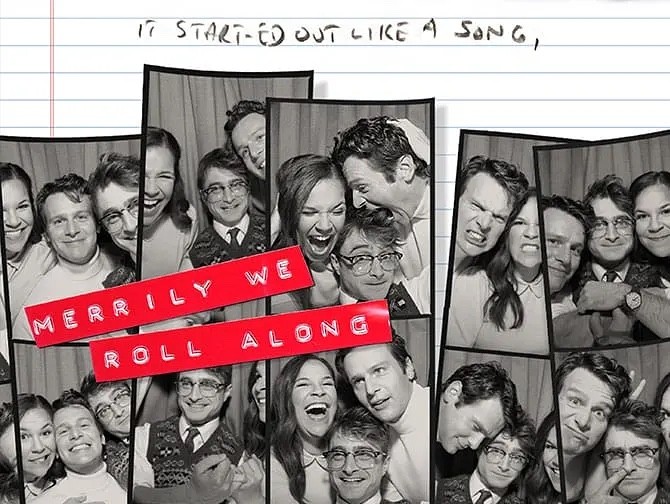
Beyond these two cases, the stage-to-screen pipeline is fuller than it has been in years. Rob Marshall is set to direct a new film adaptation of Guys and Dolls, with a screenplay by John Requa and Glenn Ficarra. Richard Linklater is applying his Boyhood approach to Stephen Sondheim's Merrily We Roll Along, filming the story's twenty-year arc over a similar timespan, with Paul Mescal, Ben Platt, and Beanie Feldstein. A film adaptation of Girl from the North Country, Conor McPherson's musical built around Bob Dylan's songbook, is in development with Olivia Colman, Woody Harrelson, Chlöe Bailey, and Tosin Cole attached.
What unites these projects is not a single aesthetic philosophy but a commercial one: proven theatrical material carries a built-in audience, a ready-made emotional framework, and a recognizable title. As one analysis noted, adapting a story from stage to screen and back offers "a sort of perpetual mobility — it keeps everything rolling," according to Goldsmiths University associate lecturer Olaf Jubin. For studios managing risk in an increasingly unpredictable theatrical marketplace, that mobility has obvious appeal.
But the Wicked-versus-Kiss of the Spider Woman contrast makes clear that the strategy is not foolproof. Prestige, critical approval, and even star power are insufficient guarantees. The projects that succeed tend to share a quality that is difficult to manufacture in development: the sense that this particular story, at this particular cultural moment, needed to be a film.
The Parallel Phenomenon: Pro-Shots and the Hybrid Middle Ground
Alongside the traditional film adaptation model, a quieter but significant shift is also underway. Professionally filmed stage productions — known as pro-shots — are increasingly common, sitting somewhere between an amateur bootleg and a full cinematic reimagining: same staging, same costumes, same theatrical conventions, captured with proper equipment and multiple camera angles.
The Tony-winning 2023-2024 Broadway revival of Merrily We Roll Along, starring Jonathan Groff, Daniel Radcliffe, and Lindsay Mendez, was released in cinemas. Hamilton received a theatrical cinema release for its tenth anniversary in September 2025. Hadestown was filmed at the Lyric Theatre in London in early 2025. These pro-shots do not replace the live experience — they cannot — but they expand access to theatrical productions for audiences who are geographically or economically excluded from Broadway and the West End.
The broader point, perhaps, is that the stage and screen are not competing for the same audience so much as they are increasingly porous with each other. A filmed production creates demand for the live show. A successful stage adaptation generates appetite for a cinematic version. The adaptation cycle accelerates, and the question of where a story "belongs" becomes less relevant than whether any given iteration of it is made with integrity and imagination.
That question, ultimately, is the one that neither box office totals nor critical scores can answer in advance. Wicked found its audience by trusting it. Kiss of the Spider Woman made a serious film and watched it disappear. The next wave of adaptations — Marshall's Guys and Dolls, Linklater's Merrily, and whatever else the pipeline produces — will face the same fundamental uncertainty. The stage has always been a place where that uncertainty is confronted in real time, eight performances a week, with no second takes. Hollywood is only now learning to live with the same condition.
Sources
- NBC / Comcast Corporate: Wicked box office milestones (Jan. 2025)
- The Hollywood Reporter: Wicked opening weekend records (Nov. 2024)
- Billboard: Top-grossing Broadway musical film adaptations, updated Feb. 2026
- Wikipedia: Kiss of the Spider Woman (2025 film)
- Deadline / Out.com: Sundance reviews of Kiss of the Spider Woman (Jan. 2025)
- Broadway Musical Blog: Upcoming movie musical adaptations, 2024 edition
- Broadway World / Playbill: Upcoming stage-to-screen projects pipeline
- The Spokesman-Review / Washington Post analysis: Mean Girls and the adaptation cycle (Jan. 2024)
- Tickadoo: Pro-shots and the filmed stage production trend (Jan. 2026)
- Goldsmiths University / Showbizz Woman: Broadway-Hollywood adaptation history
