
Where honest audiences complete the unfinished, together
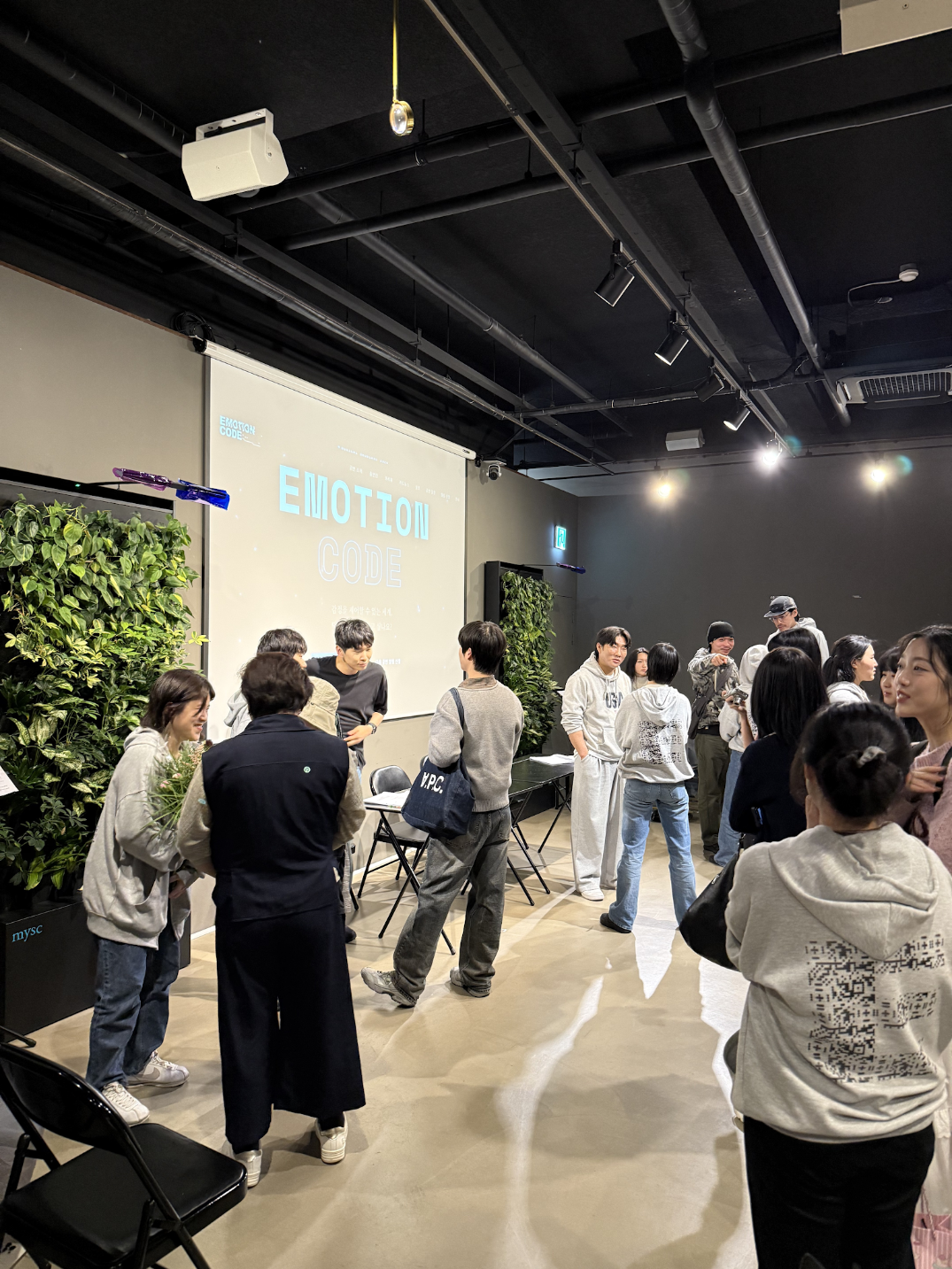
An audience by consent. A house full of people who know this is unfinished and choose to imagine its completion anyway. This is the showcase of 〈Emotion Code〉, filled with the most honest audience there is. And when it was over, I left with one question. If I could control my emotions, what would I want to do with that?
A Clear Area on a Modest Stage
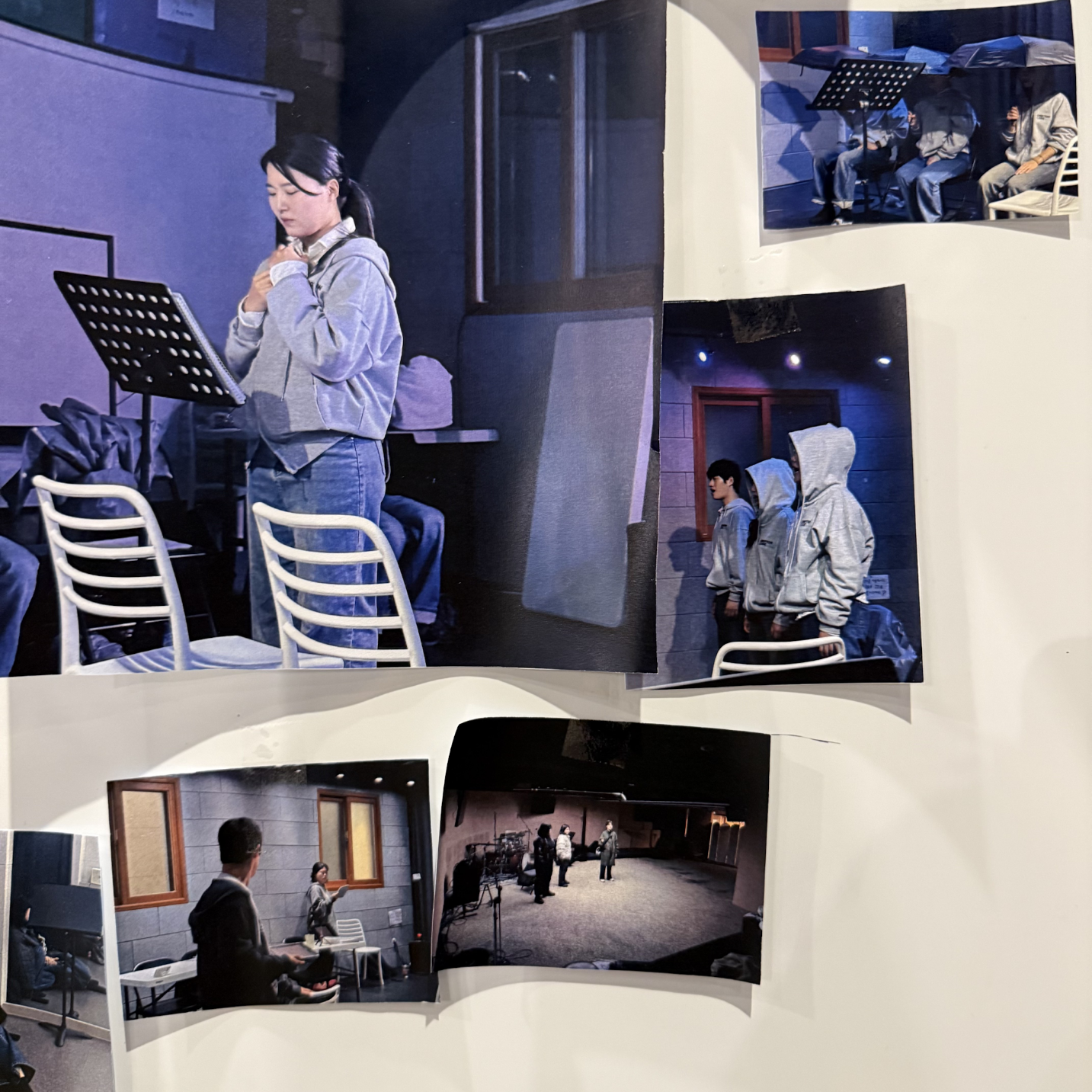
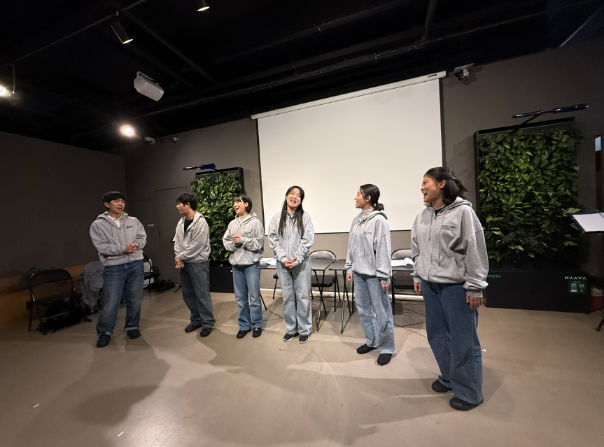
The stage was a remarkably small space. A rough table, a few chairs, a script. And that was all. No set, no costumes. Everyone dressed in the same uniform. The distance between stage and audience was uncomfortably close. And yet — perhaps because of that — a fully realized stage, complete with sets, props, and costumes, appeared more vividly in my mind. Because this was a showcase, my imagination stretched further than it ever might have otherwise.
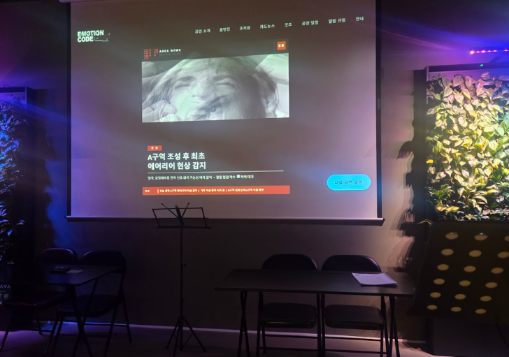
The moment the first number filled the room, I was already lost in it. From a modest basement theater, I found myself arriving — just like that — in The Area. The raucous number that played as the scene shifted from Zone A to Zone D sent a charge through my entire body. The people on the train, the landscape of Zone D, a solitary light, the clamor, the driving rain — it all unfolded right before my eyes. Jung-a's voice, low and murmuring, lingered in my ears long after the curtain fell.
Though the numbers were new to me, something in them felt familiar — a chord I somehow already knew. Some might call it predictable. But the ability to evoke that feeling is precisely the power this work holds. When a debut original musical makes its audience feel something so naturally, it speaks to the universality at its core.
An Equal Exchange Between Emotion and Efficiency
The world Emotion Code depicts is a near-future where a single emotion-control chip is all it takes to suppress what one feels. An era that has crowned efficiency its only answer. In this world, where AI holds editorial power over the news, no story that might stir fear is permitted to exist. Zone A — its residents chipped into stillness, unmoved and at peace — is a dystopia wearing the mask of a utopia. The logic of capitalism, where efficiency is the only currency, has finally extended its reach into the human interior. How did humanity — once the very symbol of triumph — come to willingly place itself in danger of its own destruction?
This work is set in the near future — but more than anything, it offers a precise diagnosis of the present. It explores how technology, reaching beyond mere convenience and efficiency, comes to shape our emotions and memories, and asks a fundamental question about the value of feeling itself. We are already living inside algorithmically engineered emotional stimulation. Outrage drives clicks. Sorrow drives shares. Joy is converted into likes. The dystopia Emotion Code speaks of is closer than we think.
— 에리히 프롬, 『희망의 혁명』
"A human being who has lost his humanistic values concentrates only on technical and materialistic values, and has lost the capacity for deep emotional experience and the joy and sadness that come with it." — Erich Fromm, The Revolution of Hope
This sentence was written decades ago — and yet it describes the world of Emotion Code with uncanny precision. Emotion Code stages a world that has voluntarily surrendered its capacity for joy and its capacity for grief. A society that has handed over to a single chip the things that must never be forgotten, the memories that must never go numb. For a society to function properly — and for a life to remain human — emotion and memory are not optional. We must protect our sovereignty over feeling, if only to remain human. We must be able to rage, to grieve, to long, and to love.
The Power to Break the Fourth Wall
How do we define "good actor"? Perhaps, if an audience finds themselves drawn in without quite knowing why, it means the performer carries some force that reaches them — without their permission. When there is no set, no costume, there is nothing left to rely on but the actor and the script. And when the distance between performer and audience is close enough to feel like a burden — it was, for me. In the early moments, I found myself smiling deliberately, wanting somehow to send encouragement across that narrow space.
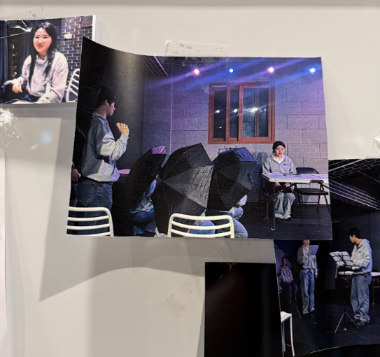
But before long, I realized I had been so absorbed that I hadn't even noticed my brow had furrowed. Not from dissatisfaction — I had simply been pulled into the story. It was the raw energy that the showcase format itself generates, meeting the concentrated intensity pouring from the actors, that produced this immersion. I find myself already looking forward to how much more powerful this work will become when it takes the stage in full.
A Production Cultivated Through Sweat: Geukjangjeon
Emotion Code was produced as part of Geukjanjeon (劇場田), an incubating program run by Yohangza Theater Company. The name Jeon is written with the character for "field" (田) — signifying that this theater cultivates the work of diverse directors and writers within its walls. Production teams perform at Yohangza Theater; Yohangza Theater Company provides a modest production budget; and ticket revenue is shared with the performing company. It offers creators the three things they need most — all at once: space, time, and a first audience.
Farming is not a solitary act. It asks for tending through an entire season before anything can be harvested. It is hard to imagine a more fitting metaphor for what it means to make a performance. A finished work belongs to no single director, no single writer. It takes shape only through countless hands and countless eyes. Geukjanjeon is the soil that makes that process possible.
What Emotion Is
Emotion Code brings a world that controls emotion to the stage in the most emotional way possible. It explores the feelings and memories that are forgotten in a rapidly advancing society, and invites us to look again at the intrinsically human emotions being buried beneath technology. The question they ultimately put to the audience is this: what is true emotion?
I left the theater with a warm feeling — the particular gladness of encountering a genuinely good original musical after a long while. I find myself waiting for the day this work returns to a fully realized stage. And when that day comes, I want to be there again — as one of the first audience members ever asked that question. I hope there will be more programs to support the imaginations that sustain work like this. And I hope the creators who ask such honest questions will be given a longer life on stage.
Director Seul Lee (이슬) Playwright Hyunkyoung Yoon (윤현경) Composers Sunhye Yoon (윤선혜) · Jaeheon Yoo (유재헌) Assistant Director Sumin Lee (이수민) Dramaturg Yurim Son (손유림) Choreography Director Hyeju Han (한혜주) Music Consultant Hanju Lee (이한주) Cast Gaeun Kim (김가은) · Hanju Lee (이한주) · Hyungyu Lee (이현규) · Hyerim Yoo (유혜림) · Jihye Lee (이지혜) · Hyeju Han (한혜주) Production Yohangza Theater (극단여행자)
