
The 'series' format, where multiple episodes are interconnected, holds a powerful advantage by keeping the audience curious about the next installment and creating a sense of continuity. By weaving works into a shared universe, it fosters a dedicated fandom, allowing audiences to immerse themselves deeper into the story and enjoy it from various perspectives.
Today, we take a look at Daehakro’s representative biographical musical series: Nijinsky, Diaghilev, and Stravinsky. Produced by Showplay, this biographical trilogy began with the premiere of Nijinsky in 2019. Its success continues today with the third run of Diaghilev currently on stage and the upcoming second run of Stravinsky opening this June, securing a solid fan base and a string of box-office hits.
The three series are based on the true stories of the Russian ballet company "Ballets Russes," with each production focusing on the lives of Vaslav Nijinsky, Sergei Diaghilev, and Igor Stravinsky.
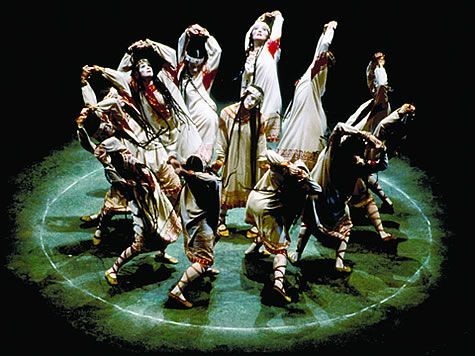
The overall story encompassing the three series is as follows:
Diaghilev and Benois, who met during their days as law students, founded the legendary ballet company 'Ballets Russes' alongside composer Stravinsky and the genius dancer Nijinsky. They reached their artistic peak, taking all of Europe by storm with the massive success of their production, Petrushka. However, the solid bond between the four began to crack when their new work, 'The Rite of Spring'—a project born from Diaghilev’s total support of Nijinsky’s experimental choreography—ended in a disastrous failure.
The conflict between Diaghilev and Nijinsky reached a breaking point due to their differing artistic convictions. Ultimately, Nijinsky left the company and chose to marry, leaving Diaghilev with a profound sense of betrayal. Driven by rage and obsession, Diaghilev blocked Nijinsky’s path at every turn. Years later, he reunited with Nijinsky in a psychiatric hospital—a man who had lost all his memories and longed only for dance. In that moment, Diaghilev looked back on their past and the entire legacy of the Ballets Russes.
The three series unfold this story from each character's unique perspective.
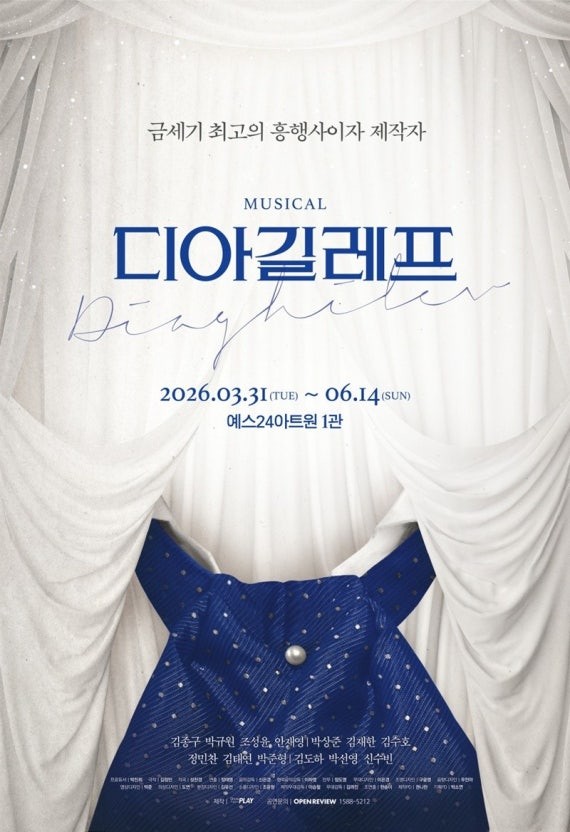
Musical Diaghilev begins in the form of a retrospective, with Diaghilev writing a letter to Nijinsky 13 years later. Questioning what remains of the years he spent creating ballet, he returns to the very first day of the Ballets Russes. The show chronicles meeting Benois at university, recruiting Stravinsky, and the breathtaking moment he first saw Nijinsky. It dramatically portrays a man’s life—his love for ballet, the heavy responsibility and decisiveness required as the director of the Ballets Russes, painful memories of past trauma, his love and separation from Nijinsky, and his eventual regrets. In the final number, he bids farewell to the memories that kept him alive, singing:
"If the things I loved can be loved by others, that is enough for me."

Musical Nijinsky captures the same timeline through Nijinsky’s eyes. It lists the beginning of his dancing career, the reason he had to stop dancing after Petrushka to focus on choreography for The Rite of Spring, his feelings of betrayal toward Diaghilev, the narrative behind his sudden marriage, and the endless despair and frustration leading up to his memory loss. To Diaghilev, who visits him at the asylum, Nijinsky says, "I need nothing. I only need to be able to dance." His final lyrics are:
"I need nothing; just the one version of me that dances is enough. I am everywhere."
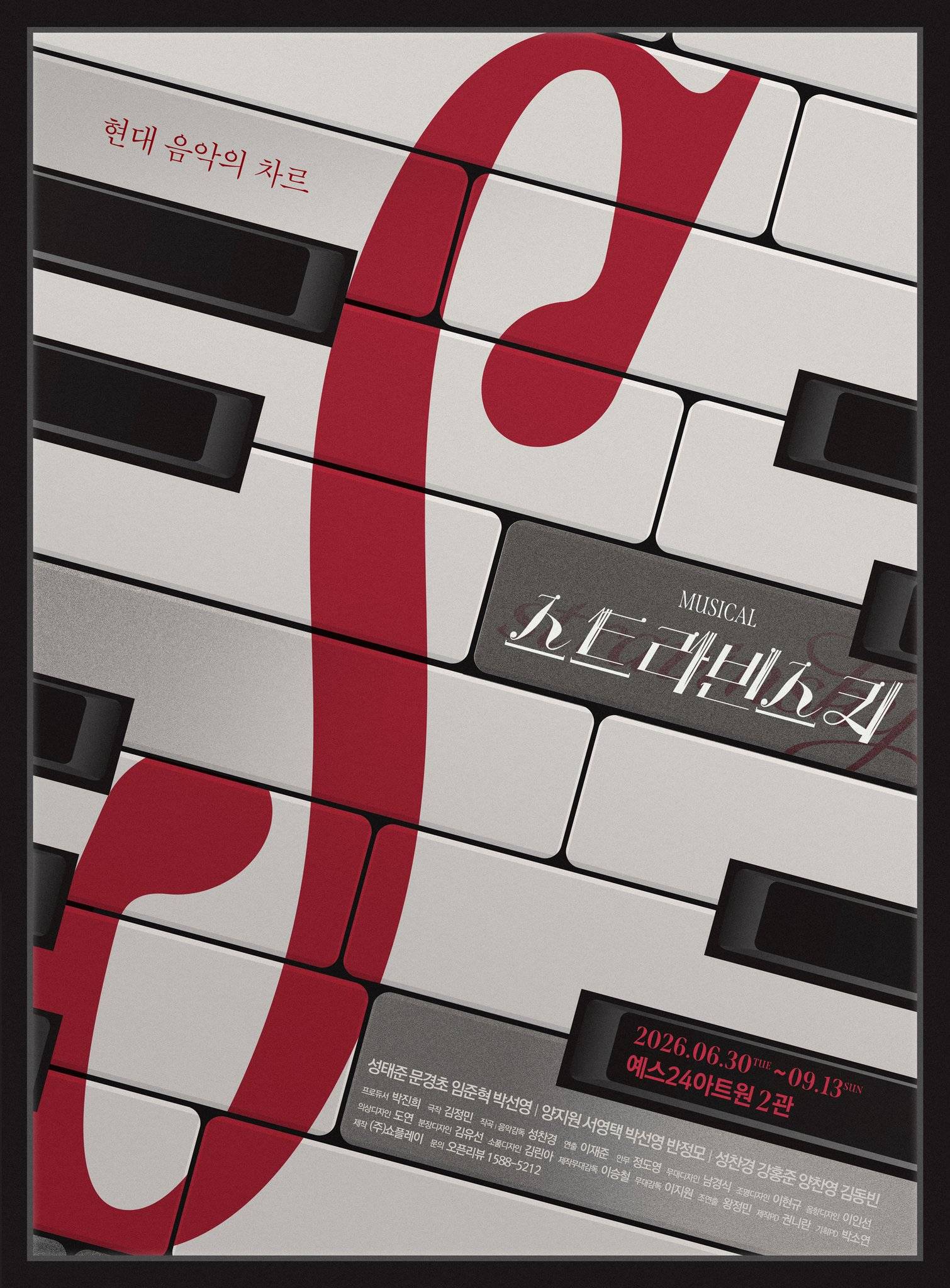
Musical Stravinsky takes a different approach. It begins from the perspective of Stravinsky, who has temporarily settled in Switzerland to escape the whirlwind of war. The play features two characters: Stravinsky and a fictional character named 'Schum,' who represents his internal conflict. In the face of poverty and a lack of income, Schum tells him to give up music, while Stravinsky evokes past stories to prove his musical worth. During this process, anecdotes of his time with Nijinsky and Diaghilev are mentioned. The audience can feel Stravinsky’s sincerity, process, and agony regarding his music. In the end, he sings with his own "noise"—which was himself all along:
"Infinite life, infinite possibilities, infinite sound that I will never let go of until the day I die."
As such, the depth of the story expands by intersecting the perspectives of various characters looking at the same events. Musical connections further strengthen this narrative bond. All numbers across the three series are composed by Sung Chan-kyung, and they share common melodies to enhance the storytelling. For instance, the melody of "Everywhere," Nijinsky’s final song, is embedded in the accompaniment of Stravinsky's finale. The number "Memory," which appears in both Nijinsky and Diaghilev with slightly different arrangements, is layered into the final bars of Diaghilev’s ending number, adding emotional weight to both characters' arcs.
Finally, the charm of the series can be felt through the stage design. On the Diaghilev stage, which unfolds like an arched theater, one can find a distinctly tilted section. This serves as a nod to the asymmetrical stage of Nijinsky and is used as Nijinsky’s personal space during the performance. Stravinsky interprets the stage itself as a piano, placing four pianos on set to powerfully reveal the story and characters.
You can experience this fascinating series through , currently playing at Yes24 Art One, and the soon-to-open. Come discover the real-life 'Ballets Russes', the art of ballet, and the magnificent music within these plays, and enjoy the interconnected narrative of this trilogy.
