

1. A Shocking Premise and Narrative
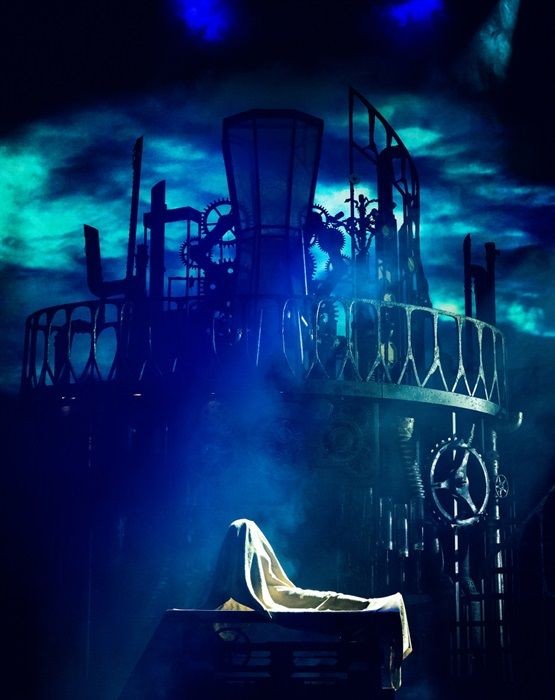
The musical Frankenstein makes a powerful impression from the very beginning. Set in a time where war and death have become part of everyday life, the story follows Victor, a scientist obsessed with creating life artificially. His desire to overcome death gradually turns into obsession, and he ultimately succeeds in bringing a new being into existence. However, the moment he faces his creation, he is overwhelmed by fear and confusion, abandoning it entirely. This moment raises a critical question: if humans gain the power to create life, are they truly capable of taking responsibility for it?
The idea of “creating life” goes beyond mere horror. The creature, assembled from dead bodies, not only delivers a strong visual shock but also reveals the extent of human ambition. Yet the outcome of this ambition is far from hopeful. The abandoned being is repeatedly rejected by society, and as a result, gradually transforms through anger and suffering.
Ultimately, this work does not remain a simple monster story. Instead, it becomes a narrative that traces the consequences of human choices and the tragedy that follows. The birth of the creature is not the end, but the beginning one that leads to a series of events shaped by human decisions.
2. What Defines Good and Evil?
What makes this work particularly compelling is its refusal to draw a clear boundary between good and evil. We often approach stories with a simple assumption: the monster is evil, and humans are good. However, in the musical 프랑켄슈타인, this distinction quickly collapses. Instead, the characters continuously move across this blurred boundary, prompting the audience to reconsider their assumptions.
Victor is a figure who succeeds in creating life, yet he is also one who abandons responsibility for his creation. He leaves the creature out of fear and confusion, and cannot escape the consequences of that decision. In contrast, the creature is not inherently evil. It simply longs to be accepted and to connect with others. However, through repeated rejection and exclusion, it gradually accumulates anger and despair, eventually leading to extreme actions.
This contrast is further emphasized through the musical’s unique use of dual casting, where one actor portrays two different roles. Through this device, the boundary between human and monster becomes increasingly blurred, revealing that good and evil are not absolute. Watching the same face embody entirely different choices and outcomes forces the audience to confront the complexity and contradictions within human nature.
Ultimately, the musical does not simply distinguish between good and evil it questions the very basis of that distinction. Some may see the monster and think of evil, while others may look at humans and recognize cruelty. And somewhere in between, we arrive at a fundamental question: who, then, is the true monster?
3. Why Do We Empathize with the Monster?
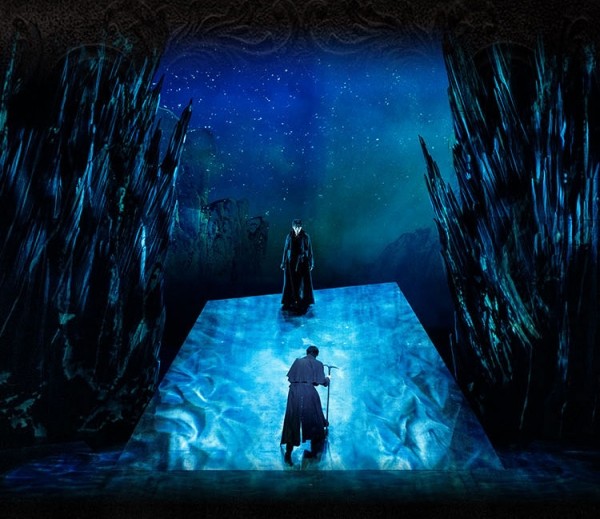
So why do we empathize with the monster? The answer lies in something surprisingly simple and deeply human. The creature is not extraordinary from the beginning it merely longs to be accepted and loved. However, the reality it faces is harsh. It is repeatedly rejected solely because of its appearance, and through this process, it accumulates deeper and deeper wounds.
These experiences go beyond mere pain they lead to a denial of existence itself. In a world where it is never accepted no matter how hard it tries, the creature gradually isolates itself and begins to harbor anger and despair toward the world. This transformation does not happen suddenly, but is shaped over time through repeated rejection and neglect.
At this point, the audience can no longer see the creature as something entirely foreign. We have all experienced moments of rejection and isolation in our lives,times when we were misunderstood, pushed away without reason, or unable to be accepted despite our efforts. Because of this, the monster’s emotions feel not distant, but deeply familiar.
We empathize with the monster not because it is extraordinary, but because it resembles us. It may not be an entirely different being, but rather a reflection of human emotions taken to their extreme. That is why we both fear and understand it, and why we cannot simply turn away from it.
This empathy lingers long after the performance ends. We may think we have come to understand the monster, but perhaps, in that moment, what we truly understand is humanity and ourselves.