
Today, it’s hard to find anyone who doesn’t use AI. From making investment decisions and picking lunch menus to providing psychological counseling and generating dream-like images, AI has become a "magic wizard" in our daily lives. We often enjoy its clever tricks, yet the moment it seems to cross a line—encroaching on activities we consider uniquely human—we quickly turn a cautious and critical eye toward it.
In this article, I want to explore the meeting between non-human entities and the world of theater. Theater is a medium that is human-driven from start to finish and, above all, smells of "humanity." By looking at how AI is being used in this field, I hope we can reflect on how we, as both audiences and creators, should treat and interact with AI in the world of art.
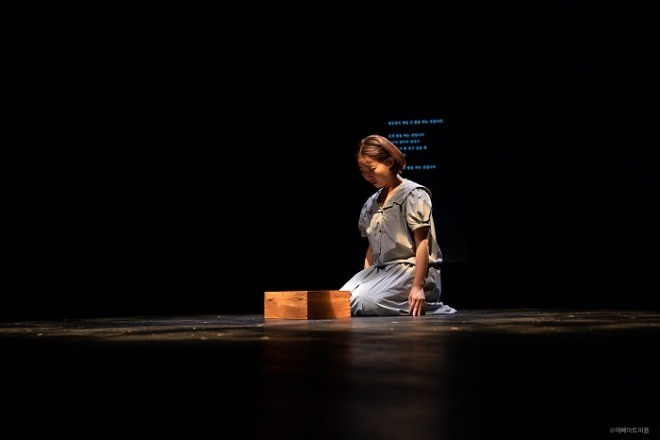
First, let me introduce SIA, an AI—not a singer, but a poet. Developed by the media art group SlitScope using KoGPT, SIA learned to write poetry by reading encyclopedias, news articles, and about 10,000 poems. The play Paphos is a production based on poems written by SIA. The directors refined SIA’s work and collaborated with ChatGPT to write the script. In this case, AI became a "co-creator" with humans.
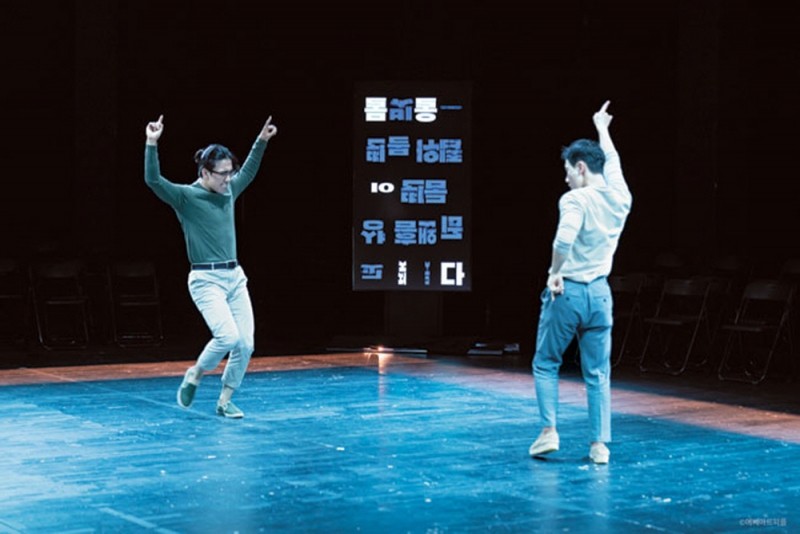
Some audience members found it difficult to understand or felt a sense of emptiness upon learning the writer was an AI. Others felt a double-edged emotion: the belief that AI can never replace humans, yet at the same time, the realization that it will expand our boundaries.
Set in a dark, "black box" theater where the audience surrounds the stage on all four sides, the play captures the uncertain, probabilistic state of whether SIA’s poems truly hold meaning—precisely because AI does not feel the "agony of creation" that humans do.
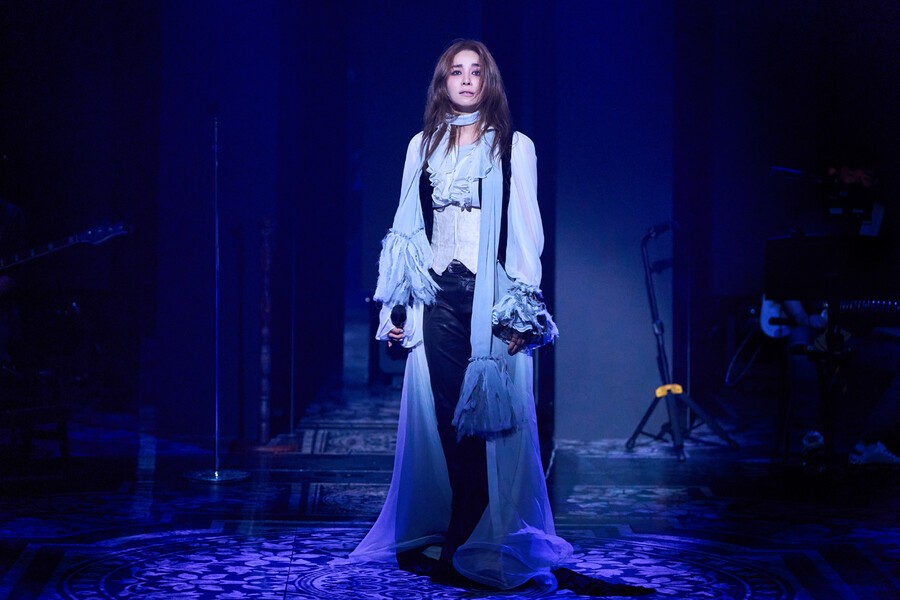
Then there is Voice of Hamlet, a musical that reimagines the classic story as a rock concert. This one-person show, featuring industrial and fusion rock, meets the audience through the perspective of Hamlet telling his own story after death. Although four different actors play Hamlet, the 80-minute performance is filled with music that drives the entire show.
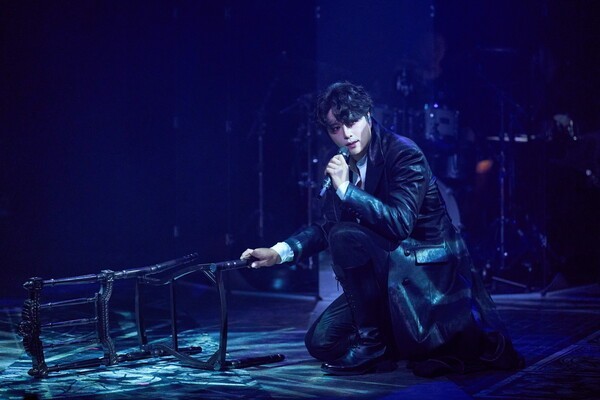
AI played a crucial role here in both playwrighting and composing. It wasn't a "magic button" where a prompt instantly produced a finished song; rather, the creators spent two years in a continuous dialogue with the AI to complete the music. Like a true partner, AI was part of the long process toward a single shared goal.
Ultimately, these cases don't ask the old, fearful question: "Will AI replace humans?" Instead, they ask: "How far can human imagination expand through the mirror of AI?" Just as Paphos questioned the meaning of creation through probabilistic language, and Voice of Hamlet reinterpreted a classic through long-term digital dialogue, art is entering a new phase of "collaboration with non-human entities." The confusion or emptiness we feel when watching AI’s performance might be a natural instinct to protect the purity of art.
However, isn't that strange, new sensation the most modern stimulus we have? It forces us to redefine our attitude toward art. Rather than feeling threatened, if we face AI as a partner that broadens our creative horizons, the theater will become a true "black box"—one that captures not just the smell of humanity, but the very breath of our changing times.
svintau
