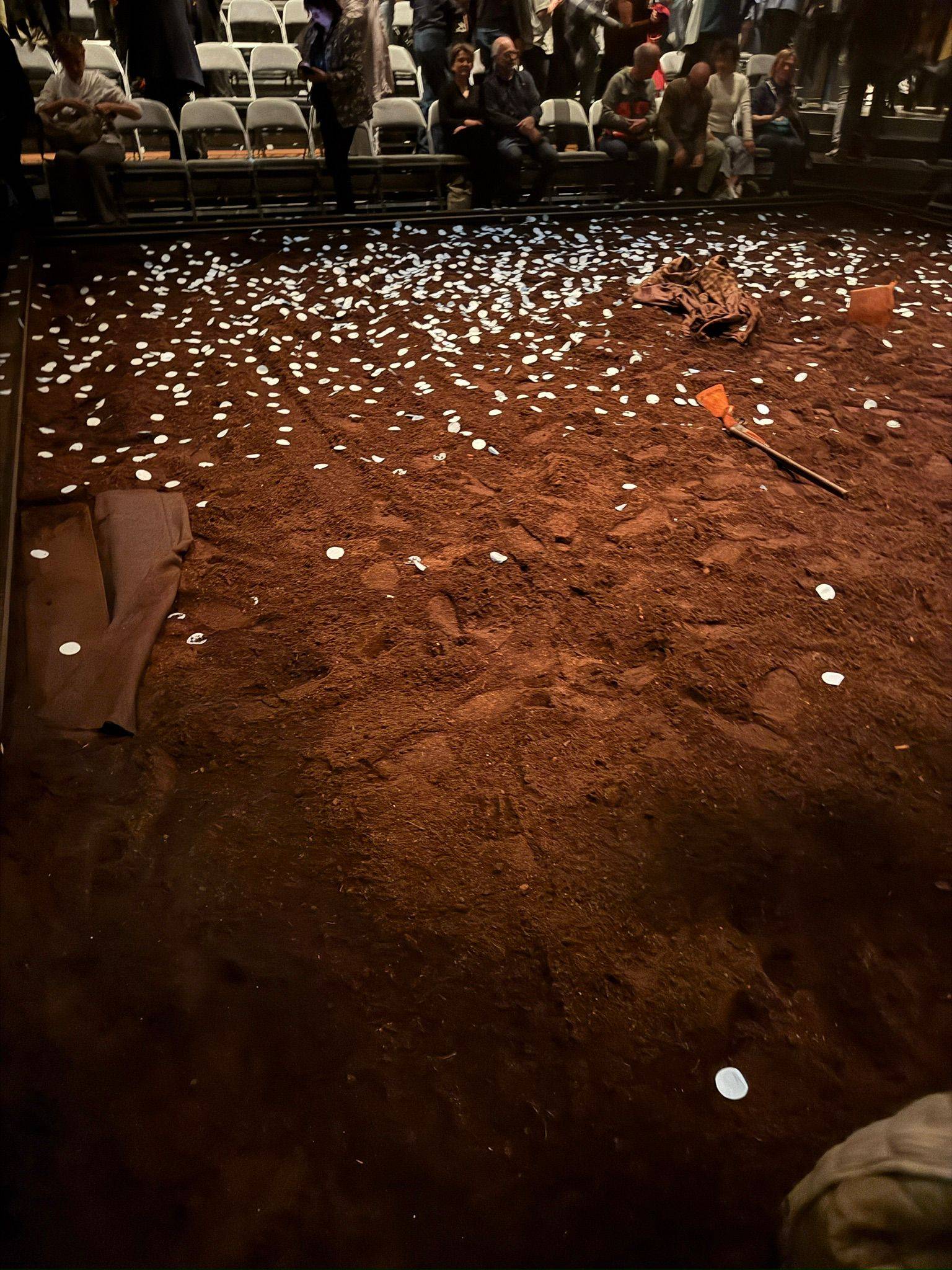
As usual, I walked into the theater without even reading the synopsis, having no clue what the story was about. The performance took place on a stage surrounded by the audience on all four sides. The floor was covered in soil, though it was hard to tell at first because it was so dark when I entered. To see the English subtitles, I had to sit in the section opposite of the entrance. Since I was running a bit late, there weren't many seats left, so I ended up in the very back row. Luckily, the raking of the seats was good, so I could see everything clearly even with a man sitting in front of me.
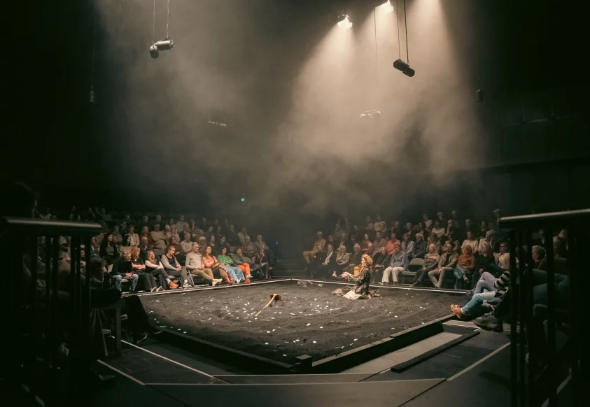
The play began with an elderly female actress sitting on the dirt floor. As she started her monologue, it was easy to guess that the setting was the countryside. While her family is away, the woman goes for a walk with her dog, and that's when it happens: a massive, invisible wall suddenly appears, cutting her off from the rest of the world. She waves to a person in the distance, but there is no response. From this point, her survival story begins. She lives by farming and hunting and starts raising animals along the way. She tries her best to live ethically and minimize killing within nature. However, towards the end of the play, a strange man appears and kills her dog, leading her to shoot and kill him in return.
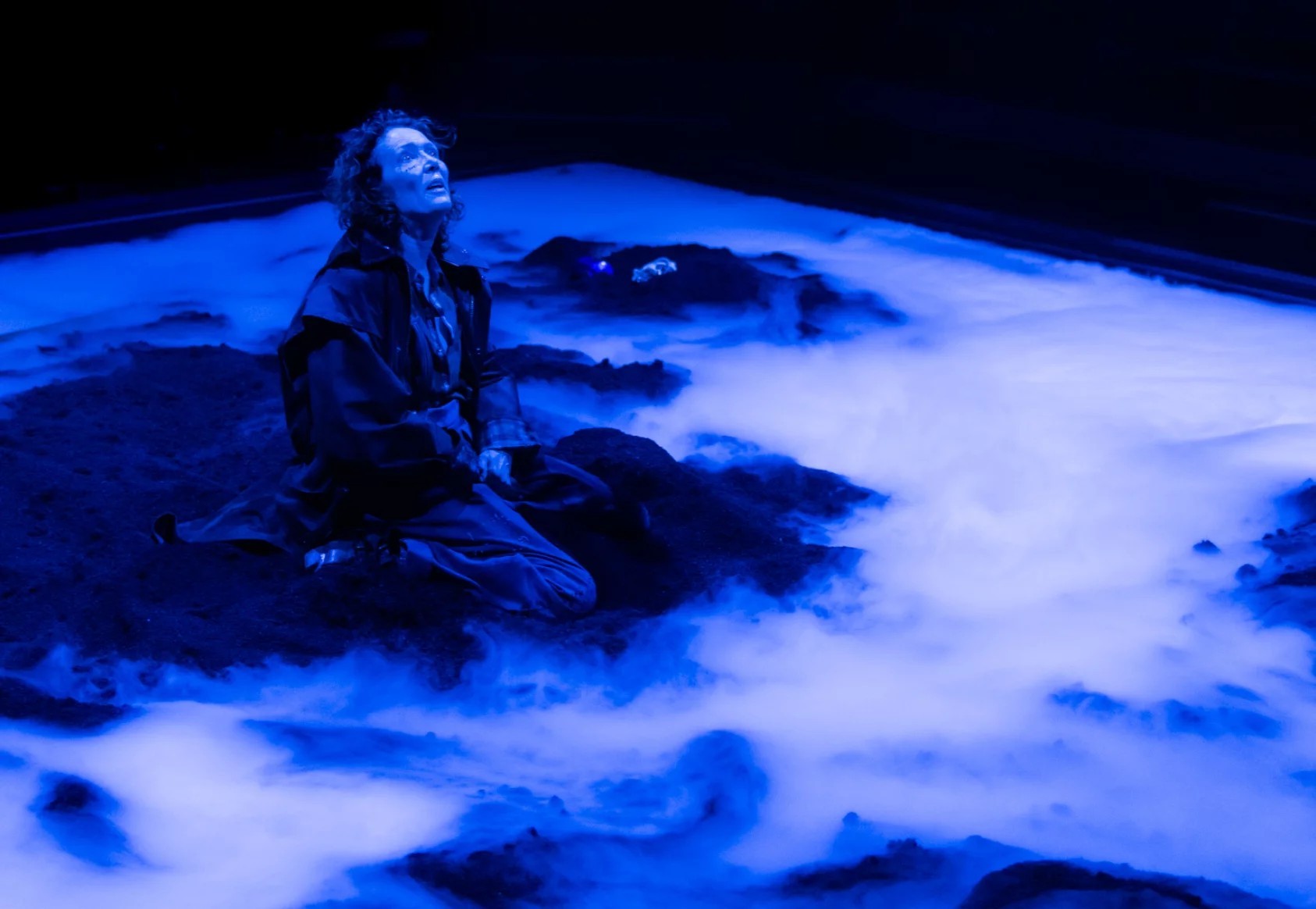
Just like in her previous works I’ve seen, Eline Arbo makes great use of stage effects. You can see the effort put into recreating natural weather on stage using water, smoke, light, and sound. These elements allow the audience to feel nature right along with the protagonist. Watching the play with all these effects made me feel a sense of awe at how she survives within nature. We see this lonely character, who has to embrace the pain inflicted by both a mysterious barrier and nature itself, finding comfort in the "gifts" that nature provides. Her raising of various animals felt like it was part of that same context—though she is forced to kill sometimes, she also cares for and embraces other living beings. The man who appears at the end makes you think about humanity all over again. She struggles with the question of why he did what he did, which felt like a device to make the audience reflect on human nature as well.
I’m still struggling a bit with having to glance back and forth between the subtitles and the stage, but it was a great opportunity to see a piece that was so highly acclaimed last year. I’ll wrap this up with a quote from the director:
"The woman in the book is a survivor, she exudes incredible strength. At the same time, it is precisely her gentle relationship with nature – the earth and the living beings around her – that makes the book so wonderful. Caring for other life gives her existence meaning in a hopeless world. It is a story about the relationship between humans and nature, about empathy and caring for another."