
In recent years, the performing arts world has moved beyond simple automation. AI is now expanding its presence as a co-creator that exchanges creative inspiration with humans, and even as an actor that commands the stage itself.
The Breath of Algorithms on Stage
The Korean original musical <Voice of Hamlet> serves as a symbolic marker of this shift. In a rare move for a musical, AI was deeply involved in the core stages of scriptwriting and composition. Having analyzed Shakespeare’s original text, the AI reconstructed Hamlet’s internal agony with a modern sensibility to generate a script and proposed fiery rock-style numbers to match the cold, synthesized text.

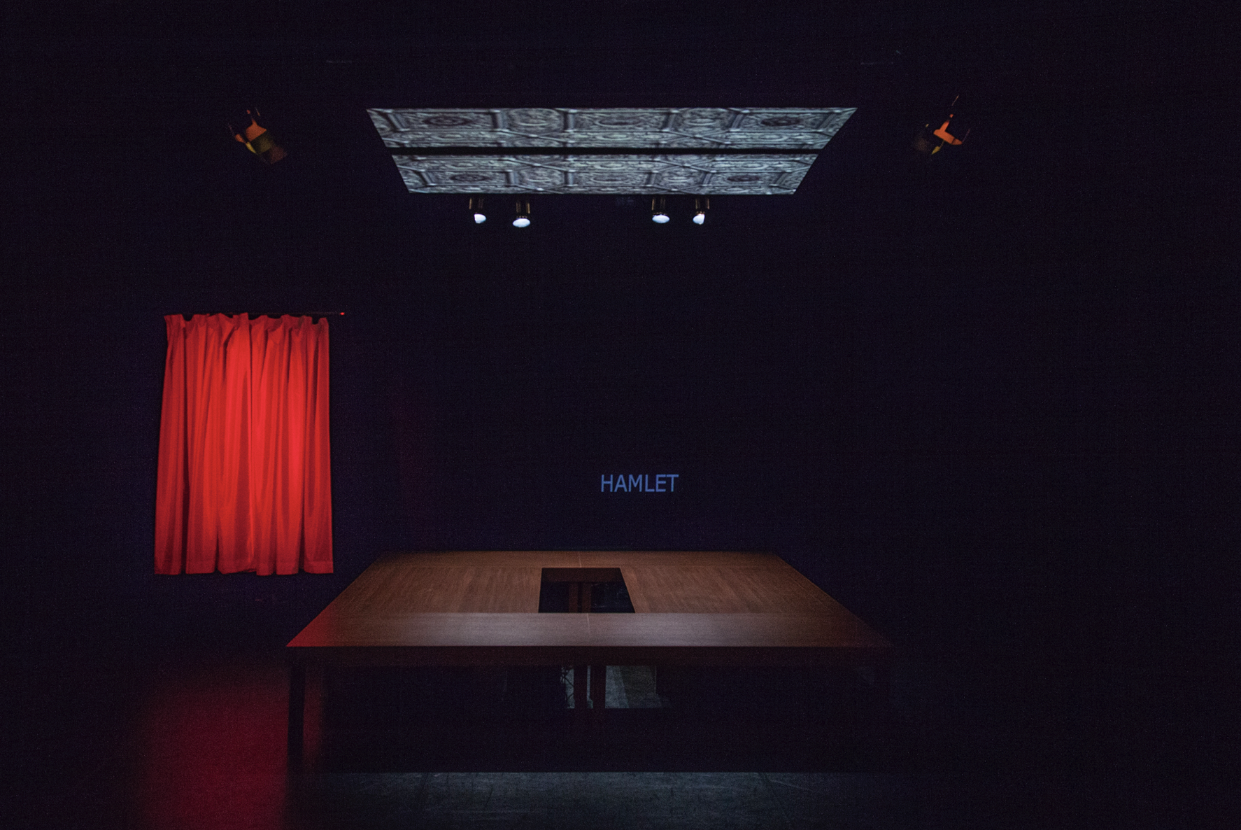
Looking abroad, the experiments become even more radical. New York-based director Annie Dorsen’s A Piece of Work has opened a new frontier called "algorithmic theater." There is no fixed script. Just before each performance, an algorithm combines and transforms the text of Hamlet in real-time, delivering it through speakers. In this surreal landscape where mechanical sounds perform on a stage devoid of human actors, audiences witness a "one-of-a-kind" performance born of chance every single night.
Between Admiration and Anxiety: Contrasting Views of Audience and Creator
The emergence of AI has sparked the most heated debate in the art world. Audiences stand somewhere between fascination and discomfort. While tech-savvy younger generations often welcome spectacular visuals and interactive staging as a new form of "experiential content," a lingering doubt about the "authenticity" of art remains. People still yearn for the raw, imperfect resonance of a human actor over the polished, perfect sentences spat out by a machine.
The voices from the field are even more complex. AI is a "magical tool" that drastically increases creative efficiency, yet it is also a massive obstacle threatening survival. While stage designers can now envision sets that overcome physical limitations through AI, actors fear their voices and movements will be reduced to data and consumed without consent. Furthermore, concerns regarding the technological polarization between major production companies and small theater groups, as well as the weakening of the "live energy" shared on stage, remain ongoing issues.
Toward Art That Asks ‘Why’ Instead of ‘How’ questions.
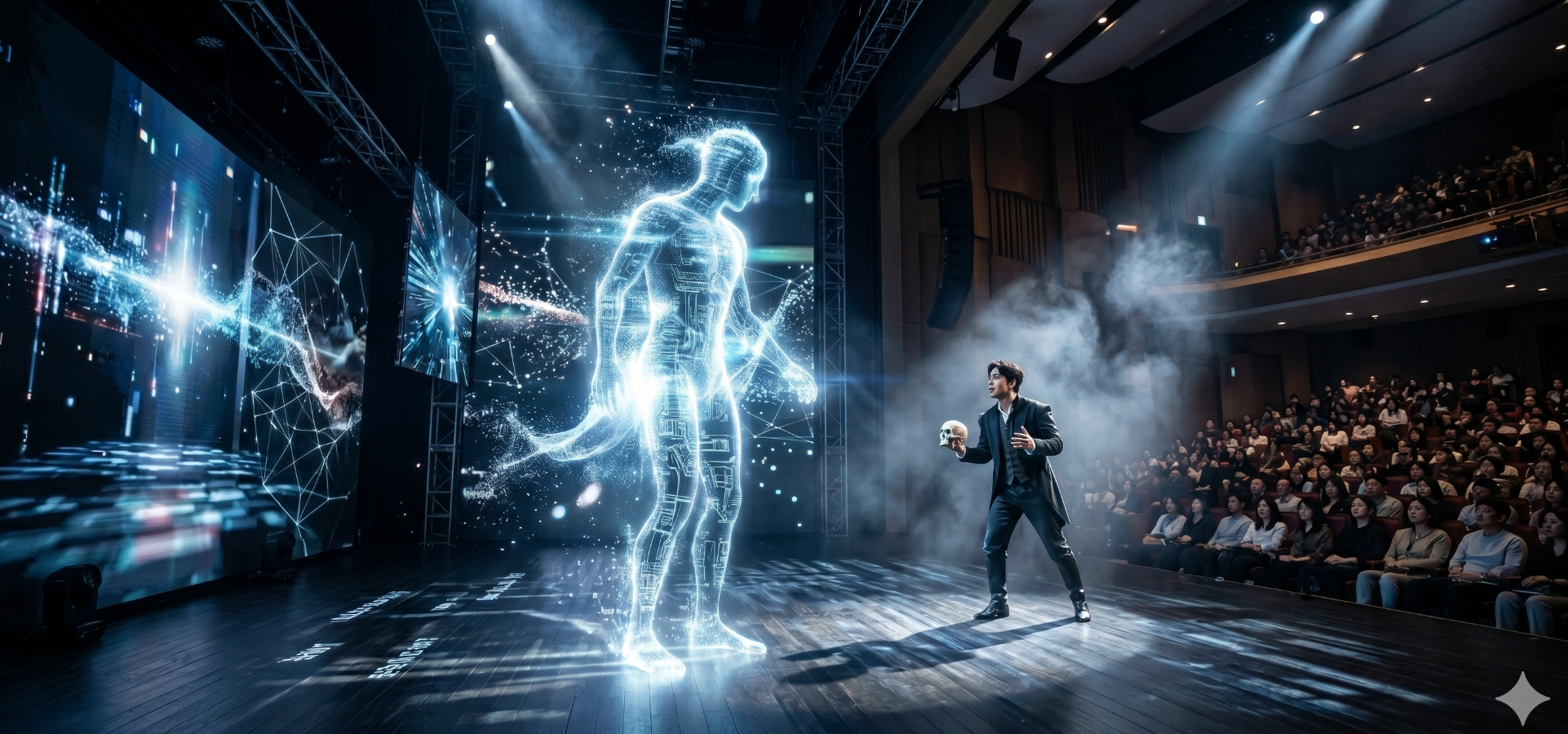
Ultimately, AI should not be a replacement for art, but rather the most powerful ally that allows artists to focus on more fundamental questions.
Every technology on stage is merely a puzzle piece meant to complete human art. AI can write sophisticated scripts and churn out perfect melodies, but breathing "soul" into that output remains a human responsibility. As technology eases the physical toll of creation, artists must now dive deeper into the realms that technology can never reach—the essence of life and the agony of being human.
If AI is a capable tool that solves the "How," defining "Why" a performance must exist is a task only a human can fulfill. When we refuse to be buried by technology and instead stand upon it to fiercely question the core of our existence, the stage will finally offer a sense of awe and emotion that transcends mere technology.