
We have been waiting for Lefty for a very long time. Now, he’s finally in the room.
Clifford Odets’ Waiting for Lefty is currently enjoying an extended Off-Broadway run at New York City's Classic Stage Company through December 6, 2026. Marking the directorial debut of stage and screen actor Steven Pasquale—who knocks it out of the park—this production unites a deeply cohesive creative team. The roster includes original music and arrangements by YELLER TOOTH, choreography by Susan Misner, scenic design by Scott Adam Davis, sound design by Palmer Hefferan, and lighting design by Mextly Couzin.
It’s so cool… almost dazzling to discover a new way to see a piece of theater you thought you already knew. Truthfully, I have never really felt deeply connected with this piece, until now. Even though I played the character of Grady back in my university days. Funny because, well that’s my name, and one does not meet too many Gradys. That particular scene has been cut for the current production, though trimming it is standard practice for most stagings of Lefty. Aside from cutting "The Young Actor" vignette (Episode V)—which removes Philips, Grady, and the Stenographer—this production keeps the rest of Clifford Odets' core text intact.
Odets is enjoying a welcome resurgence of late. London’s Almeida Theatre recently mounted a sold-out revival of his 1937 classic Golden Boy, directed by Sam Yates and starring Josh O’Connor (which is currently screening in cinemas via National Theatre Live). Meanwhile, Manhattan Theatre Club is bringing a Broadway revival of Awake and Sing! to the stage this December. For too long, it has felt as though audiences have forgotten what a powerhouse playwright Odets was, with his work largely relegated to university stages. It all comes back around.
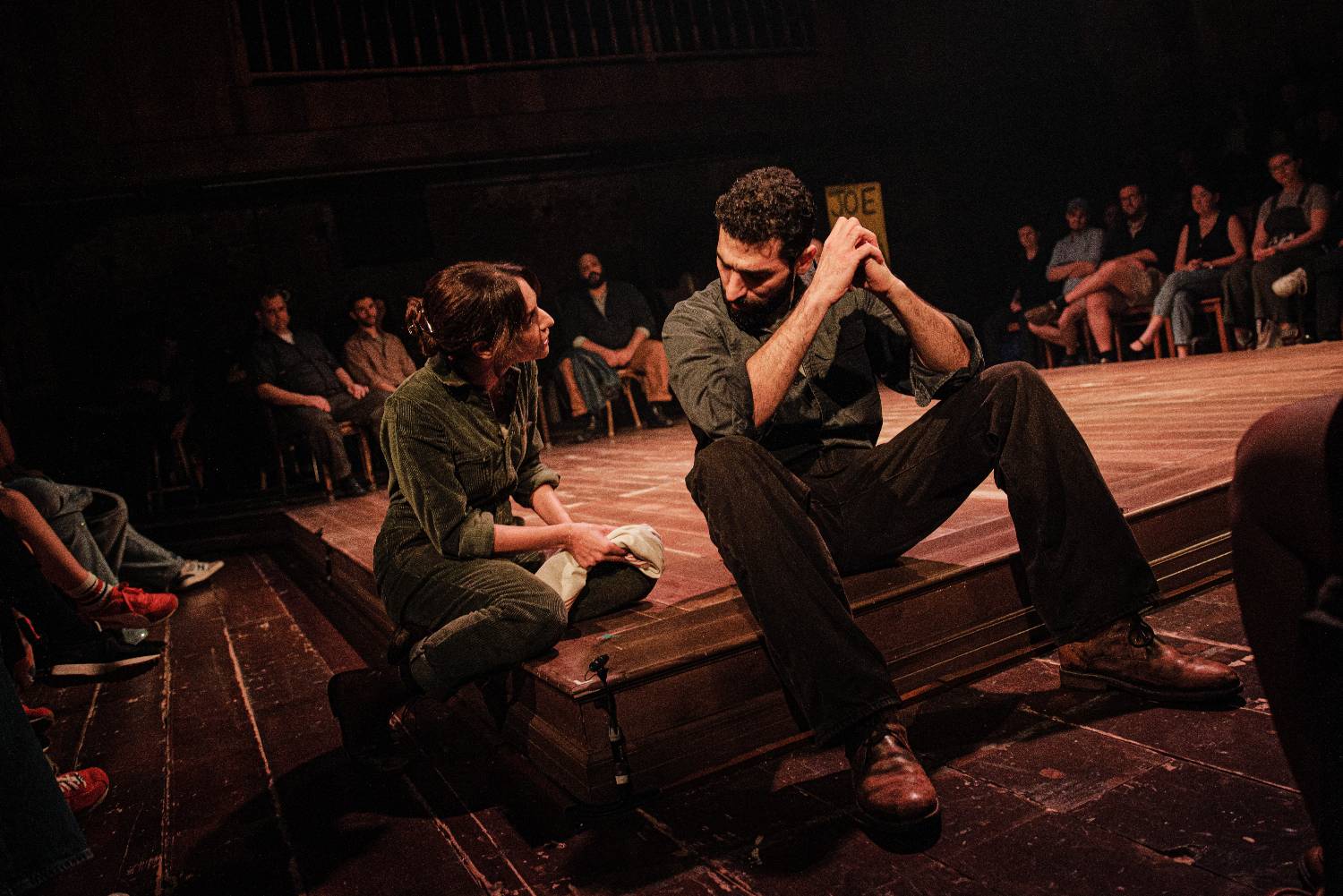
The play is at its core brutal, urgent, confrontational, occasionally vulgar, and unapologetically loud. It is a play about working people, injustice, dignity, and the collective struggle to be heard. Its characters gather in a meeting hall, taxi drivers debating whether to strike, while the individual stories of their lives unfold around the central question of whether they will finally stand together. First produced in 1935, the play put Odets on-the-map as a playwright. The play’s politics were unmistakable, and its anger was much on the surface.
And yet, what I encountered in this production was something I hadn't quite expected.
Space.
Space and quiet.
Who knew?
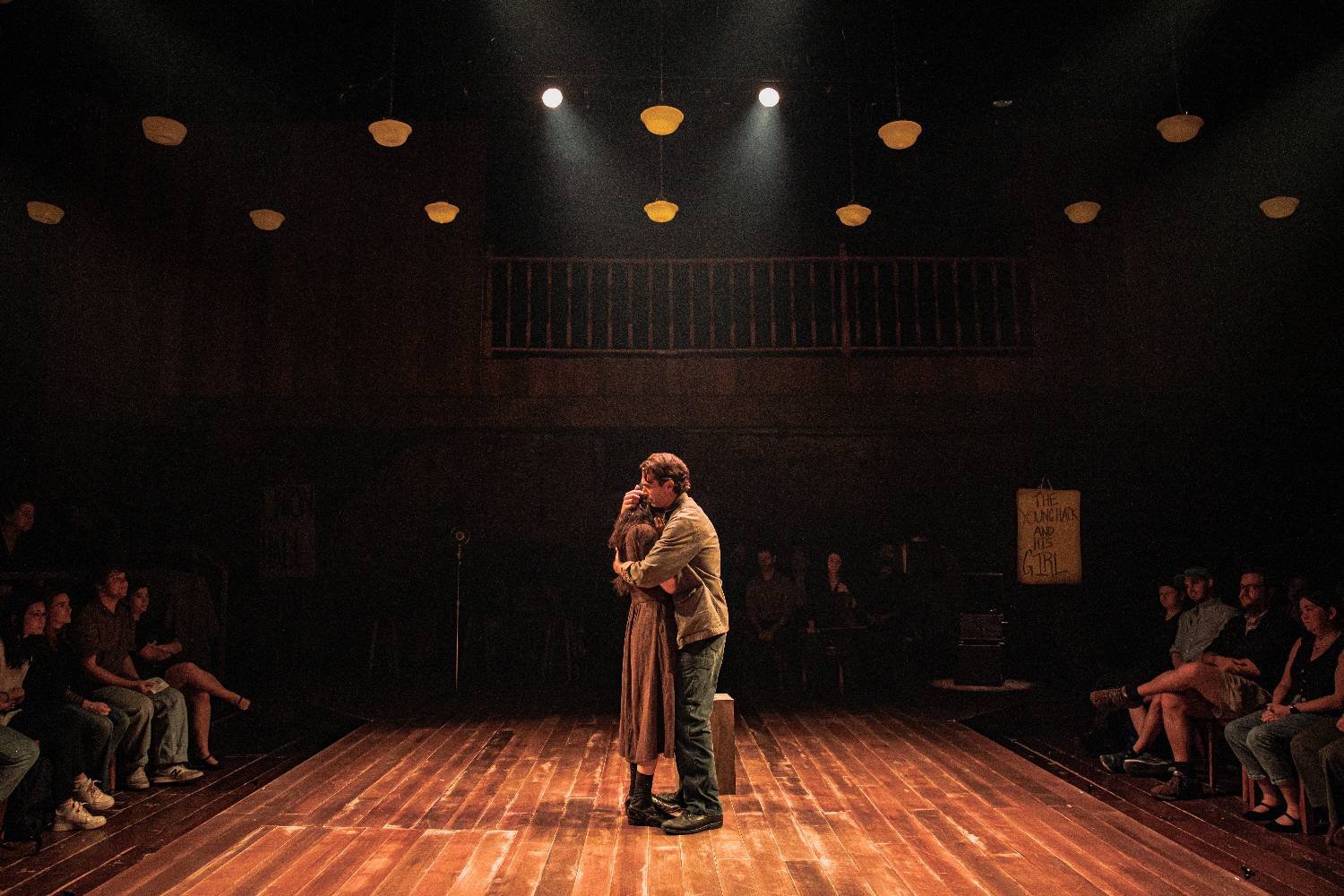
It wasn't the absence of anger. Not the dilution of its politics. It’s kind of quietness that makes the anger more visible, and humanity more accessible.I give the addition of songs and their arrangements much of the credit for this.
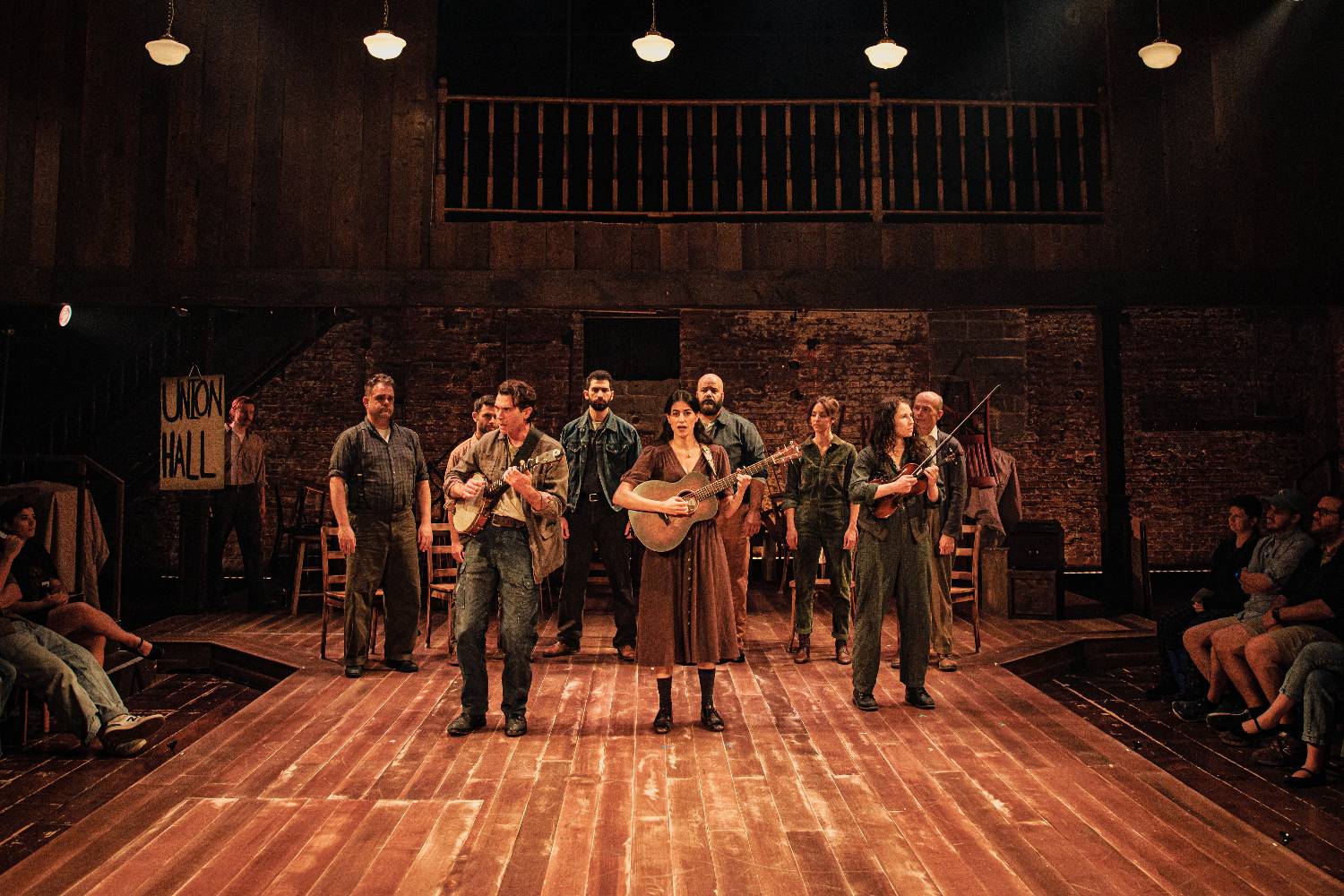
The set itself really establishes the language of the production. Designed with genuine care and thoughtfulness by Scott Adam Davis, the entire playing space is a town hall. Hardwood stretches across the stage, and the three-sided seating/framing feels oh so right. It draws the audience into the communal experience, making us feel less like observers and more like participants, as the actors address the audience throughout the meeting scenes.
Overhead, an array of hanging lamps—described in The New York Times as “42 fixtures, and arranged in a grid of upside-down, translucent, bowler-hat-shaped lights”—creates a compelling canopy of warm and cool textures above the stage. Paired with Davis’s staging, the effect is seamless, bathing the room in a deeply nostalgic atmosphere.
The sound and lighting design are, quite simply, flawless. They are never competing for attention, but working in such harmony. The lighting knows precisely when to reveal, when to isolate, and when to let the darkness do its own work. The sound is so expertly calibrated by Palmer Hefferan, allowing the voices, and instruments (a banjo, a guitar, and a fiddle) to inhabit the same space without ever overwhelming one another.The original music and arrangements are by YELLER TOOTH are expertly crafted , and Mextly Couzin’s lighting design is spot on - no pun intended.
With the entire company singing, the music becomes something more than an accompaniment. It becomes a collective heartbeat. There is an ease and elegance to it all that makes the musical elements feel as though they have always belonged here, and In my humble opinion - this made the production for me a definitive one. A blueprint not reborn, but remastered. Imagine a historical building whose original structure is respected, whose essential character remains intact, but which is granted permission to renovate, expand, and add an entirely new wing. Not to correct what was there, but to complete an idea that Odets had always been waiting to realize
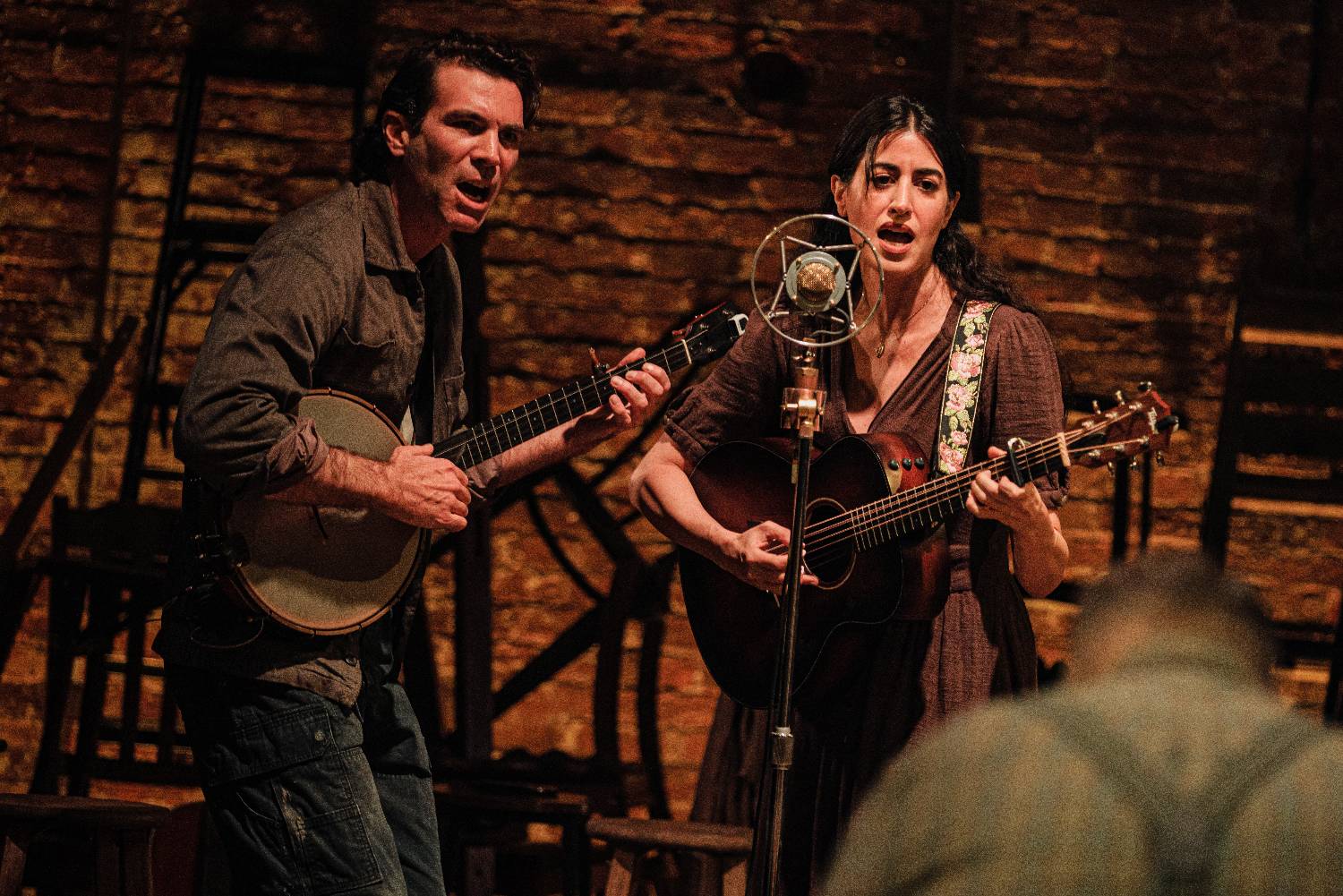
For all the toughness and volume of Odets’ writing, there is something remarkably tender and sorrowful about this interpretation—which brings me back to the music. Throughout the production, it stitches the individual vignettes together, creating a continuity that has always been missing for me in past stagings. The transitions become more than mere bridges between scenes; they carry genuine gravitas. Still, the moment that will stay with me longest arrives when the action stops altogether.
Slowly, three women in the company begin to sing “Bread and Roses,” the famous labor and women’s suffrage anthem based on a 1911 poem by James Oppenheim and set to music by Caroline Kohlsaat in 1917.
I have loved this song for as long as I can remember, thanks in no small part to Judy Collins’ recording, which I have listened to countless times. It carries a history, a sentiment, and a demand that extend far beyond the immediate circumstances of the play. Bread is the means to survive, while the roses offer beauty—and, more importantly, dignity: the right to something more than mere existence.
As they sing, the three women drift toward downstage center, meeting in a shared space anchored by the impressive musicianship of Sahar Milani, whose guitar work adds rich dimension. Her playing, paired with the effortless three-part harmonies, brought tears to my eyes; I found myself wishing the moment would go on forever. That sublime performance provides a thread that has always been missing from my experience of the play. There has long been something overwhelmingly masculine about Waiting for Lefty—so rooted in the language and physicality of male collective struggle that another side of its humanity can be easy to miss. This one’s for the ladies! (Now that’s a new one for Odets.)
Nothing about “Bread and Roses” feels decorative or like an obligatory gesture toward balance; it feels essential. The equilibrium between ease and tension is delicate—a fraction more or less, and the spell might break—but here, it lands with quiet perfection.
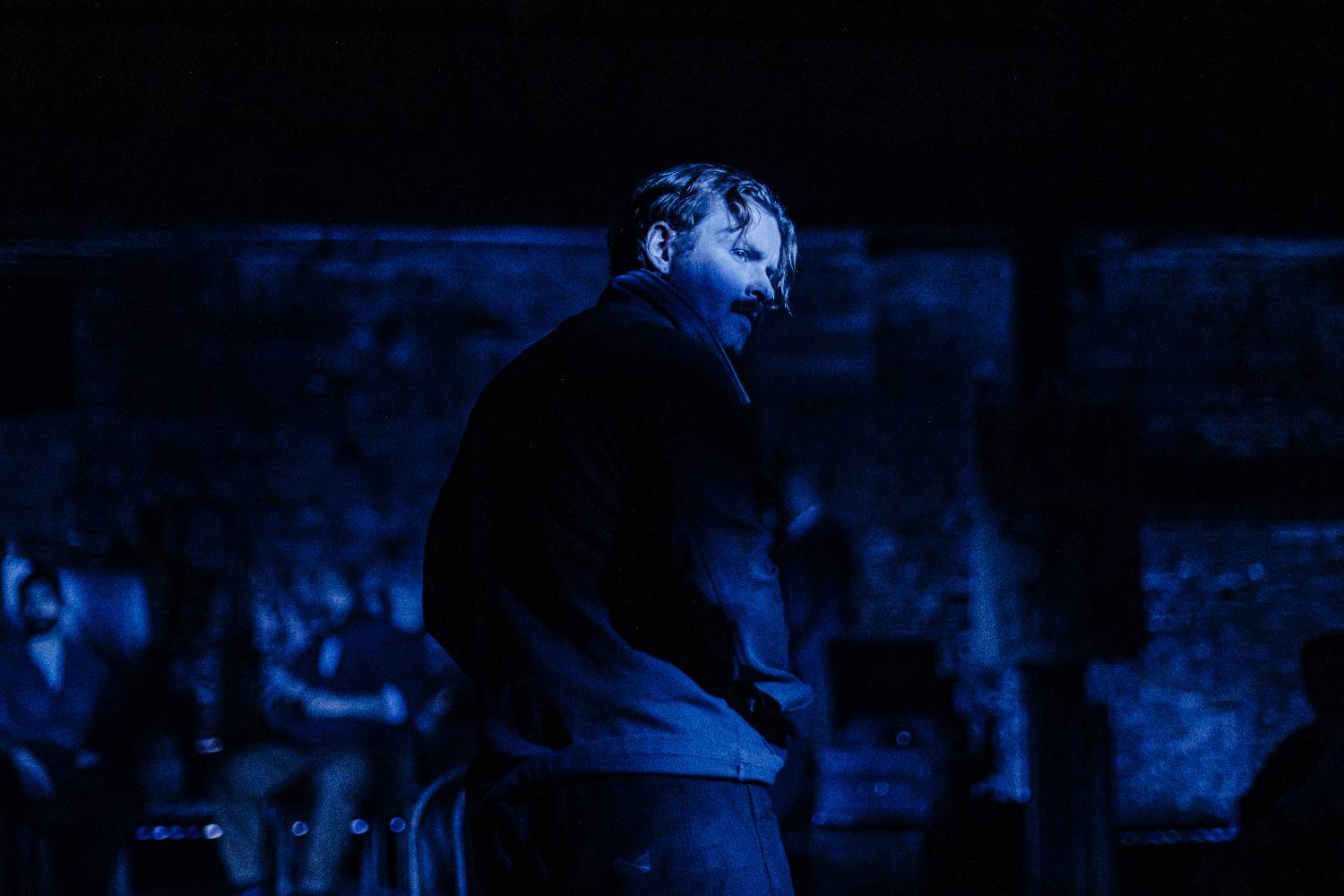
This is where the production's greatest achievement lies: its ability to make seemingly contradictory theatrical experiences coexist—the harsh and the sublime, the withered and the beautiful, the brutality of the struggle and the tenderness of the people engaged in it.
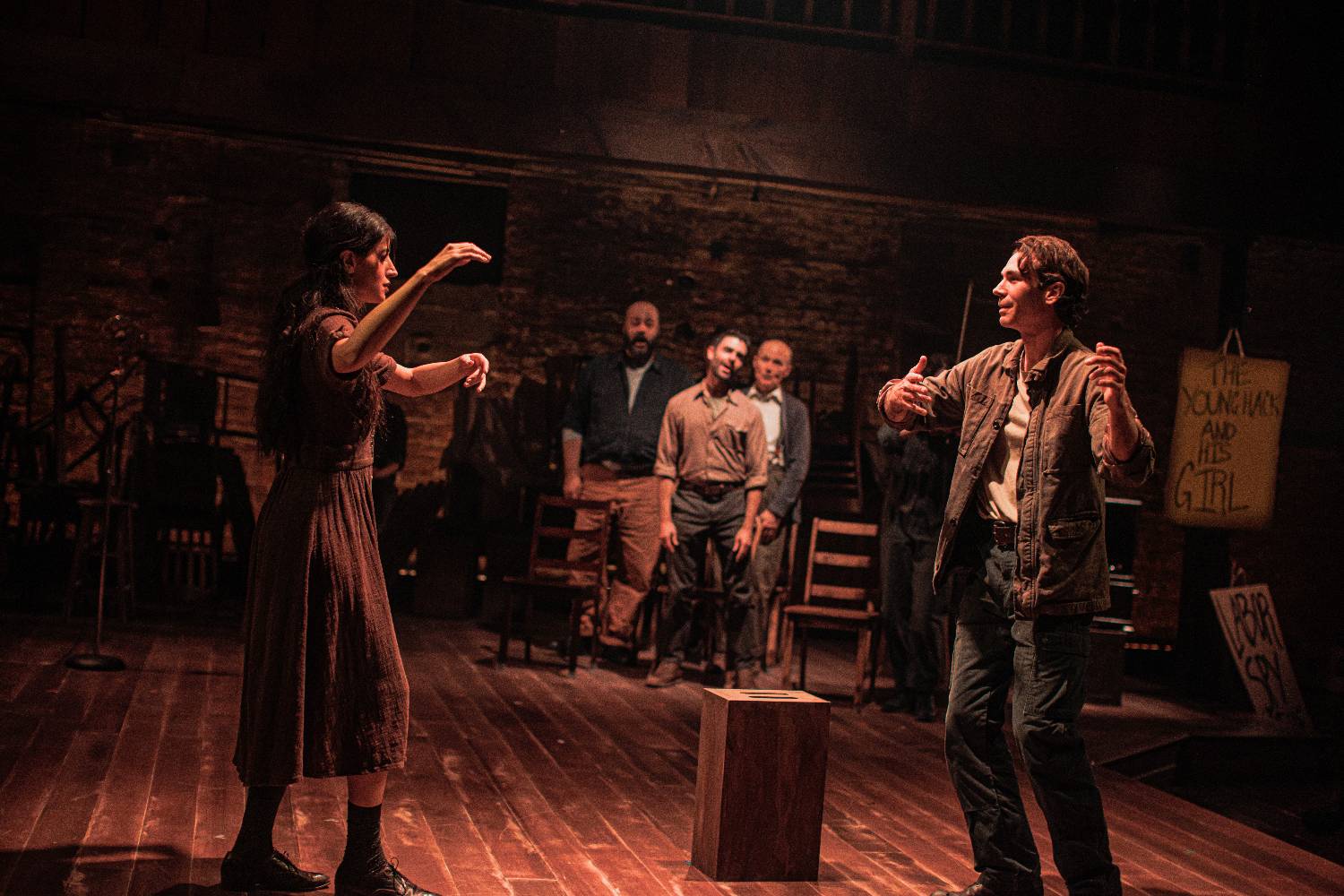
Zach McNally plays Lefty like a heat-seeking missile, though it isn’t until a razor-sharp, slow-motion sequence—almost, dare I say, a "dream ballet" flight—that we see what he can truly do. For non-dancers, this kind of movement requires extraordinary physical control and sits at the highest tier of difficulty. As the ensemble hurls, spins, and throws him across the stage, McNally—a phenomenal dancer—moves through the entire sequence with astonishing ease. It is an unexpected masterclass in strength.
Crucially, we are no longer simply waiting for Lefty. We actually witness his demise rather than hearing about it secondhand. Here at CSC, he is boldly present—and there is something miraculous about this newfound duality.
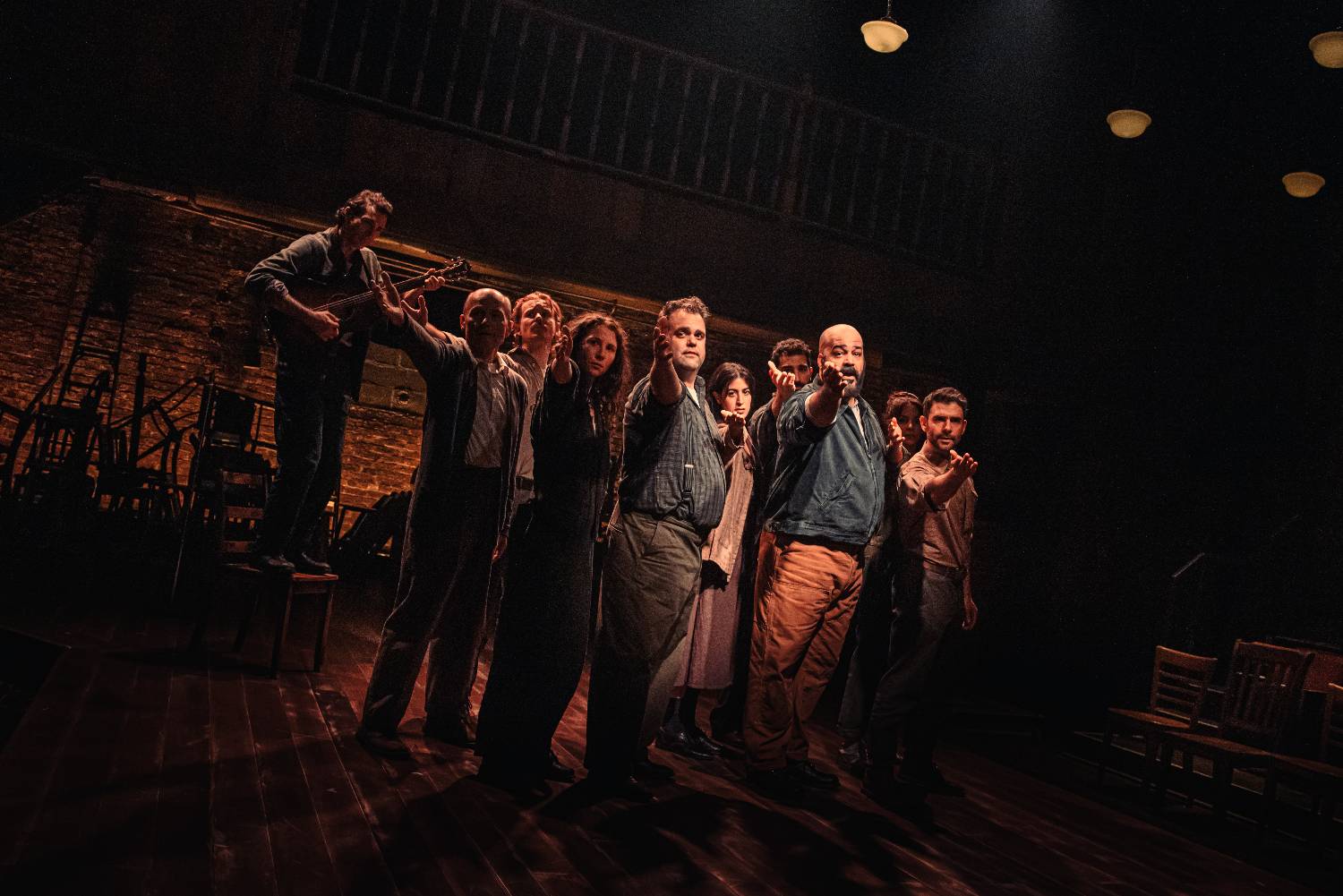
We live in an era of fractured attention, where everything competes to be louder, faster, and more insistent—and where we have grown accustomed to being shouted at. That is precisely why the restraint of this production feels so revelatory. In a play historically defined by clamor and confrontation, this staging grows so quiet at times you can practically hear a fist drop, reminding us that stillness is an action, a gesture can carry the weight of an argument, and music can articulate what dialogue cannot. Sometimes the most powerful protest isn't another raised voice, but simply allowing us to see the people behind it. All of Odets’ original arguments remain intact—the right to protest, to name injustice, and to demand something better—yet this newfound visibility makes his work feel even more human, and more accessible, than ever before.
This creative team has built a production that deserves immense praise. Rather than demanding our attention, it beckons, offering us a fresh lens through which to witness the struggle from our own perspectives. I also must single out Henry Stram, who is superb and brings remarkable honesty to his performance.
I have been thinking about that evening at the theater ever since. It was a masterclass in physical and emotional stillness and strength, and I feel extraordinarily lucky to have been part of it. This play will never be simple—true revolution never is—and while I can’t say why Waiting for Lefty hasn't been explored in quite this way before, I know I will never look at it the same way again. Thanks to Classic Stage Company, we can see that Lefty thrives with a little less shouting and a little more listening—something, in these times, we could all stand to do a bit more of.
production photos ©Marc J. Franklin
