
Every autumn, Berlin's Schaubude theatre hosts Theater der Dinge. Although its name literally means "Theatre of Things," its artistic ambitions are anything but simple. The term originates from the ideas of puppetry scholar and director Konstanza Kavrakova-Lorenz, who sought to redefine objects onstage as independent entities with their own materiality and vitality, rather than treating them as mere props or accessories to human performance. First launched in 2000 under director Silvia Brendenal, the festival celebrates its 15th edition in 2026 under artistic director Tim Sandweg. This year's theme, "Welt als Modell" (The World as a Model), delves even deeper into the essence of object theatre. When vast realities and social catastrophes are reduced to miniature objects and meticulously constructed models rather than presented through dialogue-driven drama, audiences can perceive the chilling structures and systems of the world more directly, freed from the human dialogue and emotions that might otherwise obscure them.
Among this year's festival programme, the three productions I attended—Transport: Tipping Point, Transport: Frontline, and Plateau—offered particularly compelling examples of how objects, sound, and stage aesthetics operate in contemporary object theatre. Through these three performances, each exploring the possibilities of objects in a different way, I revisit the questions raised by the festival.
Transport: Tipping Point | A Courtroom Charged with Sound
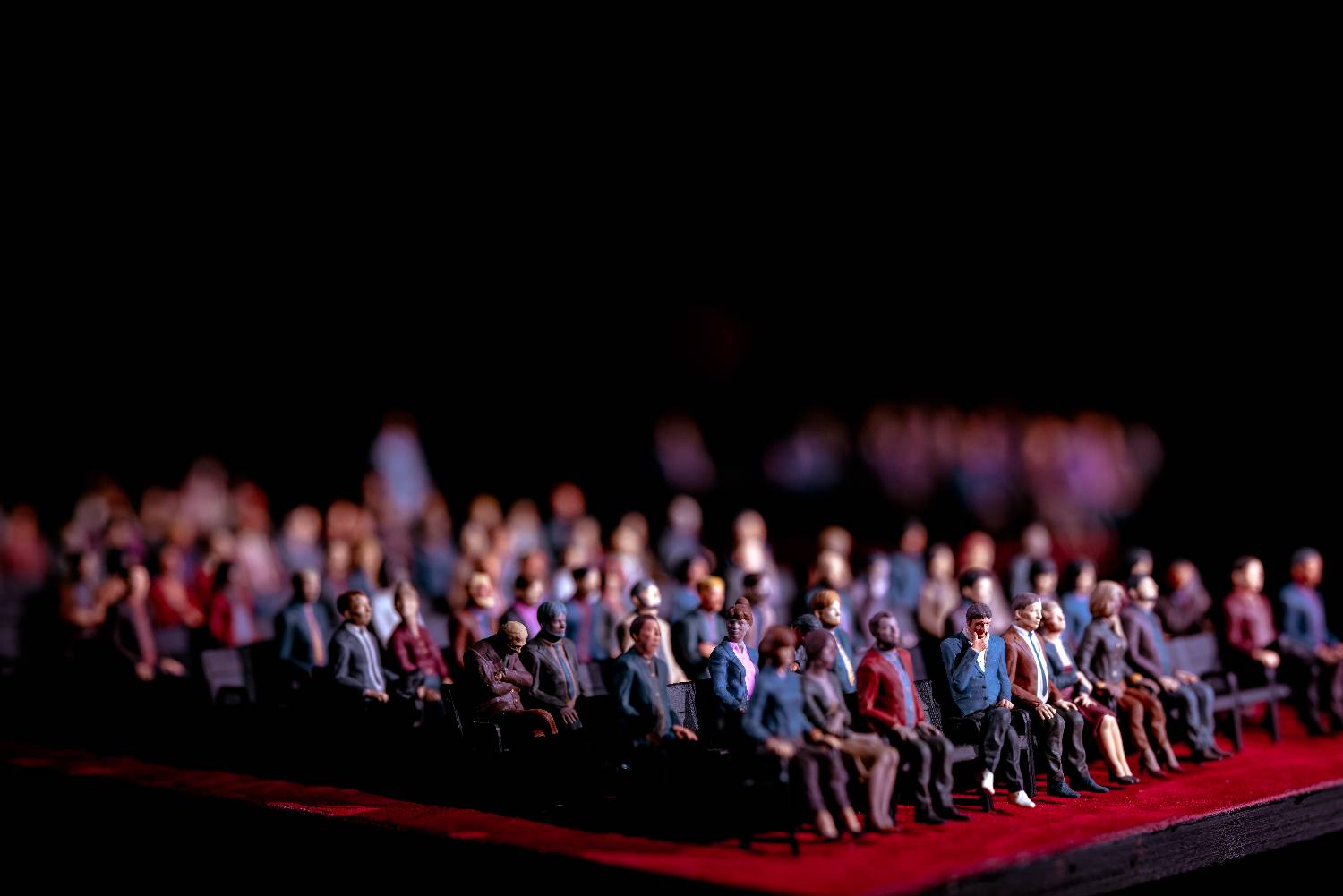
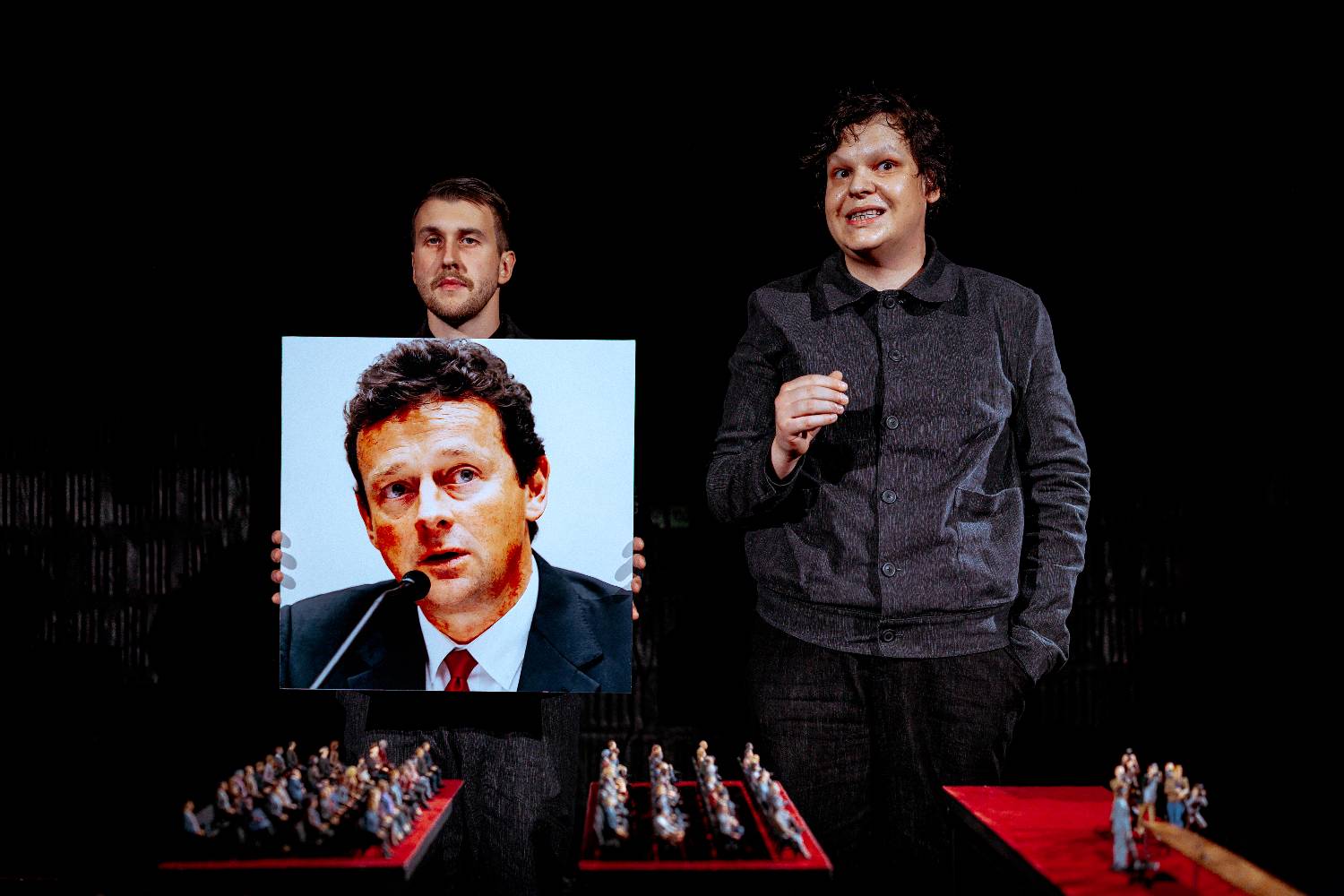
Transport: Tipping Point, presented by the Czech theatre company Divadlo ALFA, is a documentary courtroom drama inspired by the 2010 Deepwater Horizon oil spill in the Gulf of Mexico. It examines the environmental responsibility of a major energy corporation through a courtroom populated by intricately 3D-printed miniature figures. In this production, it is the power of sound, rather than the movement of the miniatures, that drives the narrative. Real testimonies played through speakers bring vivid tension to the otherwise static courtroom model. Instead of conveying emotions through facial expressions or gestures, the production creates the urgency of legal confrontation through rhythm, volume, and shifts in sound. As the voices propel the case forward, the play moves swiftly through the central arguments, compressing complex questions of corporate recklessness and systemic negligence into approximately 40 minutes. What is particularly intriguing is that, despite addressing an enormous environmental disaster, the production never actually shows the site of the catastrophe. By concentrating on the legal battle over its consequences and accountability rather than displaying scenes of devastation, it invites audiences to imagine the disaster's aftermath through testimony and confront the complicated relationships of responsibility behind it. Questions that begin in a miniature courtroom extend beyond the stage to the audience, leaving a lingering sense of discomfort that cannot easily be resolved.
Transport: Frontline | A Battlefield Shaped by Sound and Light
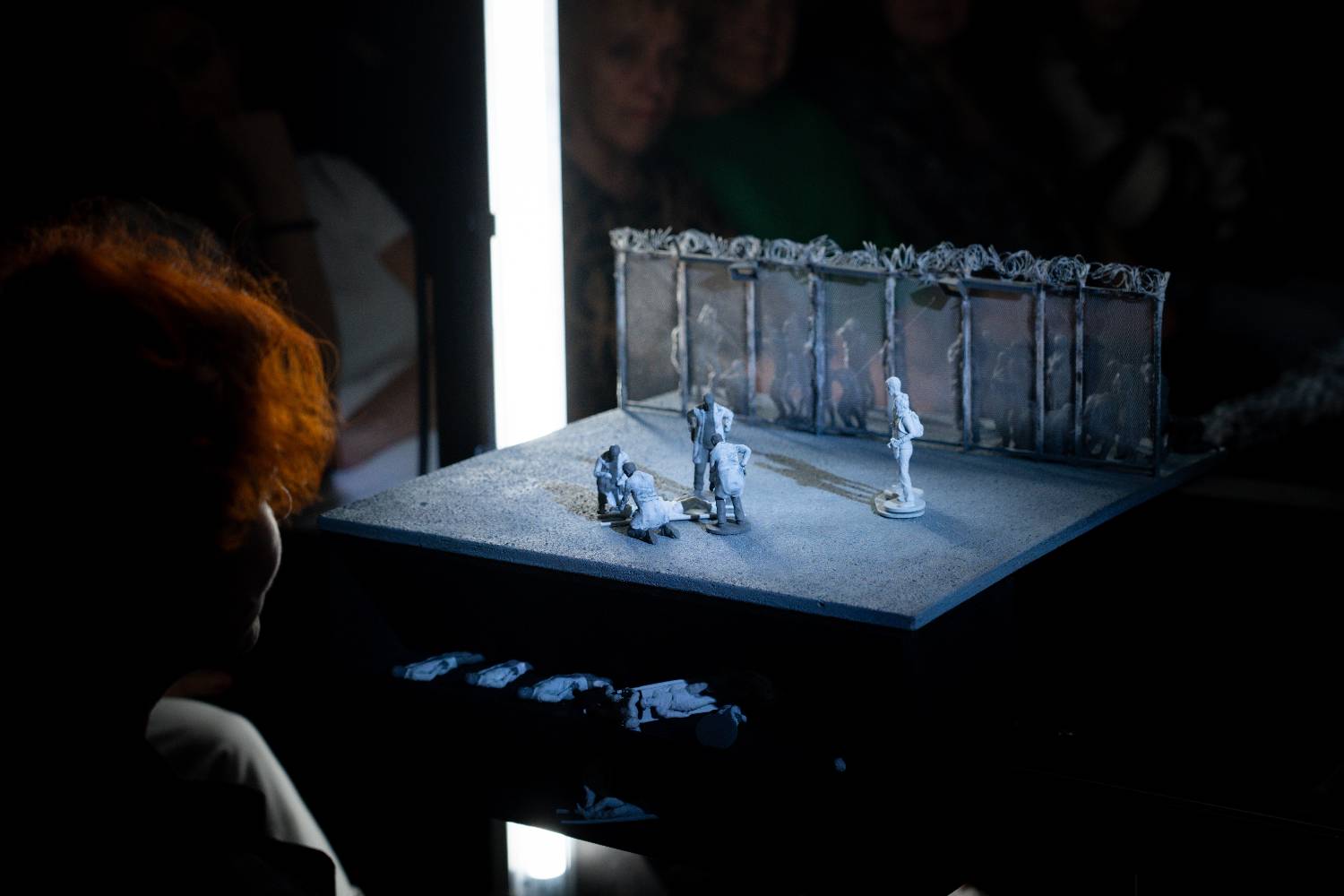
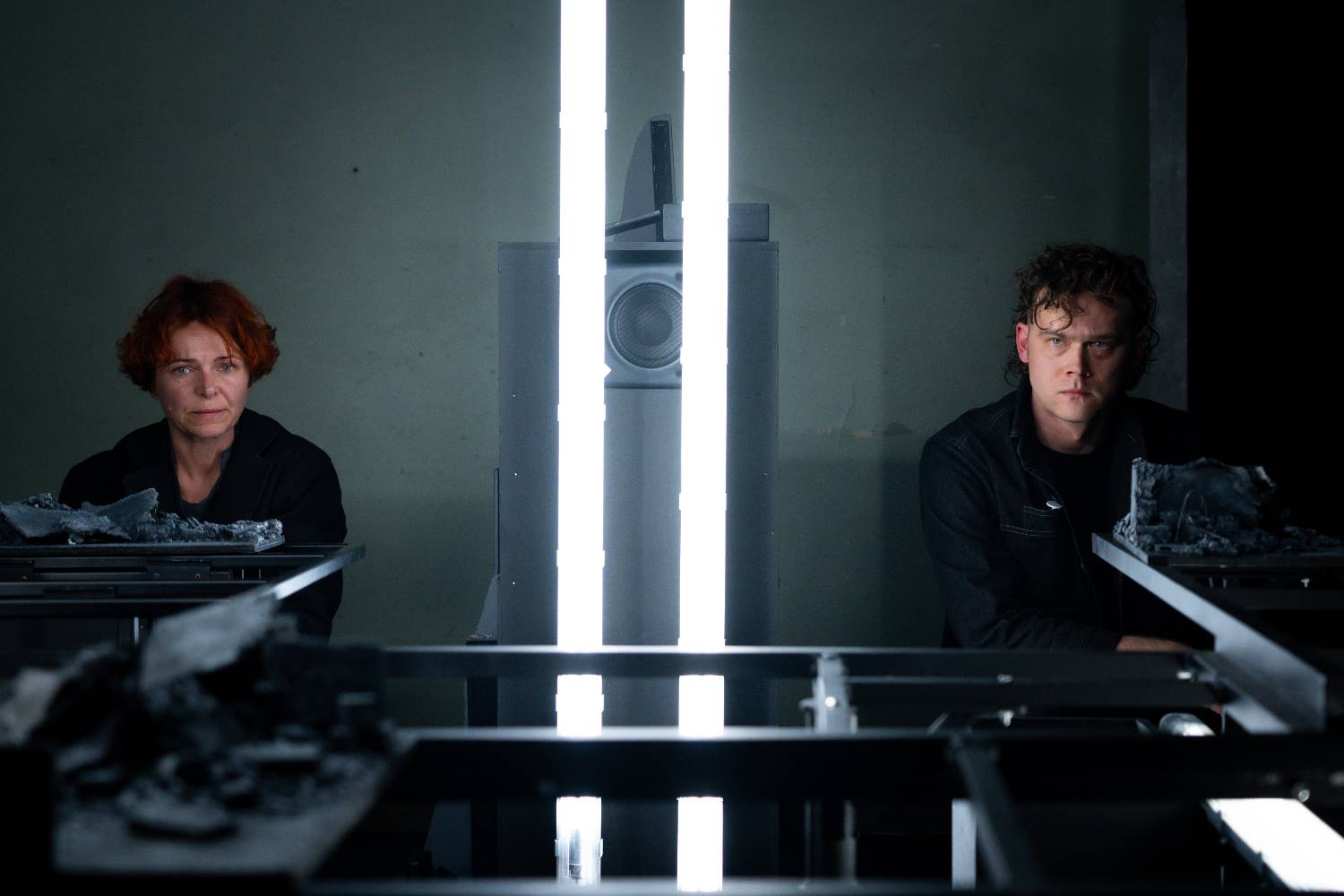
Produced by the Estonian Youth Theatre (Eesti Noorsooteater) and directed by Tin Grabnar, Transport: Frontline is a miniature theatre production that portrays a war zone through the eyes of a war photographer. The performers manipulate meticulously crafted puppets in silence, moving from scene to scene. The characters' inner thoughts are conveyed through separate voices, creating a distinctive theatrical effect by separating the puppets' physical movements from human speech. Sound and lighting are the essential elements that transform this small stage into an expansive battlefield. Helicopter rotors and gunfire, delivered through immersive 3D sound, seem to emerge from different directions and distances depending on where the audience is seated. Changes in music shift the atmosphere of each scene, while precisely coordinated lighting lends dramatic vitality to even the smallest movements of the miniatures. Although no visible floor markings or cue signs guide the performers, they synchronize the puppets' movements with the lighting with remarkable precision. Against the backdrop of charred ruins, the stark contrast of the white puppets visually emphasizes the devastation of war. Yet the production is concerned not only with the horrors of war but also with the act of documenting and observing them. Essential aspects of the war photographer's experiences and inner life are communicated directly through voice, ensuring that the information audiences need is not left ambiguous. Viewers witness the devastation through the photographer's camera while maintaining a certain distance from the events themselves. As recording media, the camera lens and photographs both reveal the realities of war and invite us to reconsider our own gaze and the ethics of observing another person's tragedy from a position of safety.
Plateau | A World Crafted by Hand
Plateau, a co-production by Belgian theatre companies FroeFroe and hetpaleis, is a 50-minute non-verbal performance conceived by Fran Van Gysegem and directed by Annelies Van Hullebusch. It poetically explores questions about a horizon held in the palm of a hand and the weight of the Earth we carry. The production's most powerful driving force is undoubtedly live music. At one side of the stage, musician Visjal Auwerx creates every sound effect and musical passage in real time. Sounds produced through instruments and various objects interact with the movements onstage, bringing the miniature world to life. Sound responds to the movement of objects, and their transformations in turn become intertwined with the music, allowing a narrative to emerge without a single spoken word.
Above all, what makes the production so striking is that it reveals the very process of creating a world onstage. The performers construct and transform miniature structures before our eyes, and these actions themselves connect directly to the work's environmental message. Drawings created live onstage are projected onto a digital screen in real time, seamlessly combining the physical materiality of analogue objects with the expansive possibilities of digital imagery. Rather than simply moving finished models to represent a story, the production makes the processes of constructing and transforming them into a theatrical language of their own.
Unlike the preceding two productions, Plateau features neither human-shaped figures nor dialogue conveying characters' emotions. Instead, the stage is filled with the movements of objects, sounds, and a constantly changing landscape. Rather than using objects to represent human stories, it tells the story of a world through the transformation of the objects themselves. In doing so, it offers perhaps the clearest demonstration of the possibilities of object theatre.
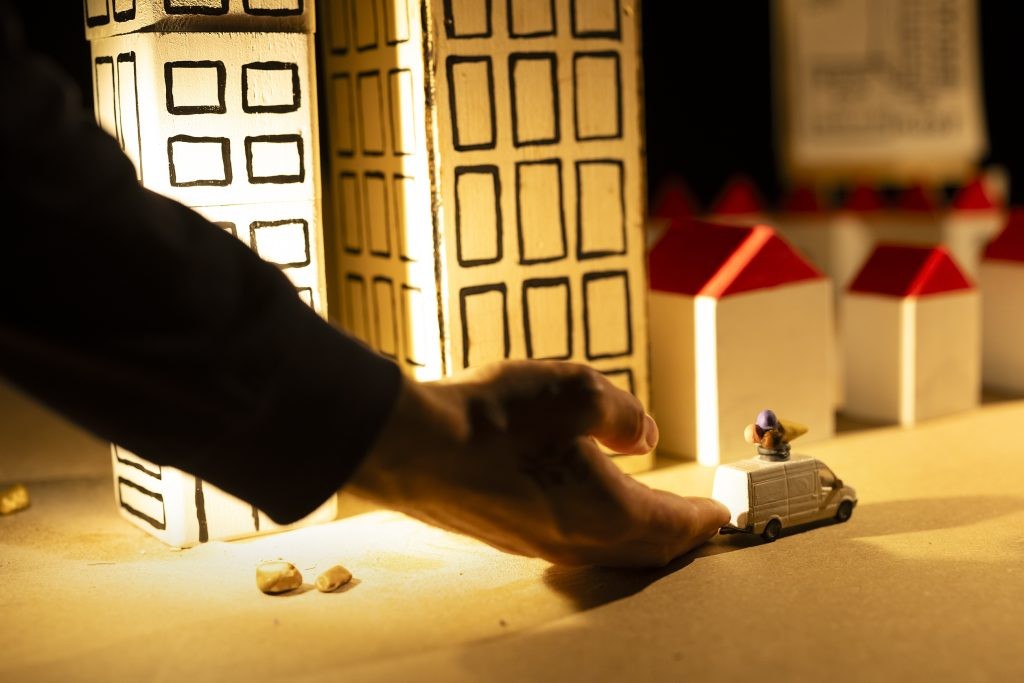
Where Objects Take Centre Stage
Exploring the festival, I found myself reflecting on the curious irony of its name, a "Festival of Objects." Although objects are described as the protagonists, most of the miniatures occupying the stage still take human form. The painstaking work of crafting and manipulating tiny human figures can seem almost at odds with an age that prizes efficiency. Yet it is precisely this labour and care that lend these small objects vitality and weight. This leaves another question: Can theatre truly move beyond an anthropocentric perspective simply by replacing human performers with objects shaped like humans? I had a similar impression of the themes explored. The productions I attended centred on tragedies caused by humans, including war and corporate environmental destruction. While the use of objects to examine these issues was certainly compelling, it was worth considering that even when objects occupied the centre of the stage, human beings remained at the centre of the narratives. Given the seemingly limitless possibilities of objects, could they not reveal a wider range of worlds beyond the representation of human tragedy?
In this respect, Plateau was particularly memorable. By dispensing with human-shaped figures and dialogue, it told its story entirely through the movement of objects, live music, and the process of constructing the stage world itself. Whereas the other productions recreated human stories through miniature models, Plateau invited audiences to discover a narrative in the transformation of objects. With human figures absent from the stage, the production's central themes emerged with even greater clarity.
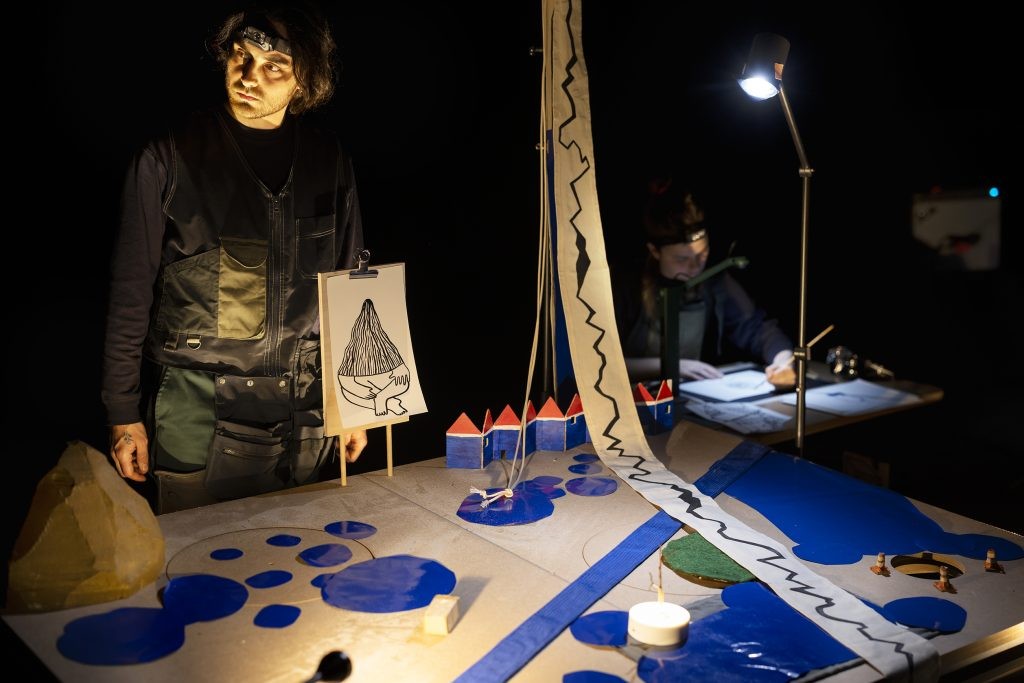
The productions also differed in how they treated the presence of the puppeteers. Miniature theatre often attempts to conceal the manipulators through lighting and stage arrangements, but immersion can falter the moment their movements become visible to the audience. Plateau, by contrast, did not attempt to hide them, instead incorporating them naturally into the construction of the stage world. As the human act of manipulating objects became part of the performance itself, the performers' presence was no longer something to conceal but another expressive means through which the work took shape.
There is certainly value in reducing human beings to miniature figures and recreating vast crowds and overwhelming realities before our eyes. Yet perhaps objects themselves can sometimes become the protagonists, while the processes of making and moving them become a performance in their own right. If it is objects rather than human beings that take the stage, could the stories they tell also venture a little further beyond the human world? What does it truly mean for objects to become the protagonists of a festival dedicated to them? This is the question the festival left me with.
