
Despite everything we now know about the tragic life of Hollywood’s quintessential child star, Judy Garland, her name and image remain indelibly linked with rainbow confetti, sparkling slippers, a joyous, canary-like voice, and the most-watched film of all time. In this new world premiere production at Schauspielhaus Zürich, German director Bastian Kraft reminds us that the magic and the tragedy are not mutually exclusive. Instead, both sides of the story walk linked arm-in-arm—much like the Scarecrow, the Tin Man, and the Cowardly Lion alongside Dorothy.
Deconstructing the immortal image of a cultural icon is a high-stakes endeavour. Yet, with Kraft’s signature vaudeville-infused directorial style, tackling the biography of history's most famous child vaudevillian feels like a fitting destiny. For a director who has firmly established his reputation as a master of literary adaptations, this production marks a thrilling milestone, serving as his very first original text work.
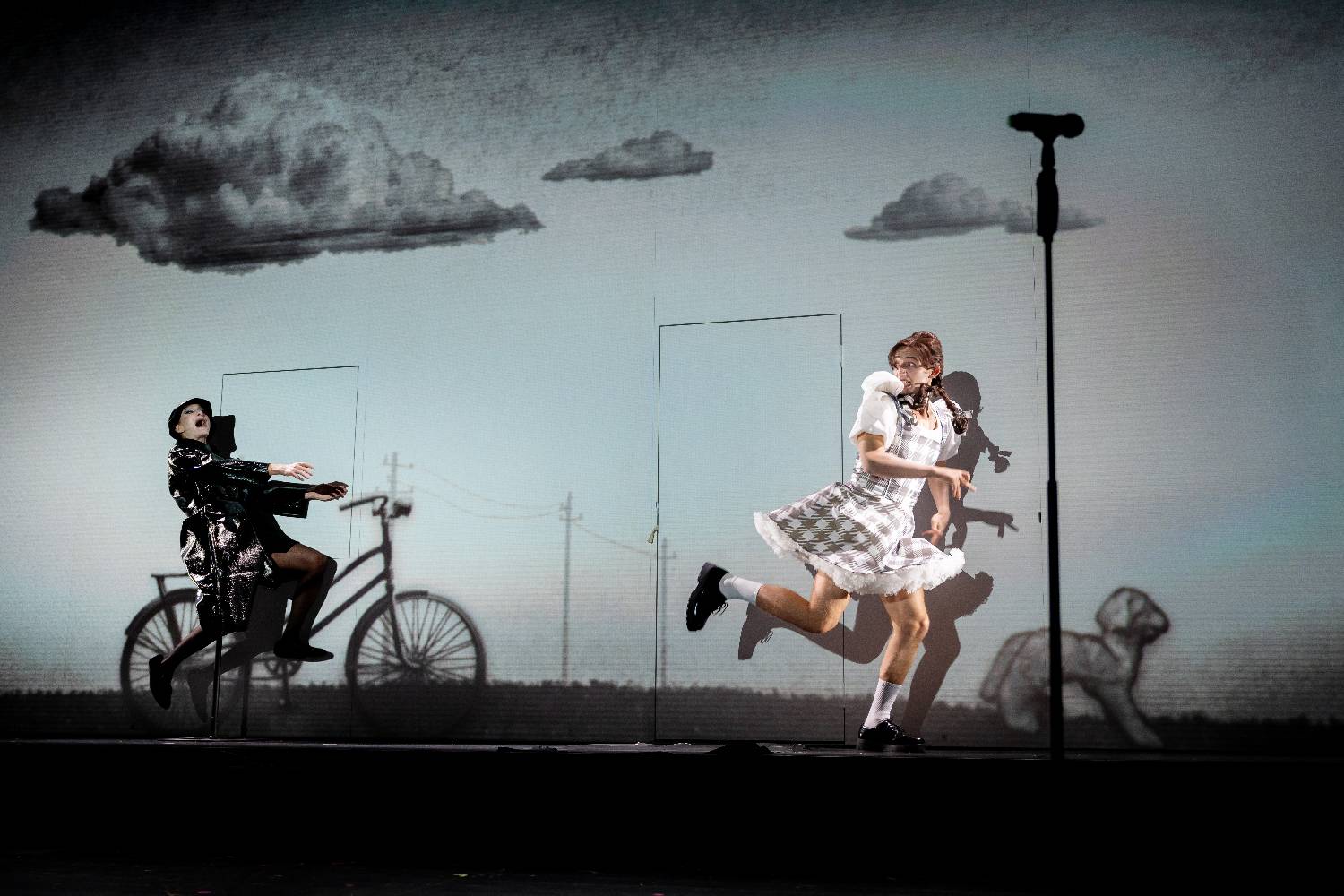
Paying homage to the 1939 cinematic masterpiece, the production opens in stark black and white. We find an adult Judy Garland isolated on stage. As the lights dim, she looks back at her younger, cinematic self, guiding us back onto that yellow brick road—an odyssey that explores how cinematic history and her own enduring status were fatefully intertwined.
From the very start of this exploration, Kraft bombards the audience with a brilliant array of cultural touchstones. He immediately hits us with punchy, fast-paced, and occasionally brutal historical truths—starting with the fact that Garland was never the studio's first choice, as contractual conflicts narrowly prevented Shirley Temple from taking the role. With surgical precision, Kraft feeds the audience a sobering mixture of shocking reminders, forgotten trivia, and lesser-known facts about the lives of those trapped behind the film's glamorous, mythic facade.
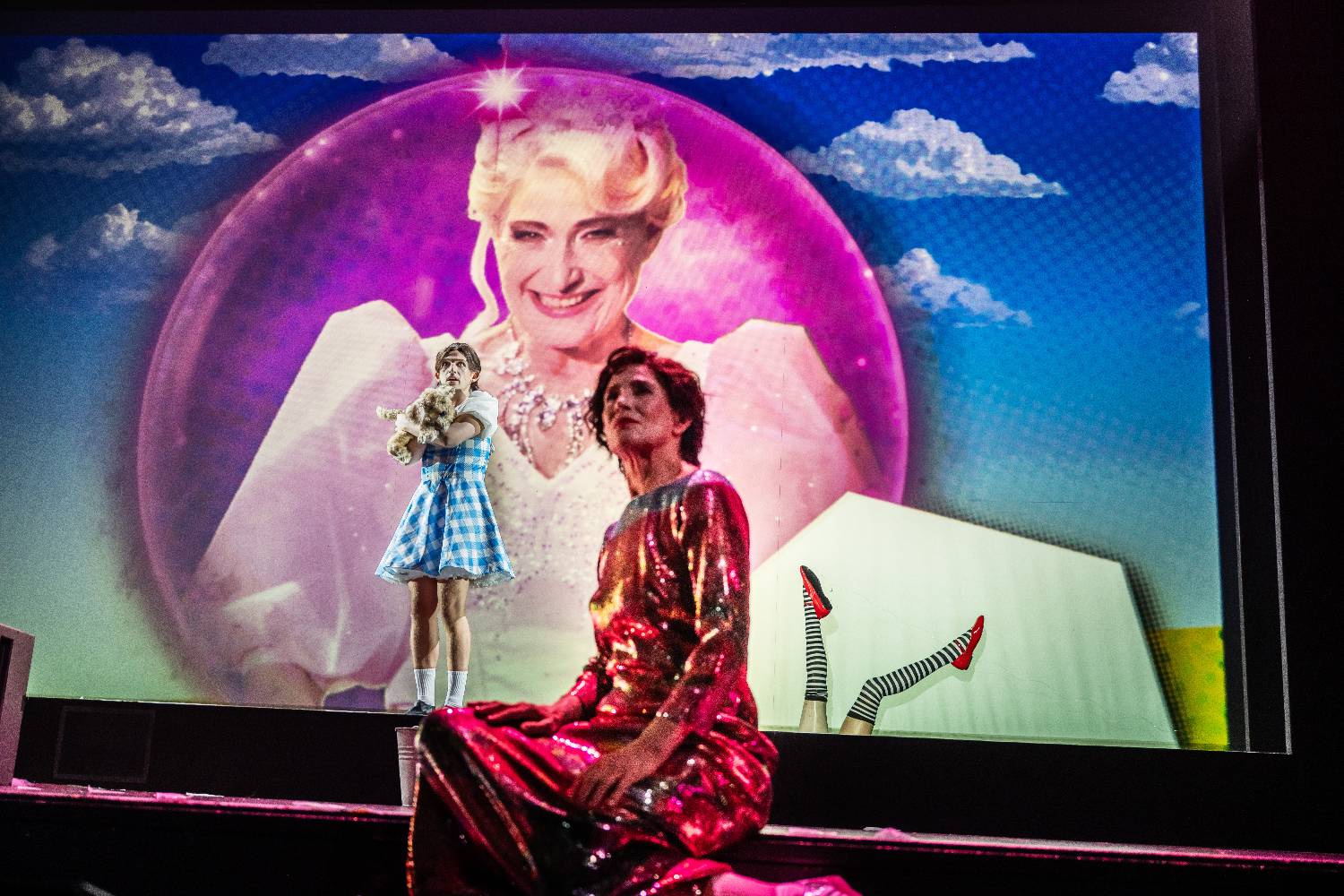
The year 1939 was ultimately the crowning achievement of director Victor Fleming’s career, highlighted by his only competitive Oscar win for Gone with the Wind—a film where, ironically, he was also a last-minute replacement. Yet, as Kraft poignantly illustrates, Fleming's historic triumph and Hollywood's collective descent into the magical realm of Oz came at a steep, human cost—a price paid, above all, by a sixteen-year-old Judy Garland. As only MGM’s second full-length feature film shot in Technicolour, the production was the most expensive and high-pressure undertaking of its era. Fleming’s famous dictum perfectly captured the studio’s hubris: "This is Hollywood! If we can’t conjure up some magic, who can?" Yet, Kraft’s production invites us to look at exactly how that magic was manufactured. To sustain a gruelling schedule that kept a teenager on set for 12 to 16 hours a day, the studio introduced Garland to her new "best friends"—"bennies" (Benzedrine amphetamines) to keep her fresh, topped off with heavy downers to artificially guarantee rest between filming.
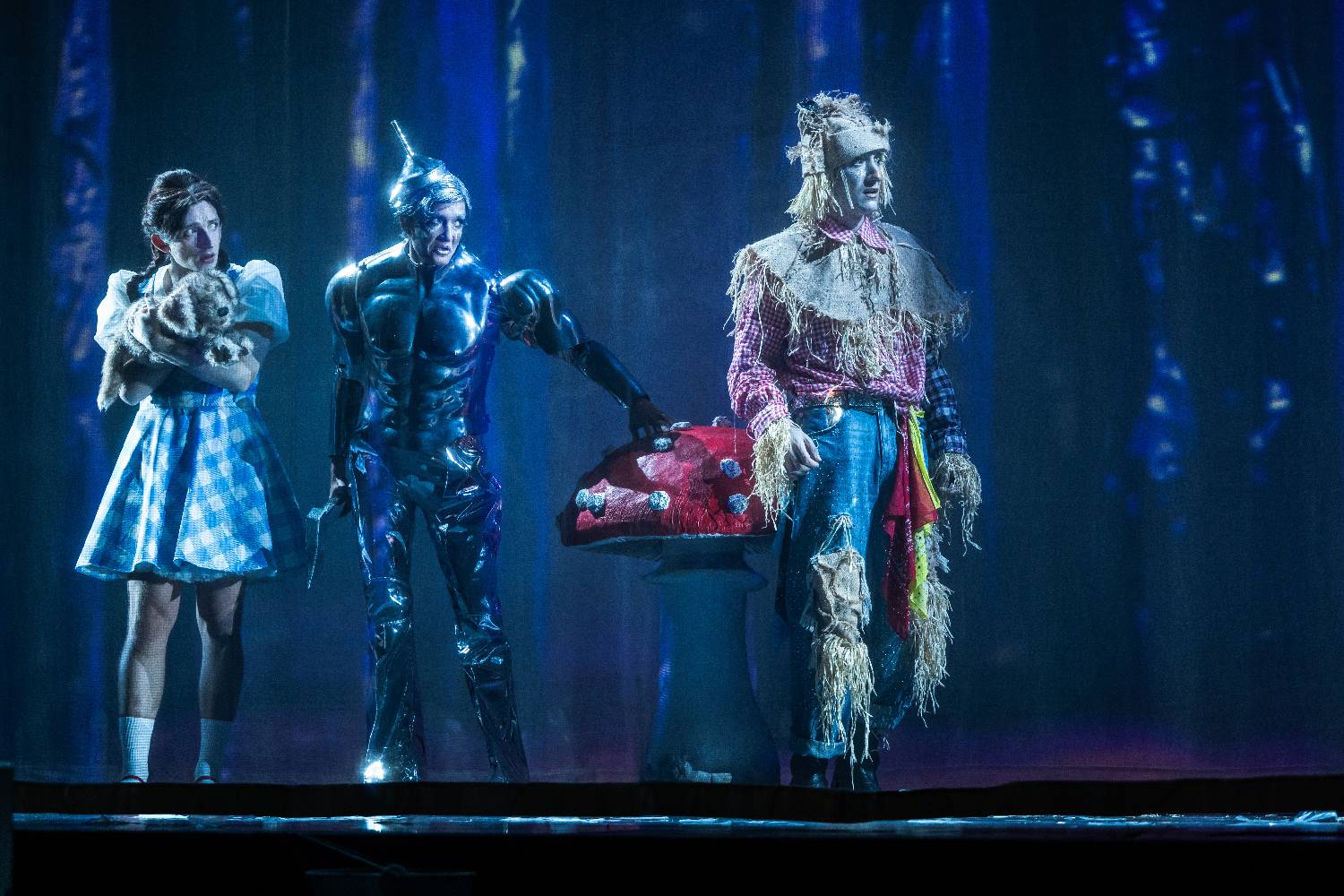
The show’s vitality rests heavily on its six-member cast, who brilliantly navigate rapid costume changes and, even more admirably, seamlessly swap personas with playful agility. Birgit Walter radiates pathos with a quiet, pensive presence as the adult Judy Garland, serving as the show's underlying heart. In a gender-bent performance that adds profound layers to this celebrated queer icon, David Rothe’s Dorothy strikes the perfect balance between high absurdity and Garland’s adolescent naivety. Lena Schwarz injects camp comedy into the Tin Man, while pivoting to deliver a formidable take on Margaret Hamilton (the film’s Wicked Witch of the West)—a dual turn that powerfully underlines the subplot of shocking on-set mishaps. Yvon Jansen shimmers effortlessly, shifting between a plush Lion and another towering gay icon, Bette Midler, while Markus Scheumann upholds the evening's meta-theatricality, perfectly channelling the larger-than-life authority of Victor Fleming and the Wizard.
While it is perhaps unfair to single out a standout performer in such a tightly knit ensemble piece, Alexander Angeletta secures some of the most memorable moments amid the frenzied transformations. He moves brilliantly from a desperate plea to Fleming by Harold Arlen (the composer of "Over the Rainbow") to keep the signature song in the movie, to a riotous performance of Dead or Alive's "You Spin Me Round" as the literal Tornado. Ultimately, he grounds the spectacle as a gentle Scarecrow who touchingly tells Garland that if only he had a brain, he would tell her story.
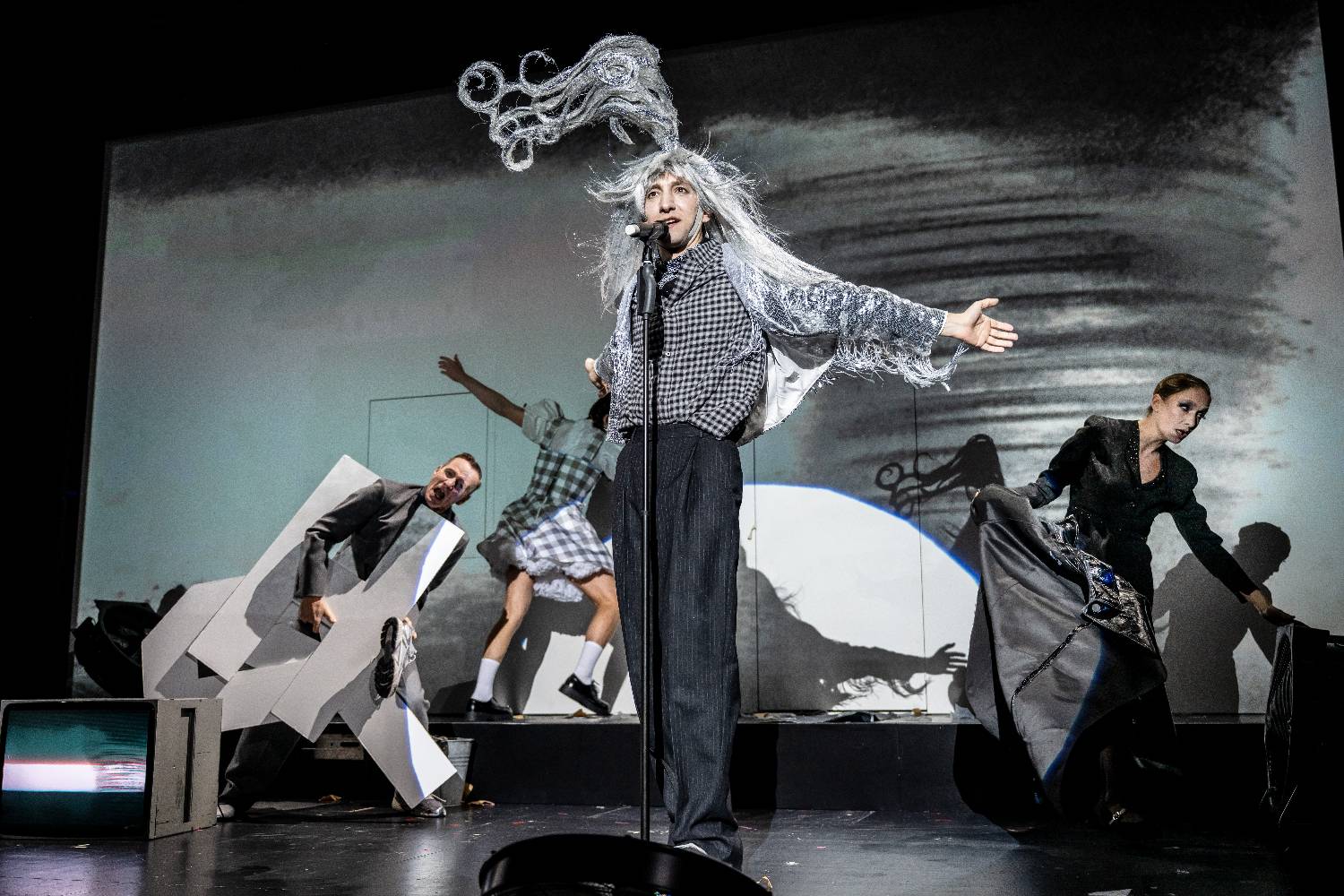
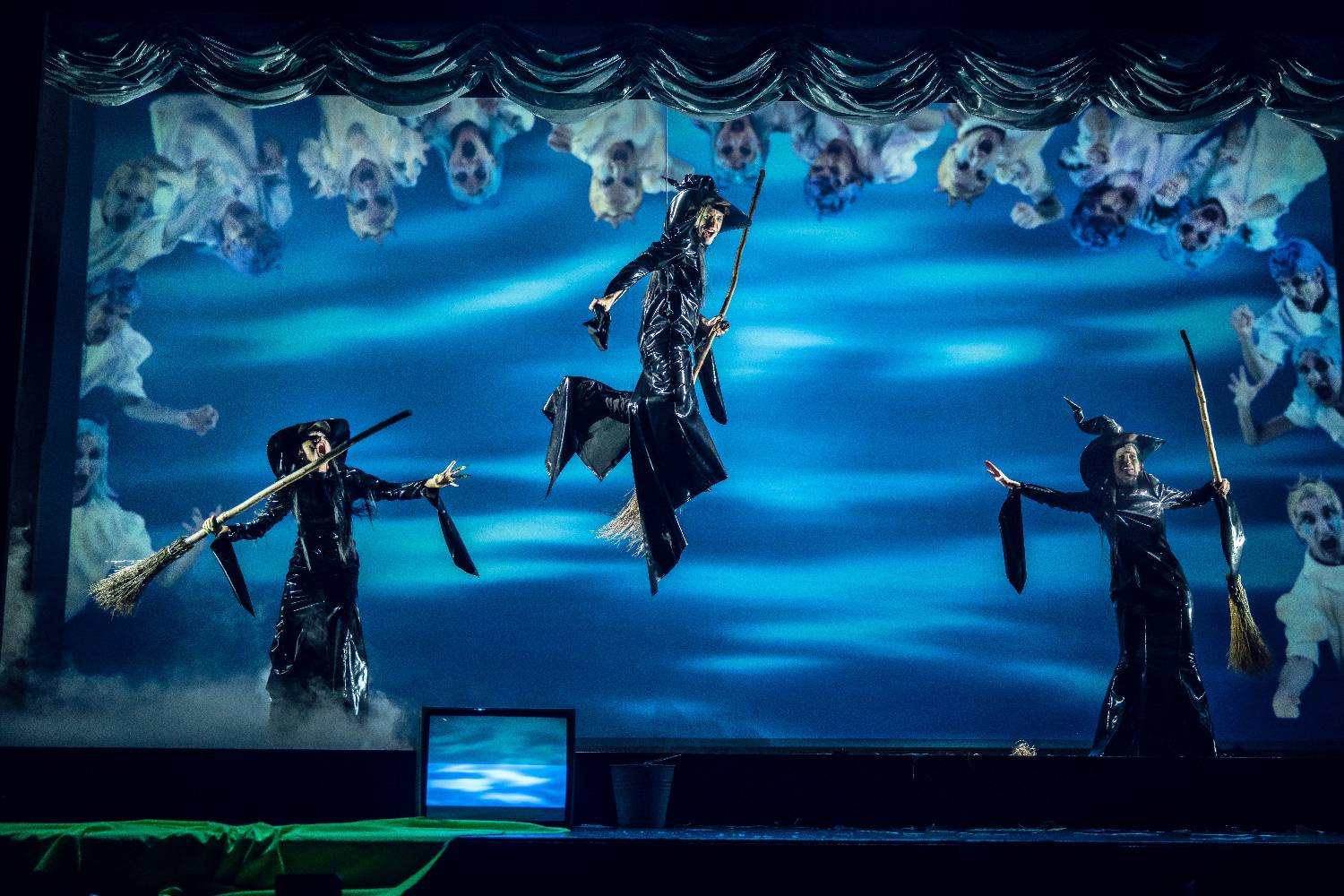
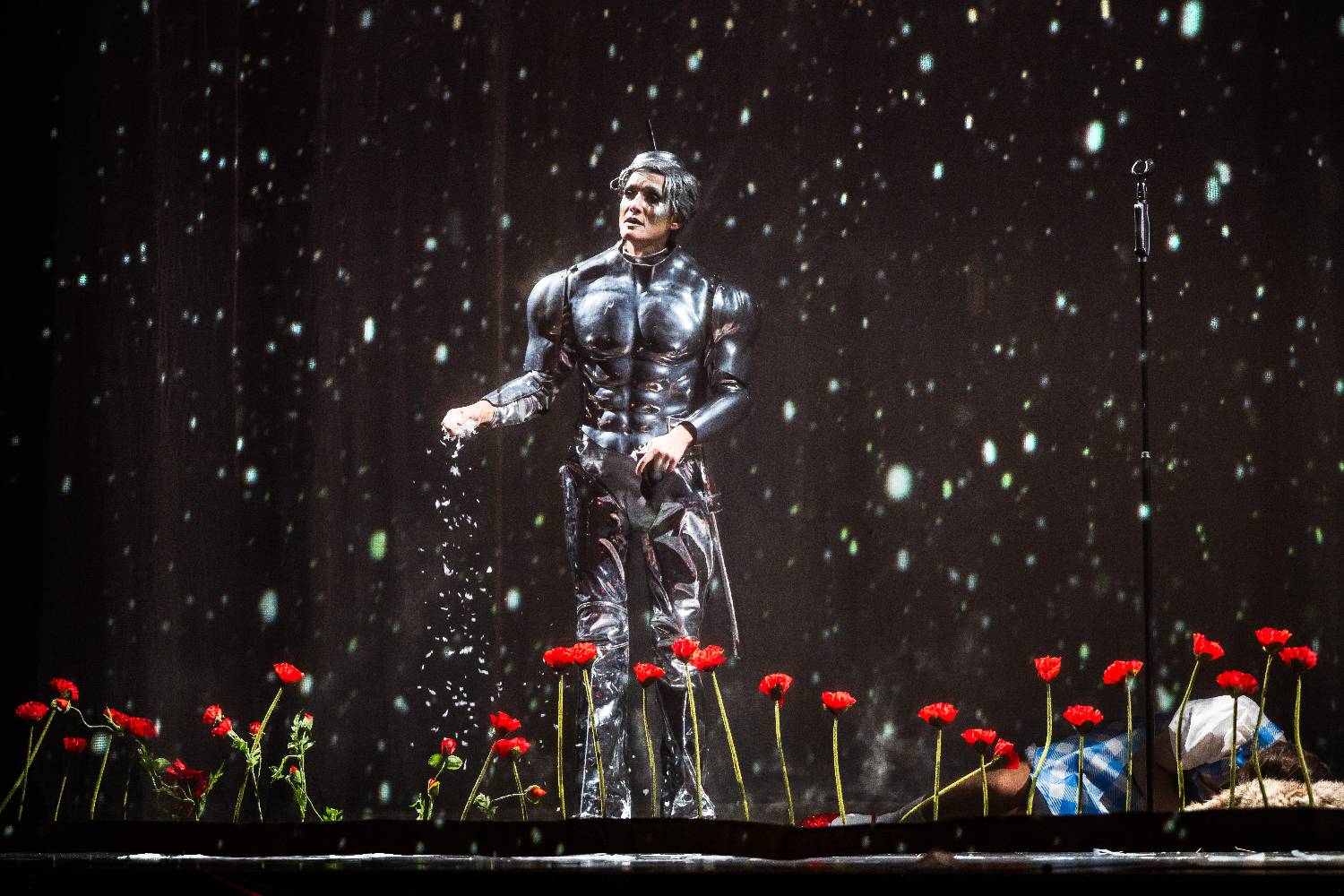
The production’s distinctive visual landscape is shaped by two key artists—the core design team behind the success of Kraft’s previous hit, Die kleine Meerjungfrau (The Little Mermaid). Set designer Peter Baur brilliantly accommodates Kraft’s demystification approach. Here, every theatrical trick is exposed and the secrets behind the stage magic are openly revealed. The result is a playful, self-aware mockery of a Méliès effect, yet it somehow leaves the audience catching their breath while witnessing an illusion that is nothing short of magical. Costume designer Sophie Reble reworks the all-too-familiar outfits from the film, giving them a distinct touch of drag and disco, and sprinkling them with sheer brilliance. Meanwhile, her own original creations—such as the shimmering silver Tornado—almost literally blow your socks off.
Does Dorothy get to return to Kansas this time? At the very least, she gets to leave the auditorium. As a live camera follows her outside, we watch the epilogue unfold on the screen—a poignant finale written by the celebrated, twenty-eight-year-old non-binary writer Kay Matter. While a seasoned theatre connoisseur might roll their eyes at this point—thinking it is simply van Hove, Jamie Lloyd, or Christopher Rüping all over again—Kraft still has another trick up his sleeve and surprises us. Nothing here is real, yet everything is true. Kraft is the ultimate wizard, using the undeniable magic of the stage to deliver profound life lessons in a way only true artists can.
German theatre tends to swing between two extremes. It often either tackles heavy topics head-on without respite or deploys heavy-handed satire that pulls back the moment it gets too close to the heart. Bastian Kraft possesses a distinct style entirely his own, allowing the storytelling to affect you deeply without ever letting you wallow in it. With this piece added to his already remarkable body of work, it feels he is well on his way to reinventing German theatre for a new era.
production photos ©Toni Suter/T+T Fotografie
