
The Lens : Decoding the modern stage with HereWeAre's Critics' Circle. A dedicated space for sharp critical essays and deep intellectual evaluation of contemporary work.
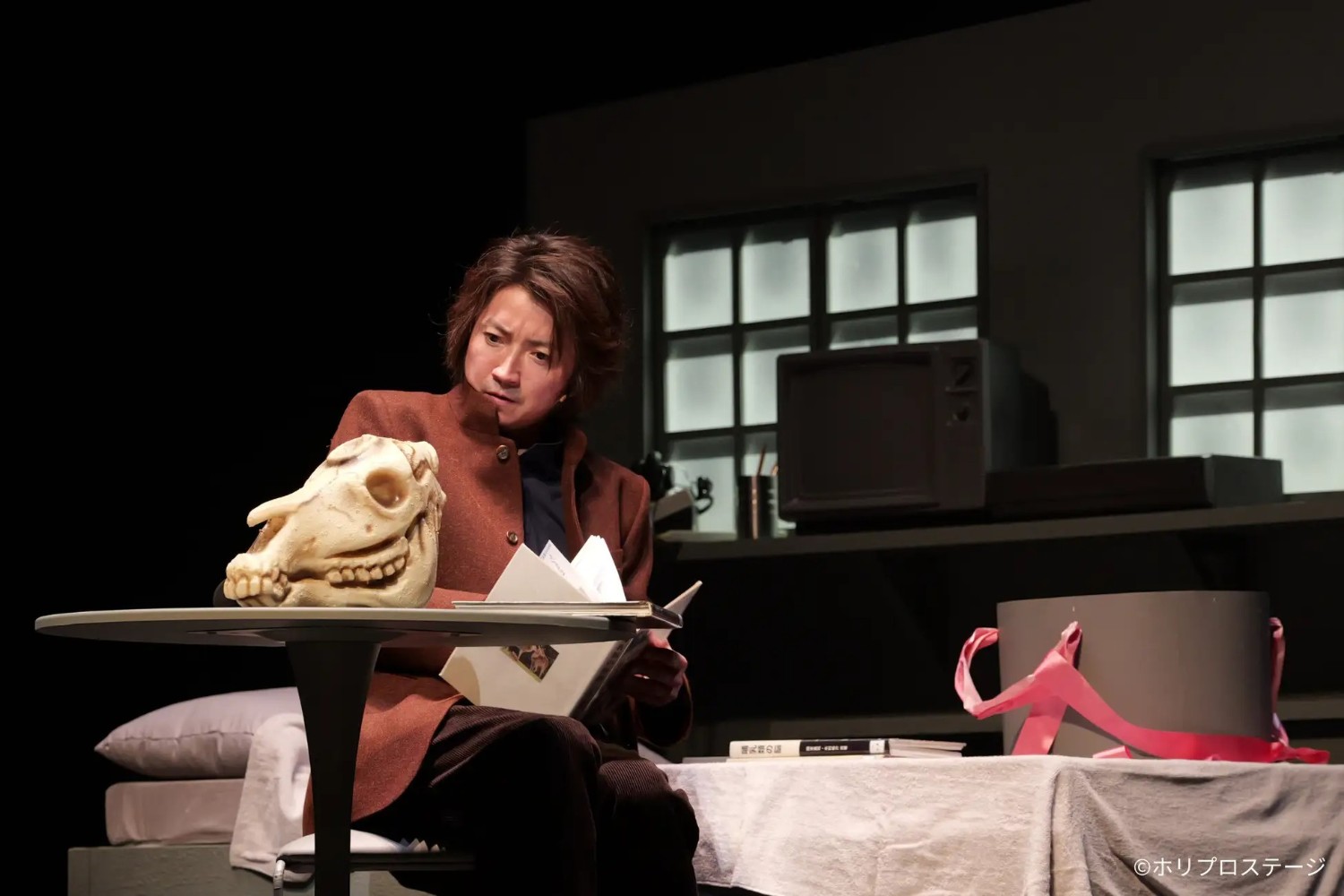
Leaving the Barbican Theatre after a Japanese production, I always carry complicated feelings. There is the joy of having seen something wonderful, but mixed with it — every time I witness how warmly Japanese stories are embraced here in Britain — comes a tangle of admiration and envy. I felt the same way the first time I saw My Neighbour Totoro (2022) at this venue, its source animation rendered on stage with such delicate care. The musical Death Note, which closed on 12 September, drew equally large crowds and has already announced a return run next year.
This time it was a novel by Haruki Murakami (b. 1949). The run lasted four nights and had sold out entirely, so securing a ticket took some effort. Right up until the performance began, I wondered how anyone could turn this sprawling, labyrinthine story into a stage work — yet the world of the novel, reborn before my eyes, unfolded with a beauty that belonged entirely to the language of theatre rather than the page.
A Direction That Crosses Every Border
End of the World and Hard-Boiled Wonderland is the first stage adaptation of Haruki Murakami's 1985 novel of the same name. The script was written by Japanese playwright Ako Takahashi, and French artist Philippe Decouflé (b. 1961) served as director and choreographer. After runs in Japan and a tour of Singapore, this London engagement marked the production's European premiere; it was performed in Japanese, with English surtitles projected above and to either side of the stage. Looking out at an audience that filled every seat, I felt the full weight of the name Haruki Murakami — and of literature's power to draw readers into a theatre. Japanese could be heard here and there among the crowd, but the sight of people speaking so many different languages gathered in one place showed just how far one writer's world can reach.
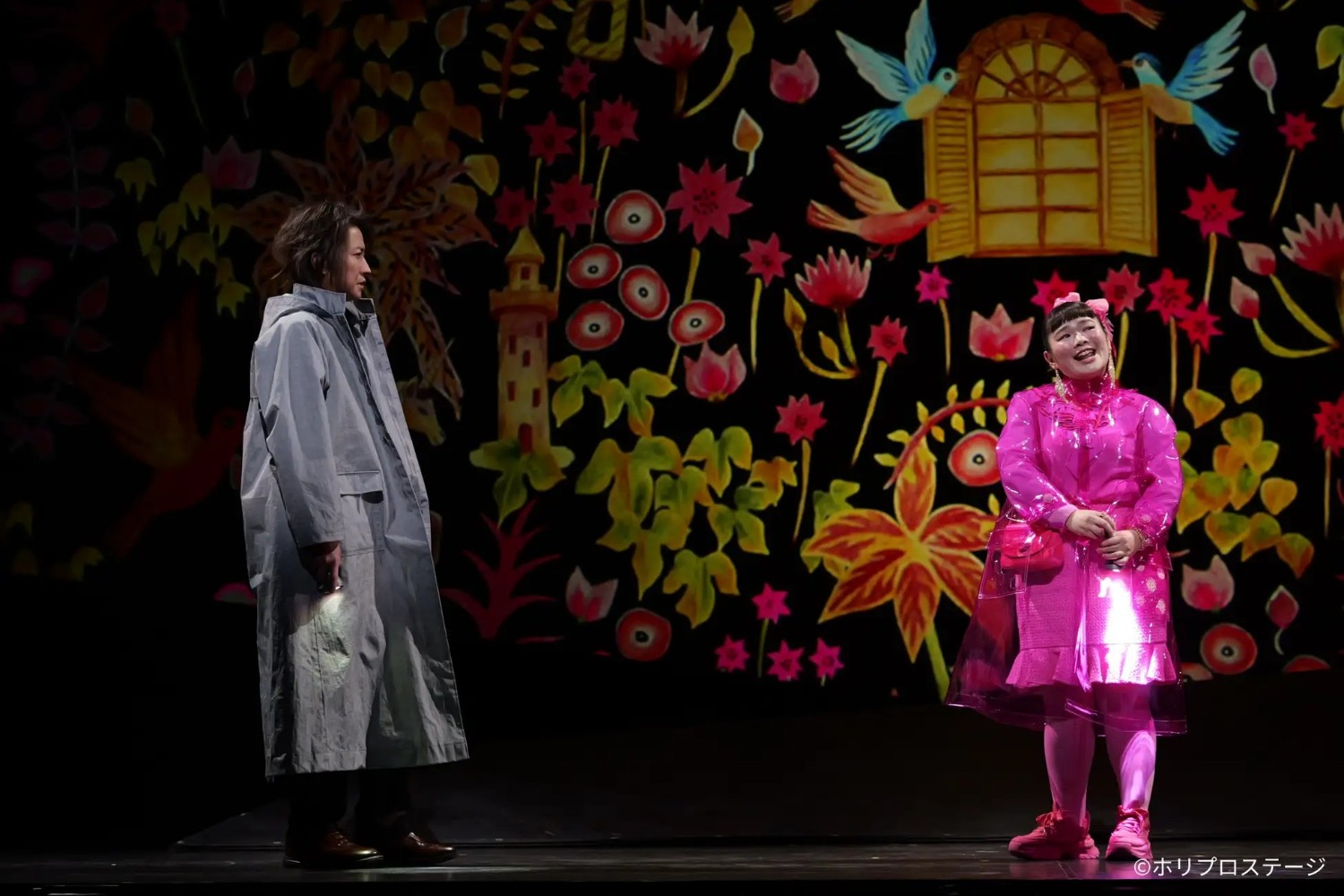
The novel moves between two narratives. In "Hard-Boiled Wonderland", the protagonist (played by Tatsuya Fujiwara), a man who encrypts information for a living, is drawn into a strange chain of events after being hired by an elderly scientist. In "The End of the World," a man enters a town encircled by high walls, separated from his shadow, and spends his days in a library reading ancient dreams stored inside the skulls of beasts. The two worlds — one built around information technology and consciousness, the other around memory and the mind — seem remote from each other at first, then gradually converge. The production rendered this intricate universe through bodies and movement, light and projection, distinguishing reality in black and white and dream in colour to mark the difference between the two realms. Looking into Decouflé's background, I could not imagine a more fitting creator to bring the novel's fantastical world to the stage. A choreographer and theatre director, he has spent his career moving fluidly between dance and film, circus, cabaret, and other artistic languages. He gained international recognition for directing the opening and closing ceremonies of the 1992 Winter Olympics in Albertville, France, and has worked in Japan on multiple occasions. In this production, too, theatre, contemporary dance, mime, and circus wove together with complete naturalness. The source novel's constant crossing between reality and fantasy gave his imagination a vast space in which to move.
A Stage Where Even the Shadow Becomes a Protagonist
It was the unicorns that made this imagination most vivid. The dancers pressed their elongated forelegs to the floor and lifted their heels high in pointe shoes — creatures that suggested a giraffe, or perhaps a horse, yet belonged to neither. The beasts of the novel, conjured by reshaping the body's proportions and shifting its centre of gravity, read as genuinely alien life forms even when you knew perfectly well that human bodies were producing them. There was beauty and strangeness in equal measure in their slow, deliberate gait.
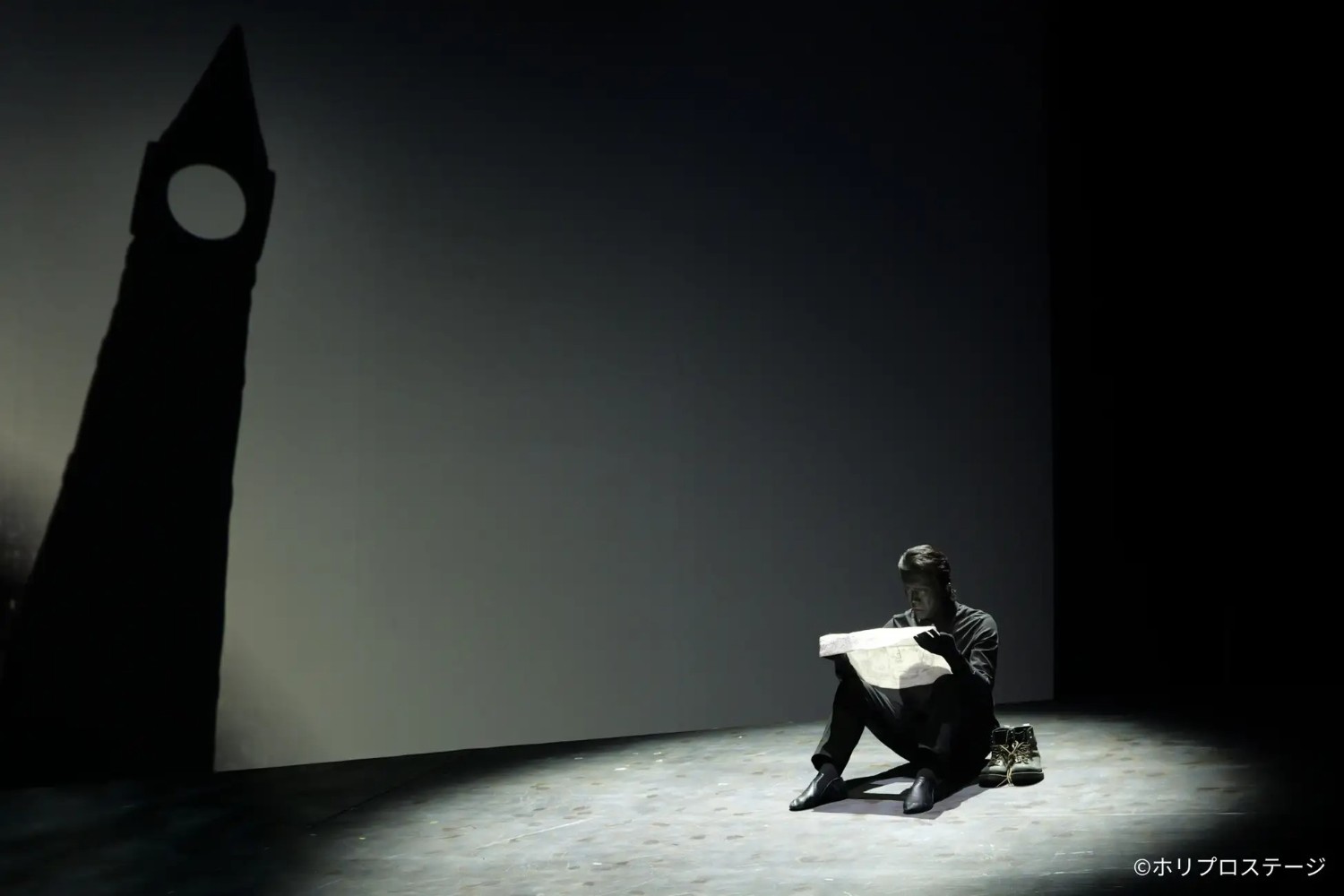
In the scene where the protagonist's shadow is severed from him with a blade, the novel's surreal premise became a concrete act on stage. The shadow, too, was given a body. Separated from its owner, it acted and danced, and beneath its movements yet another shadow appeared in projection — a shadow casting its own shadow, deepening the dreamlike atmosphere. Between scenes, solo dances that seized the eye followed one after another, carrying forward the lingering mood of what had just passed.
The set structures were shaped as though a square pyramid had been sliced at an oblique angle. Edges that did not meet at right angles and surfaces that tilted away from the vertical added a sense of instability to the space. Each time the structures shifted position, the ground on which the performers stood became a new place entirely. Some scenes looked like an enormous puppet theatre; others felt like watching a work of dance in its own right.
Depth and Dimensionality Overcoming a Confined Space
Projection fell sometimes on a portion of the stage and sometimes across its entirety, giving the space a constantly changing texture. Images layered over a semi-transparent scrim expressed flowing water; in a driving sequence, partial projection conveyed the sensation of moving through a city. At a train station, performers crossing in front of the screen overlapped with the crowd inside it, so that the space within the image and the physical stage seemed to merge into one. The projections, absorbed naturally into the production's overall atmosphere, lent depth and dimensionality to spaces that sets and props alone could not have achieved.
The beast skulls, too, made the fantastical world sharply present. In "The End of the World," the skulls are vessels holding the ancient dreams the protagonist reads, and a motif connecting the two worlds. When dozens of distinctively designed skulls began to glow in the darkness, the invisible dreams held inside them seemed on the verge of taking form. Sound was added to this landscape. Pianist Mayu Gonto, who had been playing from the moment the audience entered, continued without a score, her back turned to the house. Her presence was striking — shaping the flow of the drama by weaving music and sound effects to the movement of each scene. The slightly cool register of the Japanese dialogue and the high-pitched voices of the female characters carried a quality unmistakably particular to Japanese work. Over two hours and fifty minutes, including a twenty-minute interval, the novel's complex world was remade through bodies, sound, light, and image. The pictures that readers had formed inside their own minds passed through the imaginations of many artists and emerged with a beauty that could only belong to the stage.
Following London, the production moved to the Théâtre du Châtelet in Paris, running from 16 to 21 October, and is scheduled to visit LG Arts Center Seoul in April 2027. How will this world be received by Korean audiences? Whether you come as a reader who remembers Murakami's novel or as someone encountering it for the first time on stage, it will be a chance to unfold your own dreams inside End of the World and Hard-Boiled Wonderland.
production photos © Barbican Theatre
Jaeeun Jung
This article was originally published by
➼ Discover the full collection of issues with a print subscription.
➼ You can subscribe here.

