
What Do We Choose to See, and What Do We Choose to Ignore?
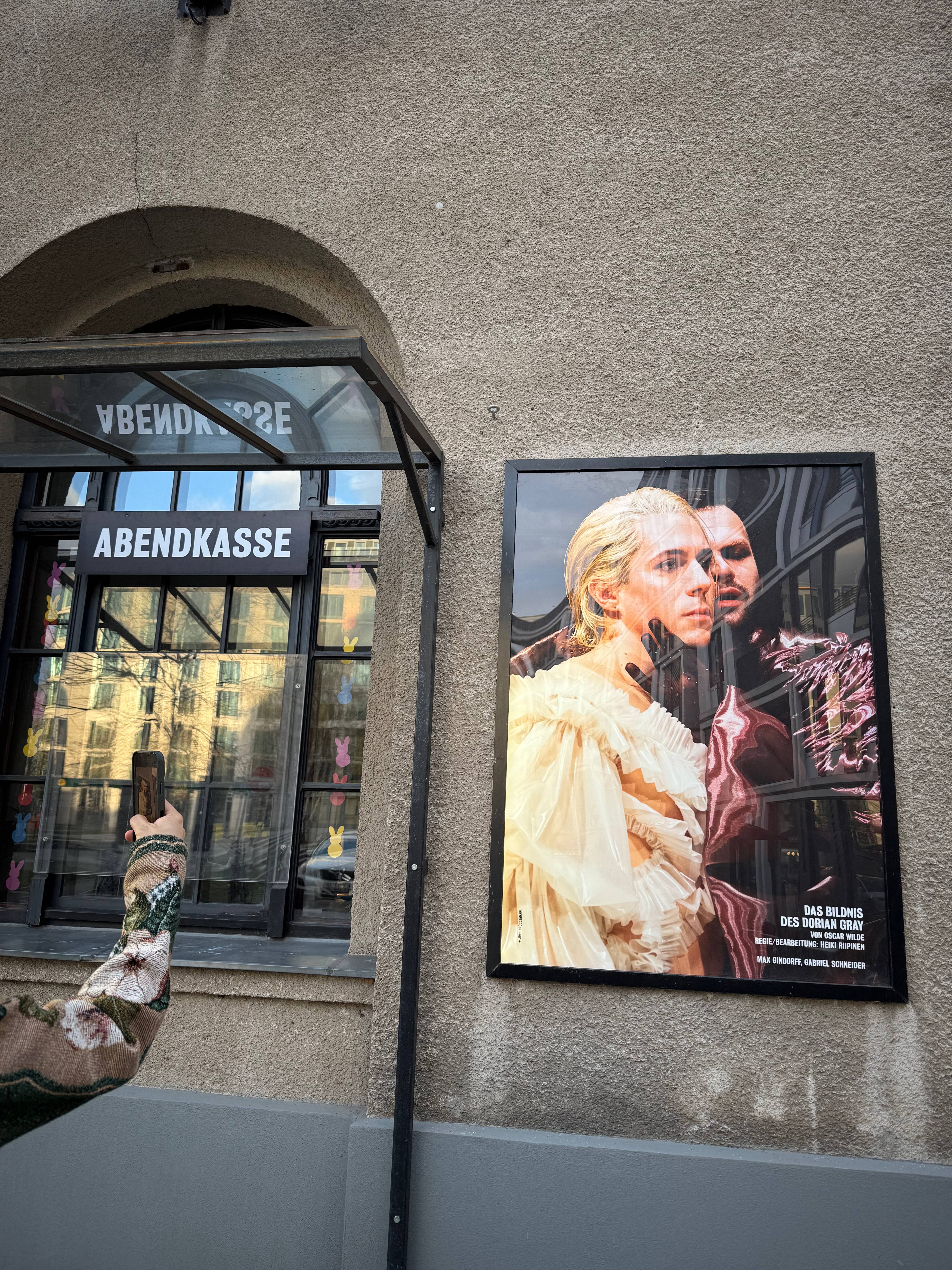
There's something fitting about Oscar Wilde's most provocative novel finding a home at the Berliner Ensemble.
A story about surface and depth, beauty and corruption, the seen and the unseen — it was always going to demand a stage that could hold that kind of weight.
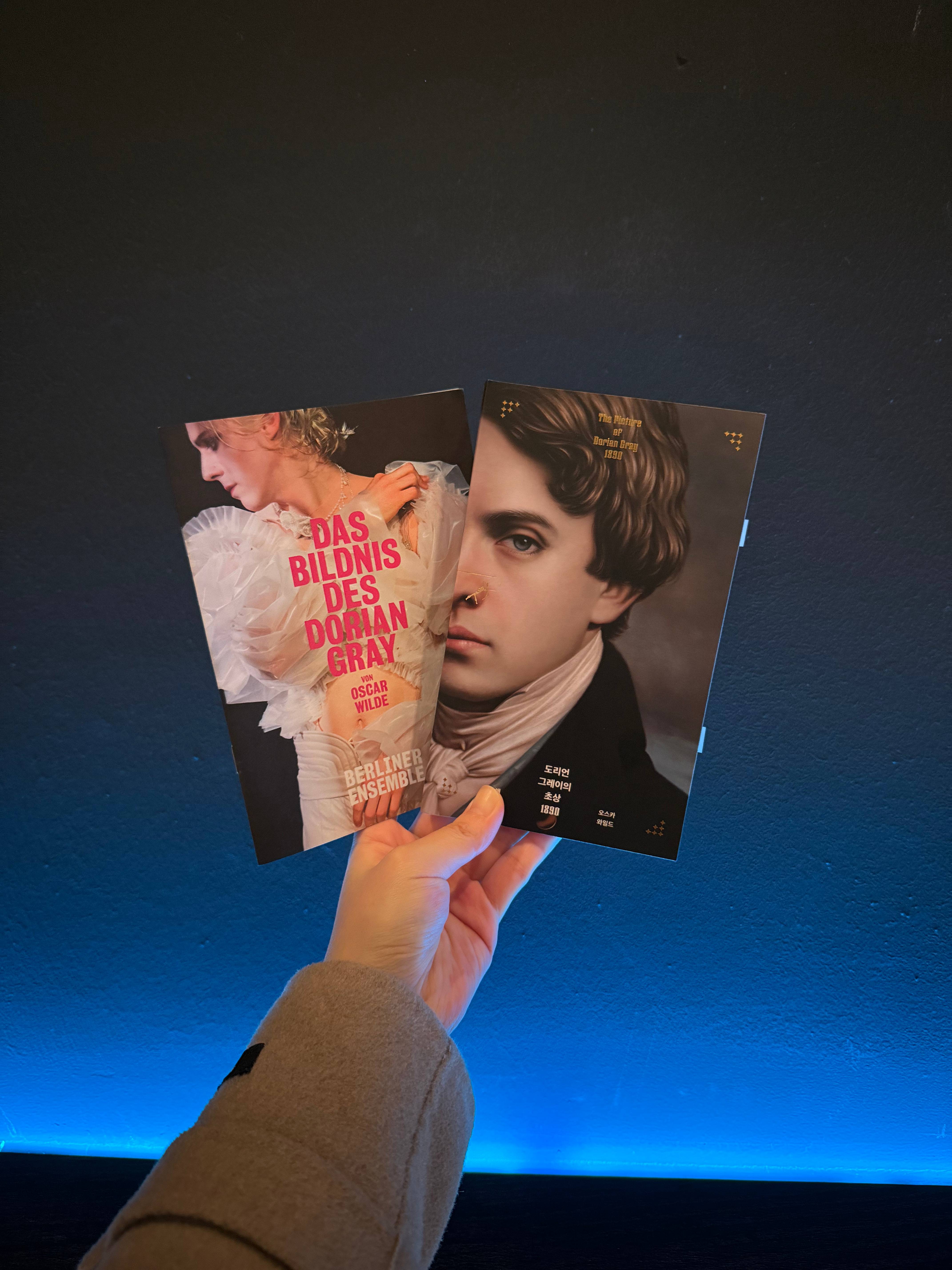
Before attending, I found myself reaching for the book again — not the familiar 1891 edition, but the original 1890 text first published in Lippincott's Monthly Magazine.
The version most readers know was revised by Wilde himself before publication as a novel.
What was quietly set aside in that editing process is, in many ways, the more unsettling and more honest work.
That the 1890 manuscript has only recently received the scholarly attention it deserves — particularly through the lens of queer criticism — makes it feel newly alive, and newly urgent.
The 1891 version has long been considered the definitive text, but the original 1890 manuscript carries a rawness that the later edition does not.
The traces of Wilde writing under the pressure of the world's gaze, and what disappeared in the process of smoothing those traces away.
To know this before walking into the theatre is to encounter the story in an entirely different way than meeting it for the first time.
The Audience Is Not a Witness
The first thing that strikes you is proximity — or rather, the absence of it.
The distance between stage and audience is close enough to feel deliberate.
Close enough to hear breathing.
Close enough for eye contact.
At first I took it for the natural intimacy of a smaller venue.
But as the performance progressed, it became clear that this was a directorial language of its own.
It does not allow the audience to sit back and observe.
You are drawn into the work, implicated in it, made complicit.
Much like Lord Henry, who is captivated by Dorian's beauty, the audience finds itself desiring, admiring, consuming what is on stage.
That discomfort is entirely intentional. For a story about the ethics of looking, of being looked at, and of wanting — there is no more precise choice.
That realization extended the work's resonance far beyond the final curtain.
Where Is the Portrait?
The absence of an obvious portrait in the promotional materials had puzzled me beforehand.
In a story where the portrait is the story — the moral center, the horror, the mechanism of the whole thing — what could possibly take its place?
The question stayed with me throughout the performance.
There was nothing on stage that looked like a portrait at first.
Instead, there were other things: the direction of light, the positions of the actors, the points toward which the audience's gaze was naturally drawn.
By the final scenes, the answer arrives with the kind of clarity that makes you exhale. An ah moment.
A story I already knew — and yet, faced with that directorial choice, I found myself stopping completely.
It is a decision so central to the production's meaning that to describe it here would be to take something away from the experience.
So I will leave it at that.
Catch it live at the venue!!! 🎭
What I will say is this: it reframes everything that came before it, and it lingers.
Walking out of the theatre, I spent a long time talking about that single moment with the person I had come with.
That alone tells you something about what this production has achieved.
On What Can Be Seen
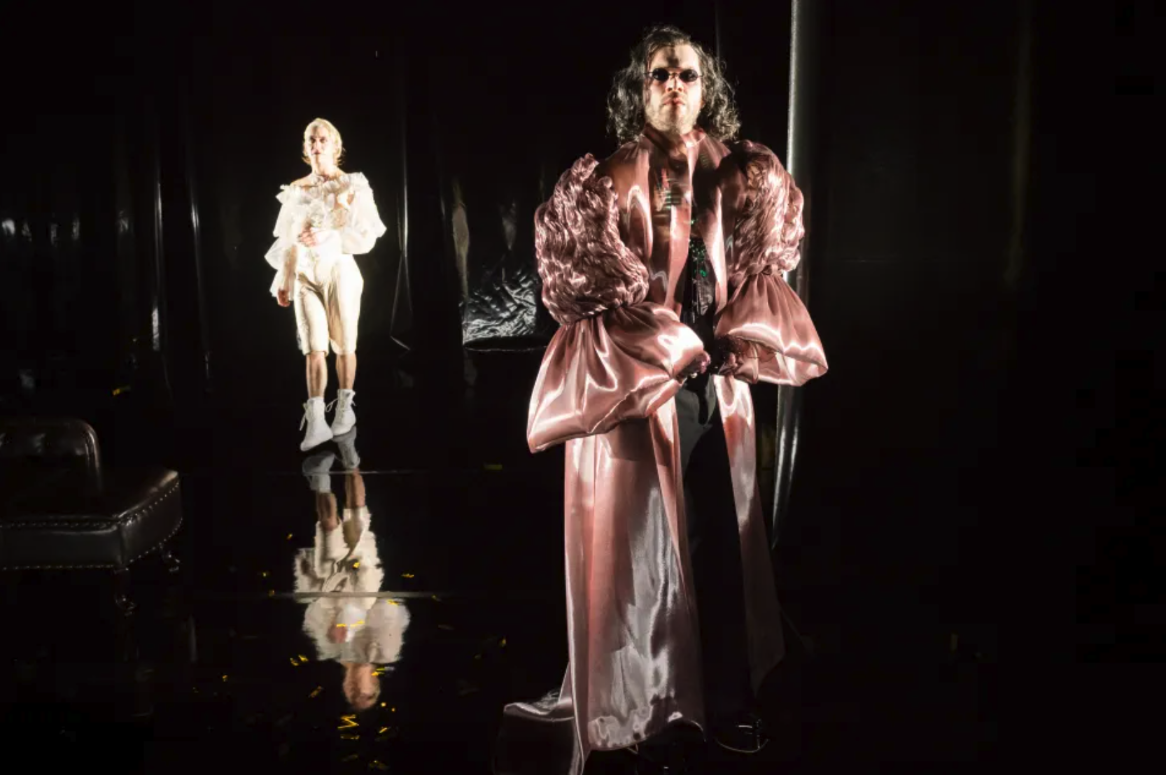
The costumes by Louise Fee Nitschke were everything one might hope for, and then some.
Henry's towering heels and that high-gloss coat announce a character who treats aesthetics as ideology — which is, of course, precisely the point.
The way the texture of that coat shifted under different lighting, appearing to change with every scene, resonated perfectly with Henry's essential superficiality.
Beautiful things that simultaneously conceal something. It was the moment costume became character.
Dorian's charm is rendered not through a single defining image but through constant, almost playful transformation — innocence and corruption, seduction and emptiness cycling across the same face.
You come to understand viscerally why falling for Dorian is inevitable. And that understanding makes the discomfort that follows all the sharper.
On the Performers
The production lives and falls on Max Gindorff, and he knows it — which is itself part of the performance.
As Dorian Gray, he commands the stage from the very first moment with a quality that is difficult to name precisely: a physical confidence that reads less as acting and more as a state of being.
The eyebrows, the mouth, the way his entire body seems to arrange itself into an aesthetic argument — Gindorff inhabits Dorian's narcissism not as a character choice but as a second skin.
What makes it remarkable is that beneath all of that surface, something else is moving. The corruption accumulates quietly, almost imperceptibly, beneath the gloss.
By the time it breaks through, you realize you had been watching it all along without quite seeing it. That double vision — the beautiful exterior and what it conceals — is precisely what this novel is about, and Gindorff carries it with full understanding.
Do not miss the intermission. I mean that sincerely.😏
Gabriel Schneider brought the kind of steady, fully inhabited presence that makes a performance feel trustworthy from the first moment — the particular confidence of an actor who does not need to reach for the stage because the stage is already theirs.
In every scene he appeared in, there was nowhere else to look.
The gaze found him naturally, and he never once betrayed it.
Amal Keller was quietly extraordinary.
The word I keep returning to is dramatic beauty — not decorative, but active.
There are performers whose presence on stage feels like an event in itself.
Every scene she was in became slightly more vivid, more in focus. What she communicated without words was as significant as anything she said.
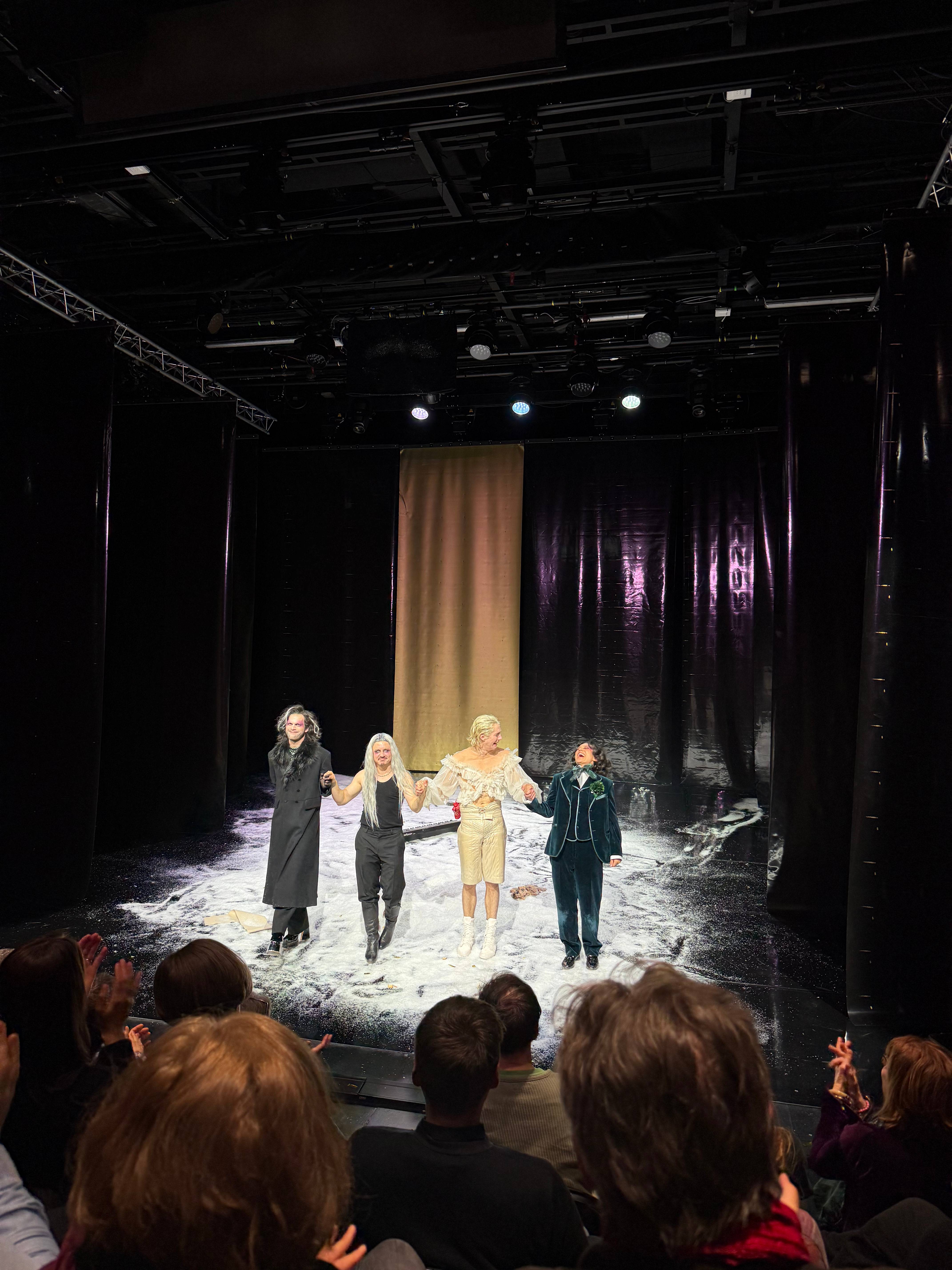
When I saw her again at the curtain call, every emotion from the performance came rushing back at once.
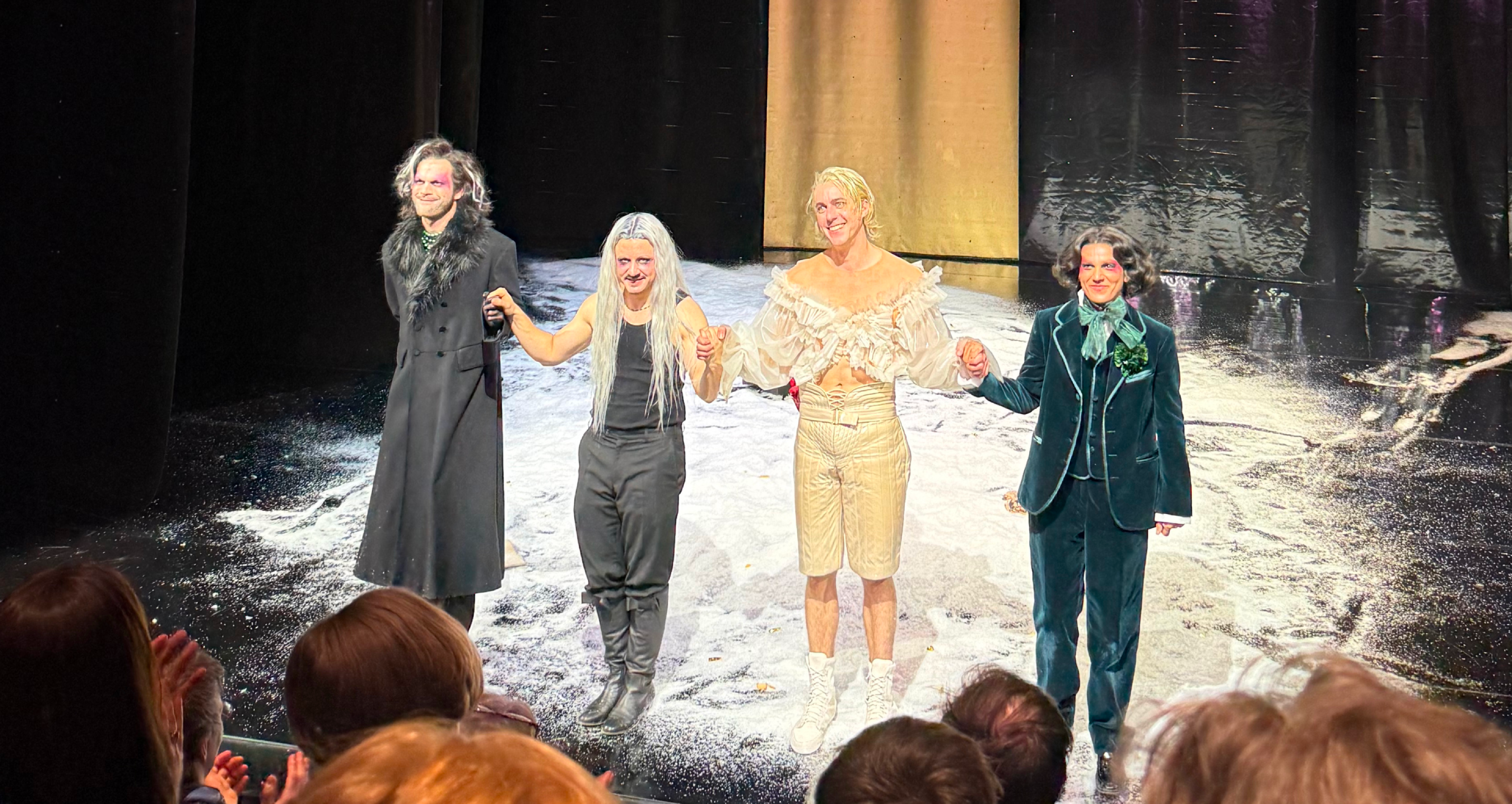
On the Berliner Ensemble
This is one of the things the Berliner Ensemble does better than almost anyone: within a single season, over a short stretch of time, genuinely great actors appear in genuinely ambitious work, one after another.
For anyone who loves theatre seriously, that kind of access is rare, and worth planning around.
That the company carrying Brecht's legacy should choose to stage Wilde is itself a kind of statement.
Two giants whose questions about beauty and morality, art and life, point in different directions and yet arrive at the same place. This production stands at exactly that intersection.
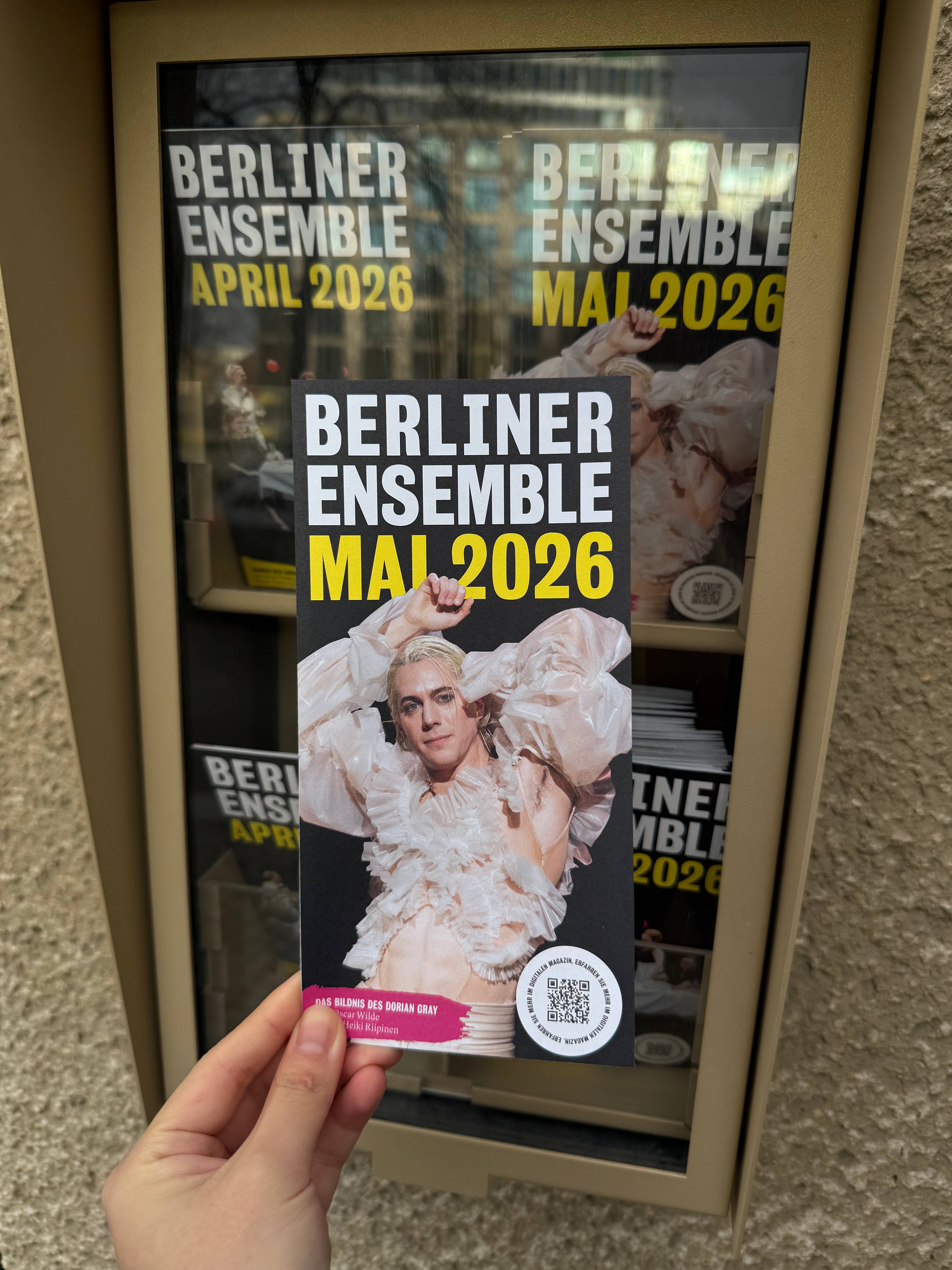
Leaving the theatre, I wanted to read the book again. The 1890 version, this time.
Whether you are someone who loves yourself too much, someone worn down by the tedium of living, someone starved of love, or someone who has begun to doubt the very idea of moral judgment — I hope you will find a way to meet Dorian.
