

Can human beings remain free in the face of truths they do not know? The ancient Greek tragedy Oedipus Rex tells the story of a man who pursues the truth without knowing his own origins or fate. The play has often been understood as a portrayal of the limits of human agency in the face of an inescapable destiny. Yet the tragedy of Oedipus is not only a story about a fate that has already been sealed; it is also a story about a man who comes to discover himself without knowing who he truly is. Rather than turning away from the truth, Oedipus seeks to uncover it, only to find his entire world collapsing around him. His story compels us to reconsider how far we can be held accountable for facts of which we were unaware, and what it truly means to know the truth.
Perhaps the reason Oedipus Rex continues to return to the stage today is that these questions remain as urgent as ever. Even when staging the same tragedy, the Oedipus audiences encounter can differ significantly depending on how a production interprets fate and human will, and how it brings truth and destruction to life onstage. Comparing the National Theater Company of Korea’s Antropolis III: Oedipus with Su Company’s Oedipus therefore involves more than identifying differences in directorial approach. It is an opportunity to examine how each production reinterprets the tragedy of the human condition in this classical work, and what questions it leaves with contemporary audiences.
Not a Perfect Man, but a Minority Who Has Endured Prejudice and Discrimination: Oedipus
The National Theater Company of Korea’s Antropolis III: Oedipus challenges the familiar questions posed by the tragedy. Rather than asking whether Oedipus could have escaped his fate, the production asks how we define human perfection—and how society pushes those who fail to meet its standards to the margins. Here, perfection refers less to moral integrity than to an idealized image of the human being, one endowed with wisdom and the capacity to govern. Through Oedipus, portrayed as both a person with a disability and a migrant, director Ryangwon Kang—He is a director who has developed his theatrical practice by focusing on unfamiliar, restrained language, fragmentation, and physical movement. His process involves long-term collaboration with actors, bringing together their ideas and perspectives to shape each scene of a production.— overturns conventional notions of what it means to be “perfect.” Paradoxically, it is precisely because Oedipus has experienced his own imperfections that, as the play progresses, he reveals the possibility of understanding the suffering of others and embracing those whose experiences differ from his own.
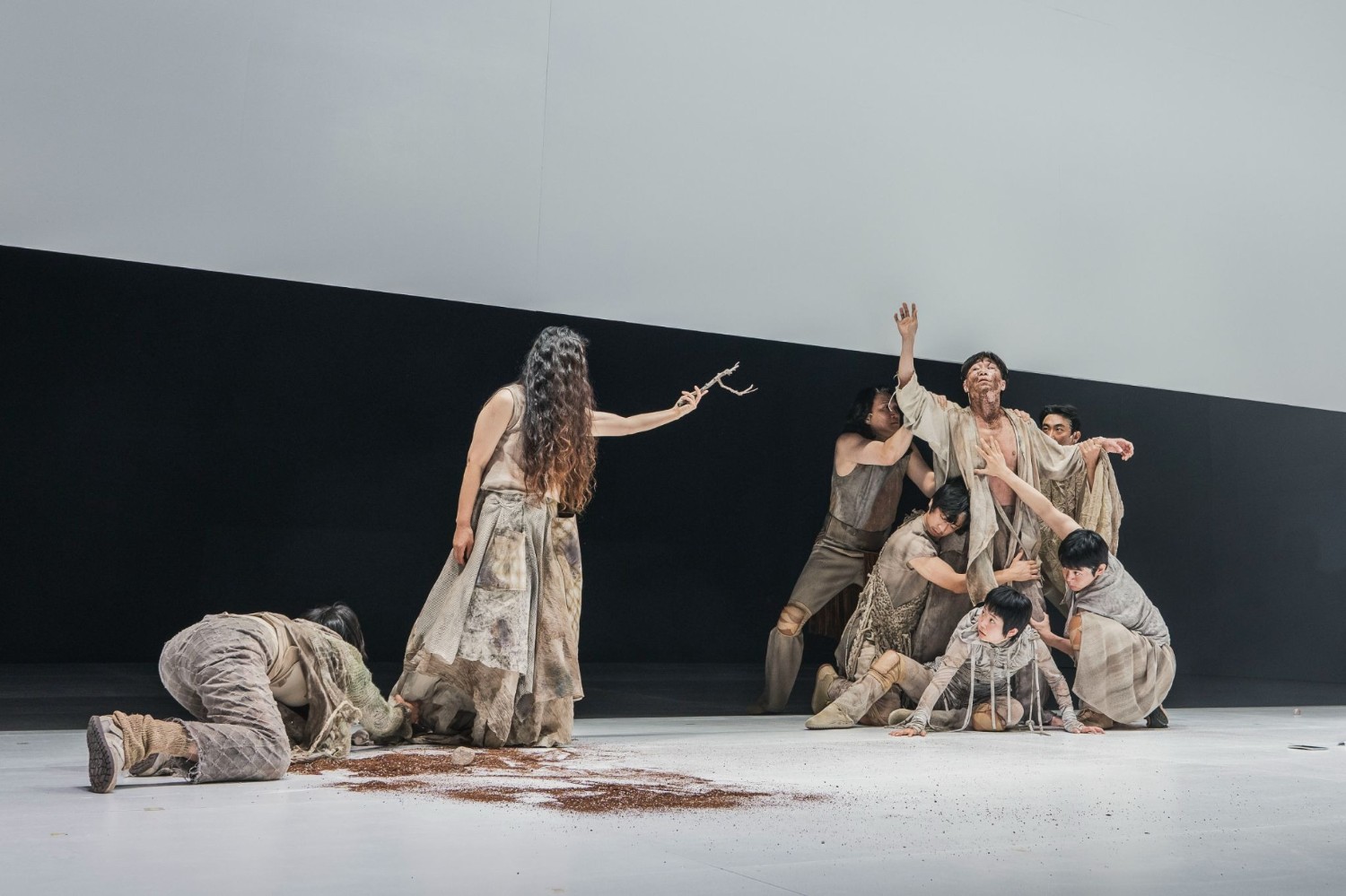
This perspective expands Oedipus’s personal tragedy into a broader social critique. The questions of whom we hold responsible for a disaster, whom we exclude, and whose voices we include in the process of finding a solution ultimately lead to a more fundamental question: which beings does a community recognize as its members? The presence of nonhuman entities, including animals and diamond, further reinforces this communal perspective. By observing, recording, and bearing witness to human actions, these nonhuman presences become active participants in conveying a collective point of view. The production also uses a massive wall to divide the stage, confining the action to just one quarter of the performance space and creating a world defined by separation and confinement. Yet in the latter part of the play, the wall is removed and the stage opens up, signaling an escape from this fractured world. Together with the nonhuman beings, Oedipus begins to move toward a new path—a journey into the “wilderness.” Even after blinding himself and becoming a social outcast, he must confront how to accept his fate and move forward into this unfamiliar world.
Ultimately, the tragedy presented in the National Theater Company of Korea’s Antropolis III: Oedipus is not simply the story of a man who fails to defy his fate. Rather, the production asks us to reconsider the standards by which a society in pursuit of perfection draws the boundaries of its community. It suggests that acknowledging one’s own imperfections can be the starting point for understanding the suffering of others. In this way, the tragedy of Oedipus evolves beyond the pursuit of human perfection into an exploration of the possibility of a community in which diverse beings share their imperfections and learn to live together.
The Essence of Ancient Tragedy: A Human Being Brought to Ruin by Fate
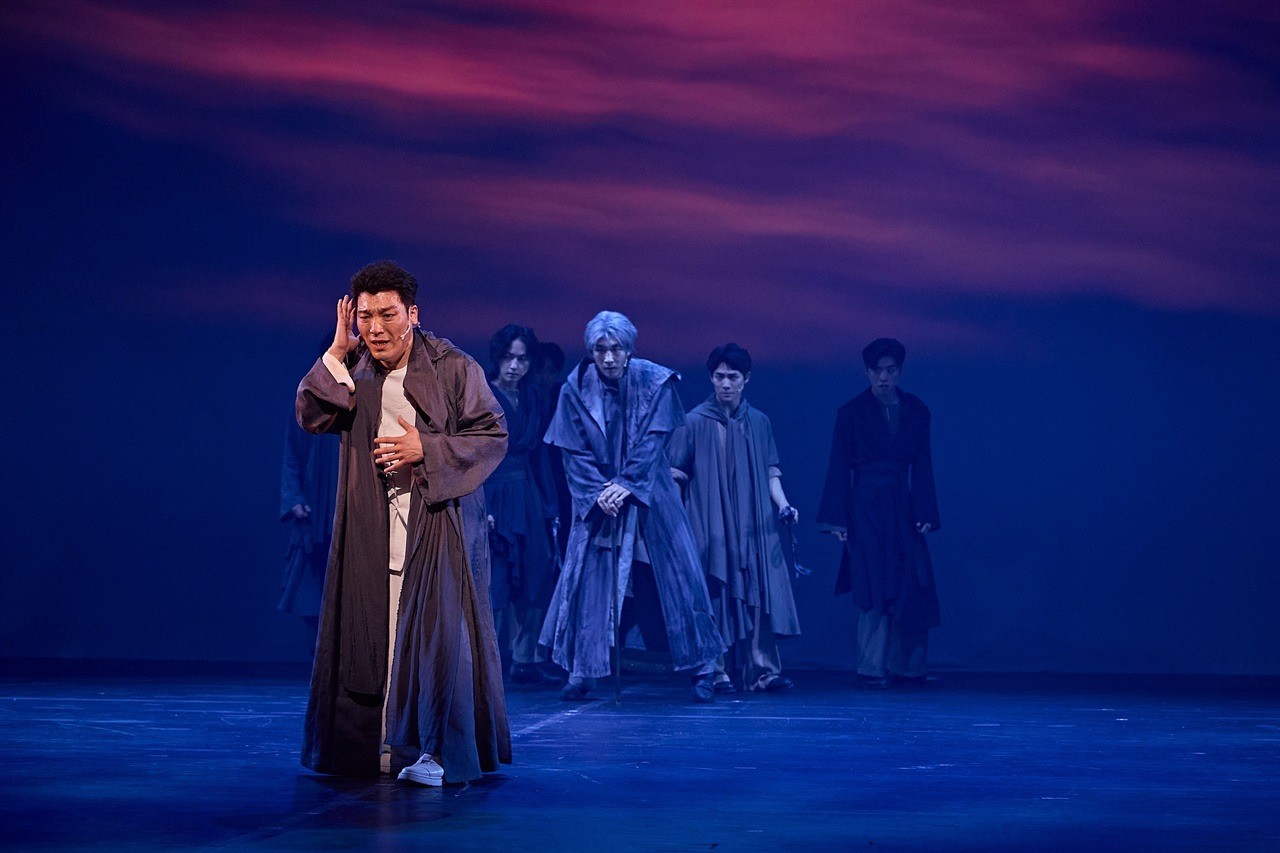
The tragedy portrayed in Su Company’s Oedipus lies in the downfall of a man who believes he can defy fate, only to be defeated by its inevitability. The closer Oedipus comes to uncovering the truth, the more he confronts a destiny beyond his control. The paradox that an investigation undertaken to resolve a crisis ultimately leads to his own destruction reveals how powerless human will and reason can be in the face of divine order.
Oedipus is neither ignorant nor incapable. On the contrary, he is a determined and proactive figure, driven by a strong will to uncover the truth and the ability to make sound judgments. Yet he remains unaware of the truth surrounding his own birth and destiny, ultimately unable to overcome the limits imposed by fate. The tragedy lies in the realization that even when human beings believe they fully understand and control their own lives, an order beyond the reach of human agency continues to prevail.
The inevitability of tragedy is also reflected in how Su Company’s Oedipus brings the protagonist’s inner world and tragic circumstances to life onstage. Through dialogue, the production directly conveys Oedipus’s predicament and psychological transformation. Meanwhile, the realistic portrayal of tragic events within a minimalist stage setting allows the audience to confront his downfall with greater clarity. The expanded role of the chorus, a defining element of ancient Greek tragedy, creates a multidimensional dramatic structure by bringing the protagonist’s inner turmoil into dialogue with the gaze of society. The appearance of nonhuman entities, along with the starkly realistic depiction of the death of Jocasta, Oedipus’s mother and wife, further underscores the tragedy of the events.
Rather than leaving the audience to fill in the tragic circumstances through their own imagination, these staging choices present the downfall of a human being before the force of fate in a concrete and unflinching manner.
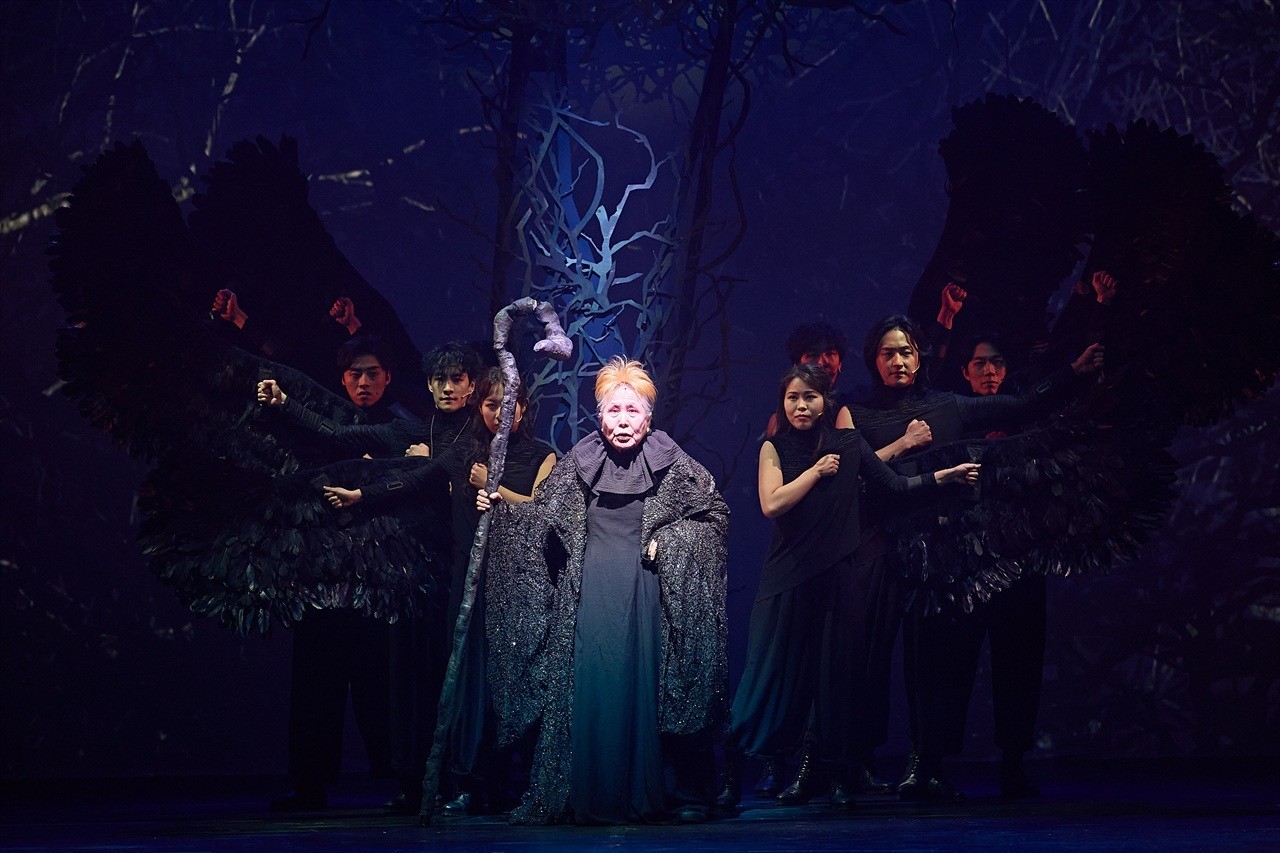
While the National Theater Company of Korea’s Antropolis III: Oedipus broadens the interpretive scope of tragedy through the perspectives of nonhuman beings coexisting with social minorities, prompting us to reconsider the ideals of human perfection and the meaning of community, Su Company’s Oedipus foregrounds the limits of human agency in the face of fate and the inevitability of tragedy. Although both productions draw on the same classical work, one invites us to reexamine the standards through which we understand humanity and community, while the other confronts us with the force of a destiny that human will alone cannot overcome.
Perhaps tragedy remains relevant thousands of years later precisely because it illuminates the human condition from these different perspectives. Faced with the reality that we cannot fully control our fate, how do we come to terms with this truth? And how can we understand our own lives and continue to live within the limits of our human condition?
production photo © National Theater Company of Korea
