
We navigate a labyrinth of boundaries, often oblivious to the subtle lines we cross daily. While some frontiers are explicitly demarcated and visually unmistakable, far more remain invisible: territorial claims, natural resources, individual rights, and personal spheres. To safeguard what we deem ours, we routinely tread across these delicate demarcations. This raises an inevitable question: What is the true cost of stepping 'just a little' out of line?
A Line Drawn in Jest: Escalation from Petty Friction
The production originates from Sukoshi Hamidete Nagurareta (Slightly Out of Line and Beaten Up), written in 2012 by Tsuchida Hideo, leader of the renowned Japanese theater company MONO. It made its Korean premiere at the LG Arts Center in November 2015 under the direction of Kim Kwang-bo (then Artistic Director of the Seoul Metropolitan Theatre) with an adaptation by playwright Kim Eun-sung. Subsequently, the company Star of the East acquired the official license to present a revived staging at the Midnight Theater Festival.
The narrative unfolds inside a correctional facility, where petty offenders casually draw a line across the floor and declare it an "international border." This seemingly harmless prank unravels their tranquil routine. As minor friction accumulates into layers of hostility, the raw, unsavory truths of human nature and tragedy come to the fore. In his notes, the playwright reflected on the palpable chilling of post-earthquake Japanese society; amid that social climate, he sought to scrutinize humanity itself before critiquing political or structural institutions. For this production, Star of the East adapted the setting into a fictional state tailored to local sensibilities, allowing audiences to engage fully with the universal themes rather than remaining tethered to a specific real-world event.
Reframe Through Dark Comedy
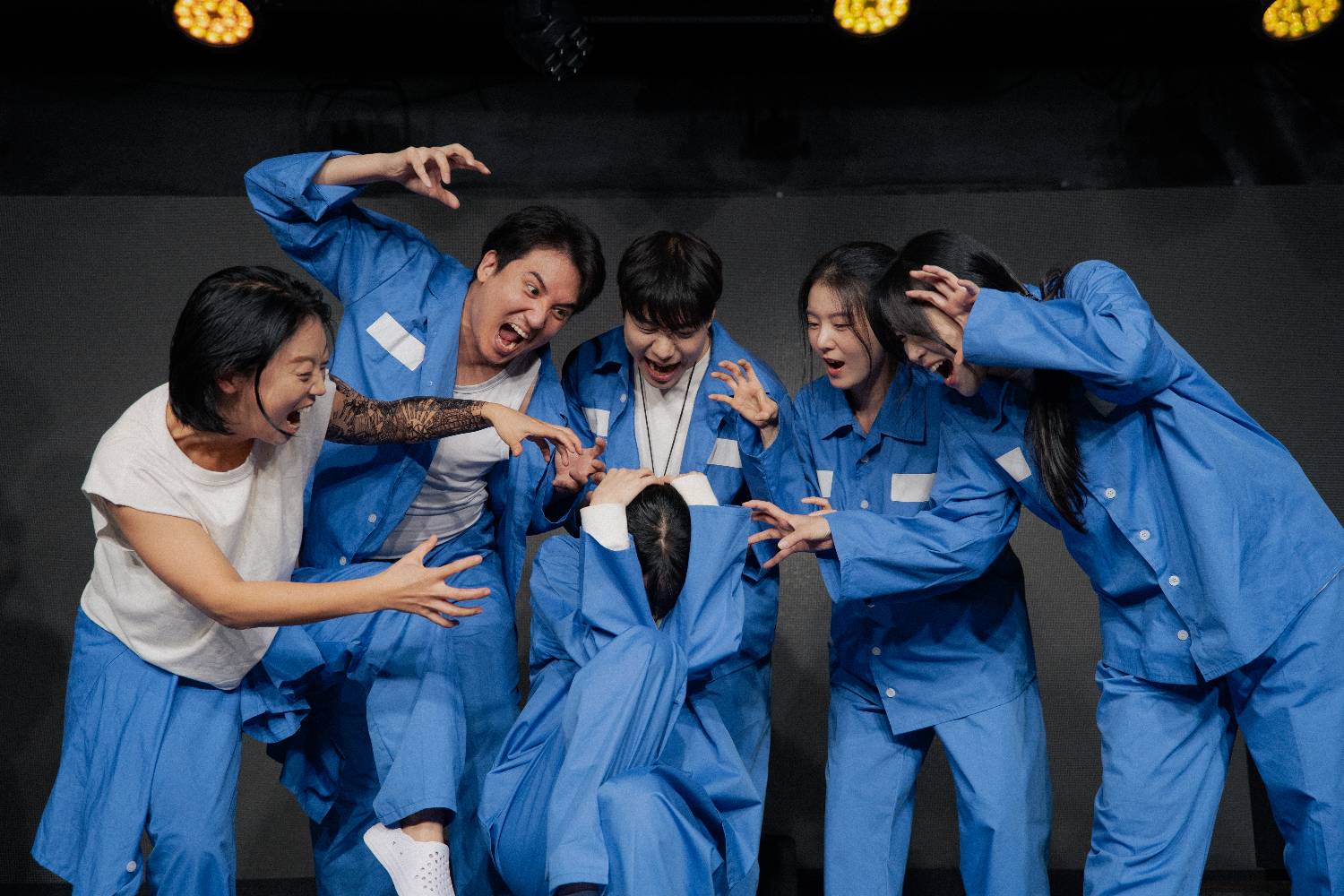
Set within a shared facility housing guards and inmates from disparate regional backgrounds, the drama hinges on a sudden government decree that bisects the premises with a new official border. Instantly divided by this arbitrary boundary, the characters succumb to self-serving desires and escalating discord—a setup ripe for incisive black comedy.
To read this work merely as a light ensemble piece or a chaotic farce would be a surface-level interpretation. The black comedy framework performs crucial dramaturgical labor: it lightens the thematic weight and establishes a precise rhythmic tempo, allowing the audience to navigate tension through a dual lens of laughter and absurdity. Far from diluting the message, this comic mechanism acts as a buffer against the raw violence and cruelty inherent in the conflict, preventing direct psychological overwhelm while compelling the viewer to stay engaged through to the final curtain. In essence, the production leverages dark humor to elevate sharp social satire into resonant theatrical art.
Resonances with Wajdi Mouawad’s Incendies
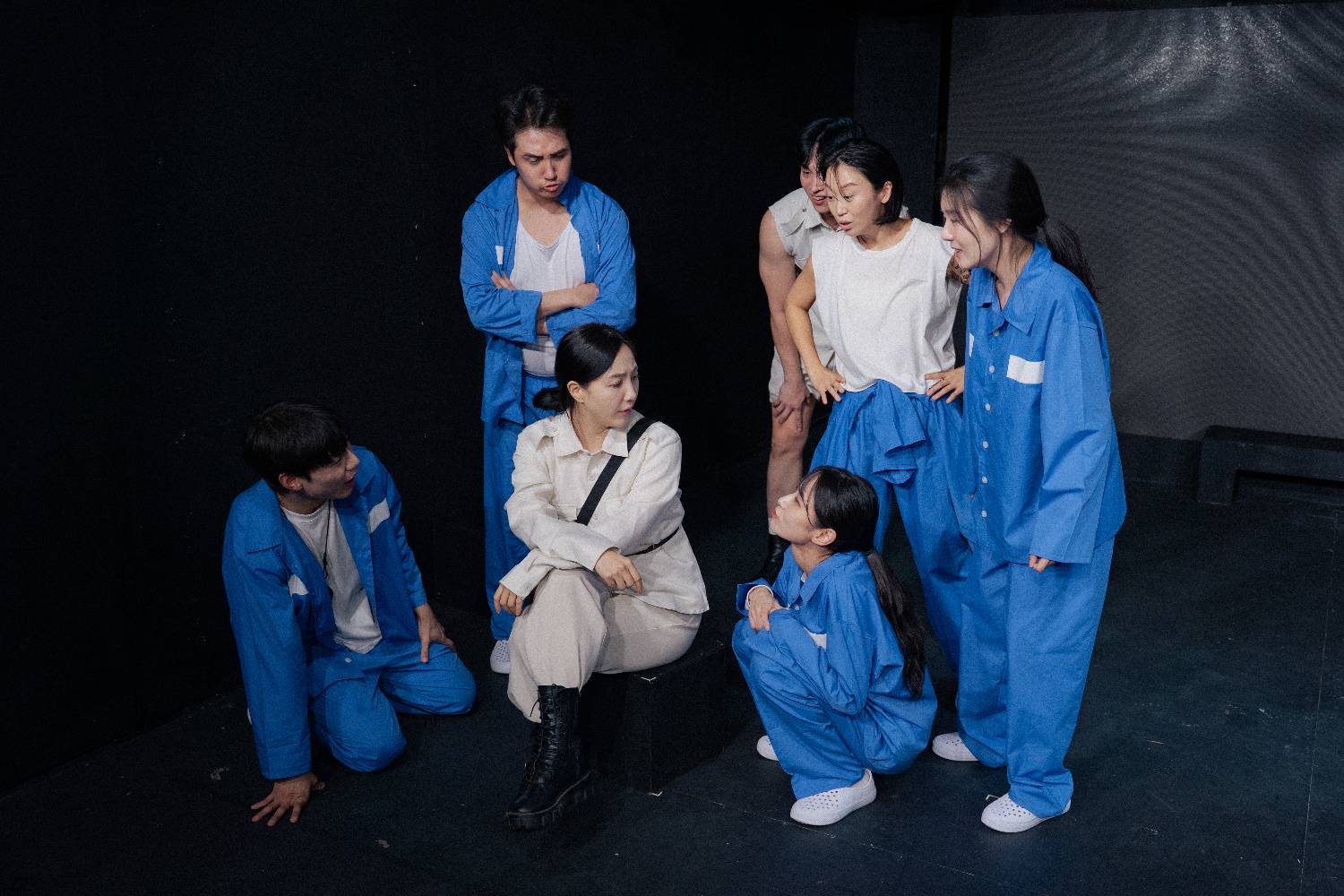
Viewing this performance inevitably brings to mind Incendies, part of Wajdi Mouawad’s celebrated war tetralogy. Though stylistically distinct, both works converge on the notions of "the boundary" and "transgression." While Incendies begins at the tragic outcome and backtracks through Nawal’s life to trace how lines were drawn and transgressions multiplied, Slightly Out of Line and Beaten Up moves forward from the genesis of the boundary. It demonstrates how casual crossings turn difference into discrimination, discrimination into conflict, and ultimately into an unyielding wall.
This thematic overlap becomes strikingly clear when juxtaposed with Scene 17 of Incendies ("Kfar Rayat Orphanage"), where a physician remarks:
Nobody knows who is shooting at whom, or why. (…) That is war.
There must have been a reason. But my memory stopped there.
Boundaries are invented, named, and institutionalized by arbitrary human collectives. The line itself remains static; it is the human beings divided by it who undergo mutation—a truth this production underscores with unswerving focus. Yet unlike the tragic closure of Incendies, this play concludes by dissolving its lines, offering a tentative step toward mutual understanding and reconciliation.
Scenographic Restraint: An Actor-Centric Canvas
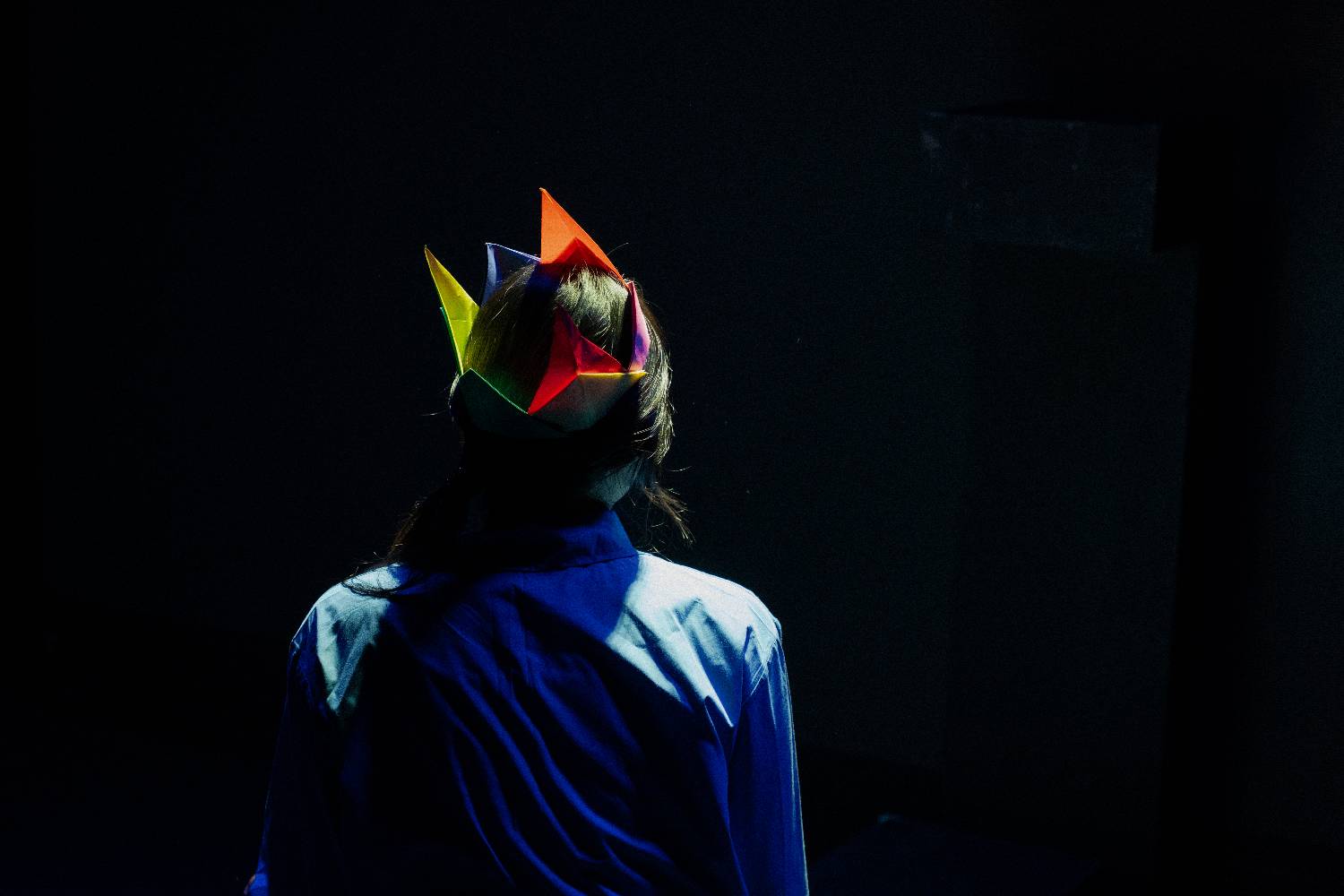
The scenography adopts a minimalist approach centered on evocative stage objects. By stripping away extraneous clutter, the staging directs the audience's gaze squarely onto the ensemble's performance and character dynamics. Director Lee Dong-gyu employs movable props and symbolic cords to represent boundaries, a economical design choice that amplifies the physical and vocal rhythms of the cast. The result reflects a deliberate, thoughtful effort by the creative team and cast to render complex character analysis and thematic subtlety accessible to contemporary local audiences.
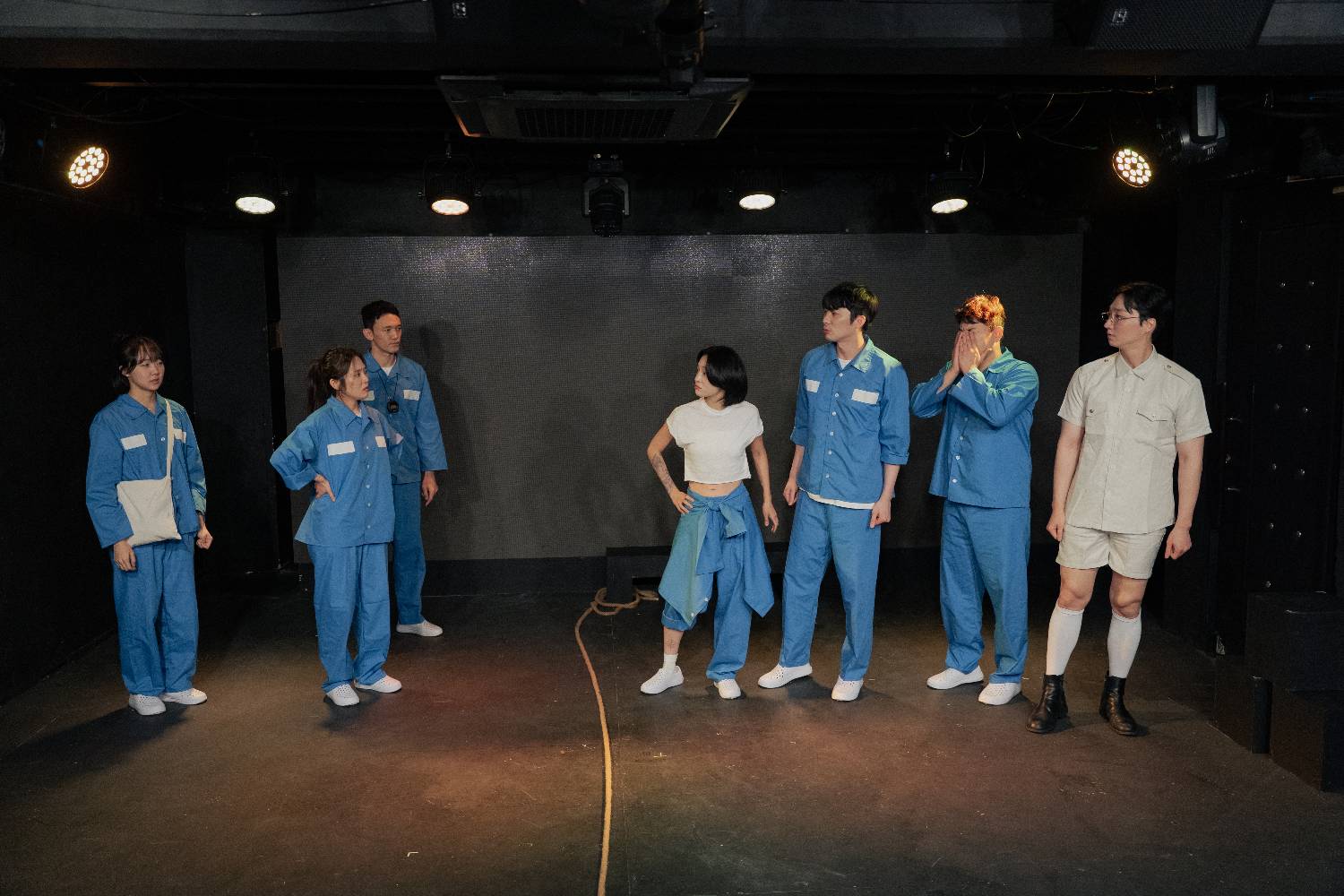
Furthermore, the integration of media wall projections offers clear visual exposition regarding the adapted background and scene shifts. This visual shorthand dispenses with cumbersome explanatory dialogue, granting actors smooth transitional beats while preserving the narrative momentum for the audience—a subtle hallmark of seasoned theatrical craft.
The Innumerable Lines We Inhabit
At its core, the performance poses a vital proposition: only by extending understanding and forgiveness across boundaries can we glimpse the possibility of hope. In an era marked by geopolitical fractures, we continuously cross and erect lines, isolating ourselves within divided spheres. Yet by dismantling these arbitrary boundaries, we may discover uncharted horizons of human connection. Even if territorial claims, resources, or historical narratives are compromised in the process, our shared humanity and life itself must remain inviolate. As the curtain falls, a lingering question remains for us all: What lines currently surround your life?
production photos ©Eastern Star
