

Where the Words Came to Rest
HereWeAre Theatre Club — Offline Meetup on The Socrates Paradox
A PLAY | Where the Words Came to Rest
This article continues from EP.1, From Everyday Life to the Theatre, and Back Again.
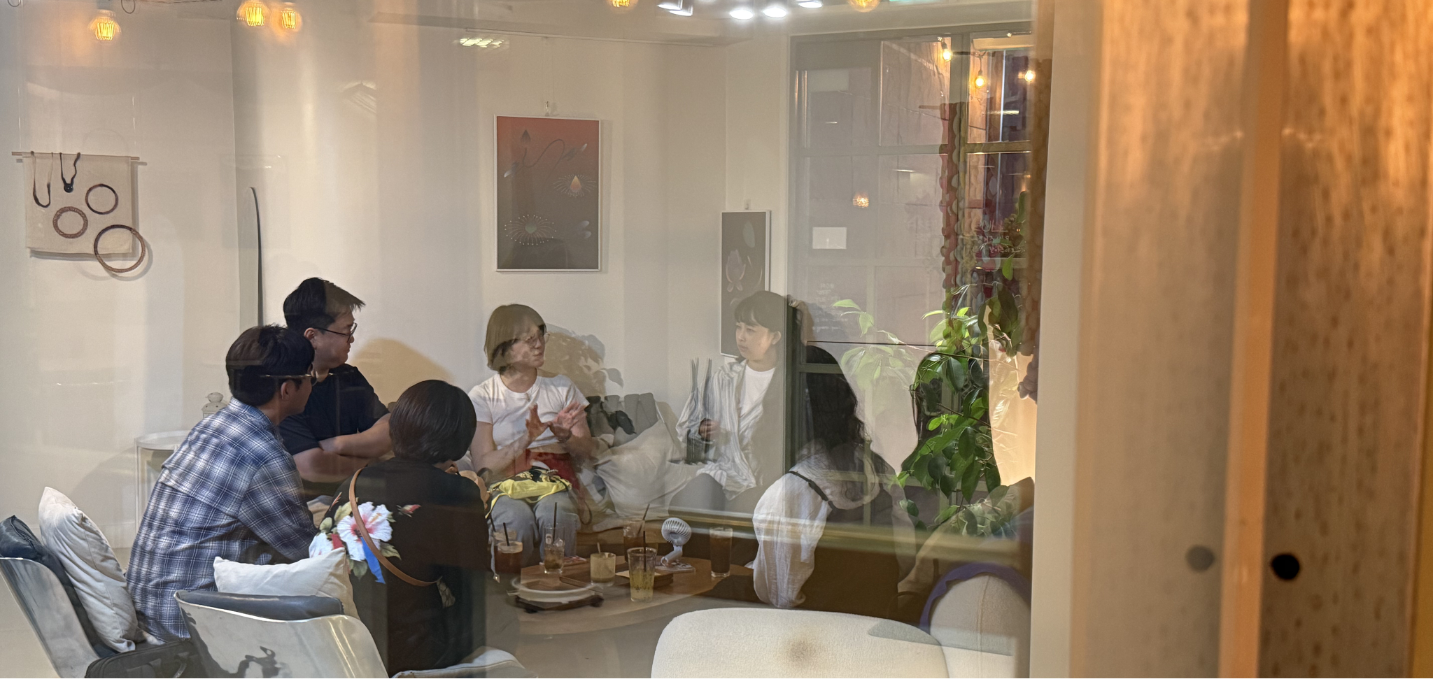
It was a weekday, before the performance began. Six people sat around a small table in Daehangno. This is a story woven from their conversation that day, told across five scenes.
Scene 1. The Feeling of Recognizing Someone
The Moment Familiar Faces Become Special
“When we share stories from long ago, for a moment, we become friends.” — Werther, “We Are”
“For a Good Performance, I’d Go to the End of the World”
The first question was simple: “Have you seen any performances recently?” W mentioned The Lives of Others, a play based on the German film of the same name. They first saw it in July, then returned again in August and September. It started with an actor they liked, Yoon Namu, whose previous work had left a strong impression. On stage, however, his portrayal of Dreyman was different from the image W had carried from the film. That unfamiliar interpretation was precisely what made the performance so convincing.
W had always enjoyed films. Actors on screen could feel almost untouchably cool, but theatre had always seemed more distant. The others nodded. Even when a theatre is physically close, going to one performance can mean giving up another. There are simply too many things to see. “For a good performance, sometimes it feels like you have to go to the end of the world.”
An Unexpected Reunion
The door opened. It was J and D. “I thought you’d be late,” S, who had arrived earlier, said in surprise. The host asked if they already knew each other. S explained that they often went to see plays together and had known each other for about three years. Neither of them had expected to meet here today. When D mentioned that it had been difficult for them to see each other lately, S laughed and said they never would have imagined running into each other here. To meet even at such a small gathering—that, they said, was a real connection.
S said they had not been going to the theatre seriously for very long: two and a half years since they first got into theatre. For a year and a half of that time, they went five days a week, seeing two performances a day. When two shows a day became too much, they cut back to one. At one point, they were seeing around ten performances a week, practically going to the theatre every day. These days, they have slowed down considerably, usually seeing five or six shows a week. When asked about this week’s schedule, S went through their itinerary starting from the day before: one performance in the afternoon, followed by The Survival Guide to Cruel Fairy Tales in the evening. The evening before that, they had seen the same production.
They had originally preferred films, seeking out everything from independent films to different genres and going to screenings in person. What changed their direction was a production they saw when they came to Daehangno after a long break. There were five actors in the show, with five different casts, twenty-five actors in total, and every single cast was good. S remembers thinking, “There are this many talented actors?” But there were only three months left in the production’s run. So S went diligently to see every cast within that time, memorizing every role almost to the level of a swing actor. It is still their favorite production. Their favorite shows have changed several times since then, but...
Why We Willingly Choose to Be Sad
Then the conversation turned to a strange question. Why deliberately spend time and emotional energy watching something sad when we already know it might leave us feeling heavy? Perhaps the emotions we suppress in everyday life can finally run freely toward tragedy on stage. And paradoxically, that can give us room to breathe.
The group talked about how some people actively seek out tragedy rather than light entertainment. L was one of them. L likes watching actors cry, collapse, and roll across the stage—expressions of emotion that are difficult to experience openly in everyday life. Bright, upbeat shows are not necessarily their first choice. Instead, L enjoys works that could almost be described as “tragedies of ruin upon ruin upon ruin.” Among them, their favorite is the musical The Brothers Karamazov.
The Feeling of Recognizing and Being Recognized
“Recognizing” someone is a powerful spark between fans and artists. Just as an audience member recognizes one particular shining artist among countless faces, when someone on stage remembers me in the audience, it can become a reason to keep returning to the theatre.
J often went to the theatre whenever they heard that an actor they had seen on screen was appearing on stage. This happened when J went to see the musical Dazzling five times because of actor Seo Jun-young. When it was time for the autograph, the actor wrote J’s name without even asking, as if he already knew it. That brief moment of being recognized precisely as “me” among countless audience members became a deep source of comfort and healing.
There is a similar kind of joy in unexpectedly encountering an actor somewhere else. J first saw actor Kang Ha-kyung as Riff-Raff in the 2018 production of The Rocky Horror Show. The actor stayed in J’s memory as “someone who is really good.” After briefly forgetting about him amid the busyness of everyday life, J suddenly spotted him playing the protagonist’s senior in the drama The Legend of the Military Cook. “Why is that person there?!” J couldn’t hide the excitement of recognizing him again. When J heard that Kang Ha-kyung would return as Smerdyakov in the musical The Brothers Karamazov, they even found themselves considering giving the production another chance after having previously passed on it because they found it difficult.
The feeling of “recognizing” and the feeling of “being recognized” run toward each other. The audience recognizes the passion of the actor on stage, and the actor recognizes me sitting in the audience. Perhaps the real force that keeps the performing arts ecosystem moving is the circulation of these two gentle ways of noticing and acknowledging one another.
Scene 2. One Role, Different Faces
Seeing the Same Stage Doesn’t Mean Seeing the Same Thing
“A reversed image in the mirror, I am another name for you.” — Fan Letter, “The Mirror”
A Scene Only One Actor Could Give You?
S unexpectedly fell in love with the musical Paganini, which they had gone to see without much expectation, and ended up seeing all three casts. But when someone they knew, who had seen the cast featuring Kon first, excitedly described a particular scene, S could only tilt their head in confusion. Even after seeing the show three times, they had no memory of the scene at all.
It turned out that the moment when Paganini embraces the female lead from behind while guiding her hands on the violin was a special bit of staging that was only possible with a particular cast whose actors had a significant height difference. In this way, a scene missed by one audience member can be completed by another audience member’s perspective, revealing the hidden charms of a performance.
S said, “That’s why different reviews come together, and why we can discover so many things that would otherwise remain hidden.”
An Irreplaceable Presence
Everyone at the table had something good to say about the musical Hell’s Kitchen. Each person had seen a different cast, yet they all agreed that the show was worth recommending. In particular, they praised Sooha Kim as an irreplaceable presence. For someone seeing the show for the first time, several people immediately recommended her performance.
The conversation moved to the male roles and supporting characters as well. Actor Tae-i, despite being relatively young, somehow felt like a “father” because of his deep voice and sly, understated acting. Actor Ha-eun Lee was someone several people had admired for a long time. After years of watching her in smaller theatres, they were especially happy to see her finally shine in a role that allowed her full energy to come through.

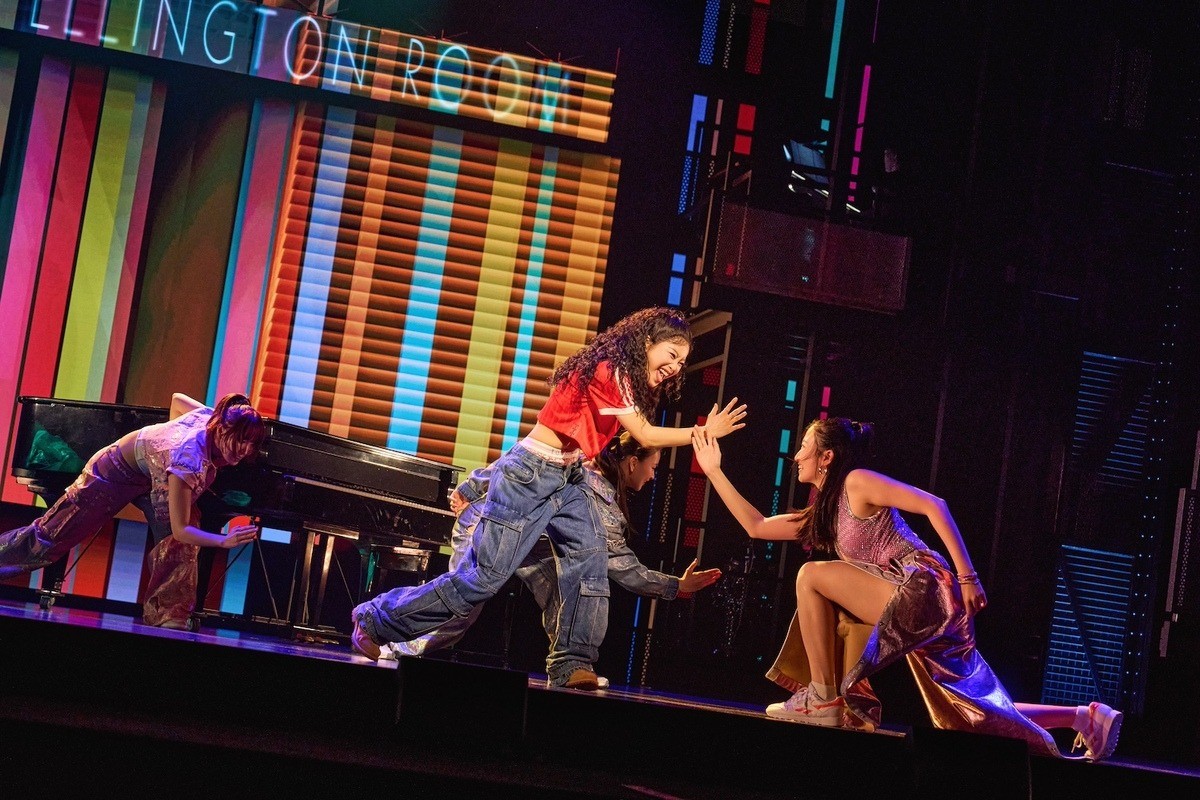
TEven though they had seen the same production, the conversation became richer as each person brought together the different fragments they had noticed from their own perspective.
When asked which production they had seen the most, L picked the musical Gloomy Day. More than ten times. As a three-person play, the texture of the production changes completely depending on which two actors are paired together, and because the actors have plenty of room to interpret their roles, every visit can feel like a different production.
L’s particular favorite is “The Man,” played by actor Jung Min. He slyly manipulates the situation from above while keeping the other two characters engaged with each other. Whenever L encounters a performance with a different tone, they immediately think, This isn’t quite the feeling I was expecting, and book another performance.
Actor Kyu-hyung Lee has also been deeply loved by L for a long time. Although he has not returned to the Daehangno stage for a while, L had even missed ticketing for his August concert The Praise of Life. He may now be what L jokingly calls their “former main fandom,” but somewhere in their mind, new performances are still unconsciously measured against the characters he created in the past.
W, meanwhile, said that Namu Yoon is currently their number one. Jointly holding second place are Soo-jin Choi and Jae-beom Kim. They are already waiting for their next projects. The affection was obvious.
Scene 3. At the Door of the Unknown
A Place Where Familiar Ways of Seeing Begin to Shake
“You don’t have to understand to love it. You don’t have to explain it to love you.” — Red Book, “You Do, Too”
“I Really Don’t Get It. But Somehow, I Really Do.”
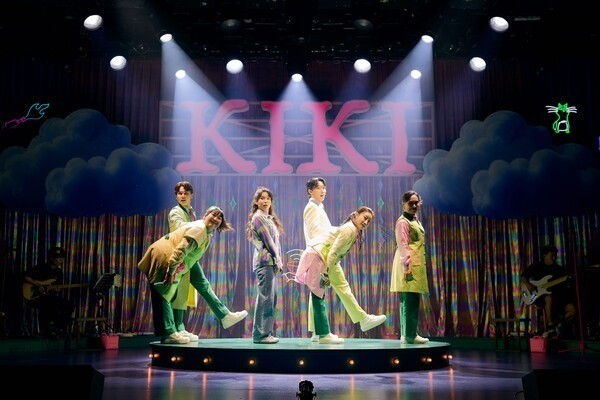
The conversation moved toward works that deliberately break away from familiar theatrical formulas. The first was the musical Kiki’s Diary of Borderline Personality Disorder, encountered through the Creative Arts Center program. The protagonist, Kiki, lives with borderline personality disorder. The production uses gender-free casting and takes the form of a talk concert, with Kiki directly addressing the audience. Supporting characters constantly shift roles—mother, lover, and others—creating an unstable world around her.

Kiki can react extremely strongly to seemingly minor triggers. At first, it can leave you thinking: “To that extent?” But as Kiki begins recovering through therapy, that initial distance gradually turns into understanding and empathy. Her symptoms do not simply disappear at the end. Instead, she learns how to recover. That gentle ending becomes a form of reassurance: “I’m okay like this.”
For people living with similar anxieties, that message can land quietly but deeply. There were certainly aspects that made the production difficult. It was not necessarily a show everyone wanted to see twice, nor one that could easily be recommended to anyone. But perhaps that was precisely why it was worth crossing a mental boundary at least once.
The play White Rabbit, Red Rabbit took experimentation even further. The actor and the audience encounter the text for the first time together on stage. The actor has never seen the script beforehand. And because the performance can only happen once in an actor’s life, the audience is also required to participate without prior information.
But there is a blind spot. If an audience member already knows what is going to happen, that prior knowledge can interrupt the experience. And if the actor does not fully understand the text either, the result can sometimes become confusing.
One practical thought remained: if the actor is supposed to experience it only once, perhaps the audience should too. J put it this way: “The actor should be experiencing it for the first time, and I should be experiencing it for the first time too. But when some audience members already know everything, it breaks the flow.”
Still, the questions raised by the production remained compelling. What happens when actors with different backgrounds—screen acting, musical theatre, traditional theatre—encounter the same unguarded text? How does each person interpret it? One attendee had watched from the second floor and could not participate directly. They said they enjoyed watching the actors respond to the audience, but imagined the experience would have been much more vivid from the first floor. It was a challenging performance that kept returning to one question: What was the author actually trying to say?

A Space Where the Heart Responds Before the Head
The conversation became particularly animated when immersive theatre came up. Instead of remaining in fixed seats, the audience leaves their seats and follows the actors through the performance space. And because everyone follows a different path, the show can become a different experience every time.
L had seen Sleep No More. Tickets were notoriously difficult to get and cost close to KRW 300,000. Some packages even included meals afterward or access to the lobby. L hesitated because of the price. Eventually, the decision was simple: “I’ll just go once.”
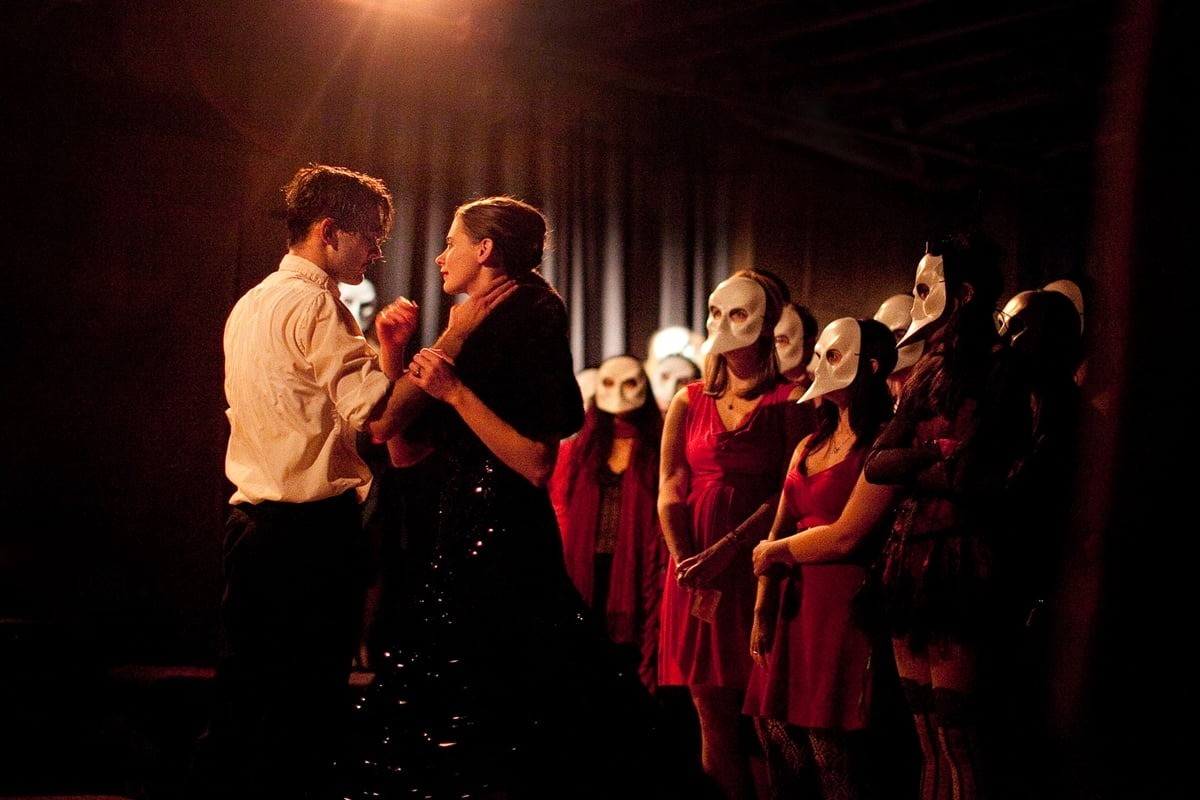
Physical endurance was another matter. The performance takes place across a huge space with endless stairs, and it lasts for a long time. The mask actually makes it easier to interact with the environment than wearing glasses would. And whenever possible, L recommends sitting down and conserving your energy.
The actors on stage told the story entirely through movement, without uttering a single line. Occasionally, we could hear them murmuring to one another in a foreign language, but without even a guidebook to refer to, it was difficult to fully understand what was happening. Each floor had a completely different atmosphere, and remembering the reviews that said you needed to see it at least three times to grasp the overall flow, the financial burden began to feel daunting. Even so, there were unforgettable scenes that left a powerful impression, such as a club scene under psychedelic lighting, where the actors intertwined almost like dancers, completely naked, creating striking silhouettes that shook you to the core.
The performance unfolded in rotating 15-minute segments. Main characters, supporting characters, and extras moved and intertwined throughout the space, but if you happened to follow an extra and the actor disappeared into a blind spot, you could end up spending the rest of the segment standing there alone, unsure of where to go next. You might lose one actor while following them, then follow another upstairs only to find an empty room. The performance could end before you even knew who the main characters were, yet there was something immensely enjoyable about the escape-room-like experience of scattering throughout the space, coming back together, and piecing together the fragments each person had witnessed.
Above all, everyone dreamed of experiencing the “1 on 1” scene, in which an actor chooses a single audience member and takes them into a secret room. Apparently, some people had been chosen several times, but unfortunately, none of us were picked, so all we could do was continue the silent competition of watching and waiting.
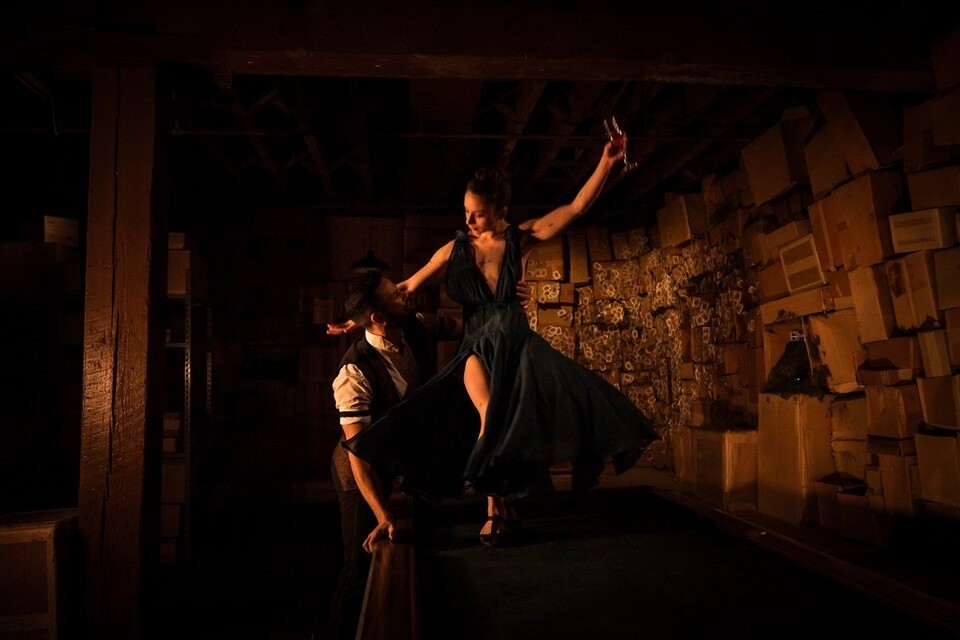
L said the performance was beautiful even without fully understanding it. There is a moment on the arched stage when two actors fight almost like dancers. One steps onto the other’s body and seems to walk through the air. The sheer precision of that instant reveals the enormous amount of rehearsal behind it. And sometimes, that alone is enough to enchant you.
Perhaps it does not matter if the head cannot fully understand. The stage is an intuitive space where the heart can recognize something before the narrative becomes complete. An empathy that crosses the boundaries of understanding can itself be reason enough to return.
Scene 4. How We Sit Together
The Ways We Complete a Performance Together
“If I were you and I'd done what I'd done, I'd do what you did. When I gave you the ring having said what I said.” — Tick, Tick... Boom!, “Therapy”
The Many Faces of Noise
Everyone agreed that theatre should not become a space so rigid that even breathing feels dangerous. There should be room for freer ways of watching. And yet, everyone at the table had experienced the disappointment of having a carefully built immersion suddenly broken.
Rather than passing judgment, they shared honest, vivid stories of what theatre audiences call “gwan-keu”—disruptive audience behavior.
S recalled seeing the musical Seopyeonje more than six times. During the final pansori passage, arguably the emotional climax of the entire production, the auditorium had fallen into a breathless silence when suddenly a phone ringtone rang out. There was even one performance when a ringtone went off four times. Since it was a daytime performance in a large theatre with a relatively older audience, S tried to be understanding to some extent, but when the ringing was followed by conversations and audience members talking aloud toward the stage, they could not help but sigh. It was a bitter memory of going to see a beloved production only to have the entire experience ruined by poor audience etiquette.
For L, the worst moment came during a special curtain-call day for the musical The Hymn of Death. It was the final performance at which filming was permitted, and everyone was holding their cameras in silence, trying not to make a sound, when one audience member’s KakaoTalk notification repeatedly rang out across the auditorium. A ringtone had already gone off once during the performance, so the audience was already on edge, making the repeated notifications all the more disruptive.
L said:
“I still can’t bring myself to watch the footage I recorded that day.”
But noise from the audience is not always a disruption. There are also moments when the audience’s reactions actually complete the energy of the stage. In a recently talked-about play, for instance, the audience erupted in cheers during an awards ceremony scene, almost as if they were at a concert, naturally responding to and feeding off the actors. Another anecdote that brought a laugh was about an actor who cleverly incorporated a sudden phone ringtone into their dialogue and smoothly carried on with the scene.
The conversation also turned to moments when something could be mildly irritating—even a little annoying—but became impossible to truly resent because you understood the reason behind it. One example was audience members in the dark auditorium straining to write down their thoughts or letters, their phone or notebook lights cutting through the darkness. Seeing a flicker of light or movement from the seat beside you might make you think, Couldn’t you have written that beforehand? But J and D agreed that they ultimately understood, saying that they knew the impatient urgency of wanting to convey today’s intense emotions to an actor on the way home, before those feelings had a chance to fade.
So what is the real boundary between “understandable noise” and the kind of “gwan-crash” that breaks someone’s immersion? After a long discussion, the group eventually arrived at one question: Is it an action that you can control yourself? Bodily functions, coughing, involuntary movements, or the tender impatience of desperately wanting to convey today’s emotions can all fall within the realm of things we can accommodate and understand for one another. By contrast, habitually checking your phone or talking continuously during a performance is something you could choose not to do but do anyway, and everyone nodded in agreement that such behavior clearly imposes on those around you.
Scene 5. What Begins Only After the Curtain Falls
Recording, Remembering, and Continuing to Love
“ If you listen to the beat and hear what's in your soul. .You'll never let anyone steal your rock 'n roll.” — Memphis, “Steal Your Rock ’n’ Roll”
The Rules of Those Who Know How to Love
When asked about the most enjoyable production they had seen recently, D picked the musical My Favorite Has Disappeared. D had gone in casually, simply wanting to “get a taste of it,” without knowing much about the show. Then they became completely captivated. At the center of that experience was the rediscovery of actor Hee-won Do. She played multiple roles so convincingly that, in one scene, the audience did not realize the timid student they had been watching was the same actor until all four actors were standing on stage together. The realization sent chills down their spine. The production was filled with fan culture: jargon that only fans would understand, random photocards, an ocean of light sticks. Around 80 percent of the audience seemed to be repeat visitors. There were countless details designed to resonate with people who already loved the actors and the show.

Naturally, the conversation moved on to everyone’s “bonjin(main favorite)”—the actor they love most—and the experience of being a devoted fan. As one famous saying goes, “You don’t choose your favorite; your favorite suddenly comes along, strikes you right in the heart, and says, ‘As of today, I’m your favorite.’” Falling for a new actor always seems to happen without warning.
There were also a few tongue-in-cheek rules about spending: “If the reason you’re hesitating is the price, buy it. If the reason you want to buy it is the price, don’t.” Another piece of darkly humorous wisdom followed: “When you buy a ticket, your money disappears. But even if you don’t buy the ticket, your money disappears anyway, so don’t give up the performance.” And when someone added the final gem—“Food turns into fat, but merchandise comes to my room”—deep sighs and bursts of laughter erupted around the table. Even with high ticket prices and tight budgets, audiences are willing to keep heading to the theatre and bringing home merchandise because what they find there—comfort and happiness—is worth more than the cost.
A “main favorite” who has taken root deep in someone’s heart becomes an absolute point of reference, one that cannot be replaced by anything else. Even as time passes and new casts and different interpretations fill the stage, the first impression that completely shook your heart remains forever, becoming your own personal standard for how you see a performance. As the saying goes, “You may take a break from being a fan, but you never truly stop being one.” Our love for the stage may pause for a while, but it never reaches a full stop. When we grow tired of our main favorite, we find comfort in watching another actor on stage, and by discovering that new excitement, we keep the cycle of going to the theatre alive.
The Gentle Diligence of Love
Holding on to the lines and emotions that stay with you after a performance is never something that happens automatically. S brought to the theatre a habit they had developed during film Q&As, where they would always ask the first question and organize their thoughts in real time. These days, as soon as Act One ends, they turn on their phone in a quiet corner of the darkened restroom and jot down their thoughts, and when an evening performance ends, they willingly stay up until dawn to finish writing their review. If they put it off, everything can disappear in an instant.
There are many ways to keep a record. Twitter is useful for quickly letting out impressions that might otherwise vanish in real time, while Instagram works well for participating in events. Thoughtful, in-depth reviews go on the blog, while high-quality videos are shared on YouTube.
Reviews that begin in a corner of a restroom and continue all the way to a blog at dawn. The heart of an audience member who tries to hold on to a fleeting moment and press it carefully into their own words is truly both tender and diligent.
The countless stories we shared around this table today could also come to life because each of us had carefully preserved our own memories in darkened auditoriums and on late-night pages.
As the conversation began to draw toward an end, the host brought out some gifts: badges to attach to our bags, so that one day we might recognize each other in a theatre lobby, and ballpoint pens to use when writing down our thoughts to pass on to someone else.
Warm farewells filled the café—“I had such a wonderful time today,” and “Please make gatherings like this again.” As the time for the performance drew near, J asked a question in a voice tinged with excitement.
J
“Are we heading to the theatre now?”
Host
“Yes! Let’s all go before we’re late!”
A warm reply came with a bright smile, and everyone gathered their belongings and rose from their seats. The tender conversation they had shared around the table while waiting for the performance had come to an end, but the real stage was only just beginning. With badges pinned to their bags and ballpoint pens in hand, the audience members naturally made their way toward the theatre at last.
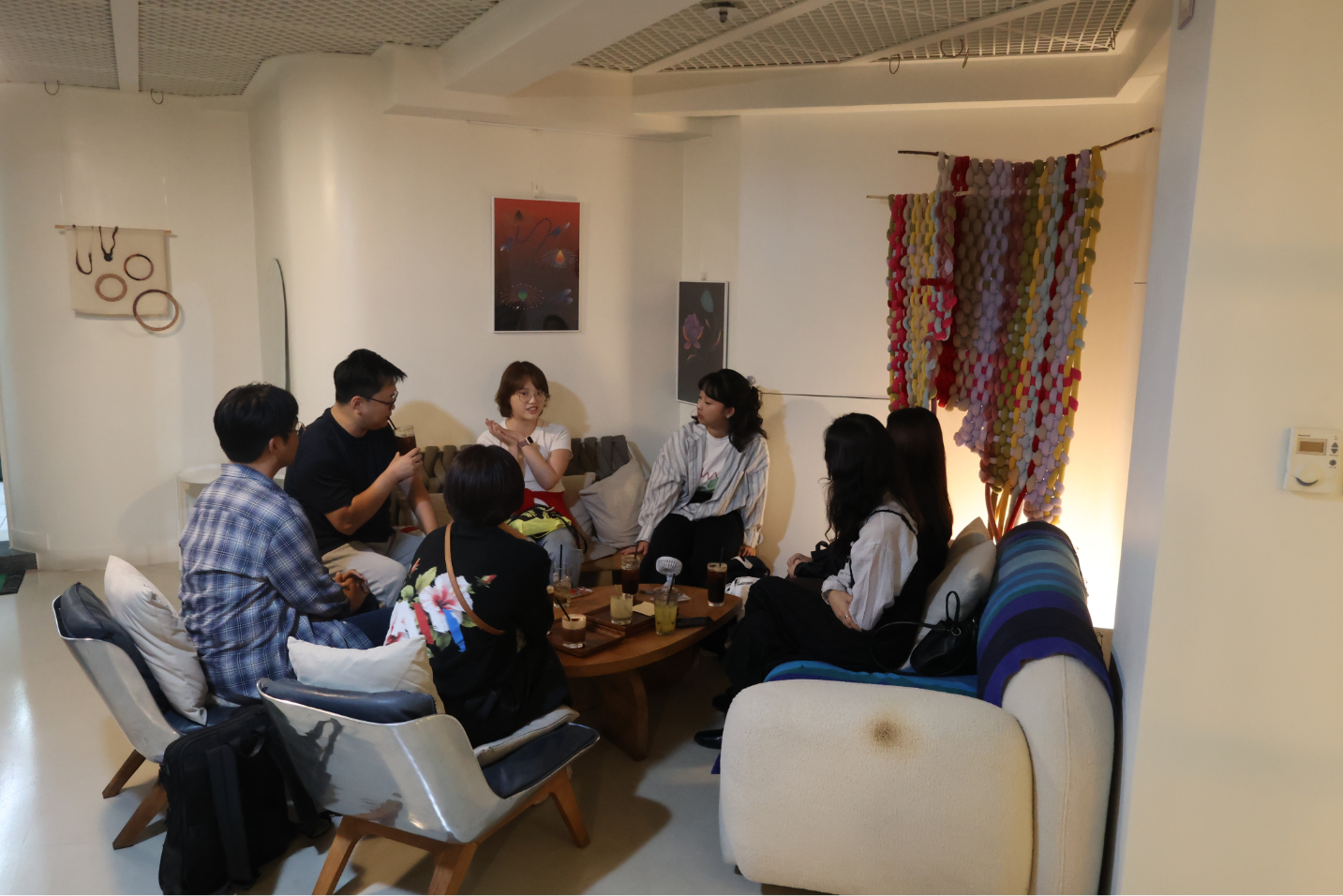
That day’s conversation ended here, but the real story must have begun again the moment we opened the theatre door.
From this place where our words lingered.
Farewell, and see you again at the theatre!
Written & edited by | Yeri Kim
Photos & materials provided by | Hayeon Kim
Participants | Sangmin Shin, Jisu Lim, Youngju Jo, Jiwon Jeon, Daon Jeong (HereWeAre Theatre Club), Hayeon Kim, Nahyun Yoo, Yeri Kim (HereWeAre)
