

From Everyday Life to the Theatre, and Back Again
HereWeAre Theatre Club: The Socrates Paradox Offline Meetup
INTRO | Turning Off Everyday Life, Just for a While
There is a rhythm to everyday life: waking up at roughly the same time each morning, boarding the same familiar subway line, and making it through another repetitive day in front of a screen. Then, on an ordinary weekday evening, carrying a small ticket in your pocket as you walk into the narrow streets of Daehangno, something inside you begins to stir.
You open the theatre door and take your seat in the dark auditorium. Slowly, the noise of reality fades away, and another world—one that has been created—lights up on stage. For a moment, you forget the routine of everyday life and step into a world of imagination. You hear the heated breath of an actor performing only a few steps away. You feel the energy of philosophy colliding with hip-hop. Something ripples through you. Emotions that could never quite be released in everyday life begin to flow through the characters on stage, while the audience in the dark sits quietly, breathing to the same rhythm.
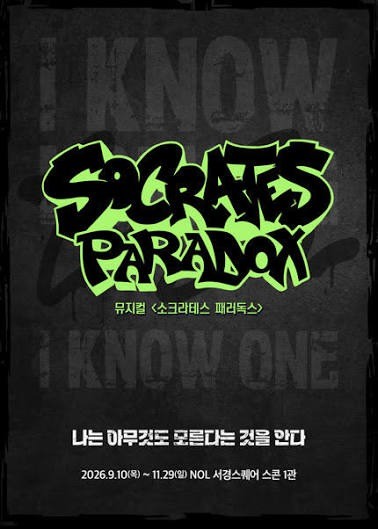
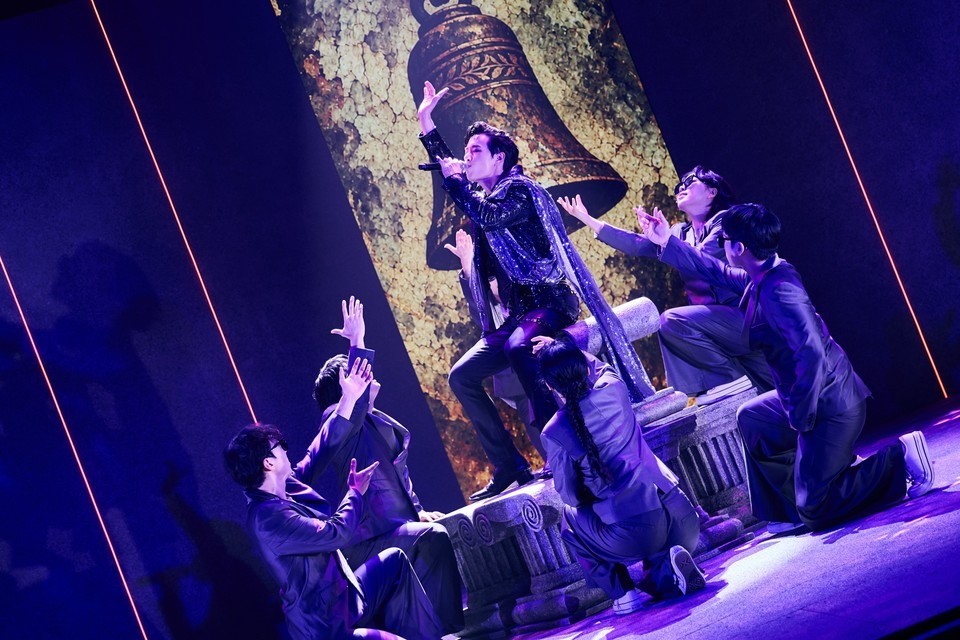
The musical The Socrates Paradox, which inspired this meetup, reinterprets classical philosophy through the raw energy of hip-hop rap. On stage, Socrates argues that the only thing he knows is that he knows nothing. Yet he offers us, the audience, no clear answers either. Instead, he leaves us with sharp questions that unsettle our own lives. Perhaps that is the paradox the stage gives us: only when we switch off the intensity of everyday life and sit in a dark auditorium can the real feelings we had forgotten about finally come to light. And sometimes, when we leave the theatre without finding an answer—carrying nothing but questions—our own lives become clearer. We have to turn off everyday life to see ourselves. We have to leave the answers empty for life to be filled. If Socrates on stage is there to keep asking us questions, then the unfinished question itself is completed only within us—the audience sitting in the dark, quietly carrying it home and filling it with our own paradox.
There is another paradox here. Theatre is an art form rooted in the beauty of liveness: it exists only in that particular moment, in that particular space. Yet, ironically, the true value of a play or musical often reveals itself only after the performance is over. Only after the applause of the curtain call fades and the auditorium lights come back on does the real performance begin within us. We leave the dark theatre and breathe in the cold night air as we walk back down the steps of Hyehwa Station. We take out our phones, return to the familiar routine, and wait for the train home. Yet somehow, the person who walks out of the theatre is subtly different from the person who entered. A single line from the stage, a single look in an actor's eyes, has settled somewhere deep inside us, leaving behind a question of our own.
Here, right at the boundary between theatre and everyday life, are people who keep coming back. Some are devoted theatregoers who “commute” to the theatre five days a week, going from one performance to another just to make room to breathe in their lives. Others have spent years carrying the afterglow of performances alone, until one day they finally opened the door to an unfamiliar gathering and stepped inside.
Why do we keep returning to the theatre? And why do we want to share those stories with other people? Perhaps the theatre is more than a place of entertainment. Perhaps it is both an escape from the exhaustion of everyday life and a gentle charging station that gives us the strength to walk back into it.
As Socrates famously said, “The unexamined life is not worth living.” Six people gathered here because, in the middle of lives constantly chasing after answers, they wanted to stop for a moment and look into their real feelings. Here, we unfold the conversations they shared after briefly switching off the intensity of everyday life—and the warmth that lingered in the spaces where their words came to rest.
FOCUS | Know Thyself!
Why do Korean audiences fall so deeply in love with the stage?
Booking the same production dozens of times. Searching for the smallest differences between casting combinations. Returning to Daehangno day after day. The world might call it a “revolving-door” audience or simply a fandom phenomenon. But if you look a little closer, there is a much gentler reason underneath.
Our everyday lives are filled with workplaces where emotions have to be hidden, and roles that leave little room to be fully ourselves. But the moment we open the door to a dark theatre, actors on stage explode with the grief, destruction, passion, and love that we ourselves could never quite release in everyday life. Watching someone else's breakdown can become a kind of emotional rehearsal—a safe way to let the knots inside us slowly loosen. For many Korean theatregoers, repeatedly returning to the same production is more than a hobby. It is perhaps the gentlest form of rescue we offer ourselves, a way of standing back up after a difficult day.
The Socrates Paradox offered neither comfort nor easy answers. Instead, Socrates placed sharp questions over the unconventional beats of hip-hop, urging each of us to look back at our own lives with one simple command: “Know thyself.”
The same is true of this meetup table. This is not a space designed to make us “one,” or to immerse us in a comforting sense of sameness. Around the table are longtime theatregoers who can pick up on the slightest change in an actor's breathing after seeing a production dozens of times; people who usually go to the theatre alone but have opened the door to an unfamiliar gathering for the first time; and people who, in the loneliness of living far from home, read Korean play scripts aloud simply to hear the language again.
We do not try to smooth these people into a single “fandom” or a group of like-minded companions. Instead, we leave room for each person's particular loneliness and distinctive perspective, exactly as they are.
Just as Socrates offered questions instead of answers, this table does not rush to offer easy comfort either. Instead, it places a clearer question into each person's hands.
“What brought you to the theatre today?” “Is there a moment from the performance that you want to carry back into your everyday life?”
The goal is not to unite through a shared, standardized emotional experience. It is to look at ourselves through someone else's unfamiliar perspective, and then return to our own stages carrying a clearer sentence about who we are. Perhaps that is why we keep opening the theatre door and stepping inside.
OUTRO | The Way Back to Your Own Stage
When the theatre doors close and we begin our journey home, performances that leave us with questions often stay with us much longer than those that simply hand us an answer.
So tonight, whether you are reading this on the train home through the streets of Daehangno, or lying beside your bed, here are three questions to ask yourself—and only yourself.
- One. Was there ever a performance that allowed you to breathe completely freely, perfectly separated from the intensity of everyday life?
- Two. Even after the applause of the curtain call faded and the lights went down, is there a line or a scene that has stayed somewhere deep inside you?
- Three. What is the line you need to say to yourself tonight in order to truly face the person you call “me”?
It is okay if no clear answer comes to mind right away. We spend our everyday lives being expected to have answers. Perhaps it is a beautiful paradox that only when the answer is left empty can we finally begin to look directly at what we truly feel.
Instead of the questions the world uses to evaluate and pressure us, we hope these questions—questions that let a little warmth reach the parts of ourselves we have kept hidden—can become a small opening through which you can breathe freely, away from the suffocation of everyday life.
The conversations we shared that day continue in EP.2, Where the Words Came to Rest.
