

Can the same show really be received so differently?
On Broadway, Dracula faced criticism for its familiar premise, somewhat weak narrative coherence, and underutilized ensemble.
In Korea, however, the story is completely different. With repeated revivals, it has steadily gained popularity and established itself as a successful, widely loved production. What explains this contrast? I found myself especially curious, having personally watched the show three times and enjoyed it every single time. In this article, I will explore why Dracula has been so uniquely embraced by Korean audiences.
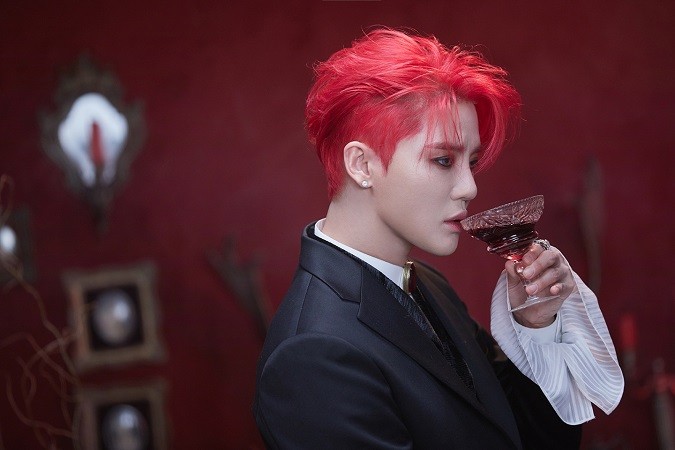
One of the key reasons why Dracula has been consistently loved in Korea is its star casting.
From its premiere to the present, the production has continuously cast Junsu Kim in the title role of Dracula. As an actor with a strong and dedicated fan base, he draws audiences not only through interest in the production itself, but also through the desire to see him perform. In this sense, Dracula is not just about watching a show. It is about experiencing the interpretation and charisma of the actor on stage.
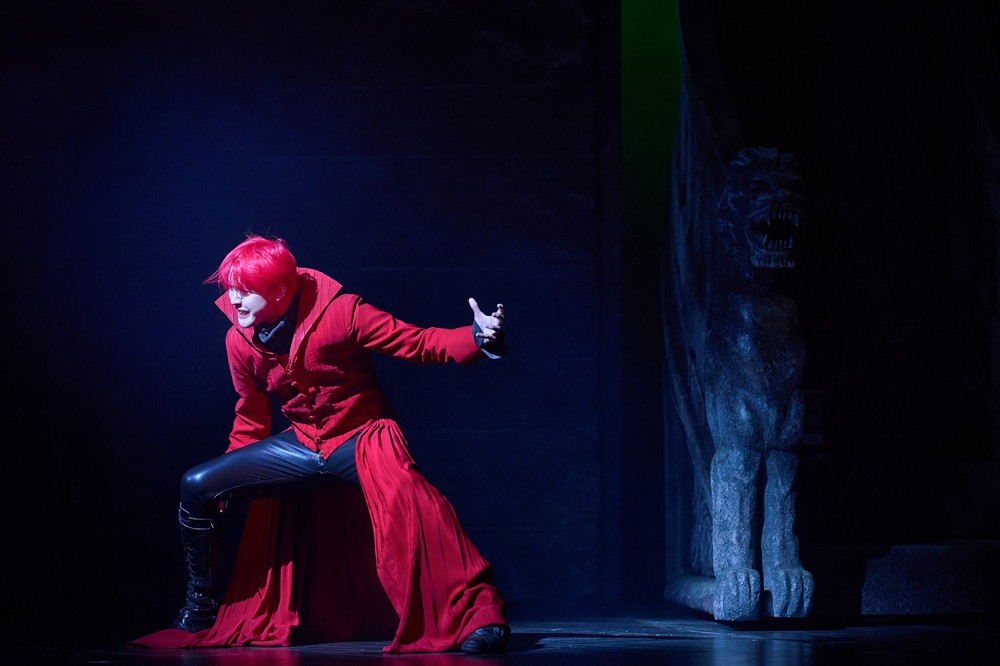
In addition, well-established musical actors such as Junghan Ryu, Dongsuk Jeon, and Sungrok Shin have also taken on the role of Dracula, further enhancing the overall quality of the production. Even though they portray the same character, each actor brings a different mood and style of expression. This allows audiences to enjoy comparing performances, often leading them to watch the show multiple times. As a result, so-called “repeat viewers” naturally emerge.
The same applies to the female lead, Mina. Acclaimed performers such as Sunah Jeong, and Ivy have taken on the role, each bringing her own unique interpretation. Even within the same character, these subtle differences create distinct impressions, allowing audiences to experience something new each time they return to the same production. Ultimately, Dracula is a work where the influence of its cast plays a significant role. Audiences attend to see their favorite performers, and return out of curiosity for different interpretations. This dynamic—shaped by star casting and fan culture is one of the main reasons why Dracula continues to be loved in Korea.
It is impossible to talk about a performance without mentioning its musical numbers. Dracula is a production driven strongly by the power of its music, and each number plays a key role in carrying the characters’ emotions and the overall narrative, which makes it even more impactful. One of the most notable songs is “Fresh Blood,” performed in the scene where Dracula regains his youth by feeding on blood.
Its intense sound fills the entire theater, creating an experience that goes beyond simply listening. It is something the audience can physically feel. Combined with striking special makeup, the scene offers strong visual appeal and heightens immersion. It is also one of the most direct moments that reveals both Dracula’s inhuman nature and his overwhelming presence.
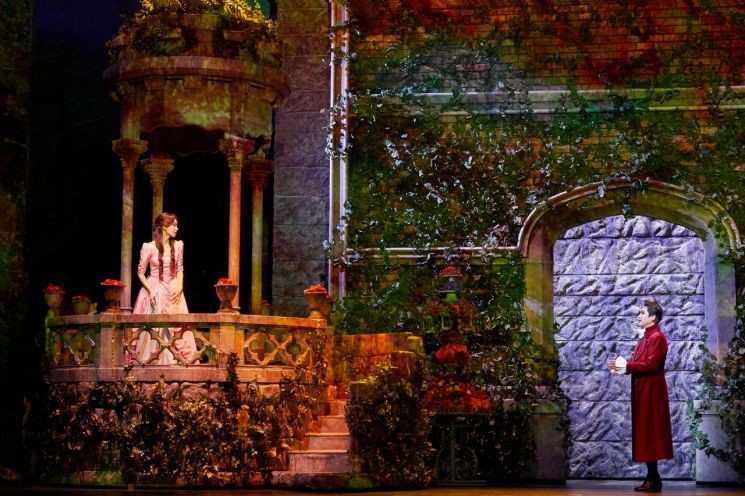
“Loving You Keeps Me Alive” is a number that best captures the central emotional core of the musical. It weaves together Dracula’s longing for love, Jonathan’s sincere devotion to Mina, and Mina’s inner conflict between the two. As the emotions of the three characters intersect within a single piece, the love triangle naturally unfolds, intensifying the dramatic tension. The lyrical melody further amplifies the emotional depth, making it one of the most memorable songs even after the performance ends.
Personally, the most striking number was “Life After Life.” It appears during Lucy’s funeral scene, when Dracula attempts to bring her back to life. The song begins with a dark and tragic tone and gradually builds into an emotional climax. The combination of stage direction and powerful vocals maximizes the audience’s immersion, bringing Act I to a dramatic close. In particular, this moment powerfully conveys both Dracula’s obsession and the tragedy of his character, leaving a lasting impression on the audience.
Shifting the focus to the story itself, we can more clearly see why Dracula resonates so strongly with Korean audiences. This work goes beyond a simple romance, building on the idea of a love that continues across lifetimes. A relationship that does not end in a single lifetime but repeats across time—yet still never fully comes to fruition—deeply stirs the audience’s emotions.
It is not just a feeling of “liking” someone, but a love that cannot be let go of or abandoned, which is why it lingers so powerfully. The addition of a love triangle further intensifies the emotional arc. Within a structure where one person’s choice inevitably leads to another’s loss, the characters are driven toward more extreme emotions.
In particular, Dracula is portrayed as a figure standing on the boundary between love and obsession, prompting the audience to feel not just sympathy, but a more complex mix of emotions. These blurred emotional lines draw viewers deeper into the narrative, making the story all the more immersive. Above all, the story ultimately moves toward tragedy.
It does not offer a completely resolved or wholly happy ending. Instead, it concludes with something left unresolved. And perhaps because of that, it remains in the audience’s memory even longer. These unfinished emotions invite personal interpretation and leave a lasting aftertaste, lingering in the mind well after the performance has ended.
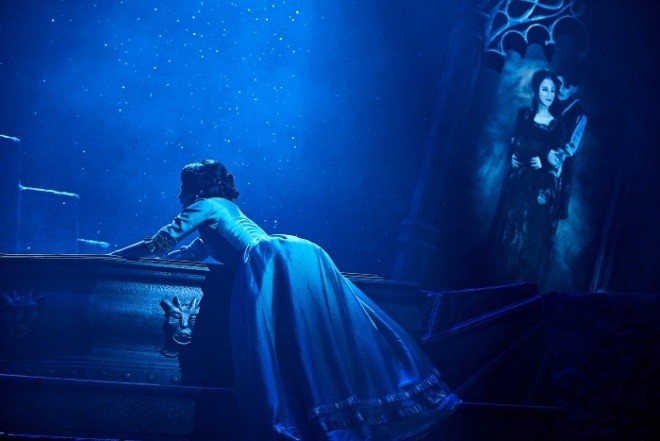
This kind of tragic emotional arc also aligns closely with the sensibilities often favored by Korean audiences lingering affection, emotional resonance, and feelings that cannot be easily defined or resolved.
Dracula embodies all of these elements, which is why it is not simply a show to be watched once, but one that audiences return to again and again. In the end, people come not only to see the story, but to re-experience the emotions they felt within it.
All of these elements come together to make Dracula more than just a performance. It becomes a work that is difficult to forget once seen. The actors’ interpretations, the tragic emotional arc, and the powerful musical numbers all clearly explain why audiences keep returning to the theater.
As welcome news, the production will return to the stage this coming July. In the heat of summer, for those who wish to experience something both chilling and deeply emotional, it may be worth seeing at least once. For anyone who wants to immerse themselves in a love story that is both haunting and profound, Dracula comes highly recommended.
