

Frozen the Musical: Warmth That Crossed Over From a Cold World
Why Do We Long for Fantasy?
To be honest, I entered the theatre without any expectations. I already knew the story of the original film all too well, and I had expected little more than a dazzling show that recreated the familiar characters and mega-hit songs on stage.
Yet the moment I saw the real snowstorm swirling before my eyes and looked at the faces of the characters filled with happiness, I realized something: why we long for fantasy so desperately, and why we find ourselves unconditionally rooting for the triumph of love in an unrealistic fairy tale.
In contemporary society, talking about “true love” or “devotion that is willing to endure loss for the sake of another person” is often dismissed as a naïve and unrealistic superstition. In a cold world where keeping one's distance to avoid being hurt by others, and regarding efficiency, calculation, and self-protective cynicism as forms of wisdom have become commonplace, the fairy-tale ending that “love ultimately saves everything” can easily seem like an innocent relic of a bygone era.
And yet, Frozen the Musical delivers its message to audiences precisely at this point. Even in a world where avoiding loss has become a virtue, the triumph of love and solidarity unfolding on a three-dimensional stage ultimately leaves our hearts burning with emotion. It proves that when we long for a fairy tale, we are not simply searching for a fake spectacle through which to escape reality. Rather, what reaches us is a genuine longing for the practical courage to endure a harsh reality and reach out to someone once again in a life that has frozen over.
The Courage to Be Hurt, Blooming Through an Isolation Full of Scars
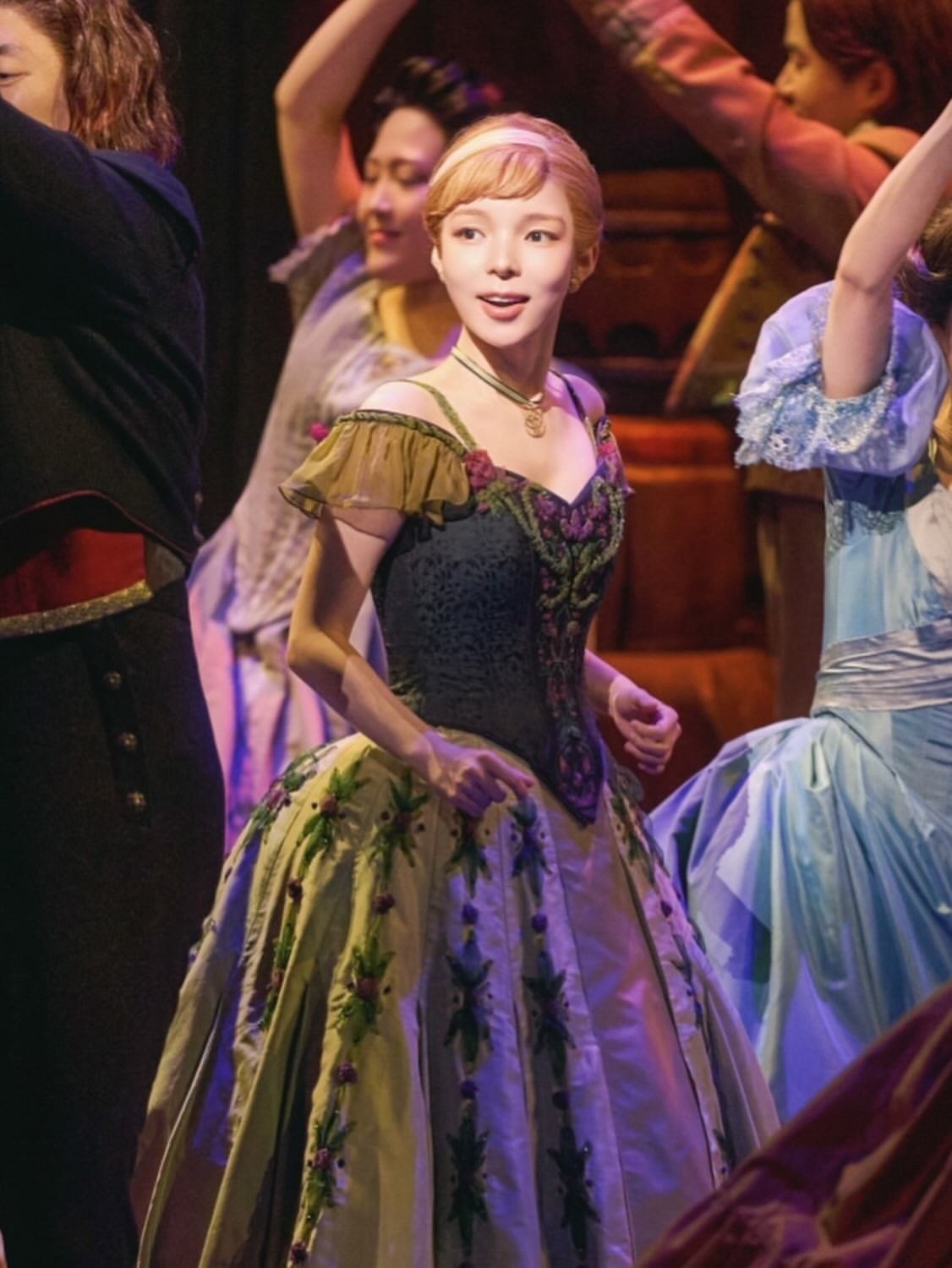
We can see just how extraordinary this courage to reach out to another person is through the character of Anna. Some people are quick to dismiss Anna as nothing more than a recklessly cheerful and immature princess from a fairy tale. But when we look closely at the path she has traveled since childhood, we begin to understand how superficial such a judgment really is.
As a child, Anna was completely shut out by her beloved older sister Elsa, the person she loved most in the world, without ever understanding why, and was confined behind the castle gates. To make matters worse, she lost even her parents, her only source of protection, in an instant at sea, and was forced to spend her adolescence in profound loneliness and emotional neglect.
For most people, these would be tragic circumstances under which it would be easy to fall into deep cynicism, distrust of others, or an all-consuming darkness. And yet, astonishingly, Anna endured those cruel years of isolation without losing her warmth and tenderness toward others.
She is not naïve because she does not understand the world. Rather, despite the deep wounds and deprivation she has suffered, she chooses not to pass that darkness on to others and instead makes the decision to believe in people and love once again. It is a remarkable form of inner resilience.
Anna's ability to smile brightly again despite the tragedy of losing her parents and being separated from her sister offers a deeply moving kind of hope to modern people who have grown accustomed to despair and loneliness. Her tenderness, which leads her without hesitation toward the cold wall of ice her sister has built, is the most powerful weapon capable of melting a frozen world.
From Screen to Stage
By bringing an animated film from the screen into a vivid three-dimensional stage world, Frozen the Musical offers the fresh pleasure of experiencing the production in comparison with the original.
The first thing that stands out is the dramaturgical adaptation shaped around the mechanics of the stage. Elements such as the giant monster Marshmallow and the pack of wolves, which caused comic commotion in the film, have been boldly removed. The trolls, meanwhile, have been reimagined as the “Hidden Folk,” imbued with a deeper Nordic mythological quality, allowing the production to focus more intensely on the characters' inner isolation and the desperate narrative of the two sisters.
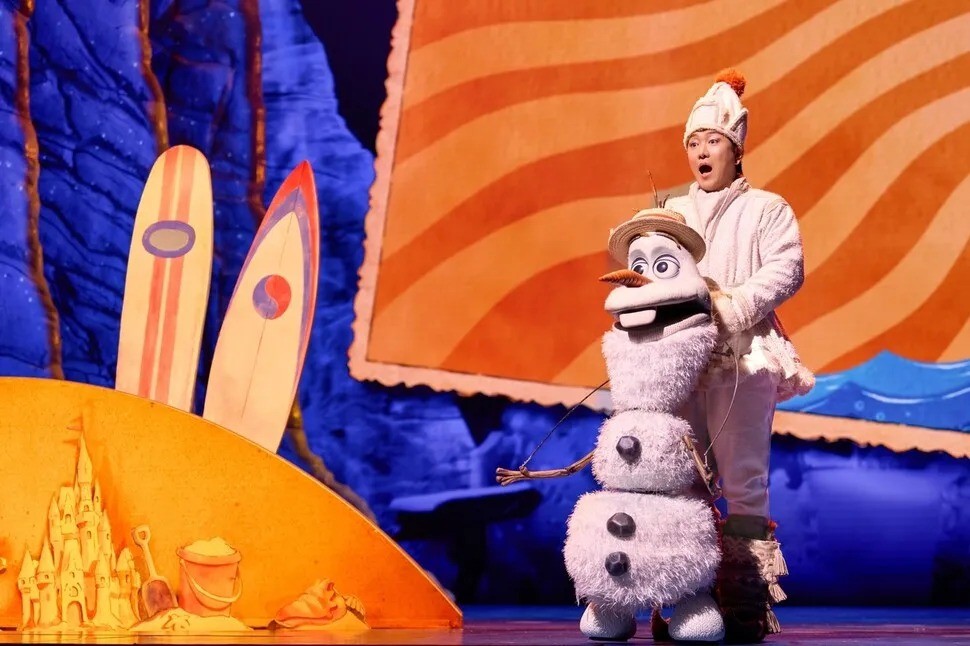
In particular, the puppetry mechanism used to bring the characters into the physical world is one of the most distinctive aspects of the theatrical experience. In the case of Olaf the snowman, the actor is not hidden behind the puppet; instead, the actor's face and body remain fully visible. An actor is, by nature, someone who wants to reveal themselves on stage and stand in the spotlight. Yet the actor playing Olaf completely melts into the role of an onstage facilitator and companion, not to draw attention to themselves but to make the character itself shine.
The actor's gaze, breathing, and subtle changes in facial expression synchronize perfectly with the movements of the Olaf puppet, creating the astonishing impression of a single living creature breathing as one. It inspires awe that goes beyond the extreme technical difficulty of the performance.
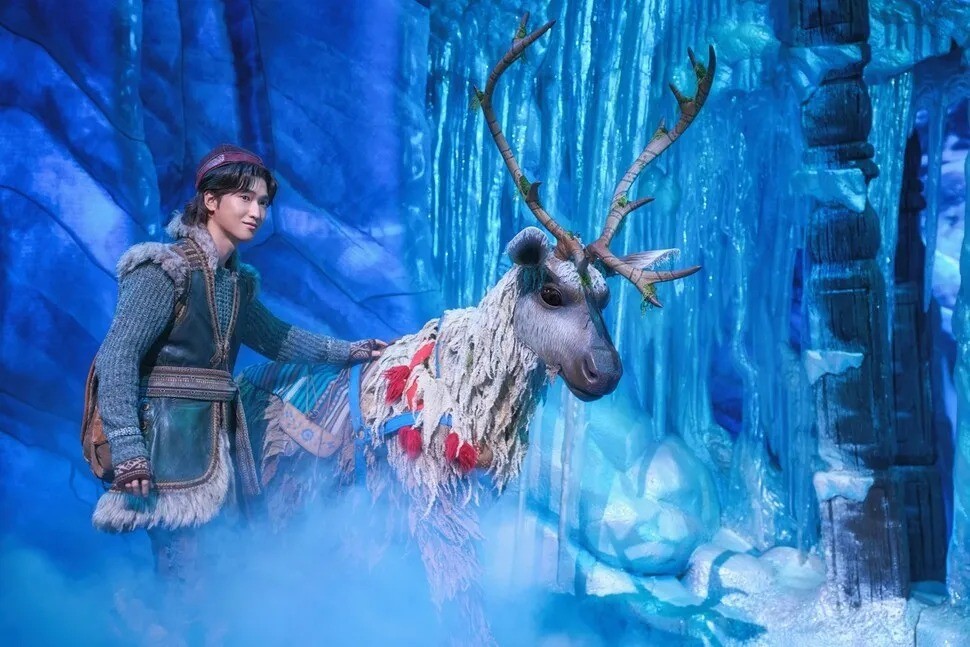
By contrast, Sven the reindeer requires the actor to disappear completely inside an intricately designed large-scale puppet and perform a near-marathon of physical acting on all fours. He does not utter a single line throughout the entire production, yet the delicate angle of his head as he tilts it and even the sound of his breathing are enough to create the vitality of a living reindeer.
One side boldly reveals the actor's face, while the other completely conceals the performer and relies solely on movement. This contrasting approach to performance is one of the great highlights that can only be experienced within the three-dimensional space of the theatre.
The musical variations are equally impossible to overlook. Stage-exclusive numbers such as Elsa's Dangerous to Dream, which deals with the crushing pressure of her coronation, and Monster, in which she breaks down in tears as she wonders whether she is truly a monster, fearing that her magic might bring about disaster, offer an even deeper perspective on Elsa's loneliness.
Oaken's Hygge, which opens Act II with a playful expression of simple Nordic warmth, provides another refreshing moment that can only be experienced in the stage production.
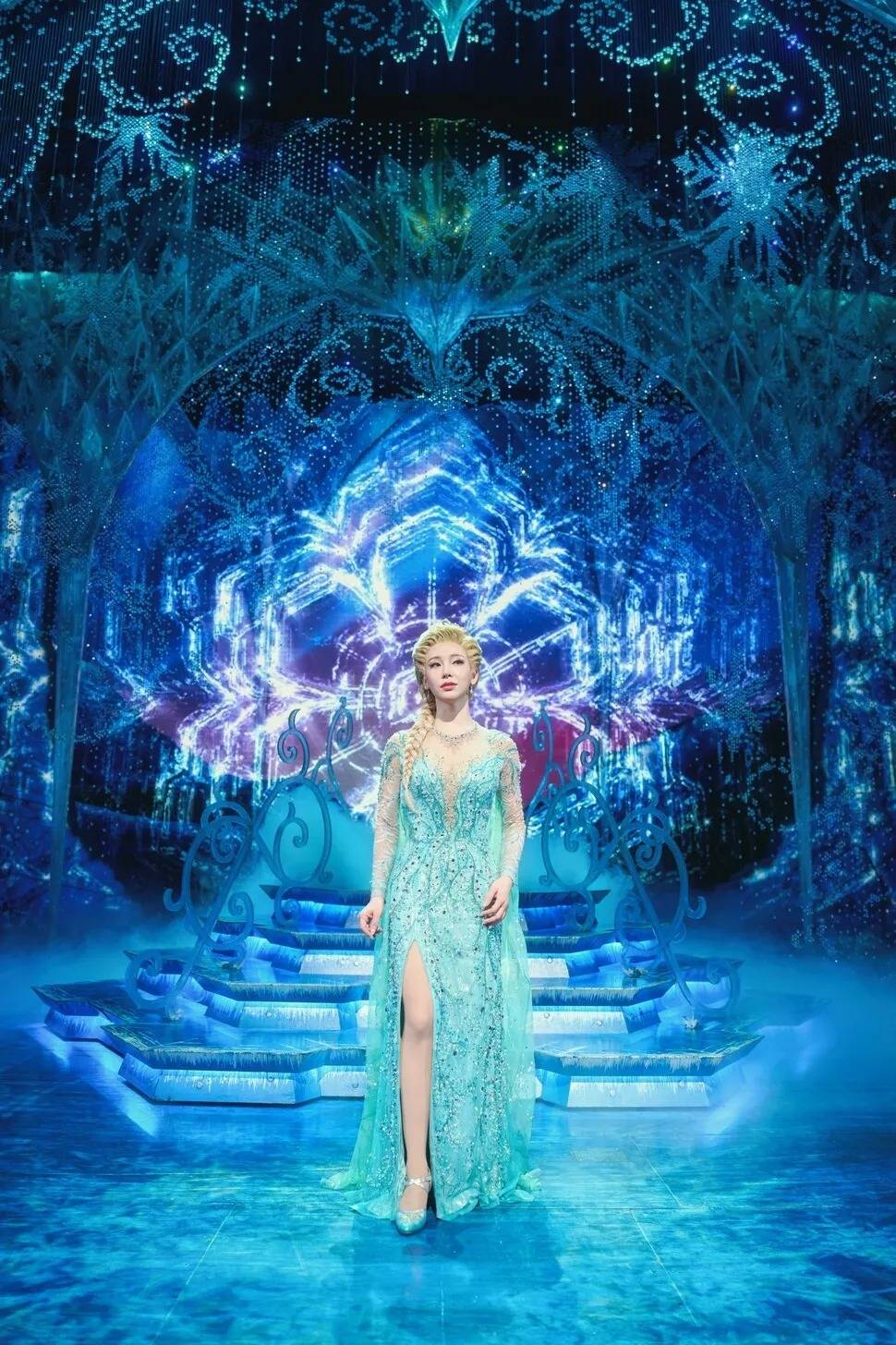
Added to this is the decision to place the signature song Let It Go as the finale of Act I. The instantaneous costume transformation that takes place live at the climax of the song, together with the spectacular mechanics of Elsa's ice palace, completes a dazzling fantasy that can only be proven possible on stage.
“I Can’t Lose You”: Taking the Risk of Melting for the Sake of Not Losing Someone
Beyond the dazzling stage mechanisms and fresh dramaturgical adaptations, the essence of the “fantastical story” that Frozen the Musical ultimately seeks to offer us—the message that true love triumphs in the end, nevertheless—is revealed most clearly in two moments on stage.
① Anna: Reaching Out Despite the Wounds
Fearing that she might hurt others, Elsa locks herself away in the cold northern mountains and builds layer upon layer of walls of ice around herself. Elsa's ice palace, born from her decision to sever herself from the world, appears to be an entirely rational and secure mechanism of self-protection. But Anna walks through the freezing snowstorm and climbs toward her sister without hesitation.
Even in the face of the trauma of nearly being killed by her sister's magic as a child, the profound isolation she experienced in the absence of their parents, and the reality of being rejected and injured by Elsa's ice magic, Anna's love never takes a step backward.
The newly added musical number I Can't Lose You, which brings profound emotional resonance to the stage production, becomes the dramatic climax at which these two truths collide head-on. Elsa's fear pushes Anna away—“Don't get close”—while Anna desperately knocks on the closed door, pleading that she cannot bear to lose her sister again.
“I can't lose you, not again I can't lose you like then”
“If you could see yourself the way I do Then you'd see why I can't lose you”
“Don't get close This is all so brand new”
— I Can't Lose You
Anna's tenderness—her determination to embrace the sister who has hurt and pushed her away, insisting that she cannot lose her again—is the very embodiment of a “brave love” that moves forward despite the possibility of rejection and the fear of being hurt once more.
② Olaf: Offering Warmth at the Risk of Disappearing
The snowman Olaf is the character who most closely mirrors Anna's love.
In fact, Olaf himself is the very embodiment of the love that binds the two sisters together.
His body, made of cold snow and ice, resembles Elsa's magic, while his innocent longing for warm embraces and affection, even at the risk of his own disappearance, mirrors Anna herself. Born from one of the sisters' happiest childhood memories, Olaf becomes a harmless intermediary and a living testament to the love between the sisters that never truly disappeared, even when the two of them became isolated and could no longer bring themselves to approach one another.
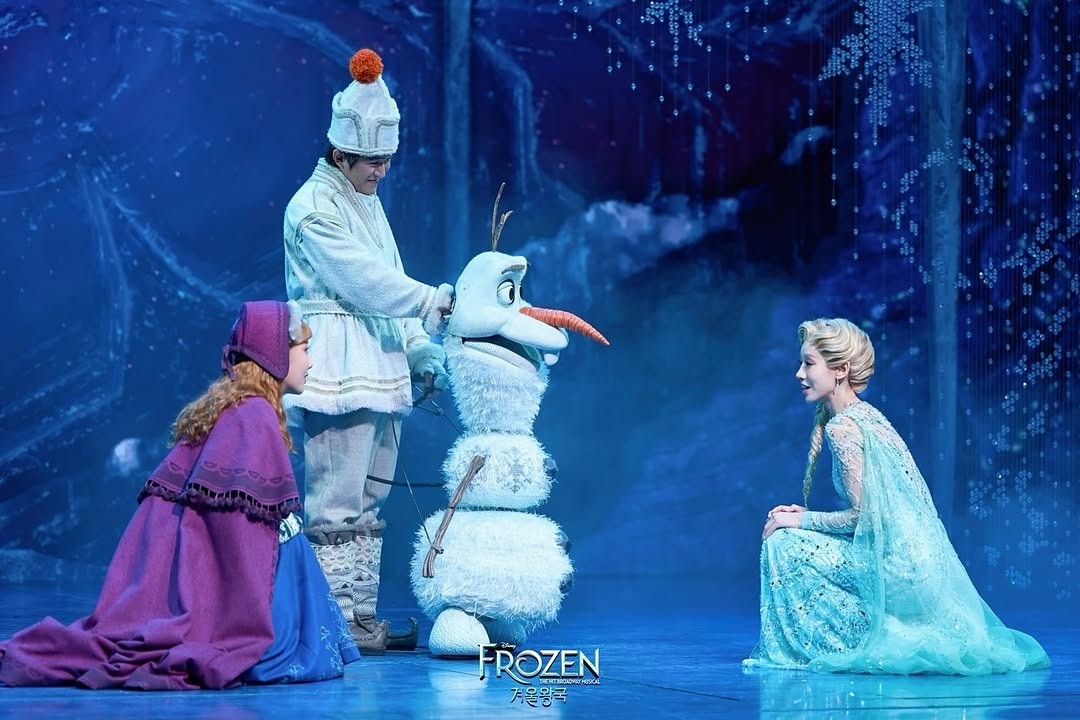
As we all know, a snowman is essentially a fragile creation of cold ice and snow, destined to lose its form and disappear the moment it encounters warmth. That is why audiences often burst into laughter when Olaf first appears on stage and cheerfully says, “Hi, I'm Olaf. I like warm hugs,” an innocent statement about a snowman longing for warmth and embraces.
But as the story progresses toward its climax, this very premise becomes heartbreaking.
The moment arrives when Olaf, fully aware that he will lose his form and disappear, remains beside the fire without hesitation for Anna's sake, his body slowly melting away. This little snowman, born from the cold wind, approaches the fire without hesitation when Anna is trembling with cold in her frozen body and lights a fire for her.
Even as his body slowly begins to melt and his form collapses, Olaf offers the tender reassurance that “melting for someone you love is a wonderful thing.”
That single longing for “warmth” and “hugs”—warmth that could literally melt him away—is perhaps the most poetic symbol of the fundamentally selfless nature of love and devotion.
Ultimately, the true love this work awakens in us is the kind of love that does not calculate one's own safety or benefit. Anna reaches once more toward the sister who hurt her. Olaf remains beside the fire even though he knows he will melt.
Through these characters, among the purest and most harmless beings in the world, we are finally reminded of the essence of love that we have forgotten amid the harshness of reality.
Opening the Door to the Cold Reality Once Again
The moment Anna steps in front of her sister and turns herself into a cold statue of ice, the atmosphere in the auditorium grows heavier.
“Is this where the story will end in tragedy? In a situation where we cannot even expect the conventional ‘true love's kiss’ from a male protagonist, what could possibly break this icy spell and complete the salvation?”
And yet, almost as if mocking the stale clichés of traditional fairy tales, Elsa's tearful, genuine embrace brings Anna's frozen heart back to life and ultimately melts the winter covering all of Arendelle. In that moment, the audience witnesses something beyond a mere “happy ending.”
No one chooses to live trapped in cold isolation while believing themselves to be a “monster.” If Elsa had experienced even once as a child the warmth of someone embracing her and drawing her out of the darkness, perhaps her life would not have been so lonely and sorrowful.
For Elsa, trembling alone behind the walls of a loneliness she never truly chose, Anna was precisely the one person who pulled her back out into the world.
It is a profound testament to the possibility that if we have even one person whose genuine love can pull us out of the depths of isolation, we can truly find the strength to move toward life once again.
And perhaps that is why true love—the willingness to give oneself to another person without calculation—is the only force capable of melting all the cold despair in the world.
When the theatre lights come back on and the fantastical snowstorm that had filled the stage finally subsides, we must once again open the door and step into the cold, unforgiving world outside.
Beyond that door, a harsh world may still be waiting for us—a world in which people fight not to lose anything, hurt one another, and grow increasingly cold and ruthless toward each other.
But when we leave the theatre carrying this fantastical story somewhere in our hearts, we may be able to choose a life that is just a little different from the one we lived before. Even in an age of cynicism, when we lock our hearts behind layer upon layer of defenses for fear of being hurt, we can choose to reach out a warm hand to someone first, even at the risk of being wounded. As Olaf says, “It’s wonderful to melt for someone you love.” We can find the courage to give and receive love.
The ice on the stage has melted, but the warmth that has bloomed in our hearts will not easily go out.
As we make our way back into the cold reality of the world, I hope this small, burning flame may become the gentle courage to reach out to another person first.
No matter how cold and merciless the world may become, that willingness to dare to reach out first and embrace someone with tenderness is precisely why we still need to seek out fairy tales in this age—and the true reason why Frozen the Musical remains necessary in our lives.
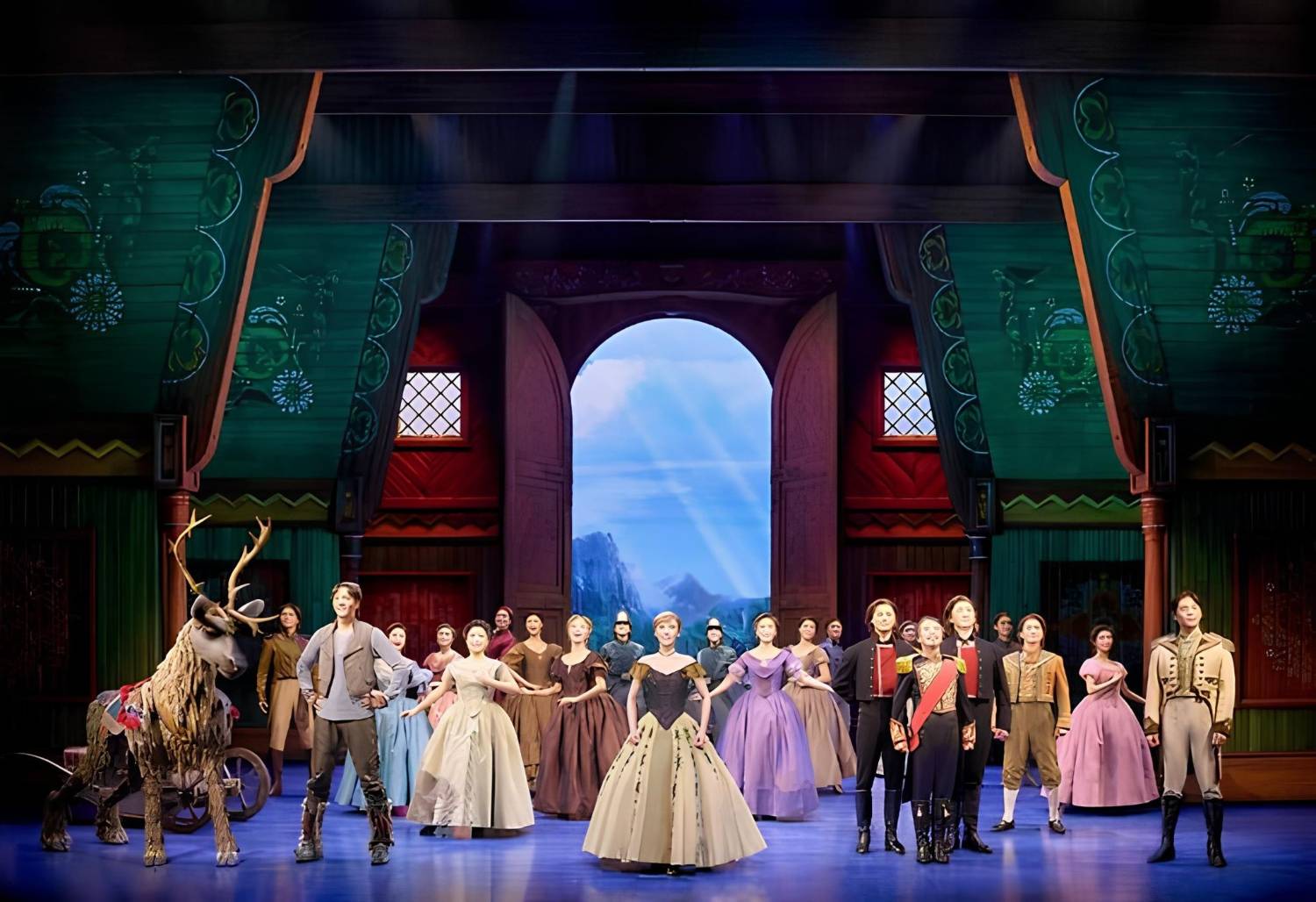
The musical 〈Frozen〉 is scheduled to run at Charlotte Theater in Seoul from August 13, 2026, to March 1, 2027.
Production photos © S&Co
