

The Possibilities and Limits of Public History Shown by the Musical Elisabeth
The "Sissi Myth" as a Popular Icon, and Public History
Empress Elisabeth von Wittelsbach of the Austrian Habsburg Empire — nicknamed "Sissi" — was consumed for decades as a popular icon, the "romantic, lovable fairy-tale princess,” an image cemented above all by Ernst Marischka's 1950s film trilogy starring Romy Schneider.In order to obscure the dark past of its defeat in the Second World War and its complicity with Nazism, postwar Austrian society processed the glamorous aura of the Empire and Sissi's beauty into a decontextualized language of nostalgia (Habsburg Nostalgia), packaging it as a signature national tourism product.
As a public historian, one can interpret this "kitschification" of popular historical memory as functioning as more than mere idealization of a single figure — it operates as a mechanism of national memory politics that conceals historical structures and the violence of the era. The musical Elisabeth, with book by Michael Kunze and music by Sylvester Levay, dismantles this ossified conventional image, and can be called the quintessence of a "public history aesthetic" that demonstrates how popular art can perform the work of historical critique.
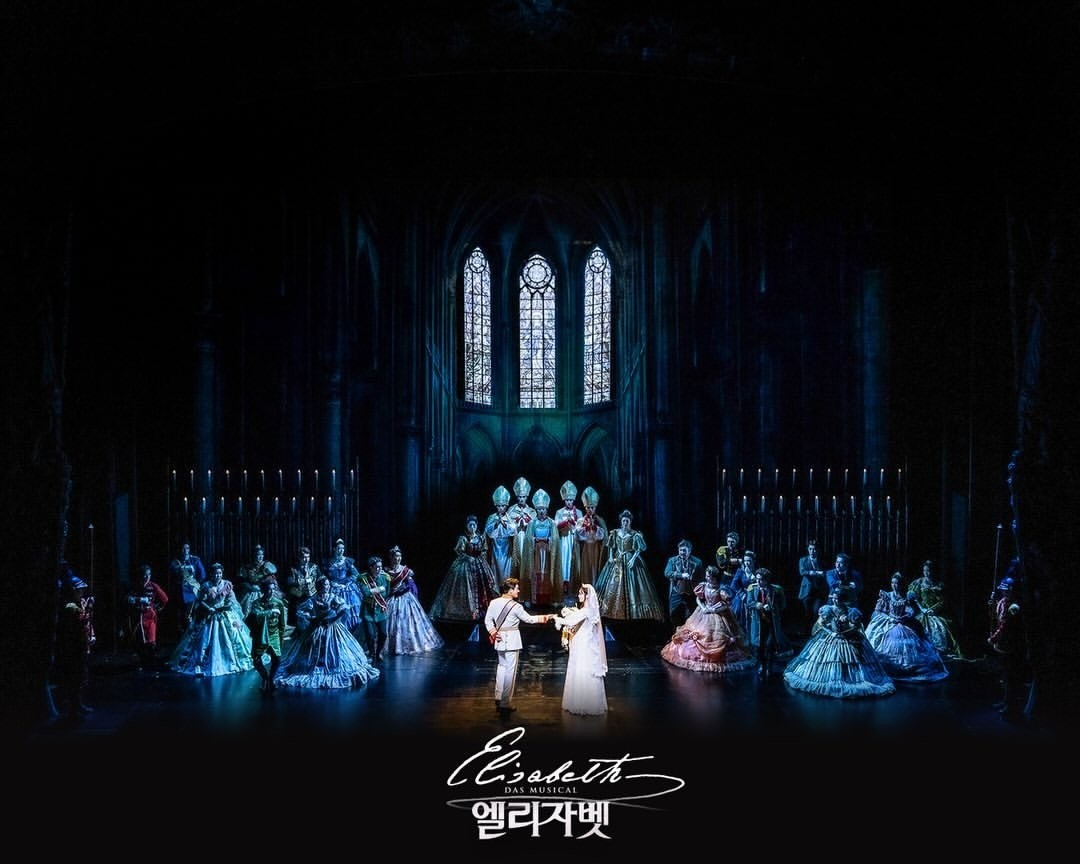
Austria's Memory Politics and the Reckoning with the Past
The 1992 premiere of Elisabeth at the Theater an der Wien in Vienna landed at a decisive turning point in modern Austrian history and historiography. Immediately after the Second World War, Austria seized upon a self-serving reading of the 1943 Moscow Declaration to make the Victim Theory (Opfermythos) — the self-definition as "the first victim of Nazi Germany" — the very foundation of its national identity. Through a Kulturnation policy built on the legacies of Mozart and the Empire, Austria likewise avoided national and moral responsibility for Nazi crimes. However, the 1986 scandal over President Kurt Waldheim's concealed Nazi past, followed in 1991 by Chancellor Franz Vranitzky's official acknowledgment of Austria's complicity in the Holocaust, finally plunged Austrian society into the whirlwind of a genuine reckoning with its past. Premiering a year later, Elisabeth was an event that answered the demands of an era in which the public was, for the first time, confronting its dark past head-on.
[The Context of Postwar Austrian Memory Politics and the Emergence of Elisabeth]
1945–1985: Avoidance of responsibility through the discourses of the Victim Theory and the Kulturnation
1986: The Kurt Waldheim Nazi-collaboration scandal
1991: Chancellor Franz Vranitzky's official speech acknowledging Nazi-era complicity
1992: Premiere of the musical Elisabeth in Vienna
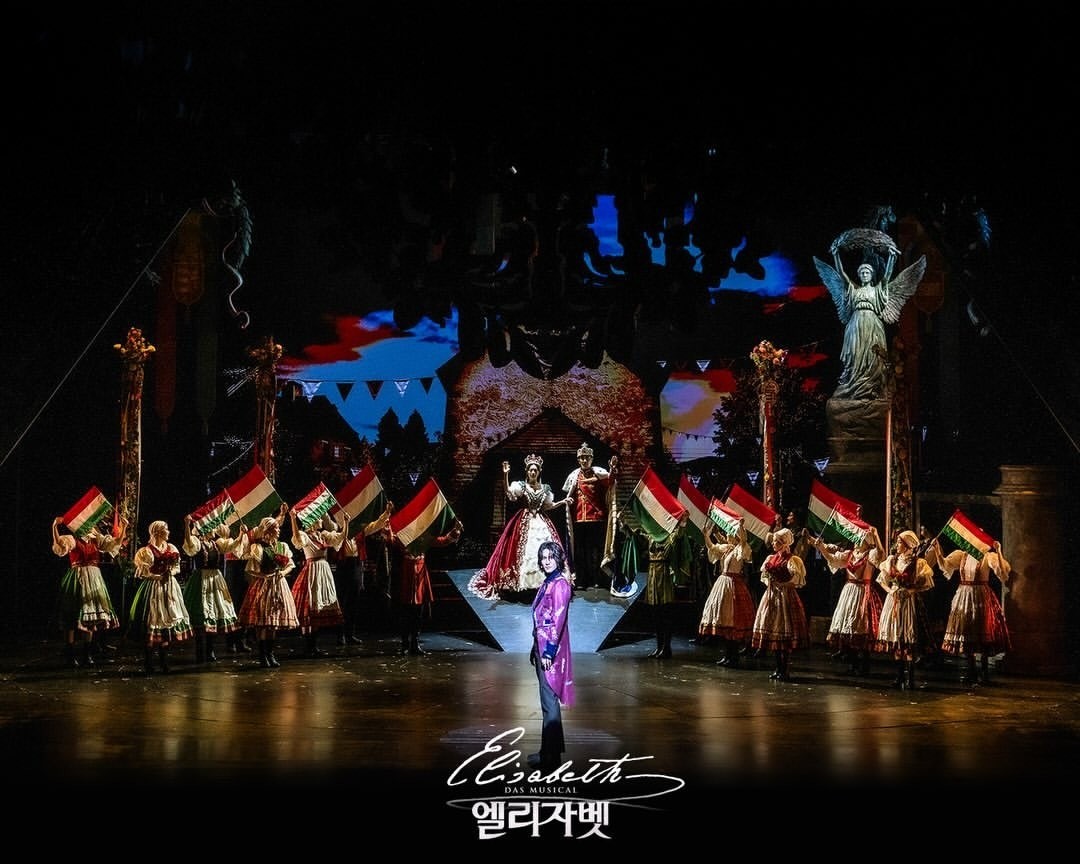
A Public-History Reinterpretation: "Death" and the Symbolic Structure of Character Relationships
The structural coherence of the work is anchored by the uncanny relationship formed between the meta-historical narrator* Luigi Lucheni and the personification of an abstract idea, "Death" (Der Tod). In the prologue, Lucheni, having endured a century of harsh interrogation in the court of the underworld, declares: He killed her, he says, because she herself wished for death.
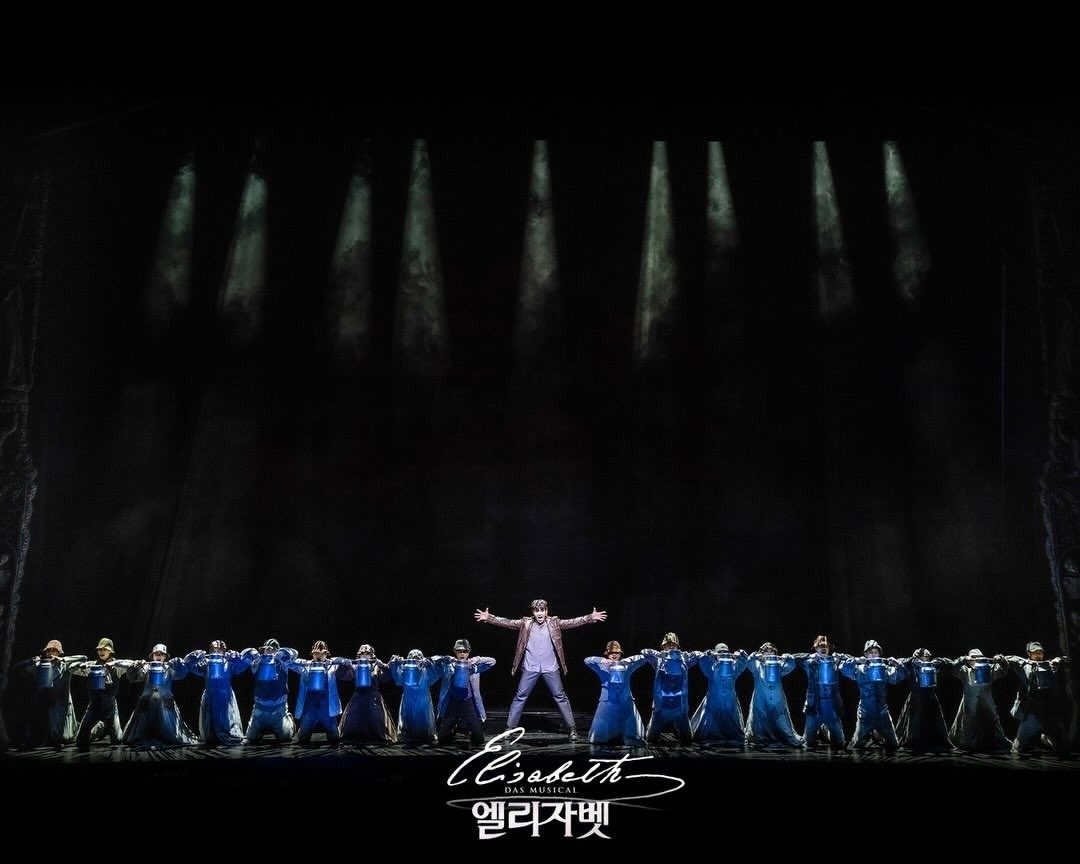
Lucheni functions as a hyper-historian** who fractures the fixed historical record, resurrecting ghosts and an archive of objects and summoning them onto the stage. Here, Death is not merely an individual's guardian spirit but a "catalyst" driving the vast historical catastrophe of imperial collapse.
In the latter half of the show, the staging in which Death — as if overturning a chessboard — hands Lucheni the weapon (a file) that will pierce Elisabeth forms the culminating point at which transcendent Fate (Death) meets real historical violence (Lucheni). This is a historical symbol staged to demonstrate that the history of the period was a process of self-destruction born from the union of transcendent catastrophe and popular madness.
Just as the transcendent idea of "Death" combines with destructive violence from outside the Empire (Lucheni) to draw history toward catastrophe, on another front Death infiltrates the inner world of the weakest link within the Empire — the Crown Prince Rudolf — inducing the structural self-destruction of the royal house. For Rudolf, used as a political hostage and neglected amid his mother Elisabeth's struggle for freedom, Death becomes his sole refuge and a fatal lover.
The numbers that best capture this relationship — "The Shadows Grow Longer" (Die Schatten werden länger) and the "Mayerling Waltz," in which Death seduces Rudolf by placing a revolver in his hand — elegantly illustrate how an individual's psychological deficits combine with political despair to culminate in the Empire's self-destruction.
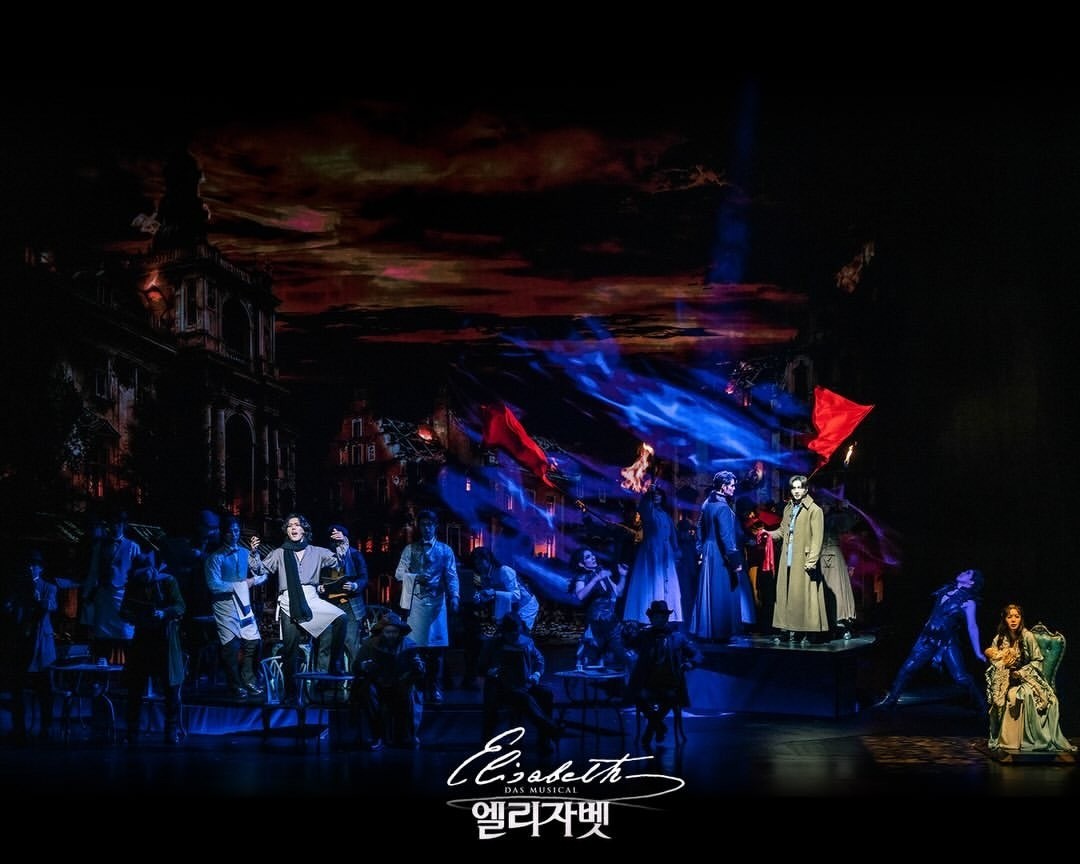
What is notable is the symmetry by which "Death," rather than committing murder directly, places a file in the hands of the anarchist at the very bottom of the Empire's hierarchy (Lucheni) and a revolver in the hands of the Crown Prince at its very top (Rudolf). Ultimately, the complicity of "Death and Lucheni" and the seduction of "Death and Rudolf" together prove that the fall of the Habsburg Empire was not a single accident, but a process in which psychological self-destruction from within the system (Rudolf) and structural violence from outside it (Lucheni) were intricately intertwined.
Death, the personification of an abstract idea, visualizes the process of imperial catastrophe on the stage in multiple layers through these two figures, completing, beyond a simple character drama, a weighty message of public history about the fall of an empire.
*Meta-historical Narrator: A dramatic device by which a figure, not confined within a single historical narrative, breaks the "fourth wall" to communicate directly with the audience, critically commenting on the mode of historical representation on stage and on the public's own attitude toward consuming history.
**Hyper-Historian: A concept from theater scholar Freddie Rokem, denoting a theatrical mediator who — unlike the academic historian who collects and records documentary sources — summons figures and events of the past directly onto the stage, using their own body, voice, and an archive of objects as media, within the performative space of the theater.
Progress and Critical Limits in Staged Representation
The musical Elisabeth has never remained a fixed text, continuing instead a series of ongoing production variations. The directorial revisions seen in the most recent production ("All New Elisabeth") clearly illustrate this progress. In earlier productions, during the scene in which Elisabeth visits a mental asylum,
Lucheni would turn to the audience and joke that "there are plenty of madmen here too," treating human illness and suffering as mere comic fodder for the audience's entertainment. This was simply the reflexive habit of conventional large-scale musical theater, which had long caricatured the illness and mental suffering of others without self-scrutiny. In the 2026 version, however, this unethical mockery and sensationalist comic element has been removed entirely.
Instead, by assigning the setting that a patient confined in the asylum "was once a member of the nobility," the production reconstructs the asylum itself into a space symbolizing the collapse of the entire Habsburg Empire and its aristocratic class. Abandoning the conventional belittling of others' suffering while deepening the structural tragedy of the Empire's fall demonstrates that popular art can embody both ethical awareness and historiographical depth at once.
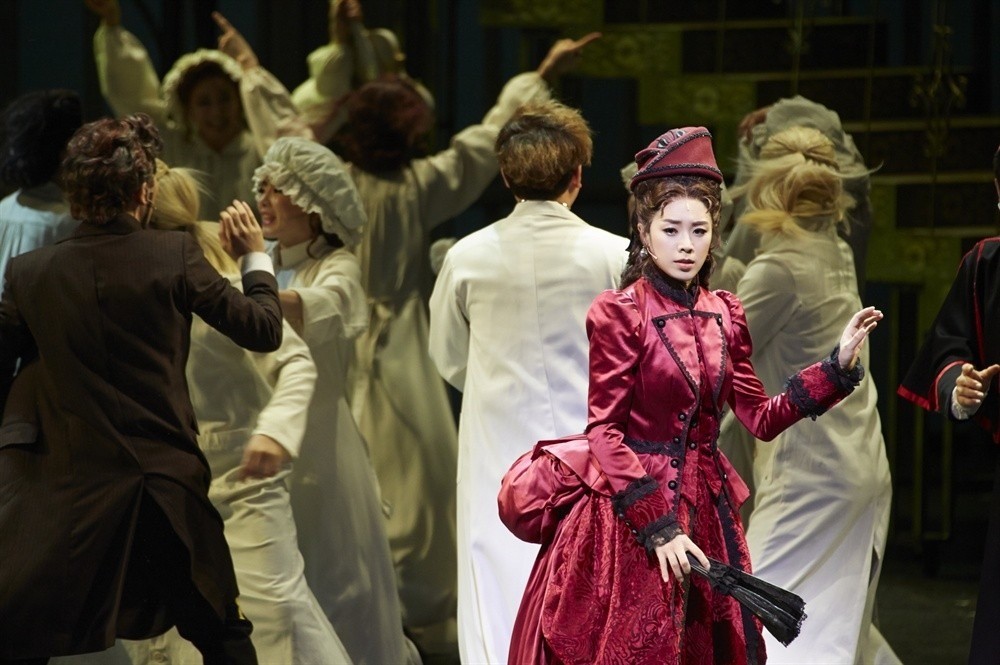
Despite this advance, however, certain flaws remain unaddressed. Chief among them is the distortion and gender-cliché convention found in the Act II number "The Malady" (Die Maladie). The scene depicts Emperor Franz Joseph having relations with the courtesan Madeleine and thereby infecting Elisabeth with a venereal disease — but this is not historically accurate. In fact, it was not Joseph but their son Rudolf who contracted the disease and passed it to his own wife, Crown Princess Stéphanie, in the historical record. Yet the production distorts this history, emphasizing Joseph's betrayal in order to maximize the dramatic justification for Elisabeth's flight from the court. A further question remains: why does grand-scale musical theater, whenever it seeks to portray a male character's despair, moral corruption, or narrative turning point, so consistently reach for the device of "the woman of the street / venereal disease / the brothel”? That popular art relies on sex workers and venereal disease as a narrative shorthand for visualizing a character's inner despair or moral contamination is a habitual convention repeatedly excused as a mere reflection of the period. The unnecessary joke in the asylum scene was reworked into a narrative of aristocratic collapse, yet the prostitution cliché was left untouched — a matter that must absolutely be reconsidered and revised in future productions.
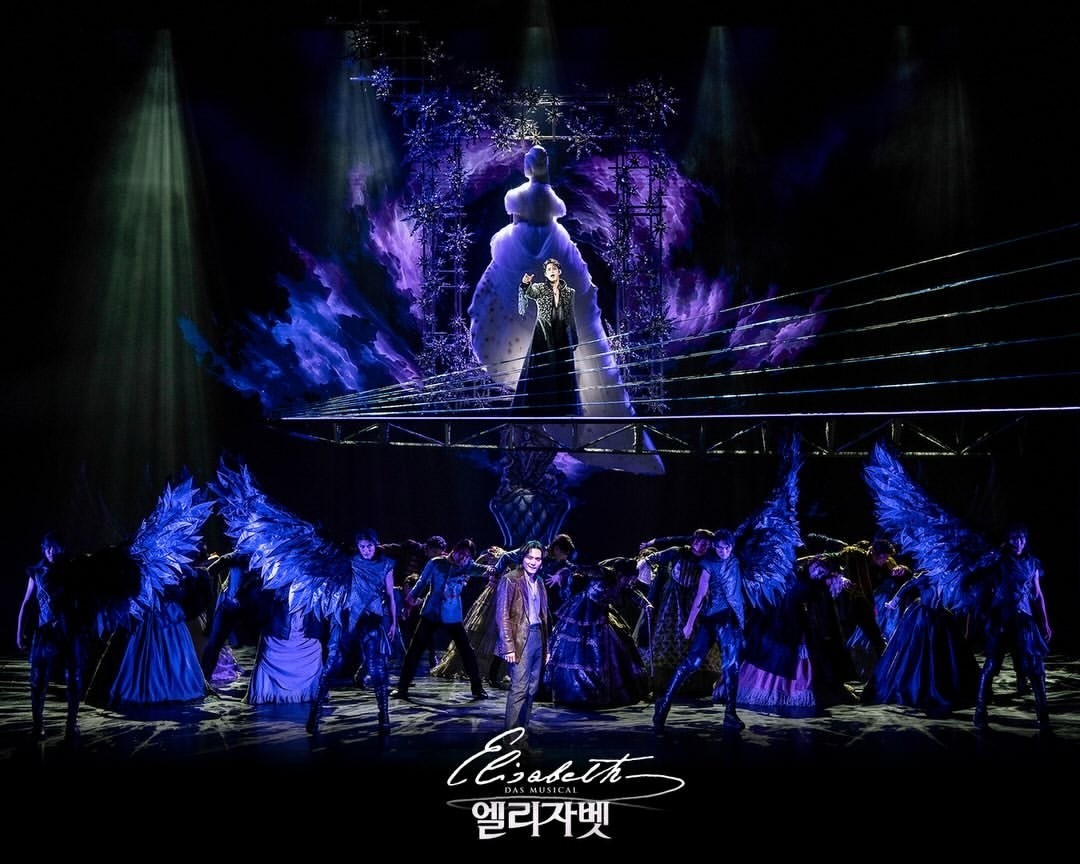
The limits of staged representation are not confined to modes of gendered consumption alone. Another significant public-historical and ethical issue that arises in the process of dramatizing historical figures concerns the treatment of a real-life perpetrator. May a real historical criminal or terrorist be aestheticized in popular art as an appealing narrative mediator for the audience's entertainment?
In actual history, Luigi Lucheni is the anarchist assassin who, in 1898 on the shore of Lake Geneva, brutally murdered an innocent sixty-year-old woman with a knife and a file for no reason other than that she was royalty. Yet the musical bestows upon Lucheni the status of a cynical but intelligent narrator, a charismatic rock star who commands the stage, and a meta-historian who exposes the hypocrisy of the audience. In this process, the audience becomes absorbed in the narrative charisma of a criminal, subtly desensitizing itself to the brutality of the actual historical violence he committed and to the tragedy of his victim. Thus, even as its directorial revisions deepen the narrative of imperial collapse, the production leaves behind a double challenge — conventional gendered consumption and the narrative aestheticization of a real perpetrator — a scholarly and ethical question that future creators of historical content must confront.
The Aesthetic Structure of Historical Content and the Aims of Public History
For a historical text to achieve powerful commercial success and narrative resonance in the realm of popular commercial art, sophisticated mechanisms of aesthetic reconstruction beyond mere factual accuracy are required. The musical Elisabeth stands as a representative case demonstrating that history can be transformed into vividly living content only when public-historical and dramatic devices work organically together. The aesthetic mechanisms that elevated this work into successful public-historical content can be concretized into four major narrative pillars.
First, there is the narrative energy generated by dismantling the "Sissi myth" already lodged in the public unconscious. The work takes the existing popular romanticism of the "lovable empress” — formed through the Sissi film series and the like — as the very engine of myth-breaking.Instead,
it delivers a shock to the audience by juxtaposing that romanticism, in raw and unvarnished form, against the truth of an obsession with beauty, severe eating disorders and depression, and a struggle against the court as prison.
Second, there is a narrative structure that aligns an individual's private tragedy with the tide of imperial collapse. Elisabeth's personal struggle for freedom is intricately interlocked with the uncontrollable disintegration of the nineteenth-century Habsburg Empire. In this way, the work moves beyond a fragmentary biographical drama of a woman endlessly wandering outside the court, achieving universal resonance instead.
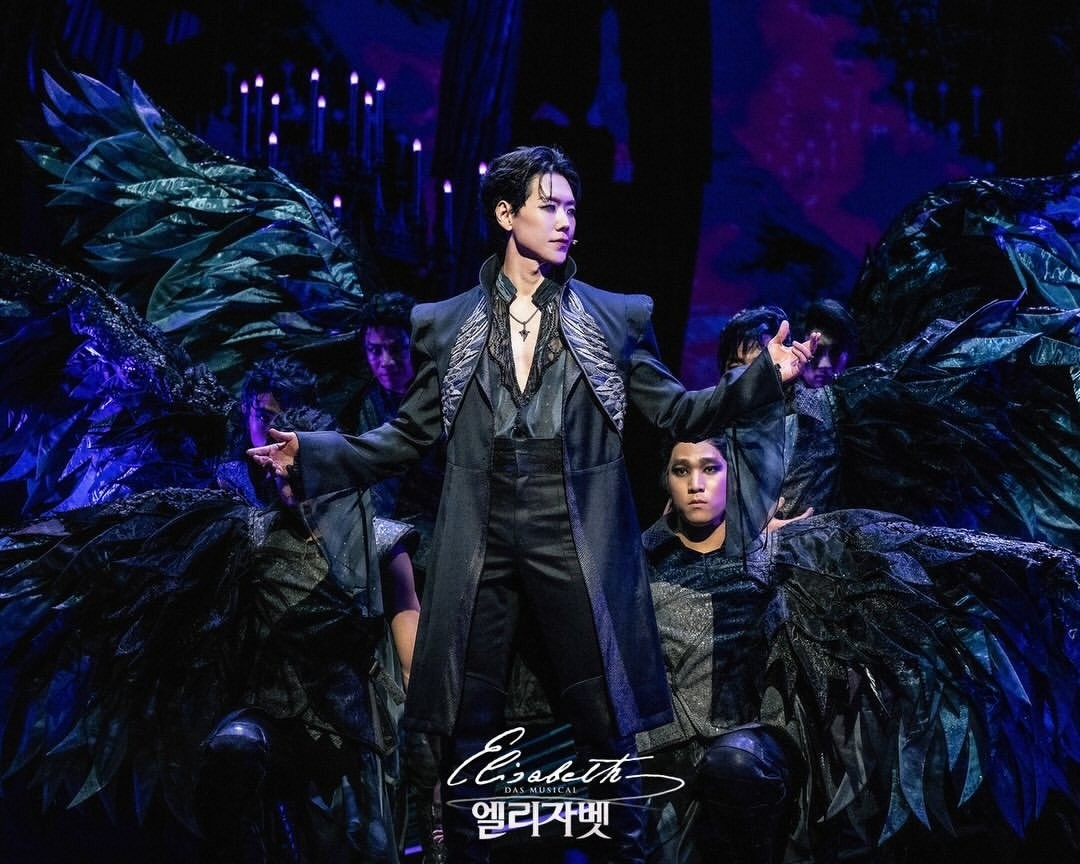
Third, there is the construction of a character that personifies the abstract idea of "Death" (Der Tod) as a captivating figure. By visualizing Death as a sexy, alluring entity, the work dramatically embodies the existential deficiency and loneliness within Elisabeth's inner world, and "Death" as her escape route.
This functions as the decisive dramatic device that breaks the characteristic heaviness of weighty historical drama, securing both fantastical tension and commercial popular appeal at once. Fourth, as in Lucheni's number "Kitsch," there is a satirical device of exposure that critiques, on the very stage itself, the public's own nostalgic consumption of history. By positioning Lucheni, the real-life assassin, as an observer and narrator, the work directly mocks and satirizes on stage both the hypocrisy of the court and of a public that processes and consumes history as a cheap souvenir. This functions as a metanarrative device that, rather than letting the audience become absorbed in the romanticism on stage, instead prompts them to critically reconsider their own mode of consuming history.
Yet even when a work is equipped internally with such sophisticated historiographical and dramatic devices, transplanting it into the popular consciousness of an entirely different culture and language is a challenge of another order altogether. In a Korean environment long dominated by English (Broadway/West End) musicals, the achievement of translator Danbi Lee in adapting and localizing an unfamiliar German-language original — with its unfamiliar grammatical structure — into a successful presence in the Korean market cannot be overlooked.
For Korean audiences, nineteenth-century Habsburg imperial history and modern Austrian history were, beforehand, an entirely unfamiliar domain with no prior point of contact. Moreover, a German text dense with weighty, philosophical metaphor carried a real risk of alienating audiences through a language barrier. Yet the linguistic achievement of recreating the poetic cadence and historiographical metaphor of the original with the particular grace and emotional register of the Korean language became the decisive bridge by which audiences, with no prior acquaintance, crossed over into the tragedy of the Austrian Empire and came to explore that history for themselves.
This aesthetic is particularly evident in the adaptation of the musical's very core — its numbers (music). A representative case is the adaptation of the Act I highlight number "Ich gehör nur mir," well known to Korean audiences under the translated title, roughly "I Am Only My Own."
The literal meaning of the German original — which could come across as stiff and overly direct ("I belong only to myself") — was rendered as "I want freedom," or, in its title form, as "I Am Only My Own."
The two-syllable phrase that crowns the number's climax, "Nur mir" ("only to myself"), was translated into the word “freedom" — a word that not only fits the rhythm and syllable count precisely, but also names the very core value the character had yearned for her entire life. By discovering a word that breathes in perfect sync with the tension of the melody, the translator created a powerful "hook" that lodges itself in the ear at once, fully imprinting Elisabeth's determination to refuse becoming the possession of the system.
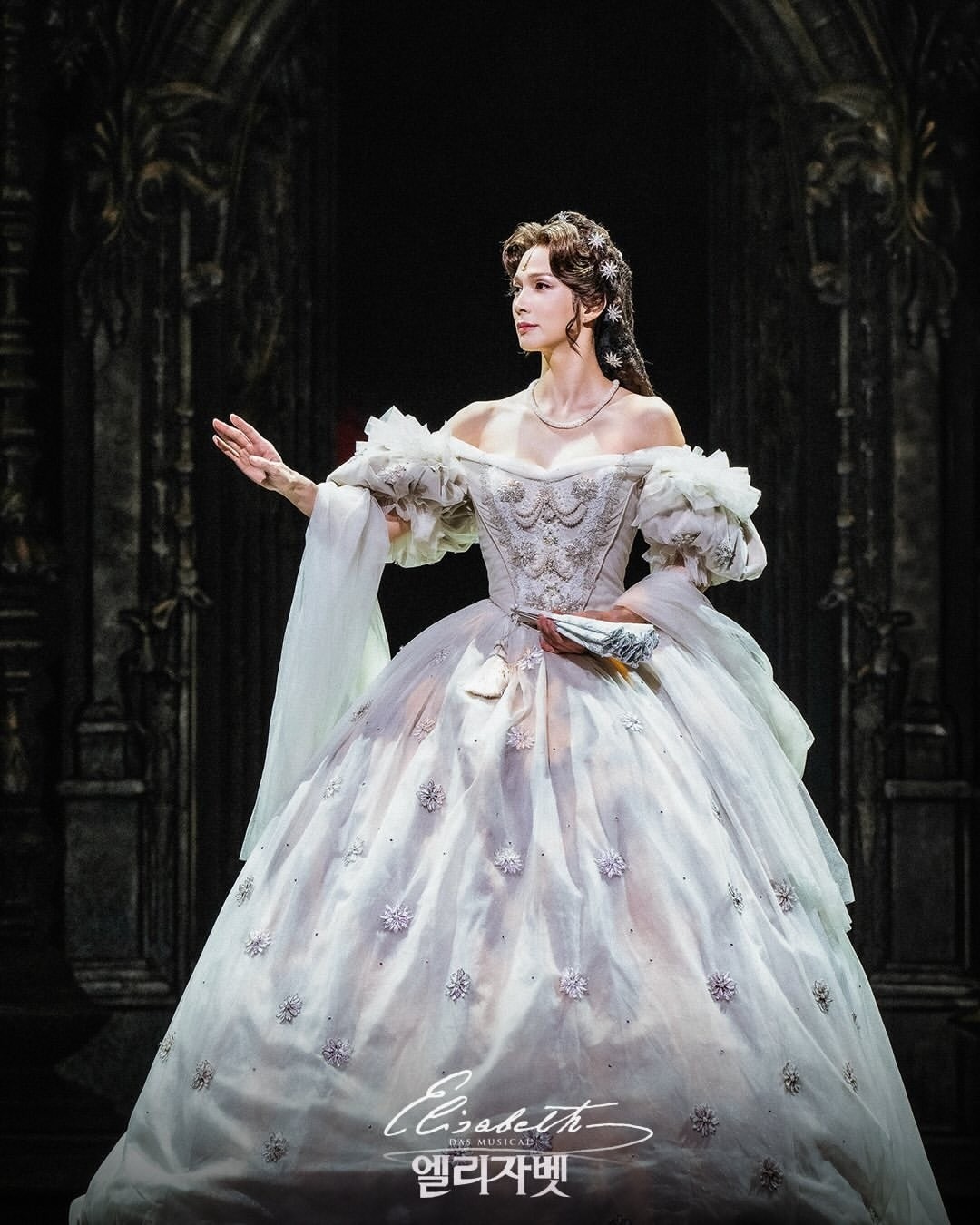
This adaptation, which fuses the melody's rhythm with the character's inner emotion, shines even more brightly in the Act II duet "Boote in der Nacht" ("Boats in the Night"), sung by Franz Joseph and Elisabeth after their son Rudolf's death, as they voice their two eternally parallel, unreachable lives. The original offers the lyric image of two ships adrift on a night sea, each with its own destination and its own cargo, showing that Joseph, bound to his imperial duty, and Elisabeth, endlessly craving freedom beyond the court, can never reach a single shared destination.
The Korean production recreated this through the intuitive yet lyrical expression, roughly, "happiness is far away.” In particular, the passage that unfolds the spatial (night) and historiographical (imperial collapse) meaning of the original into the lyric roughly meaning "happiness is far away, we are small boats adrift in search of love" is a genuinely admirable achievement. This passage — preserving the original's core image of "the drifting boat" while dissolving, into the Korean language's own distinctive cadence, the despair of two people who, even in the face of their child's tragic death, can ultimately never embrace each other (happiness is far away) — is without question the crowning achievement of the adaptation. Through such adaptation — one that honors the historical context of the original language while drawing out the particular emotional register of Korean — an unfamiliar foreign history was drawn into the audience's own inner sense of tragedy. This is an example of how, when public history permeates a foreign public across borders and languages, the translator functions not merely as a linguistic conduit but as a cultural and historical mediator guiding the audience into history.
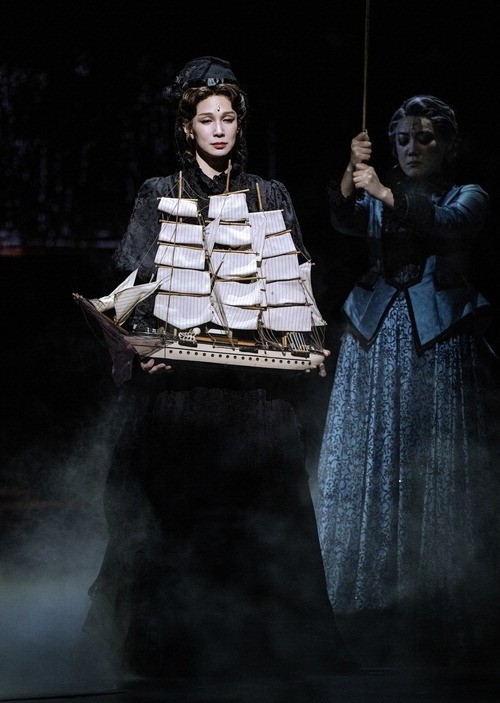
Beneath the foundation of this successful localization, quite naturally, lies the overwhelming completeness of the original work itself. Playwright Michael Kunze, composer Sylvester Levay, and the creative team displayed an extraordinary gift for material selection and dramaturgical vision, elevating what could easily have remained a parochial and unrelentingly dark tragedy — "the fall of the Austrian Empire" — to the summit of popular commercial art. In particular, the original directorial technique and character construction that personified the abstract concept of "Death" as a sexy, captivating being and inserted it into Elisabeth's life was a masterstroke, lending a weighty historical drama both fantastical tension and commercial popular appeal.
Despite the critical limitations — the conventional gendered framing (the brothel/venereal-disease trope) and the narrative aestheticization of a real perpetrator (Lucheni) — the union of the original's singular creative and directorial achievement with a localization that transplanted it perfectly into Korean sensibility shows the most powerful artistic model of what history can achieve when it meets the stage. This is the ultimate implication the musical Elisabeth holds for the next generation of public historians and creators of historical content.
We must study closely and learn from the aesthetic structure and commercial mechanisms this work has proven — while also moving beyond the critical limitations embedded within it. The true mission of public history does not end with the commercial re-consumption of history centered on famous royals or heroes. Using the content mechanisms of successful works as its engine, its task is to continually summon onto the stage those stories that are clearly recorded in the historical sources yet have been forgotten by the public memory — stories "recorded, yet unremembered."
To unearth the lives and voices of marginalized subjects hidden in the shadow of a great myth, and to connect them meaningfully with the lives of the public today. This is the scholarly and artistic mission we must carry forward, through continued research and creation, taking the musical Elisabeth as our starting point.
The musical Elisabeth runs from August 16 to November 15 at the Blue Square Woori Bank Hall, Seoul, South Korea.
Production photographs © EMK Musical Company
Sources and References
- Hametz, Maura E., and Heidi Schlipphacke, eds. (2018). Sissi's World: The Empress Elisabeth in Memory and Myth. New York & London: Bloomsbury Academic.
- Monde, Lisa. (2024). "Mozart! The Gem of European Musical Theatre: Exclusive Interviews with Michael Kunze and Sylvester Levay." The Theatre Times.
- Richardson, Carolyn Nicole. (2021). "If I Were Your Mirror" – A Reflection on Austrian History Through Elisabeth das Musical. Honors Baccalaureate Thesis, Oregon State University.
- Scheiblhofer, Susanne. (2023). "Confronting the Past through Popular Musical Theatre: The Effects of Austrian Postwar Cultural Policies on the Reception History of Musicals." Musicologica Austriaca: Journal for Austrian Music Studies.
- Tanaka, Rina. (2026). Wiener Musicals and Their Developments: Glocalisation History of Musicals between Vienna and Japan. Wien: Hollitzer Verlag.
