
An Interview with DAC Artist Bonjoo
There is a creator willing to bring her most private and painful experiences onto the stage — someone who sharply captures the trajectory of violence and survival, yet always ends up embracing life.
Bonjoo, who won the Best New Director award at the 2024 Dong-A Theater Awards for the play Documentary of a Failed Collaborative Creation: Can the Survivor Project Survive?, has continued to throw down weighty questions for our times.
At thirty-nine, drawing directly from her own deeply autobiographical experience of loss — "early menopause"
— she has created a new play, Again, Again (갱更).
We met her at Doosan Art Center's Space111, where the production had just opened.
In devising a stage kitchen where an aging body and imperfect generations collide,
what did she manage to salvage, to bring back "again"?
We followed the meaning of life she uncovered there.
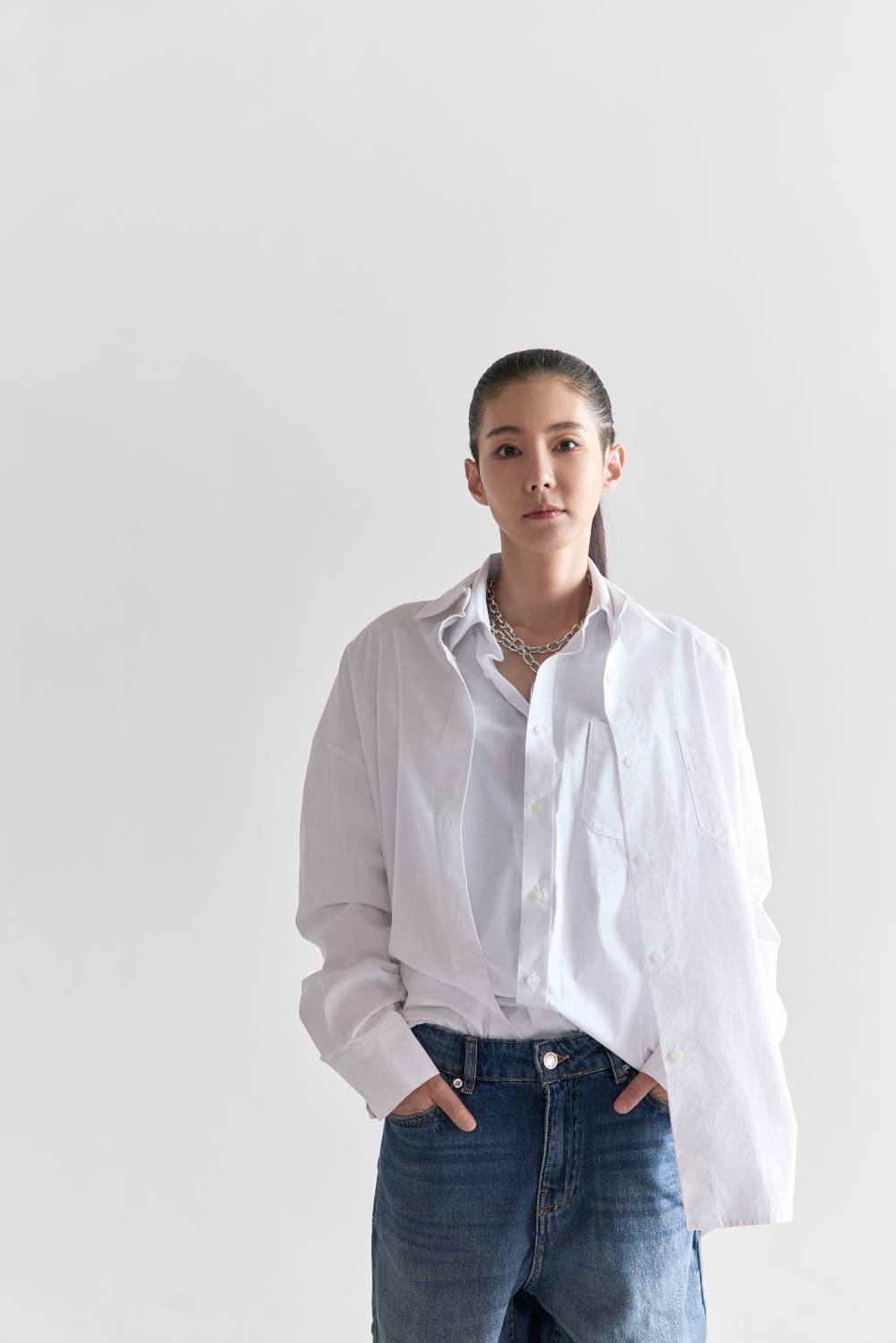
"Youth" and "Early Menopause": A Life Questioned at the Border
In 2025, through the Doosan Art Lab, Bonjoo presented a staged reading of A Record of Crossing the Motoyasu River with Kame-gun in August.
Unlike that earlier work, which grew out of a documentary record of a past experience, her new work as a DAC Artist, Again, Again, took a different path from the very start.
"The Doosan Art Lab piece was a reading performance based on a personal record, but Again, Again started out together with Doosan Art Center from the very beginning. The run for the Art Lab piece was also short — just three days. But with Again, Again, I had a lot of time to really sit with the themes embedded in the work."
The subject she dug into most deeply was, of all things, her own body. As it happened, right at the tail end of the age limit for participating as a "young artist," in the winter she turned thirty-nine, the physical change known as "early menopause" arrived — and it expanded far beyond a simple health issue into a fundamental question about social boundaries and categories.
"When I first got the diagnosis at the hospital in 2023, I was genuinely stunned.
I had fully thought of myself as a 'young artist,' as part of the younger generation.
But once I suddenly crossed outside that boundary, I found I had no way to prepare for it at all.
I was thrown into confusion: 'Am I no longer a young artist?
What generation can I even define myself as?'
We tend to lump people together and define them by a particular generation,
but I came to really understand how difficult it is, in the end, to flatten a single person down into belonging to just one generation.
That said, it's not as though I started out thinking, 'I absolutely have to tell this story!'
I created the work by starting from the sensations I currently understood best,
while thinking hard about how to bring in the world around me in order to turn that into theater."
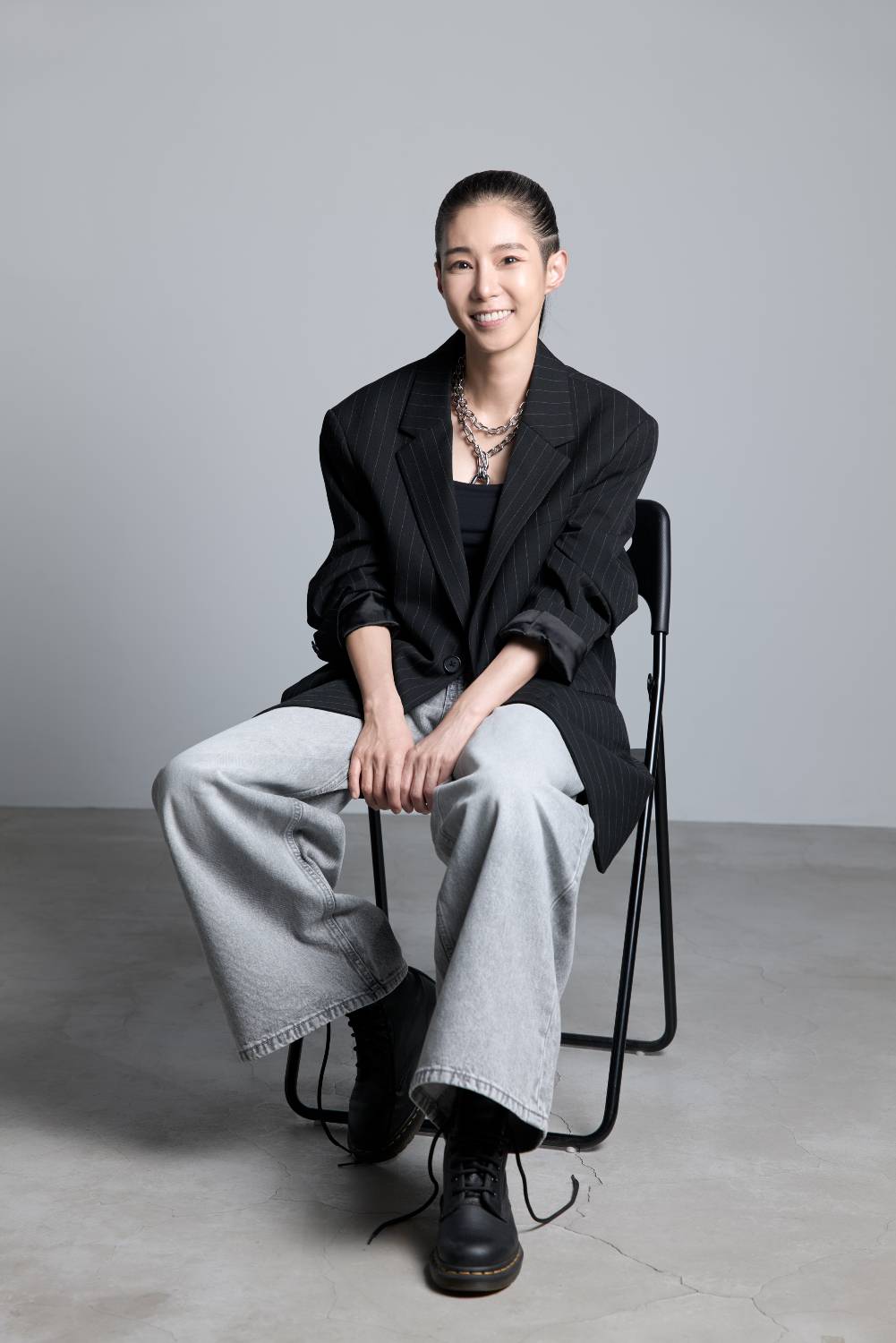
Calling Failure and Wounds Onto the Stage
Bringing one's own painful failures and autobiographical record onto the stage — not a success story, not a tale of heroism — takes tremendous courage.
What does it mean to her to put such an embarrassing record out into the world? Bonjoo spoke her mind in a calm voice.
"There are beautiful, good stories out there — stories where you can gather with others in a theater and share something more positive, some uplifting energy or message.
But personally, I don't think that's where my own spark, as a creator, is located.
Lately I've come to feel more and more strongly that where I start from — 'Ah, I want to tell this story, and I want to share it with someone' — sits on the darker side of the equation."
Even if it is a story that wears her down and causes her pain, the reason she keeps choosing this difficult path for herself is that it is, precisely, the real meaning behind her theater work.
"Doing theater doesn't resolve a single wound or worry — not one.
If I hadn't started, if I hadn't dragged this out through the work of making theater, it would have hurt less.
It does feel like I'm bringing this particular story up on purpose and putting myself through an unusually hard time because of it.
But even though it isn't easy, willingly bringing it out and talking about it — that, I think, is where I feel the meaning of the work I do."
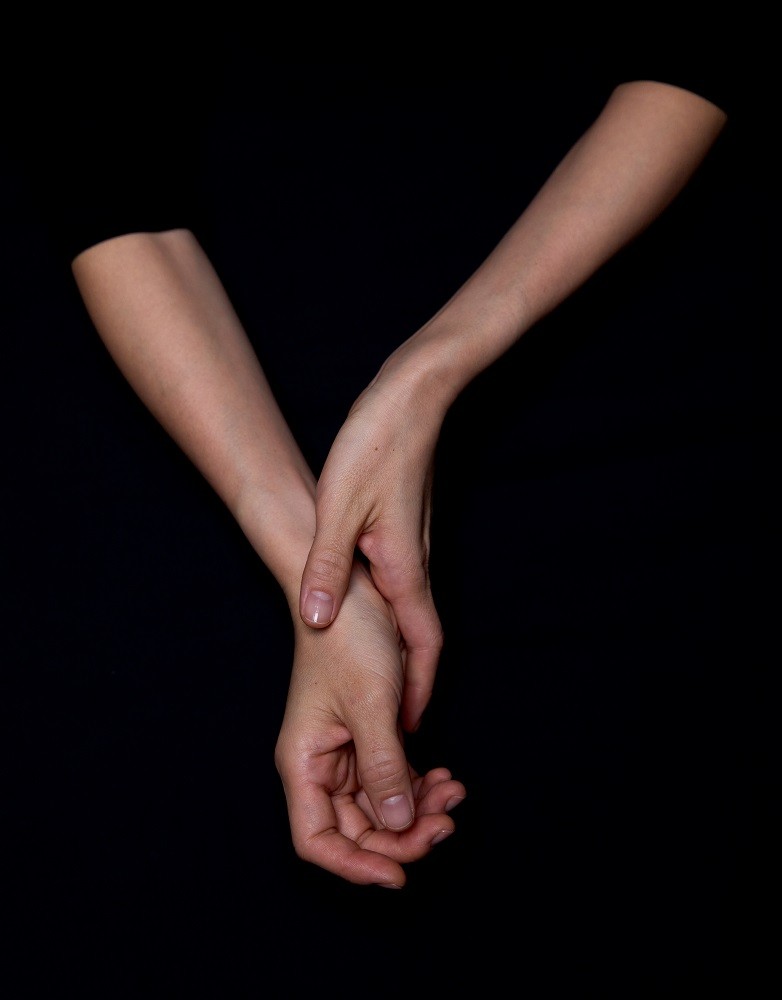
The Inner Battle Between Writer and Director
Carrying out the roles of both "writer," the one who writes the text,
and "director," the one responsible for the stage, within a single work may well be a matter of waging the fiercest war with oneself, every single day.
A self that keeps trying to expand an infinite universe inside her head is constantly colliding with a self that must coolly carve that down into the narrow, physical frame of the stage. Bonjoo confessed that this internal clash of selves is woven into her creative process, describing it this way: "If the writer is someone who keeps expanding the story outward, toward the world and other people, the director is the one who reduces and cuts that expansion down."
"I revised the text an enormous amount. It kept going right up until we moved into the theater. For example, when writing the script, I had carefully planted in details to support the narrative — the domestic violence Piyeong had experienced, Geumok's backstory. But as we went through rehearsals again and again, I came to feel it was more important to get the audience focused on the 'present relationships' between the characters inside the kitchen. In the end, I took all of those backstories out entirely.
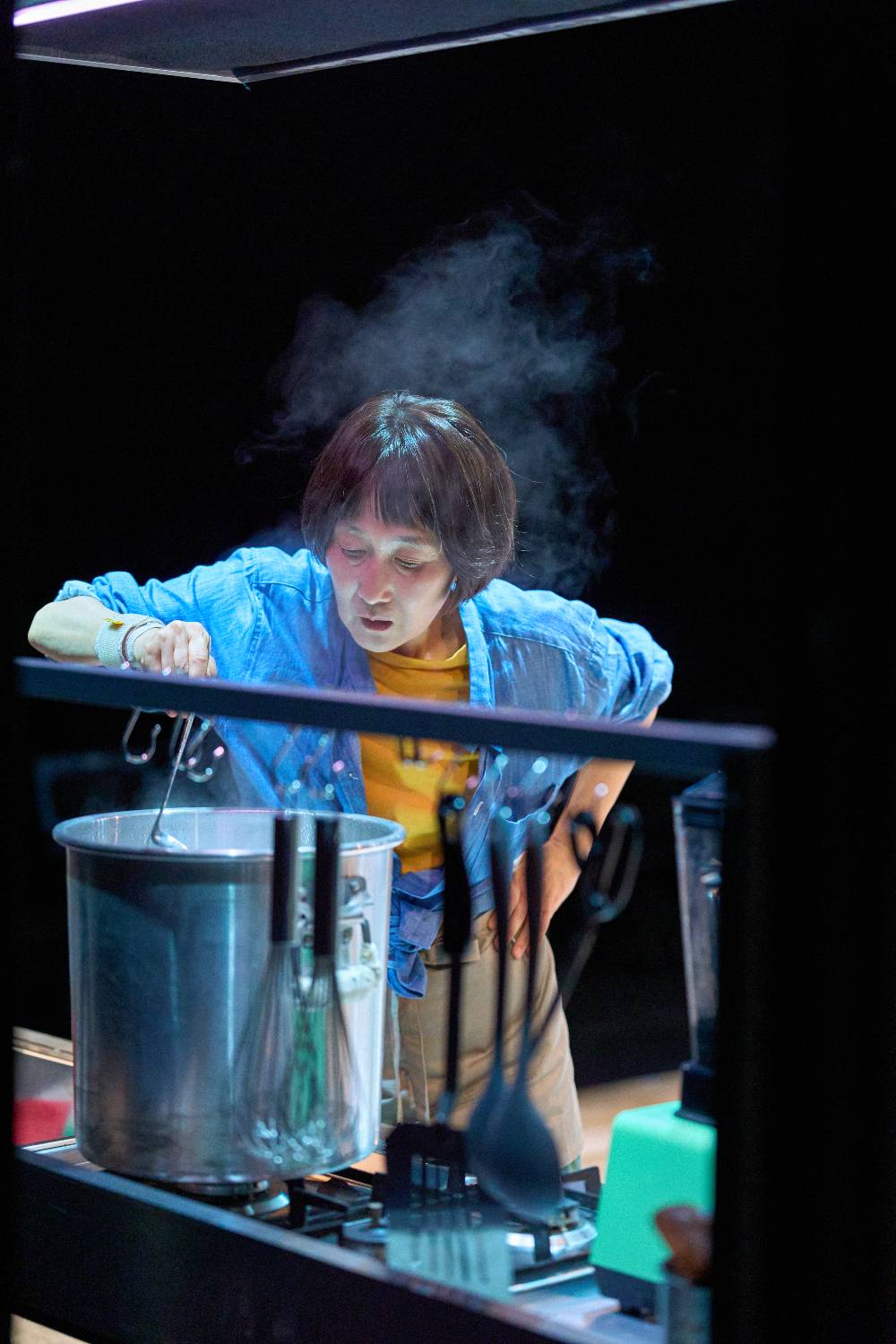
Deciding not to actually put the kitchen's key materials — meat, vegetables — physically on stage, and instead having the actors render them through precise mime,
was a directorial decision cut from the same cloth.
When I was writing the script, I deliberately did not plan ahead, thinking, 'I'll direct this as mime later.'
If I start writing with the image I'm going to direct already in mind, I end up censoring and guarding my own theatrical, image-based text.
In the end, the directorial device of 'de-visualizing the ingredients through mime' was something I decided once we were actually building the stage in earnest.
By boldly clearing away the ingredients that would otherwise rot and disappear, I wanted to show the audience,
far more clearly, the 'human body' that was actually being consumed and processed inside that kitchen.
The struggle of the writer, who has to endlessly expand the world through text, and the struggle of the director,
who has to prove that world within the physical limits of a stage, exist on completely different dimensions.
Because I've always done both writing and directing together within my theater company, I thought I'd grown fairly used to it —
but on this particular work, both sides were so difficult that I couldn't easily say which one was harder."
Blind Spots of Communication, Realized Through Two-Sided Seating
For this work, Bonjoo adopted a "traverse," or two-sided, seating arrangement,
in which the audience faces each other across the stage.
This inevitably means the audience experiences invisible blind spots.
We asked about her directorial intent in giving up a one-directional frame — one where a director can control the audience's gaze — and choosing two-sided seating instead.
"Two-sided seating puts a director through absolute hell.
With one-directional seating, as a director you can control and design exactly which expression on a character's face gets shown at a given moment, and when it gets hidden.
But with two-sided seating, when one side of the audience sees an actor's face,
the audience on the opposite side is inevitably only seeing that actor's back — an imbalance and a difference in perspective is unavoidable.
And I decided I wanted to include that difference as part of the work.
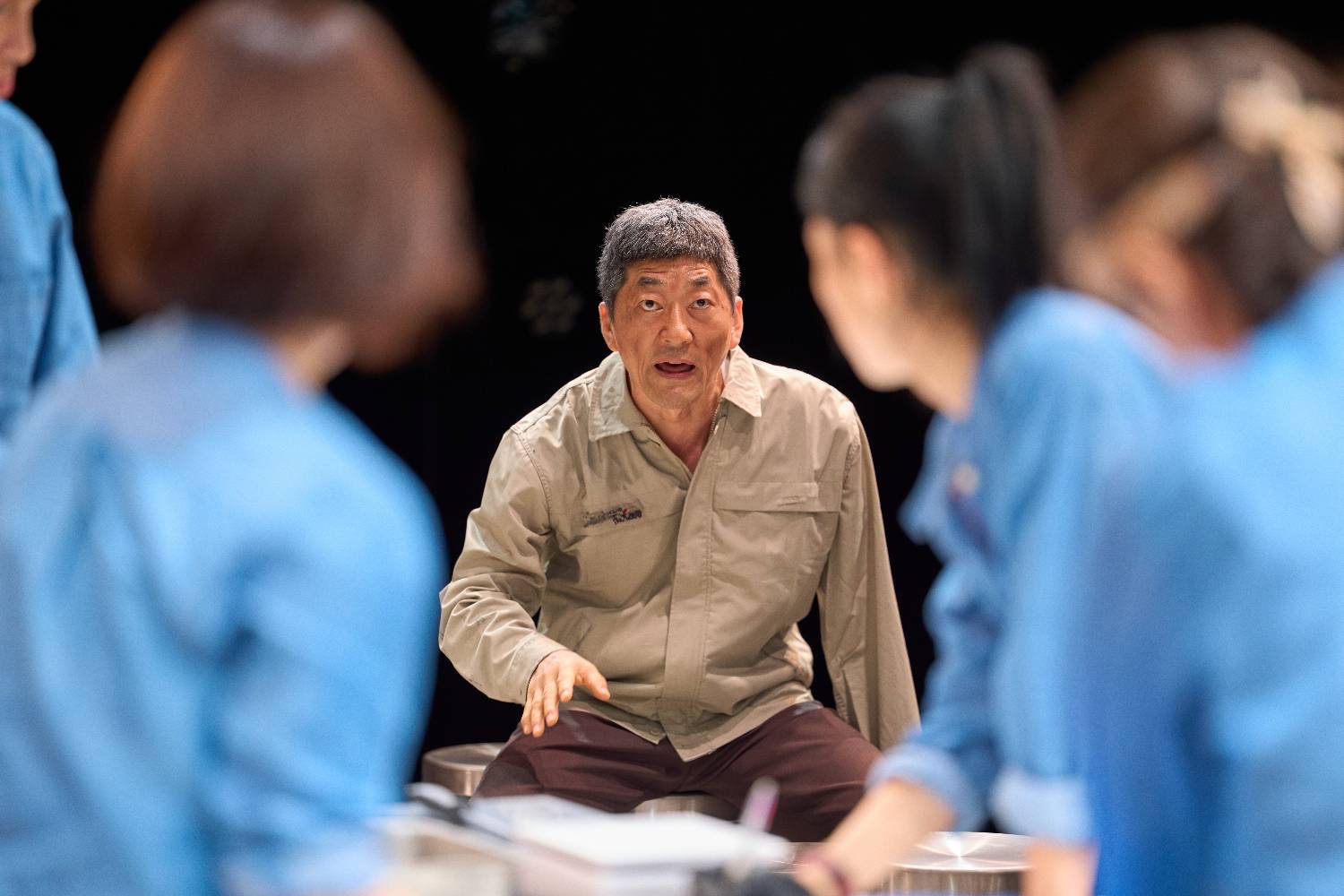
The six characters who appear in the piece range from their twenties to their eighties
— generations whose lived time and whose sense of the value of social labor are starkly different from one another.
It's only natural, and completely understandable, that they can't fully understand each other.
I wanted the audience, too, seated facing one another across that divided seating,
to physically sense the plain limitation that 'we can only ever see one small slice, one cross-section, of another person.'
I wanted to design it so that the failure of understanding the characters experience on stage would directly overlap with the physical,
limited sightline of wherever the audience happened to be sitting.
As a director, I did leave open some ways of fixing the actors' blocking and gaze.
Instead, we divided things up by setting a goal for each scene — a goal for moving without deciding everything in advance.
Because more than a hundred props move through that narrow kitchen, the minimum rules needed for safety
— starting points and ending points — had to be locked down very strictly.
But apart from those rules, I deliberately left the process in between completely undetermined from the start.
There's no challenge more unsettling or difficult for a director than not fixing an actor's blocking in advance —
but in a sense, I built an extremely precise set of promises in order to avoid making promises."
Swallowing a Nauseating Daily Life, and Willingly Living "Again"
"更" — also the title of the work — is a doubled word in which two opposing images coexist precariously within a single character:
something aging and worn down (as in menopause, 갱년기), and something being remade, restored again.
The final line of the writer's note — "So I eat myself, and live again" — belongs to characters who, inside that kitchen, must ceaselessly crush and swallow something down. Bonjoo said she hopes this ending is not the work's period, but a long comma.
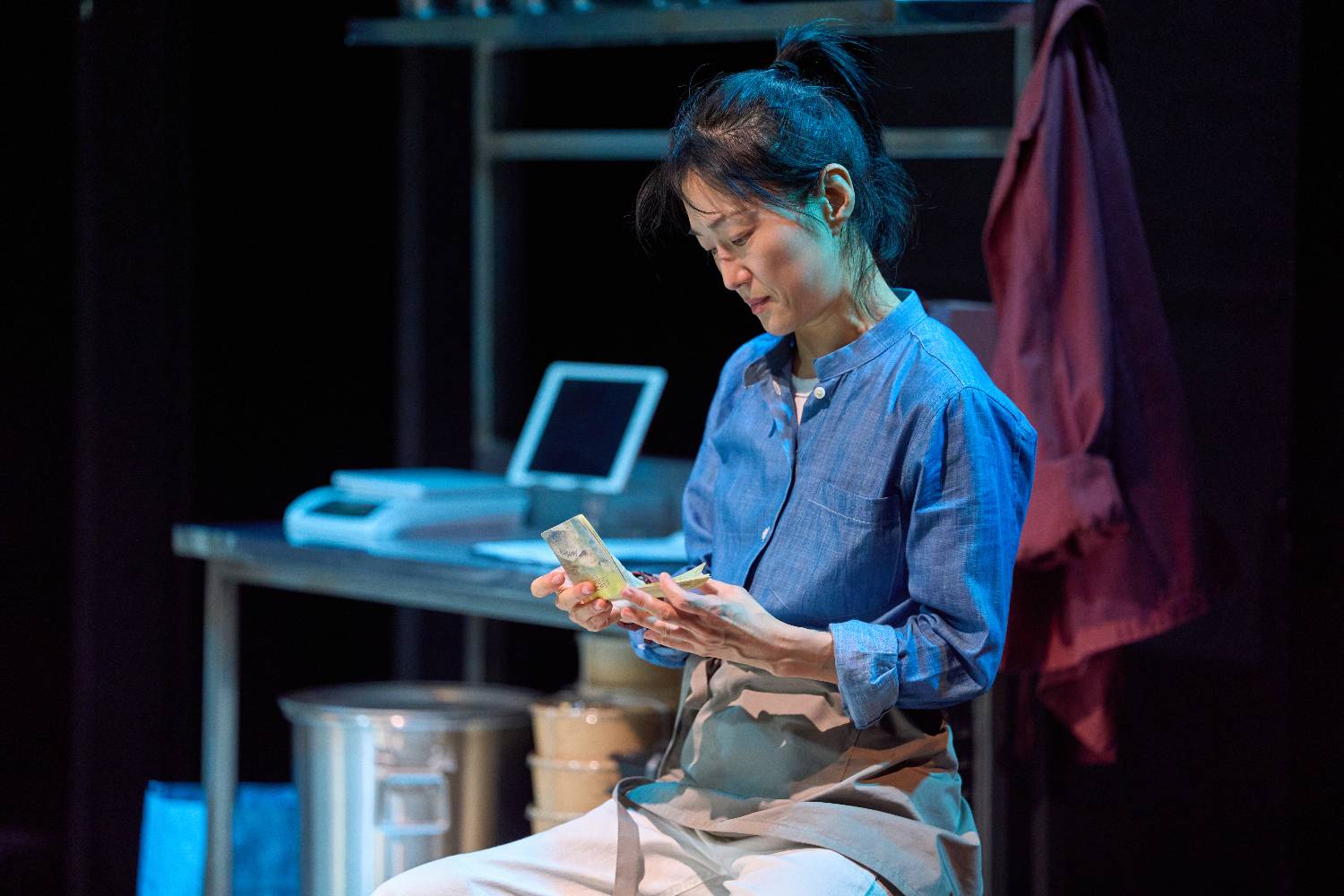
"I think of that final scene not as the period at the end of this work, but as a comma.
Once the curtain falls and the audience returns to their own daily lives, this message of 'again' can't simply be a shining hope or a straightforwardly positive comfort.
Everyday life will probably look much the same tomorrow, and it will probably still be hard.
But having witnessed characters on stage who face their difficult, ugly cross-sections and still willingly accept them and push forward,
I hope the audience takes away even a tiny bit of strength to endure the clumsy, painful moments of their own lives.
I've heard from people around me who felt let down that it isn't a happy ending.
But the audience has clearly seen the characters fight, bicker, and struggle their way to choices that are ultimately foolish and even immoral.
Even so, I hope the real, vivid hope of stepping forward toward tomorrow can be found directly in each audience member's own tomorrow, in their own daily life — not inside the theater.
Deliberately not calling that up onto the stage and dressing it up hypocritically was, itself, part of my directorial intent."
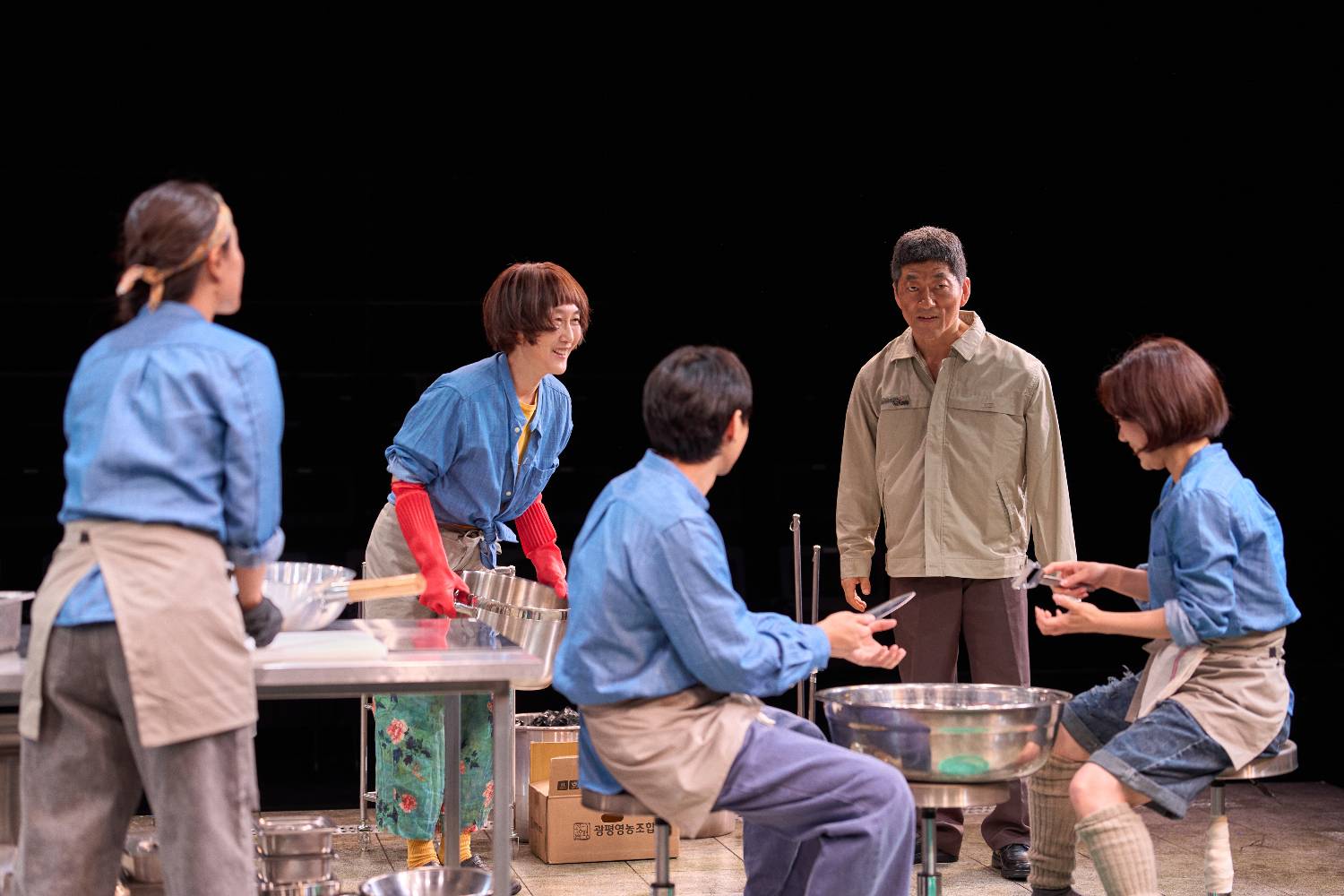
In the end, the act of "swallowing" in this play is neither a surrender to reality nor an escape from it.
On a stage where the shabby ingredients that would rot away have been erased through mime,
what can ultimately be proven is only the desperate realization that all we truly have is our own honest, worn-down, consumed body.
It is a decision to no longer refuse or feel sick at the sweat and blood of the generations before us — nor even at our own flaws — and instead to willingly embrace them and take responsibility for them.
Even an imperfect, uneven daily life; even when we willingly embrace and take responsibility for our own ugly, embarrassing cross-section —
only then does our real "again" truly begin.
The desperate struggle of characters enduring the brutal weight of survival in that narrow,
hot kitchen paradoxically hands us a heavy kind of courage: the courage to face one another again, and keep living.
Our trajectory doesn't have to be smoothly beautiful. Let's go again!
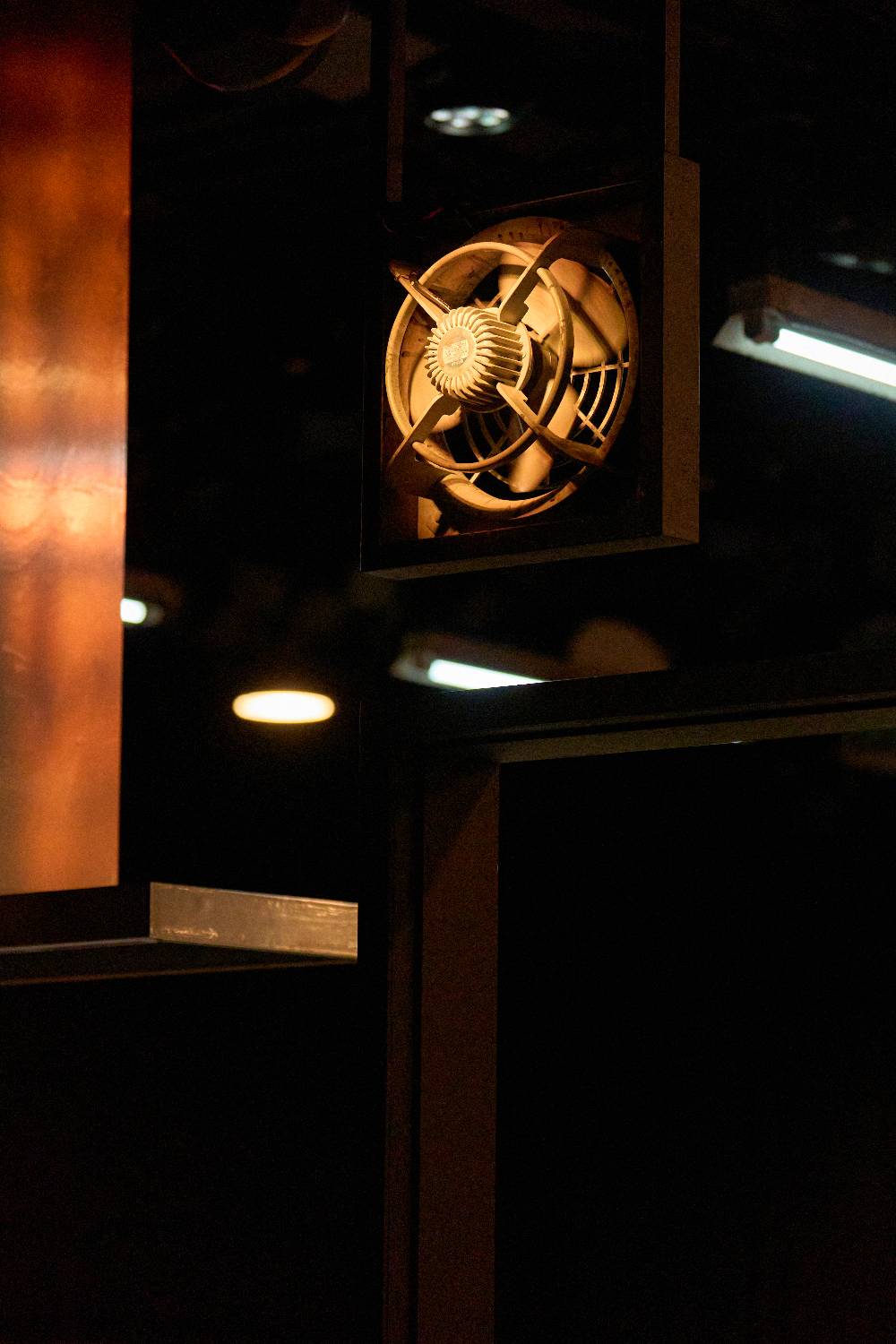
The play Again, Again (갱更) runs from September 2 to September 20 at Doosan Art Center's Space111.
© Doosan Art Center
