

For most audiences, a performance is a fleeting experience that comes to an end the moment the lights in the theatre go up.
But there are those who open the script before the curtain rises,
closely scrutinize the director’s meticulous mise-en-scène from their seats,
and, after the performance ends, gather scattered moments and transform them into carefully crafted sentences, building their own archives.
They are audiences who go beyond simply “watching” a performance to construct yet another layer of intellectual text upon the stage.
Here, we take a closer look at the world of these extraordinary “recorders” discovered through the global performing arts community HereWeAre Theatre Club (HTC).
#1. Su-jin Lee in Vienna, Austria: A Theatre Marathoner Who Opens the Script and Runs to the Theatre
The first person we met, Su-jin Lee, has been living in Vienna, Austria, for four years,
working as an office professional and freelance writer.
Drawn to the allure of German theatre, she eventually decided to pursue graduate studies and even wrote her master’s thesis in Korea on the dramaturgy of German playwright Roland Schimmelpfennig.
A true “theory-driven audience member,” she has been finding her own balance between the historic theatre streets of Vienna and the avant-garde stages of German-speaking theatre.
We sat down with her to hear her wide-ranging and deeply thoughtful stories about theatre.
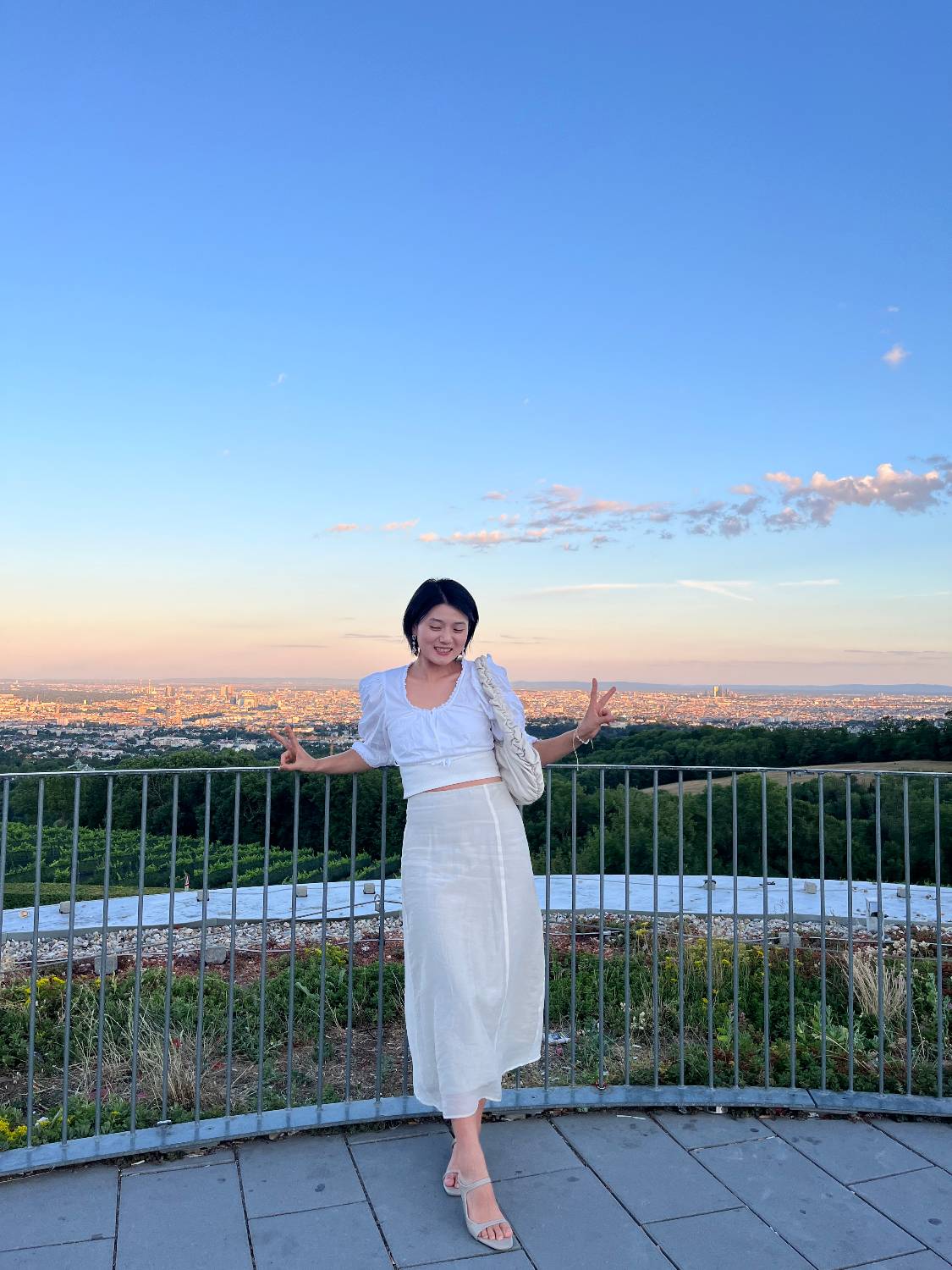
Q. It is fascinating that your passion for German theatre led you all the way to writing a master’s thesis.
How did you first encounter German theatre? And could you tell us about one of your most unforgettable “fan moments”?
A. “It actually started when I was an exchange student in Hamburg during my university years.
I happened to encounter German theatre and felt an intense fascination that was difficult to put into words.
I wanted to learn more and explore it more deeply, and eventually that desire led me to pursue graduate school. During my time in graduate school, I became so immersed in Schimmelpfennig’s world that I even wrote my master’s thesis on his dramaturgy.”
The moment when my passion for German theatre reached its peak was the “theatre marathon” I ran in Hamburg two years ago.
In early autumn that year, Schimmelpfennig’s Anthropolis trilogy was published.
As soon as I read the texts, I simply couldn’t resist seeing them on stage.
I immediately booked a flight to Hamburg for November and embarked on an almost terrifying marathon: I watched all five productions in the series over three days, Friday through Sunday.
I used my vacation days and practically lived in theatres from morning until night, only to land at the airport early Monday morning and head straight to work.
My legs cramped, and I was so exhausted that it felt like my entire body was falling apart.
But I was so full of happiness and fulfillment that I remember being genuinely surprised by myself, thinking,
“Wow, so this is how passionate I really am about theatre.”
Apparently, another marathon is coming this winter with the same playwright’s new work, Fremde Sonne.
I vividly remember saying two years ago, “This is absolutely insane!”—but I’ll probably forget all about that and find myself booking another ticket to Hamburg anyway.
Oh, and Anthropolis has been receiving its Korean premieres as individual plays at the National Theater Company of Korea since last year.
I really hope theatre lovers in Korea will get a chance to see these works too.”
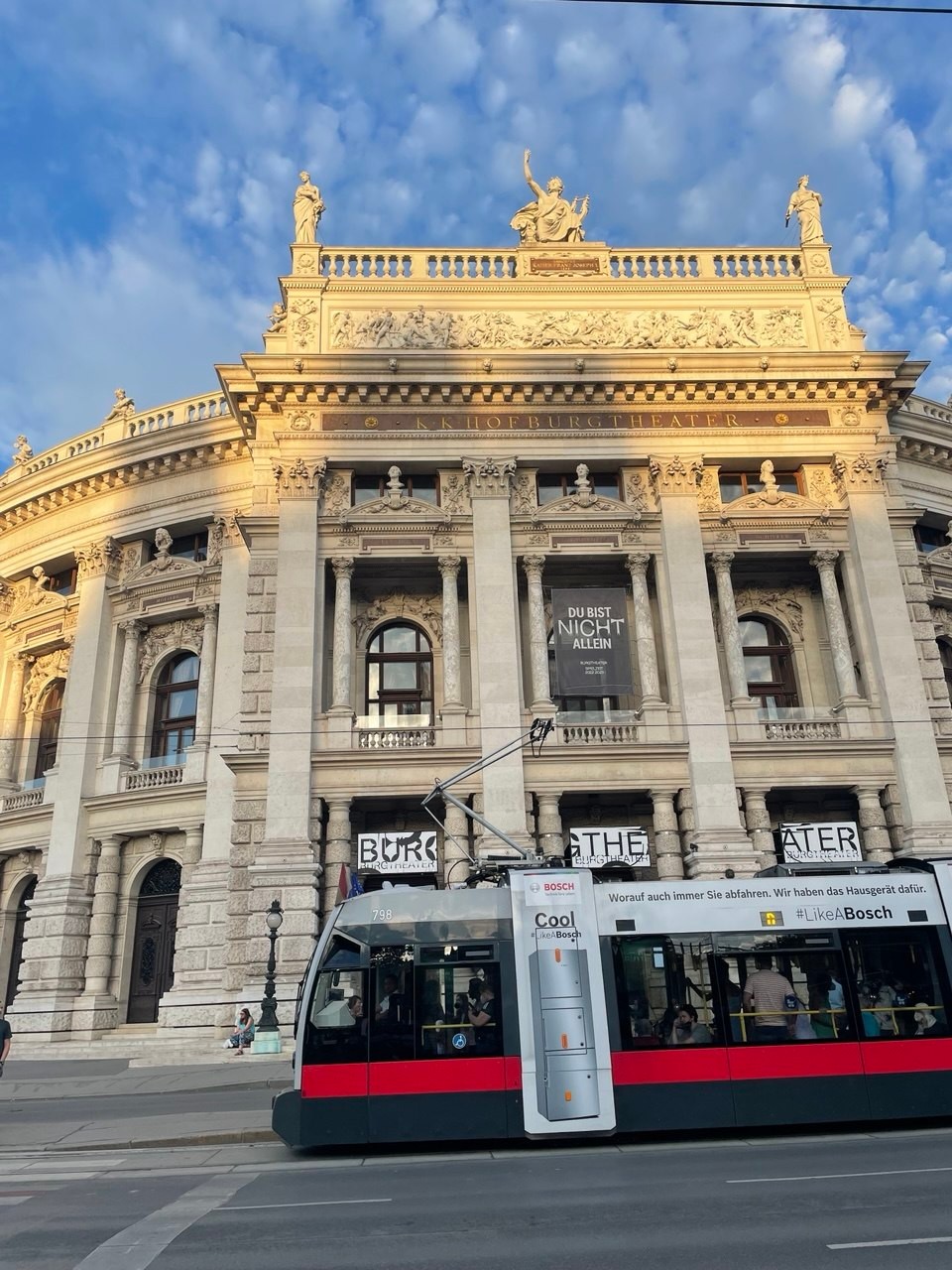
Q. You now live in Vienna, Austria, the home of opera and classical music.
What makes Vienna’s theatre scene special, and what cultural differences have you noticed compared with theatres in Germany and Korea?
A. “Vienna is a classical arts city filled with historic opera houses and theatres throughout the city.
However, compared with the avant-garde and experimental contemporary theatre I enjoyed in Germany, Vienna tends to hold more firmly to tradition and a sense of historic grandeur.
One of the biggest differences between Korean and European theatres is the diversity of their audiences.
In Korea, theatre audiences tend to be dominated by people in their 20s and 30s.
In Austria and elsewhere in Europe, on the other hand, annual subscription holders in their 50s, 60s and beyond form an important financial foundation for theatres.
As a result, the average age of the audience tends to be much higher, with people of all ages and genders represented more evenly.
Another romantic aspect of European theatre culture is the ‘leisure before the performance.’
People here often arrive at the theatre 30 minutes to an hour before the show begins.
They might enjoy a glass of sparkling wine or a light snack in the theatre lobby while sharing their anticipation and excitement about the performance they are about to see.
The relaxed European lifestyle is reflected so naturally in theatre culture, and I always find it wonderful.
At Vienna’s historic Burgtheater, in particular, productions that combine theatre with abundant live music are frequently staged.
The ensembles may not be as large as a full orchestra, but highly accomplished classical musicians perform live on stage.
In Vienna, the City of Music, it creates a rare and truly special theatrical experience that you can hardly find anywhere else.”
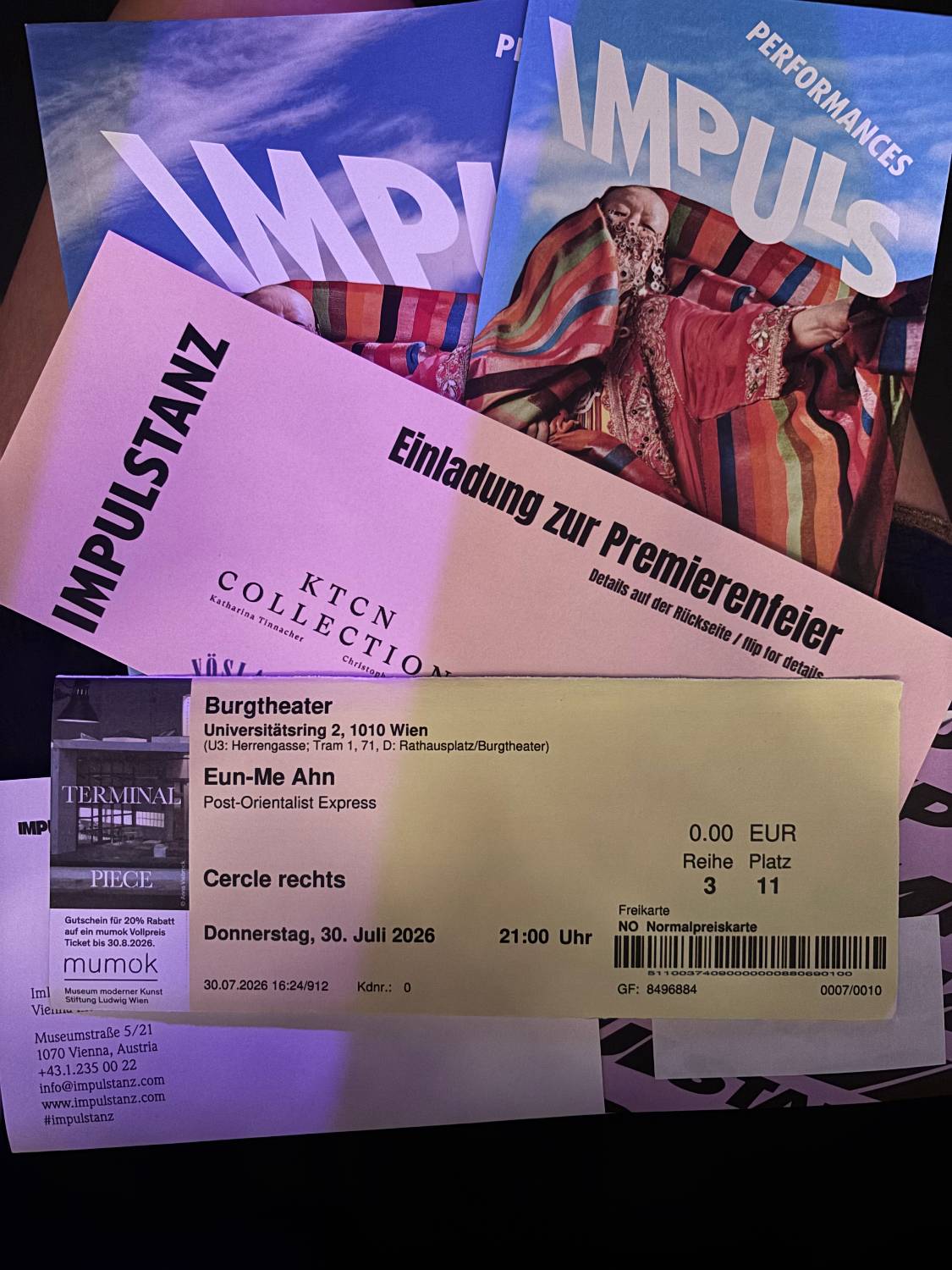
Q. Having written a master’s thesis on theatre, you seem to have a particular talent for putting things into words.
I heard that you originally did not document performances at all. How has your approach to writing and archiving changed through your activities with HTC?
A. “That’s right. I used to be an extremely dedicated non-recorder when it came to performances.
I believed that theatre is a ‘living organism’ that breathes differently in every moment,
and that as an audience member, my duty was to devote myself entirely to the thrill of that fleeting moment rather than trying to document it.
Once a performance ended, the only thing I archived was a single curtain-call photo with the entire cast, quietly saved in my personal photo album.
In Europe, especially in Germany and Austria, online communities for sharing post-performance reviews are not as active as they are in Korea.
I would look at the repertoire brochures or theatre magazines sent to me by theatres each month, remember the performances I wanted to see,
and then either go alone or discuss them privately with friends who had attended with me.
I always felt that something was missing when it came to sharing and communicating about theatre.
Then, during my third term with HTC, I was deeply inspired by seeing how other members collected and documented their theatre experiences in such diverse and thoughtful ways.
I began thinking, ‘Maybe I want to start putting my own thoughts into words too.’
In particular, writing articles in English helped me discover the joy of archiving.
The process of taking all the thoughts scattered around in my head and organizing them into one coherent piece of writing became a form of study
—one that made me revisit, digest, and think through a performance two or even three times more deeply.
At the same time, it became another way of enjoying theatre.”
Q. You described ‘a connection that transcends time and space’ as your most unforgettable,
magical moment during your time with HTC. What exactly happened?
A. “One day, I posted a log on the HTC app about how excited I was for Schimmelpfennig’s upcoming new work, Fremde Sonne.
What was truly amazing was that an active artist who had actually participated in the rehearsal process of that production left a thoughtful comment on my log!
It was such a fascinating experience to feel that something I had written alone on the other side of the world had traveled through the network
and reached an artist involved in the production—and that two people waiting for the same performance could connect across time and space.
When I return to Hamburg for the next theatre marathon,
I would love to get in touch with them and meet in person so we can talk more about the stage and the production.”
Q. Finally, what words of encouragement would you give to future HTC members who are hesitating over their applications,
wondering, ‘Can I really complete all these missions and write all these English articles?’
A. “I understand better than anyone how daunting it can feel to complete eight log missions and four English articles over two months!
But I would tell you to just dive in and give it a try.
Even I managed to do it, despite being such a terrible procrastinator that I had never archived anything before!
I hope you’ll experience the precious feeling of connecting with audiences around the world through your own words.”
💡What does HereWeAre (HTC) mean to me?
“A catalyst for archiving!”
It made me bring back performances that I had previously watched alone and simply let slip away, and inspired an entirely new interest in the joy of documenting things in someone who had never been interested in archiving before.
#2. Ji-won Jeon in Seoul, Korea: “An Academic Audience Member Who Finds Joy in Analyzing Direction”
The second person we met was Ji-won Jeon, who lives in Seoul.
Fascinated by the social messages embedded in plays and their subtle psychological portrayals that can be interpreted in multiple ways, she is an “academic audience member”
who actively explores how literary texts acquire new life when they encounter the physical space of the stage.
As a double major in German Language and Literature at university, she brings a distinctly literary perspective to her experience of theatre.
Rather than simply watching the world created on stage, she is an intellectual recorder who actively internalizes and interprets the essence of a production.
We spoke with her about her approach to theatre.
Q. Listening to you talk, your scholarly passion for seeking out the texts and original works behind the productions you love is truly impressive.
We would love to hear about one of your own hidden, intense ‘fan moments.’
A. “I think the peak of my passion for theatre was when I was an exchange student in Germany last year.
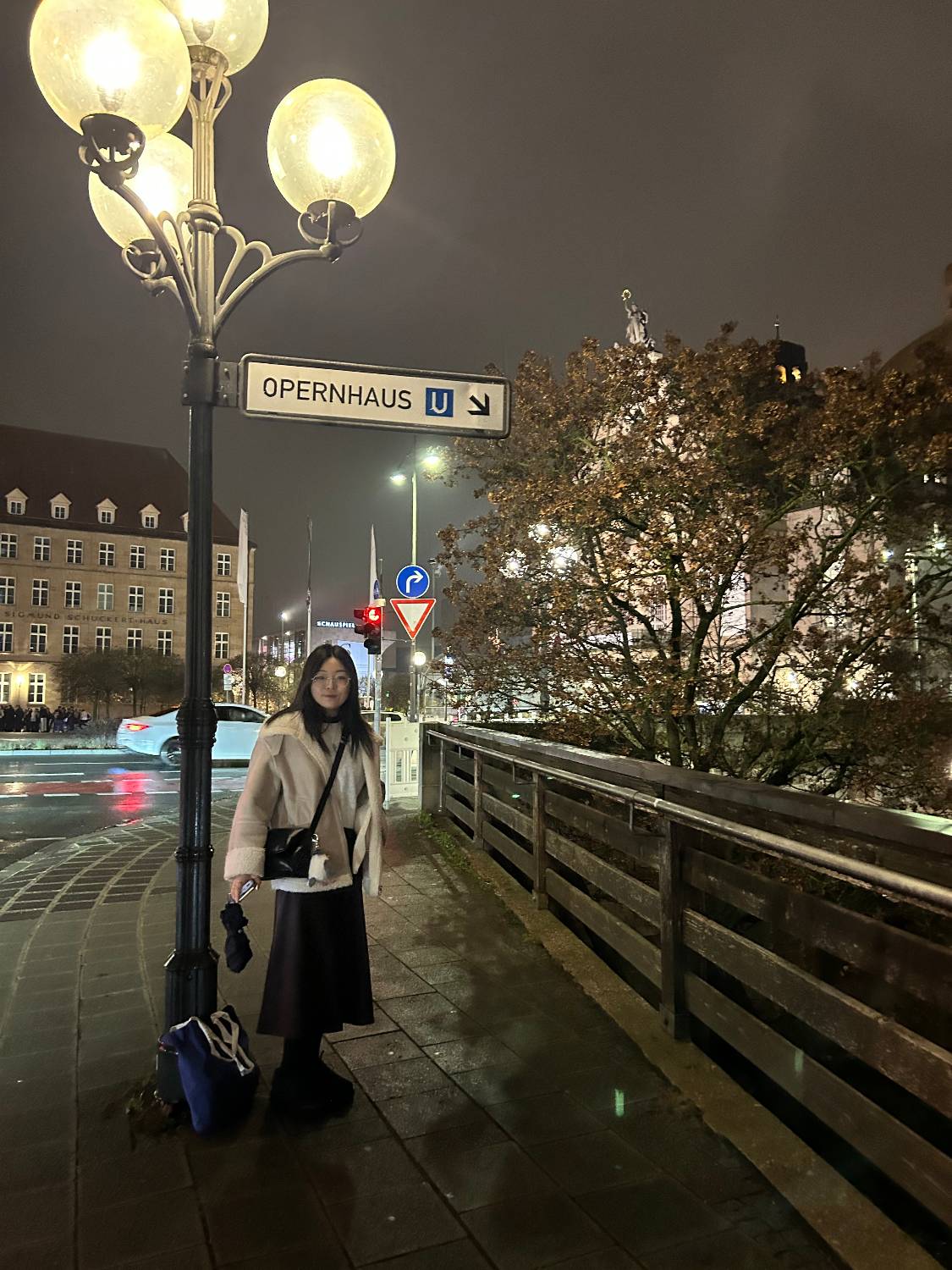
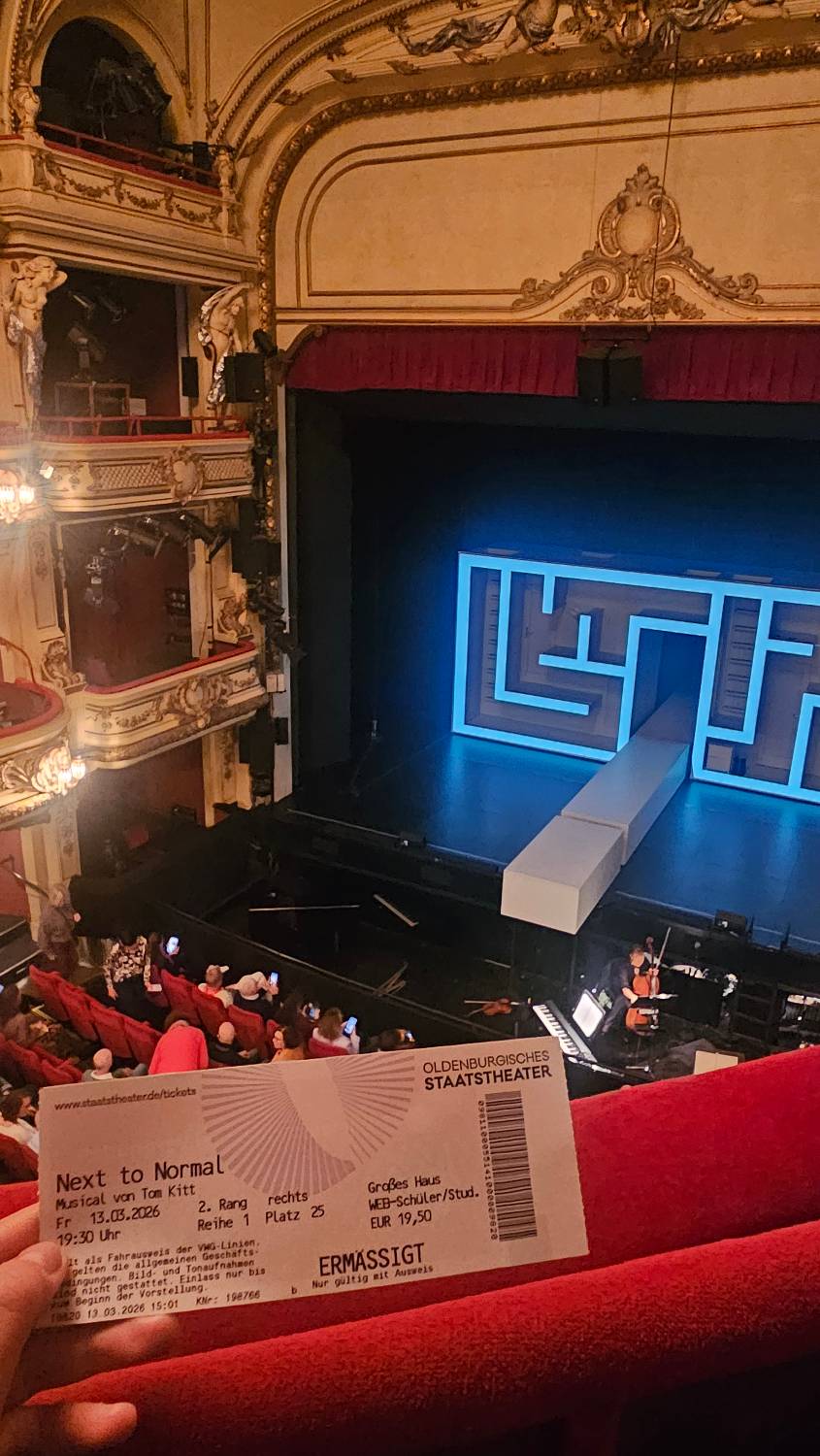
I happened to hear at the last minute that the musical Next to Normal, which I absolutely love, was being staged in Oldenburg, a small city quite far away.
It was the morning after a trip, but I didn’t hesitate for even a moment.
I got on a train and traveled for seven hours, all the way from northeastern Germany to the far west.
When I finally arrived at the theatre and went to pick up my ticket, the usher checked my student ID and looked genuinely surprised, saying, ‘You came all the way here just to see this?’
I will never forget the emotion of that day, experiencing the performance with my whole body amid a standing ovation from the entire audience.
Even after returning to Korea, things were much the same.
In August 2025, after seeing the Korean production of the musical Mahagonny, I became completely fascinated by Bertolt Brecht’s epic theatre and the original play.
Wanting to explore the text more fully, I subsequently went to see the Komische Oper Berlin production of Brecht and Kurt Weill’s opera Rise and Fall of the City of Mahagonny.
Witnessing the enduring power of the original text come alive on stage across time and space was one of the most thrilling experiences of my life as a theatre-goer.”
Q. You named the musical Next to Normal and the play The Iliad as your favorite productions.
Both reveal a particularly keen eye for direction and production. What makes these works so special to you?
A. “I love the way Next to Normal approaches the weighty question of ‘normality’ in such a delicate yet contemporary way.
More importantly, this was a special production for me because seeing the German staging firsthand opened my eyes to the aesthetics of a production.
I had become accustomed to the Korean production’s cool purple lighting and its precarious three-story metal set that tilted upward. But the German production presented a completely different structure and an entirely different interpretation.
It was the first time I truly felt in my body that even the same play can be reborn as a completely different universe depending on the director’s vision and the way the creative team constructs the stage.
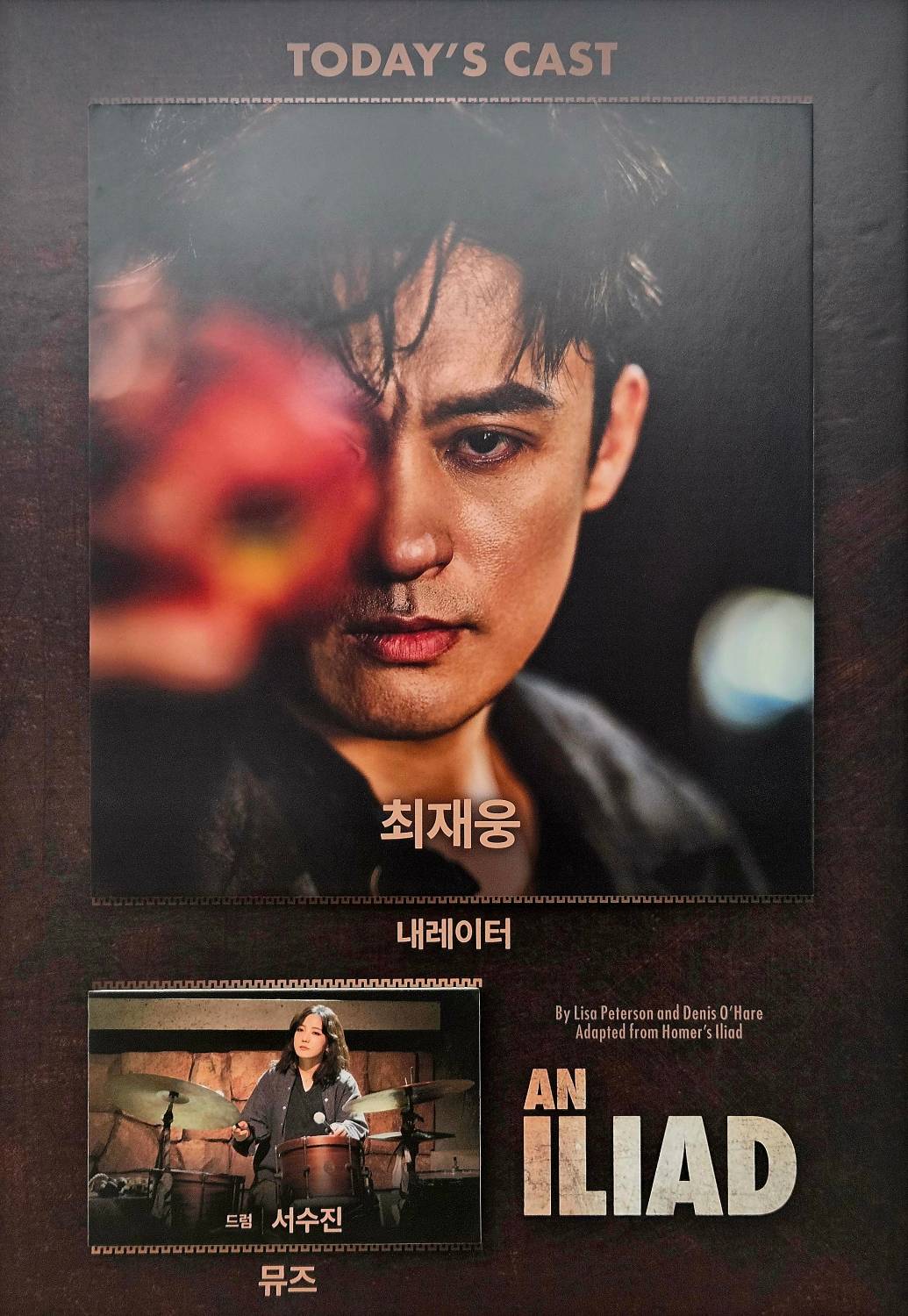
The Iliad was the first play I ever saw, and it opened my eyes to the wonder of the one-person show.
A single narrator tells the story of the Trojan War by embodying the voices of countless characters.
What was extraordinary was the way the story extended beyond ancient mythology into the history of the countless wars we continue to face today and the pain of our contemporary world.
With nothing more than a nearly empty stage, a single actor, and one instrument, the production filled the entire space and constructed an enormous universe.
It made me believe in the uniquely meta-theatrical power of the stage as an art form. It is a production I would love to encounter again on stage.”
Q. I heard that you were not someone who documented performances very much either.
How did your approach to archiving and your attitude toward documenting theatre change through your time with HTC?
A. “That’s right. I barely archived anything in the past.
Only when I saw a performance that truly struck me would I leave a few short impressions in my phone’s notes,
using completely raw language—as if I were simply purging the feelings from my system.
Then, if the production returned the following season, I would open those dusty old notes and quietly shake hands with my former self, wondering, ‘Why was I so intensely sad or in love with this at the time?’
But as I watched other editors within HereWeAre write and communicate with such care, I began to want to move beyond being simply a ‘consumer audience member’ and become a ‘recording audience member.’
While completing the missions, I found myself examining performances more structurally, from the perspectives of directors and production teams.
I also began paying close attention to how productions evolve across different seasons and collecting subtle details more sharply.
One particularly fascinating experience was following the one-person play The Last Man across its 2024, 2025, and 2026 seasons, seeing it multiple times with different casts and productions,
and translating tiny details—the smallest change in an actor’s breath or a subtle directorial choice—into words.
Going forward, I’m thinking about creating a dedicated professional archiving account solely for documenting performances, so that I can continue turning my theatre experiences into words more consistently.”
Q. Looking back on your third term, is there a particularly precious or memorable feeling that stands out to you?
A. “Without a doubt, it was the coffee chat we had after watching Lungs together. We met members whom we had previously communicated with only online and had deep conversations about the performance.
It was a moment that gave me a sense of connection—not simply within the framework of a predefined ‘supporters’ program,’ but through meeting people in the real world who shared the same passion and emotional temperature for theatre.”
💡What does HereWeAre (HTC) mean to me?
“A space that makes what I love as productive as possible!”
It helped me move beyond simply sitting in an audience, watching a performance, and letting it scatter into the air. Instead, it constantly made me ask myself, “How can I deeply interpret this stage through my own language and weave it into something of my own?”
It has made my attitude as an audience member more mature, thoughtful, and grounded.
Epilogue: A Stage Built in Words, Another Theatre Continued by the Audience
If a play begins on the blank page of a playwright, perhaps its true completion lies in the words that are written once again on the blank spaces of the audience’s pages after passing through the auditorium.
When the dialogue spoken on stage reverberates through the theatre and then disappears, audiences willingly pick up their own pens and hold on to those fleeting words.
Reading a play and imagining the stage in one’s mind, then translating that stage into carefully crafted writing, is more than simple documentation.
It is another creative act—a way of recreating the stage itself.
The growing number of audiences who write means that the dialogue between stage and auditorium is becoming deeper and richer.
A cycle that begins with a text, blossoms into a beautiful stage, and then returns to the audience as carefully crafted words.
As long as there are people willing to answer the questions posed by the stage with their own precise sentences,
theatre will continue to raise a new curtain in our everyday lives—even after the curtain has fallen at the theatre.
Written and edited by | Yeri Kim (HereWeAre)