
[Artist Study]
1. To Whom Does Classical Music Belong?
The BBC is the British public broadcaster that virtually everyone has heard of. Today, BBC Proms is not merely a series of performances the broadcaster sponsors — it is a flagship public cultural project that the BBC plans and runs directly. Yet Proms was not always a BBC festival. The BBC began in 1922 as a private company before becoming a public broadcaster in 1927. The first Proms concert, by contrast, was held twenty-seven years earlier, in 1895.
In other words, Proms was not a festival created by the BBC; it was a festival that had already built its own history and audience before meeting the BBC and growing into the institution it is today.
The classical concert hall as we typically imagine it is defined by hushed decorum, assigned seating, and strict codes of behaviour. While these conventions help audiences focus on the music, they can also form a barrier that makes classical music feel inaccessible to those unfamiliar with it.
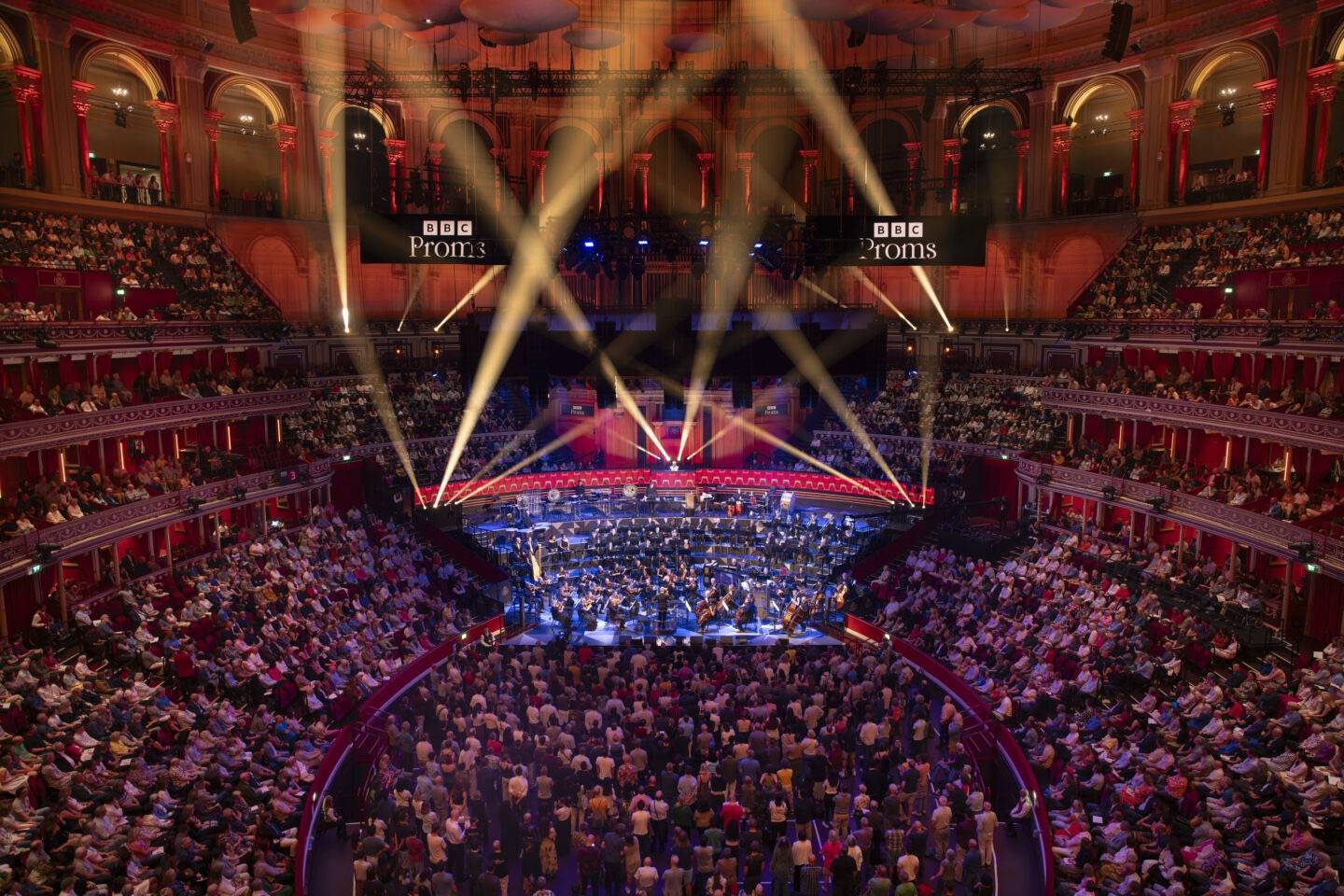
BBC Proms lowered that barrier in a different way. Inexpensive standing places are available in the arena in front of the stage and in the upper gallery of the hall, and those who attend on their feet are known as "Prommers." In the early days of Proms, smoking, eating and drinking, and moving around the hall were all permitted; even today, a relatively relaxed concert culture persists, with casual dress and enthusiastic audience responses very much welcome.
At the Last Night of the Proms, the festival's closing concert, audiences wave not only the British flag but flags of many nations, and join in the singing together. The programming, too, is strikingly broad: within a single season, contemporary music and world premieres coexist alongside film music, video-game music, jazz, musical theatre, and concerts for children and families.
So how did classical music — long regarded as the preserve of the upper classes — come to be the heart of such an open and inclusive festival?
The answer lies in the two people who designed the birth of Proms, and in the way the BBC subsequently took over and expanded the festival.
2. From Elite Culture to Public Culture
Proms was born in 1895, during the latter years of the Victorian era. In the wake of the Industrial Revolution, London was growing rapidly into a world metropolis, with railways, factories, and an expanding urban population. As the middle class grew and working hours gradually shortened, demand for evening and weekend entertainment — concerts and leisure activities of all kinds — increased accordingly.
Yet classical music at the time remained largely the domain of the aristocracy, the wealthy middle class, and those with a formal musical education. Tickets were expensive, concert etiquette was strict, and it was difficult for working people and ordinary citizens to experience orchestral music as part of everyday life. There was also a widely felt concern within the musical world that Britain, for all its industrial and imperial might, lagged behind Germany and Austria in music. Raising the standard of music in Britain required not only composers and performers, but a civic audience capable of listening to and supporting that music.
Proms was born out of this environment.It was not simply a matter of offering affordable concerts on a one-off basis; it was a social and educational project aimed at drawing people unfamiliar with classical music into the concert hall and, over time, cultivating them into a new audience.
3. Robert Newman, Who Lowered the Threshold — and Henry Wood, Who Grew the Audience
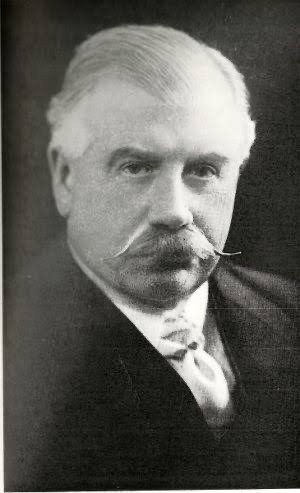
On 10 August 1895, Robert Newman — concert promoter and manager of the Queen's Hall — engaged the young conductor Henry Wood as music director and opened the first Promenade Concert. Viewed through the lens of arts management, the two men played distinct roles: Newman was the producer who designed the operational model and the vision for the concerts, while Wood was the artistic director who realised that vision through programming and performance.
Newman lowered the economic and psychological barriers to classical music through cheap standing tickets, an informal atmosphere, and a concert hall open to all. His aim was to draw people in with familiar, popular music at first, then gradually raise the level of programming towards canonical classical works and contemporary music. Rather than simply catering to the existing tastes of the audience, the strategy was to broaden the range of musical experiences available to them, so that they might become receptive to new music over time.
This can be seen as an early successful example of what is today called "audience development" in arts management — not simply gathering people who already love classical music, but encouraging first-time visits from potential audiences and nurturing their musical interest through repeated concert experiences.
4. Proms in Crisis — and Its Meeting with the BBC in 1927
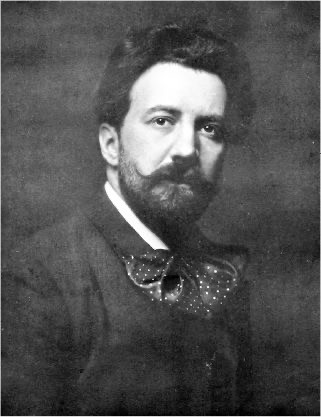
The early history of the Proms was far from smooth. Employing a large orchestra while keeping ticket prices affordable required enormous financial resources. Newman eventually went bankrupt in 1902, and Edgar Speyer, a German-born banker and patron of the arts, stepped in to provide financial support and save the concerts. However, when the First World War broke out in 1914, anti-German sentiment intensified in British society, forcing Speyer to withdraw his support. The music publishing company Chappell & Co. subsequently took over the management of the concerts.
When Newman died in 1926 and Chappell & Co. also withdrew its support, the future of the Proms was once again placed in jeopardy.
It was at this point that the BBC stepped in. The BBC began broadcasting in 1922 and became a public service broadcaster in 1927. In the same year, it officially took over the Proms. The BBC’s public mission to “inform, educate and entertain” naturally aligned with the founding philosophy of the Proms: to bring the public into the concert hall and help them grow into audiences for new music.
Under the BBC’s management, the Proms began to transform from a London concert series intended only for those who could visit Queen’s Hall into a nationwide cultural event. Radio broadcasts allowed people who did not live in London or could not afford tickets to listen to the same performances from home. In 1930, the BBC Symphony Orchestra was founded and became the principal orchestra of the Proms. The BBC now had a structure that enabled it not only to support the concerts financially, but also to plan, perform and broadcast them directly.
However, after the outbreak of the Second World War, Queen’s Hall—which had been the home of the Proms since its foundation—was destroyed by an incendiary bomb during the London Blitz on 10 May 1941. Rather than abandoning the season, the Proms moved to the Royal Albert Hall that same year. (You can read more about the Royal Albert Hall in the previous article.)
Opened in 1871, the Royal Albert Hall was also well suited to the public character of the Proms, as it had been established with the aim of bringing the arts and sciences to the wider public. Above all, its large circular auditorium, capable of accommodating more than 5,000 people, made it an ideal venue for maintaining the Proms’ tradition of extensive standing areas and festival-like concertgoing. Although the move was forced by the war, the Royal Albert Hall’s scale and iconic architecture ultimately strengthened both the Proms’ popular appeal and its visual identity.
5. How the BBC Transformed Proms
Under BBC management, Proms grew from a popular London concert series into a public music festival combining live performance, broadcasting, education, new commissions, and international exchange. From an arts management perspective, this transformation can be examined across four dimensions: financial stability, media accessibility, production infrastructure, and international brand development.
1) Financial Stability
In its early years, Proms was a privately run series whose very existence depended on the financial circumstances of Newman and individual patrons — a vulnerability made plain by Newman's bankruptcy in 1902. The BBC's involvement gave Proms an institutional foundation that allowed it to be planned on a long-term basis, without depending on any single producer or benefactor.
A public broadcaster can weigh both commercial viability and public value. This meant that programming did not have to be filled exclusively with well-known works and star performers; it was also possible to invest in contemporary music and new commissions, children's concerts, and educational programmes — even where immediate ticket sales would be modest. The ability to maintain low-priced standing tickets while making long-term investments in repertoire and audiences is one of the key reasons Proms became a sustainable public cultural project rather than simply a commercial venture.
2) Media Accessibility
A concert is, by its nature, a one-time event that takes place at a fixed time and location. But by broadcasting Proms on radio and later filming it for television, the BBC transformed each performance into broadcast content that far more people could encounter, and encounter more than once. Those who could not attend in person could still hear the music; television viewers could experience not only the performances themselves but the scale of the Royal Albert Hall, the reactions of the Prommers, and the festive atmosphere of the Last Night.
As BBC Radio 3, television, iPlayer, and BBC Sounds were added to the mix, live concert coverage was repackaged in a wide variety of forms: programme notes, interviews, composer profiles, rehearsal footage, and highlights.
This documentation and redistribution created multiple entry points through which new audiences could discover classical music. It also accumulated a record of landmark performances and world premieres, transforming Proms from a summer event into a cultural archive spanning 130 years.
3) Production Infrastructure
Beyond its broadcasting channels, the BBC maintains its own performing ensembles: the BBC Symphony Orchestra, BBC Scottish Symphony Orchestra, BBC Philharmonic, BBC National Orchestra of Wales, BBC Concert Orchestra, and BBC Singers. Of these, the BBC Symphony Orchestra — founded in 1930 — became the central ensemble of Proms.
Having in-house ensembles makes it possible to programme a long season with stability and to plan works requiring large orchestral and choral forces. Less widely known repertoire can be introduced with adequate rehearsal time, and newly commissioned works can be premiered and immediately disseminated through broadcast. Collaborations with film music, video-game music, jazz, and popular music — the kind of programming that established classical venues might struggle to attempt — also became possible. The BBC was simultaneously the organisation commissioning the concerts, the producer with its own performers, and the broadcaster distributing the results.
4) International Brand Development
The BBC's broadcasting reach and international profile provided the foundation for bringing Proms to the attention of the world. Through international broadcasting exchanges — including those via the European Broadcasting Union — live concert coverage was made available to broadcasters in numerous countries, and for leading orchestras and conductors, an appearance at Proms became an opportunity to reach far more listeners and viewers than any single concert hall could offer.
BBC Proms subsequently extended the concert format itself beyond Britain's borders. Local editions of Proms were held in Australia in 2016, Dubai in 2017, Japan in 2019, and South Korea in 2024. Rather than simply replicating the British programme, these events brought together BBC ensembles with local orchestras, composers, and performers, and incorporated educational programming. The distinctive format of Promming was retained, while the programming was adapted to reflect the musical culture of each host country. In this way, the BBC developed Proms into an international festival brand capable of being reimagined in other countries, rather than merely a concert series bearing a well-known name.
6. In Closing
The success of BBC Proms cannot be attributed to any single institution or strategy alone.
The first foundation was the vision created by Robert Newman and Henry Wood. By lowering economic and psychological barriers through cheap standing tickets and an informal atmosphere, and by expanding audiences' experience from familiar works towards canonical classical music and contemporary repertoire, they built something distinctive. They also created a participatory culture unique to Proms — Promming itself — that other classical festivals would find difficult to replicate. This became an identity that belongs to Proms alone.
The second foundation was the scalability that the BBC provided. The institutional backing of a public broadcaster enabled long-term planning and new commissions; in-house orchestras and choirs created a stable production structure. Radio and television carried the concerts beyond the physical limits of the concert hall to find new audiences, while digital platforms, international broadcasting exchanges, and overseas editions of Proms expanded the festival into a global brand.
Ultimately, the reason BBC Proms has endured for some 130 years is not simply that it preserved tradition unchanged.In 1895, it lowered the threshold to classical music through cheap standing tickets and an informal atmosphere; in 1927, through radio; and later, through television and digital media. It embraced film music and video-game music while never abandoning canonical classical works and world premieres.
BBC Proms created many different entry points through which people of all kinds could draw closer to music, and guided the audiences who passed through those entry points into an ever broader and deeper musical world. It is precisely this philosophy of audience development, combined with the BBC's structure as a public broadcaster, that transformed a summer concert series into a world-renowned festival sustained across 130 years — and that remains the most important factor in its success.