

The opening notes of Elektra strike with terrifying precision. The orchestra establishes three distinct motifs as Elektra cries out for her murdered father, Agamemnon. This unforgettable wall of sound opened Richard Strauss’s Elektra at the New National Theatre, Tokyo, marking the grand finale of the 2025/26 opera season.
German director Johannes Erath spearheaded this new staging. A former violinist with the Vienna Volksoper and Vienna Philharmonic Orchestra Academy, Erath infused his musical insight directly into the drama. The result was a fresh, convincing, and deeply sensory interpretation.
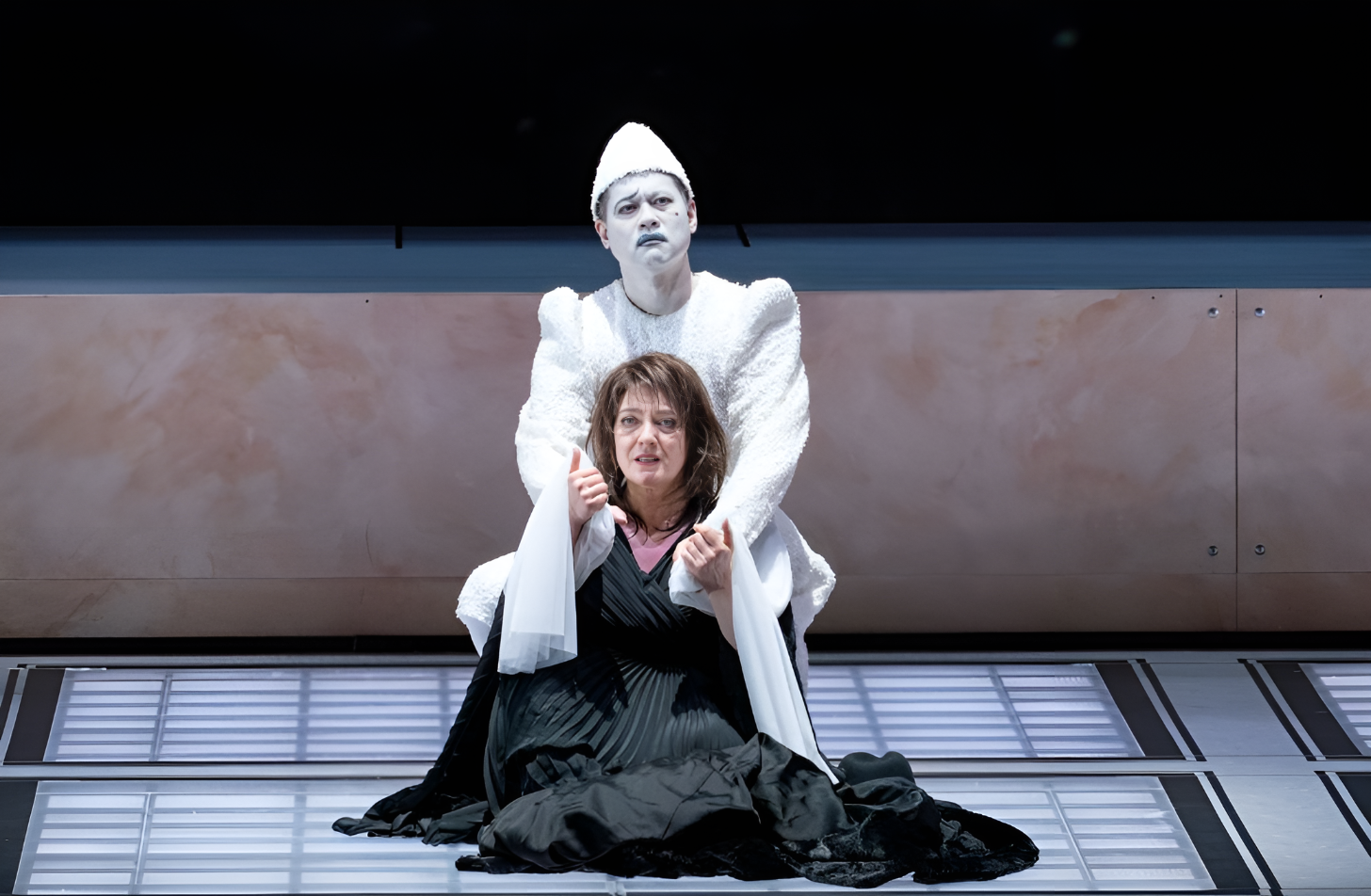
A Tense Confrontation of Three Women on a Dark Stage
Elektra stands entirely isolated behind a black, transparent scrim. Five maidservants dressed in black creep onto the stage. Suddenly, a massive set piece crashes forward with a heavy thud. The collapse reveals a striking silhouette: a man in a coat and hat, instantly recognizable as her dead father, Agamemnon. This stark visual choice highlights the profound psychological grip her father still holds over her. Forever trapped in grief, Elektra violently curses her mother, Klytaemnestra, and her lover, Aegisth. The scene ends on a chilling note as she vows total revenge for the regicide.
In stark contrast to Elektra, dressed in unadorned black attire, her younger sister Chrysothemis wears a bright light-green dress. Chrysothemis longs to escape her grim reality, marry, and have children. Rather than joining her sister's quest for vengeance, she chooses to adapt to her circumstances and pursue a peaceful life.
In the title role, Estonian soprano Aile Asszonyi delivered a commanding performance rich in both vocal colour and dramatic volume. As her gentler sister Chrysothemis, Norwegian soprano Hedvig Haugerud matched Asszonyi's intensity, elevating the stage with an even greater vocal presence, a solid acoustic texture, and a remarkably clear, clean tone. Tokyo operagoers will not have to wait long to experience her powerful artistry again; Haugerud is already confirmed to return to the New National Theatre, Tokyo next winter to sing the title role in Salome next season.
Klytämnestra sits expressionless on stage right from the beginning. Though she has no early lines, her silent presence looms over the court. Soon, Elektra enters and sets down a bizarre prop: the severed head of a toy dog. Chrysothemis joins her, and the three women sit to share wine. Erath directs this wordless interaction flawlessly. It instantly highlights the taut, icy confrontation between the mother and her two daughters.
While world-renowned mezzo-soprano Mihoko Fujimura did not quite match the overwhelming volume of her younger colleagues, her veteran aura and spine-chillingly intense acting commanded full attention. Her portrayal of Klytämnestra relied on masterclass dramatic nuances that made her presence deeply felt. Providing vital ballast to this formidable trio of female singers, Latvian bass-baritone Egils Siliņš delivered a grounded, stoic Orest, while tenor Kazuma Kudo offered a sharply characterized Aegisth, bringing a strong vocal and dramatic balance to the production's climax.
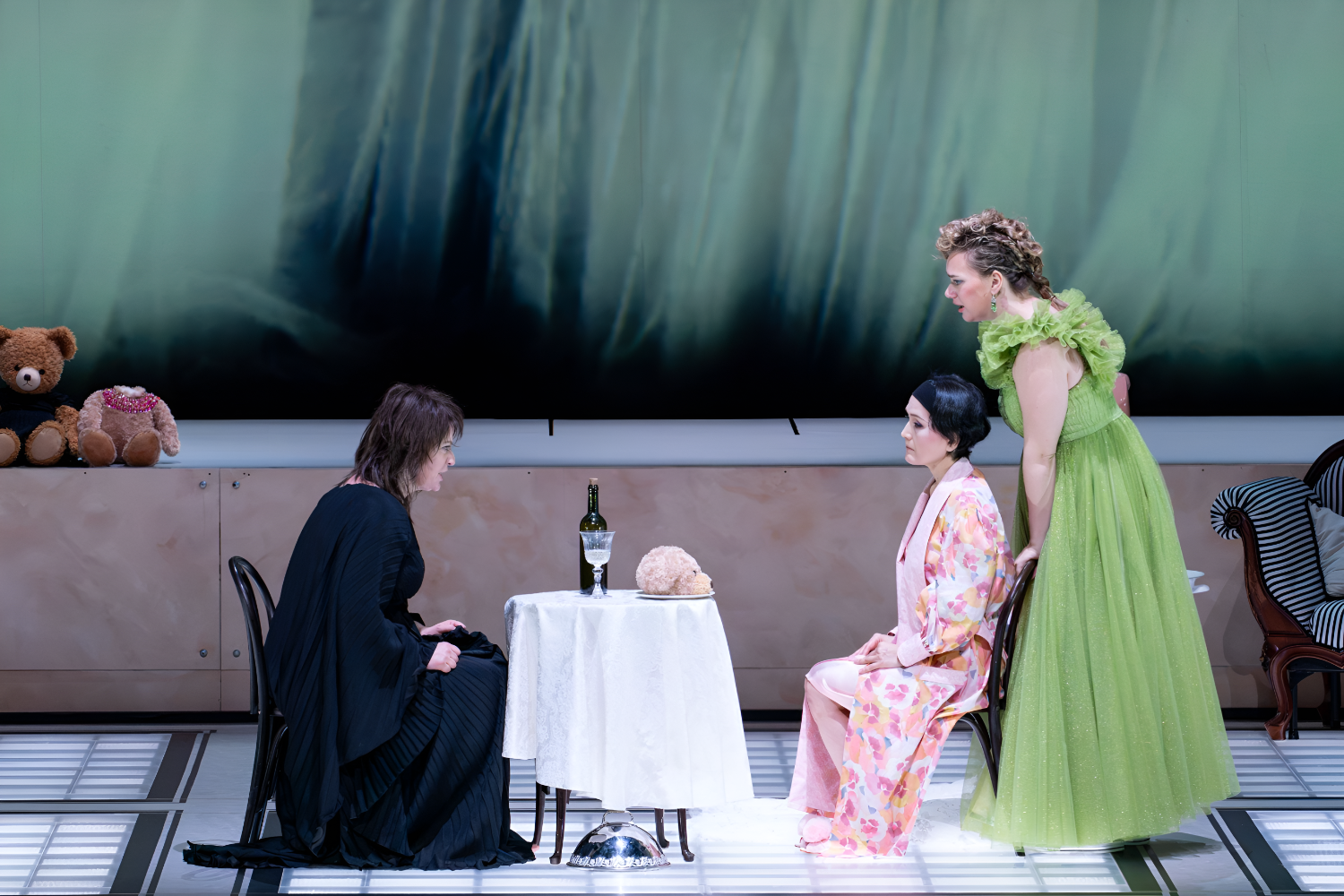
Overwhelming Orchestration Completing the Tragedy of Revenge
Erath’s visual contrasts are incredibly striking. Five maidservants wear costumes evocative of crows. Meanwhile, the palace servants appear as Pierrot and Arlecchino from commedia dell'arte. This choice cleverly recalls the comedic actors in Strauss's Ariadne auf Naxos. It offers a fascinating easter egg for opera enthusiasts. The production also utilizes brilliant multimedia staging. A massive video projection shows Klytämnestra applying makeup before meeting Aegisth. This shot perfectly captures both her brazen vanity and her tightening grip of fear. Her death honors the traditions of ancient Greek tragedy by remaining hidden. Dressed in a snake-like costume, she is slain offstage by Orest. Though unseen, the violence hits hard as Mihoko Fujimura delivers two spine-chilling offstage screams.
Above all, the Tokyo Philharmonic Orchestra, conducted by Kazushi Ono, delivered a remarkably solid performance. The tense, space-filling music that saturated the opera house was truly overwhelming. It deftly alternated between Strauss’ signature orchestral weight and an enchanting brilliance that completely disarmed the audience. The interpretation and performance quality of German opera demonstrated by Ono and the Tokyo Philharmonic were the finest I have experienced among all the productions seen at the New National Theatre to date.
production photos ©Rikimaru Hotta
Ilbeom Jang
This article was originally published by
➼ Discover the full collection of issues with a print subscription.
➼ You can subscribe here.

