

Simon Stone, the master of modernizing antiquity, returns with a sleek, suffocating vision of Aeschylus’s Oresteia. Originally staged in 458 BC, this 2,500-year-old cycle of ancestral bloodshed is reborn as a contemporary family thriller. By stripping away the gods, mythical grandiosity, and the traditional Greek chorus, Stone isolates the core of the tragedy: a terrifying, inescapable cycle of domestic execution. What remains is a stark, claustrophobic portrait of a dynasty devouring itself from the inside out.
Deconstructing the Original into the Language of Today
Aeschylus’s foundational triptych tracks a linear descent into chaos and resolution: Agamemnon captures a war hero's slaughter by his wife Clytemnestra; The Libation Bearers sees their son Orestes execute matricide in the name of honor; and The Eumenides pits a tortured Orestes against the Furies in a climactic trial. Simon Stone mirrors this epic scope, preserving the architecture of a three-act saga with two intermissions spanning over three and a half hours. Yet, Stone completely upends the traditional chronology. By fractures the timeline between 2016 and 2026, the narrative aggressively cuts between the present and the past. This structural inversion forces the audience to confront the devastating aftermath of familial crimes long before uncovering the root traumas that triggered them.
Simon Stone is a playwright and director who deconstructs classic originals, rewriting and staging them entirely in the language of his own era. Working through rehearsals with actors, he develops scenes and dialogue through improvisation. Rather than merely updating the setting to a modern backdrop, he uncovers the core questions embedded in the source material and imagines how they might play out in the lives of people today, creating a brand-new work.
Stone first made a strong impression on British audiences with his 2017 Young Vic production of Yerma. The story of a 1930s rural Spanish woman was reimagined through the life of a modern London lifestyle blogger, brought vividly to life by acalimed actress Billie Piper. In his 2018 Barbican production of Medea, he portrayed the mythical sorceress as a modern pharmacist, and in the 2023 National Theatre production of Phaedra, he translated ancient tragic desire into the political, social, and personal relationships of a contemporary woman. In this way, he transforms classical tragedy into dilemmas of desire and choice that feel entirely possible today.
The Glass Box World
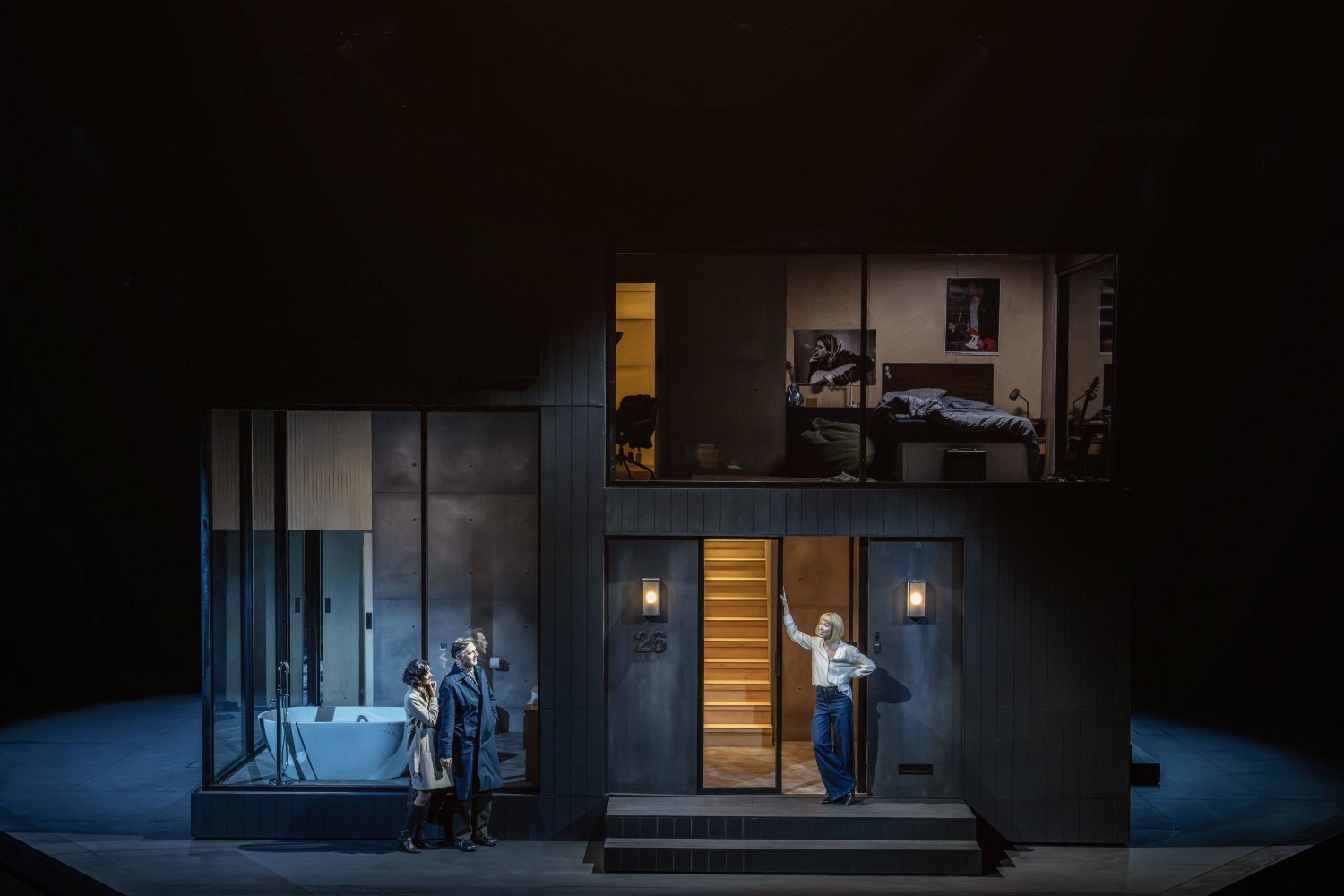
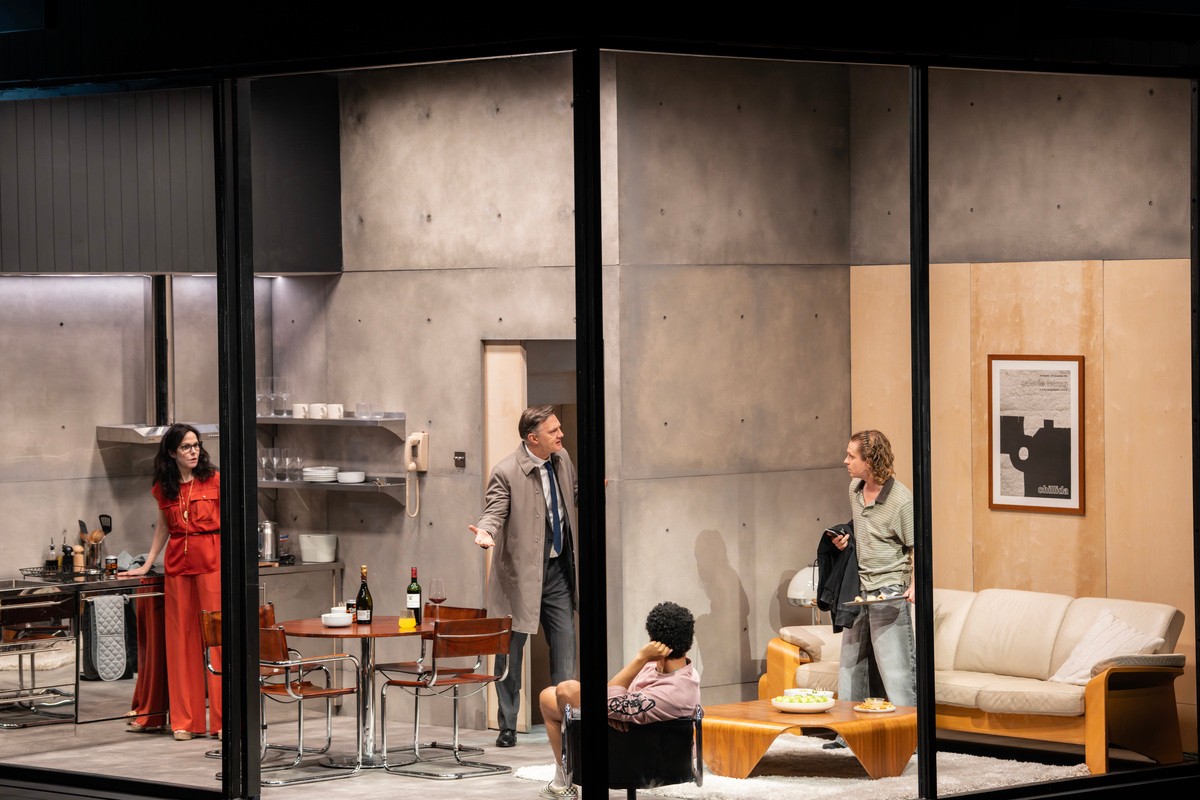
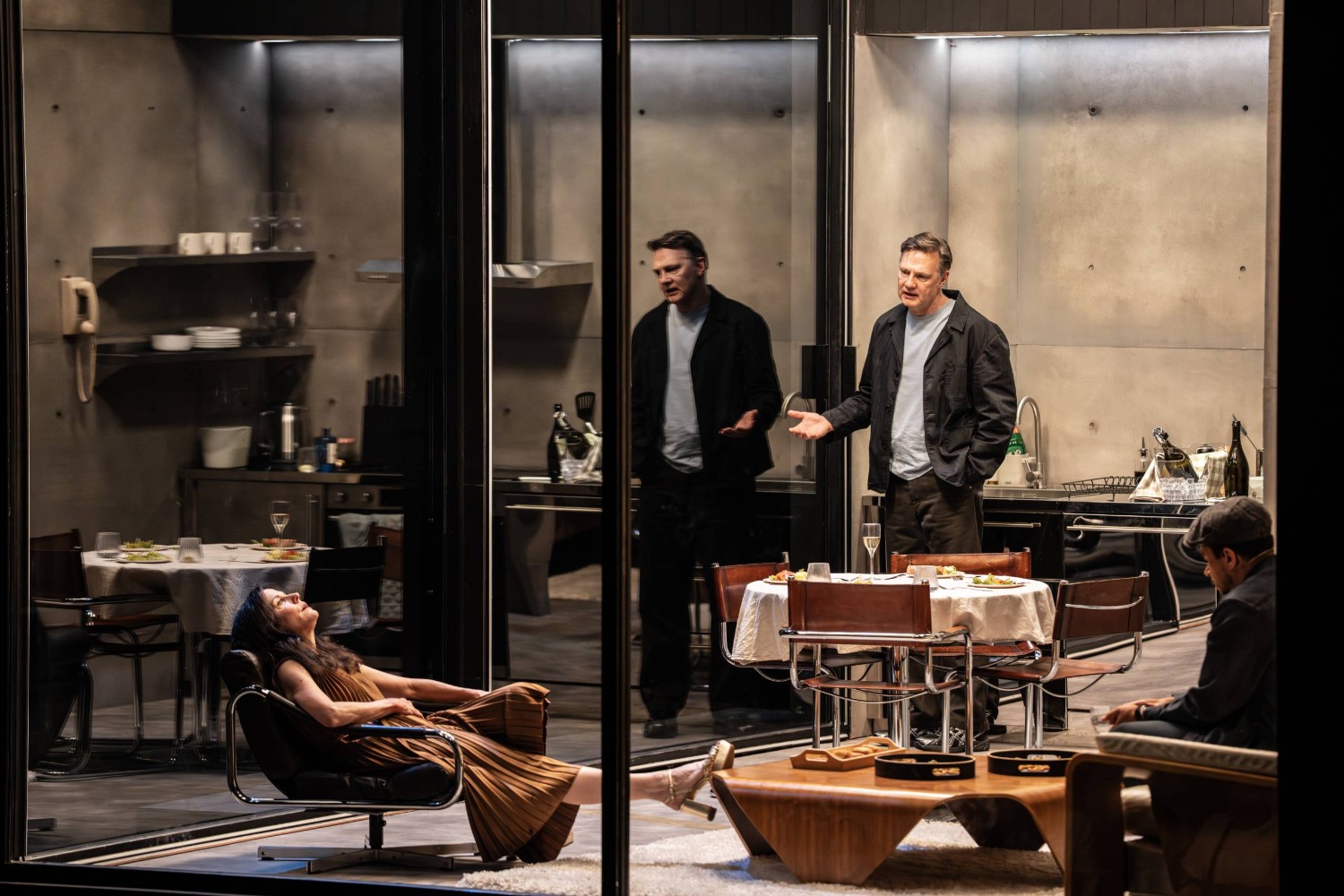
If rewriting classics in his own voice is Stone’s signature as a playwright, placing a massive glass box on stage represents the visual hallmark of his directorial style. For Oresteia, he installs a giant house reminiscent of a model home or greenhouse. Designed by Lizzie Clachan, the house is a sleek, modern home featuring high ceilings and expansive floor-to-ceiling windows. At first, the glass appears almost invisible and pristine, but as the performance unfolds, it becomes stained with the tragic marks left by the characters.
The giant house rotates with each scene, alternately revealing the living room, bedroom, bathroom, upstairs rooms, and entrance. A crime scene drenched in blood just moments before transforms back into an ordinary living space in an instant, and a character soaking wet and bleeding appears smartly dressed in the next scene as if nothing happened. Only the year displayed on a top monitor indicates the passage of time. As past causes and present outcomes rapidly intersect on stage, the audience traces the motives behind the revenge back to even older wounds.
The swift pacing, rapid scene transitions, and intense energy of the cast maintain tension throughout the 3-hour-and-40-minute performance. Amid torrents of dialogue and spattered blood, love, resentment, and fear quickly spiral into madness. In particular, Tom Glynn-Carney, playing Auggie (the counterpart to Orestes), chillingly conveys an unstable anxiety and madness that threatens to explode at any second. His energy pierces through the transparent glass walls to hit the audience directly. Rosie Sheehy as Alice (the counterpart to Elektra) builds a dense portrait of a character unraveling in darkness and anxiety after losing her twin sister and parents. The actors' intense immersion draws even the spectating audience beyond the glass wall into the family's chaos. Spoken words inside the transparent house are transmitted to the audience via microphones. At times, the sound is completely cut off, forcing the audience to watch the characters scream in total silence while straining to hear what takes place in other rooms.
Human Choice, Not Divine Oracle
In the original myth, Agamemnon sacrifices his daughter Iphigenia to secure passage to Troy. When Artemis's wrath stalls the winds, he sacrifices his daughter's life for his army's departure. However, this act becomes the pivotal motive for Klytaemnestra to murder her husband, which in turn sets off Orestes' vengeance against his mother.
How can the sacrifice of a daughter be expressed in a modern setting? The origin of all these events is revealed only after the performance has run for over three hours. Oresteia pushes a plausible choice to its extreme limits. A single decision to turn away from one's child for personal success and a larger goal shatters an entire family's life, returning years later as a renewed cycle of violence. There is no divine curse or inescapable oracle—only human choices and their consequences.
Tragedy allows us to look into the darker sides of humanity and society that are difficult to face in reality through a fictional lens. What Simon Stone pulls from Greek tragedy into the present is not myth, but humanity. People long ago lusted, loved, failed, and wounded those closest to them, just as we do. Thus, 2,500 years later, Oresteia remains our story today. Stone’s bold deconstruction and rewriting of original texts sometimes provoke controversy. Yet, contemporary theatre is rendered infinitely richer by a director who makes ancient tales feel undeniably like stories of our present.
production photos ©Johan Persson
Jaeun Jung
This article was originally published by
➼ Discover the full collection of issues with a print subscription.
➼ You can subscribe here.

