

Which is the smallest theatre in Daehangno?
The venue we're introducing today is Hongik University Art Center Small Theatre.
Tucked beneath a familiar large theatre building, this tiny rectangular space is used flexibly — sometimes with two sides serving as seating, sometimes three. As a result, the seating chart on the booking page looks different for every production. The compact space is connected to the outside to create invisible pathways for movement, or split in two to function as entirely separate areas. All of this gives audiences the feeling that, upon entering, they are not watching a stage from a distance but witnessing an actual event unfolding right before their eyes.
The smallest yet most versatile theatre in the area — here are two special stories that could only ever be told in this particular space.
Each of the productions introduced below is a single work, but divided into three episodes, which is why they are known as the 'Trilogy Series.' Let's take a closer look at this series, in which three stories come together to form one complete work.
| <Capone Trilogy>
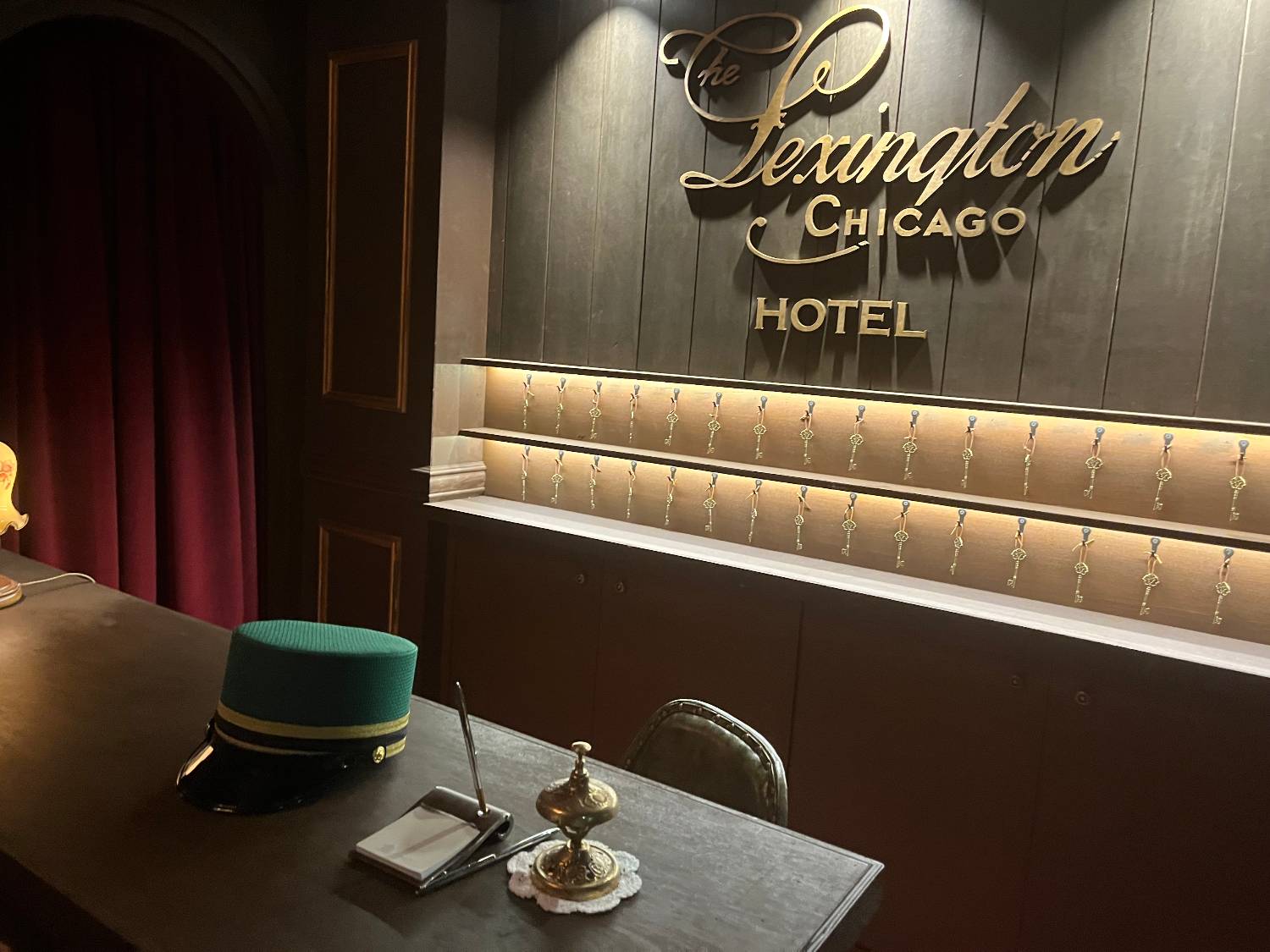
'Bad things always happen in the same place.'
1923, 1934, 1943 —Room 661 of the Lexington Hotel, Chicago.Three murders. Three different eras.
In chronological order: LOKI (the clown of ruin), LUCIFER (the fallen angel), and VINDICI (the embodiment of revenge) — three episodes, each presented in omnibus form.
The episodes deal with events that occur in the same location across different time periods. There are subtle threads connecting them — a later episode may reference an incident from an earlier one, or an object from a past scene may turn up in a worn wardrobe — yet each story stands entirely on its own.Old Man, Young Man, Lady —three actors take on different roles in each episode, frequently changing their appearance to play multiple characters, or slipping behind a closed door to emerge as someone else entirely. The flexibility with which the actors are deployed is remarkable.
The first episode,LOKI,revolves around Lola Kin, a showgirl at the Lexington Hotel bar. One day, two clowns wake her with the news that she has killed someone, and the full story is revealed piece by piece. This episode is a comedy: the two clown characters address the audience directly, play tricks, and keep the laughs coming.
The two clowns relentlessly question Lola, laying out the truth of the story one detail at a time, and every time she tries to escape the room, they send her back in like an endless loop. This is where the theatre's unique qualities come into play: a character who hides under the bed vanishes seamlessly to the outside, while the actor who played that role reappears almost immediately through the opposite door in an entirely different guise. Three actors share a total of ten roles.
The second episode,LUCIFER,tells the story of Nick Nitti, the second-in-command of a Chicago crime organisation, and his wife Marlene. A suspense piece, it portrays the encroaching shadow of death — emanating from a figure imprisoned behind bars — through a dark, oppressive atmosphere. Nick keeps insisting to his wife that this hotel is the safest place in the world, yet the story hints that the most dangerous thing in the city may be standing right beside her. Steeped in noir, the episode reveals the shadow cast by Nick Nitti, a man who once sought to bring light to a dark city.
The final episode,VINDICI,begins with a young police officer named Vindici, who has lost his wife, preparing his revenge inside Room 661. The man he intends to kill, Frank Doos, is a senior detective who investigated both the Lola Kin case twenty years earlier and the Nick Nitti case nine years before that. Frank's daughter, Lucy Doos, assists Vindici's revenge plot for reasons that remain unclear. As the brutal act of vengeance begins, a tragic truth slowly closes in.
Across all three episodes, a single prop appears in common:a red balloon.In the LOKI episode, the red balloon carried in by the clown becomes the object that accompanies Lola as she finally steps out the door. In LUCIFER, it appears floating up past the window — a symbolic thing Nick tries to catch for Marlene. In VINDICI, it is something Lucy associates with a wound from her childhood, and it resurfaces again in the latter half of the revenge drama.
| <Bunker Trilogy>
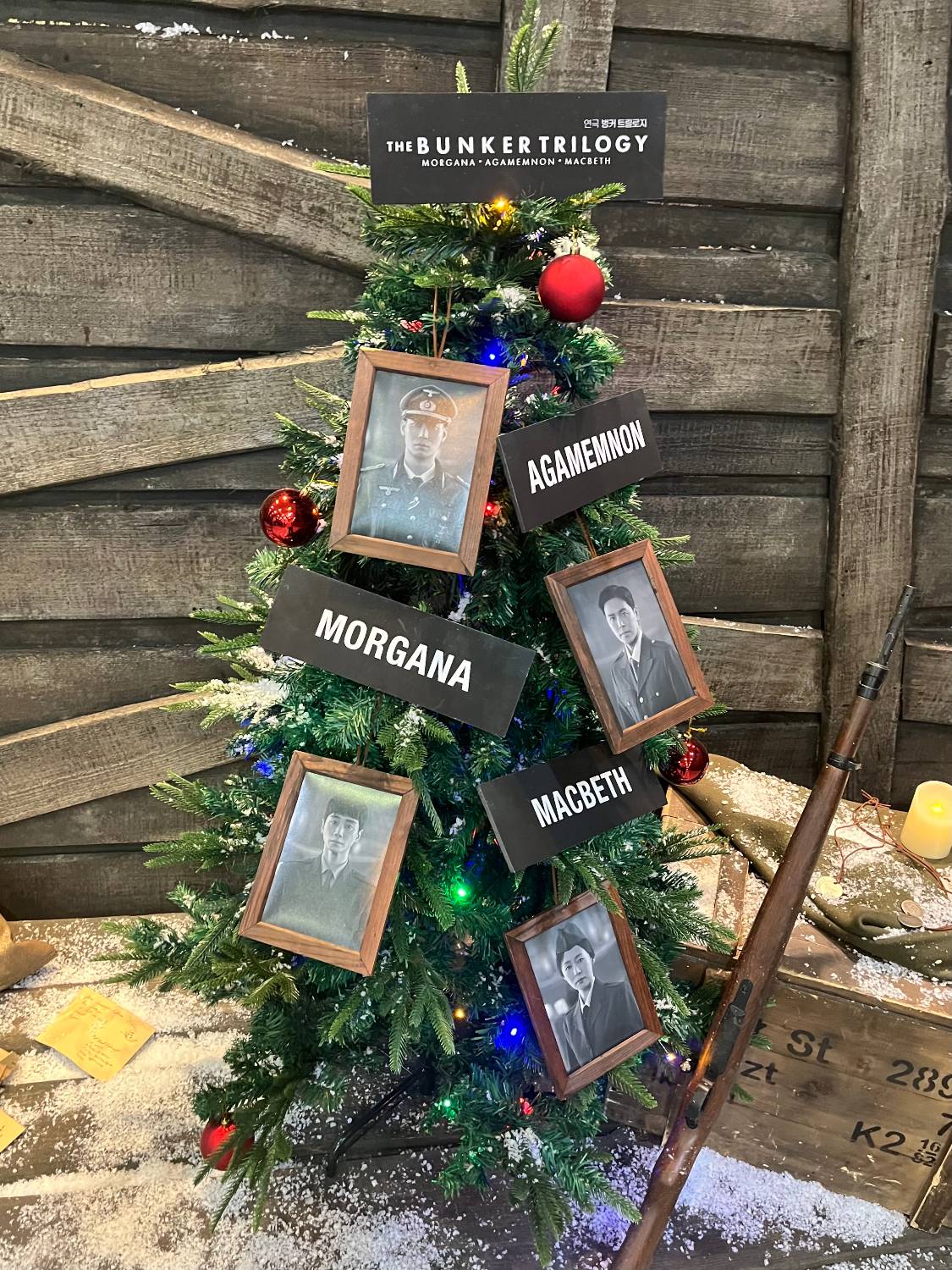
'In war, truth is the first casualty.'
Three episodes set inside a bunker during the First World War.
MORGANA, AGAMEMNON, and MACBETH each draw onthe Arthurian legends of Britain, Greco-Roman mythology, and Shakespeare's plays respectively, weaving together reality and imagination. Four actors — Soldiers 1 through 4 — perform across the episodes, with each episode carrying four to eight roles. In a cramped space that feels like an actual wartime bunker, complete with cascading dirt and dust, the production brings the horror of war and the humanity caught within it right to your eyes.
MORGANA is the story of young British men who enlisted together, dreaming of adventure. They have given one another nicknames drawn from the Knights of the Round Table, and the three who remain — Arthur, Lancelot, and Gawain — find their emotions clashing inside the bunker. Gawain, the most guileless of the three, keeps describing a woman he saw in no man's land, while the other two persistently dismiss it as his delusion. Alongside the truth that gradually surfaces, we see how these men endure the war by retreating into fantasy.
AGAMEMNON is set on the front line where British and German forces face each other, and centres on Albert, a German soldier married to an Englishwoman named Christine. When war breaks out, he leaves his wife behind and goes to the front. Once the finest sniper in the field, his gunshots — fired simply to survive — bring him growing renown, while Christine's letters go unanswered and Albert's frenzied war cannot be stopped. Drawing on Aeschylus's ancient Greek tragedy Agamemnon, the episode lays bare the solitude and madness of war.
MACBETH unfolds on the eve before the end of the First World War, inside a trench at British rear headquarters. As a candle is snuffed out, a general and his soldiers gather to perform Shakespeare's tragedy Macbeth, and the play-within-a-play bleeds into reality. General Mark Taylor, once a comrade who fought alongside his men, has grown increasingly consumed by rank as the war has dragged on, and on the war's final night the truth behind the performance is laid bare. What makes this episode particularly special is that each audience member is handed a dog tag upon entry. At the actors' cue, the audience shakes the tags together, creating a visceral sense of being present on the battlefield.
These productions — Capone, Bunker, and Frontier — are three works in total, produced under a Jethro Compton Productions licence by imculture, and collectively known as the 'Trilogy Series.' Of these, the two introduced above — Capone and Bunker — are both directed by Kim Tae-hyung and adapted by Ji Yi-seon, and have earned a devoted following through the distinctive qualities each brings.
Stories of Chicago across different eras, all set in the same place; a story that weaves fantasy and reality together around the theme of war — two works that are connected yet each carry their own distinct narrative.
You can watch just one episode and still find it rewarding, but it is when you experience all three that the Trilogy Series truly comes into its own — and that is where its real charm lies.
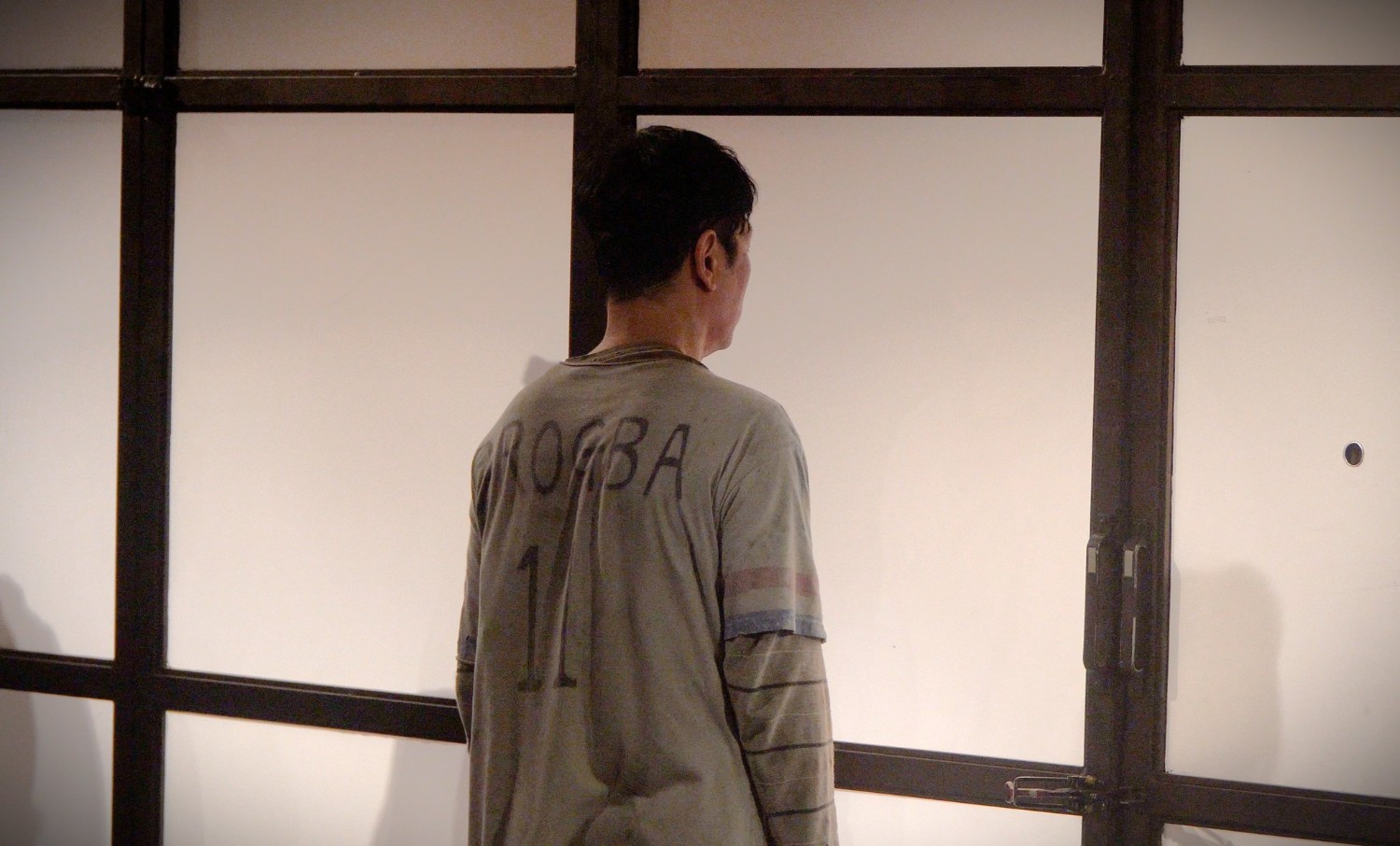
And currently running at Hongik University Art Center Small Theatre is <The Helmet>.It is not part of the Trilogy Series introduced above, but it is produced by the same company, imculture, directed by Kim Tae-hyung, and written by Ji Yi-seon — and it stands as a prime example of the small theatre being used in an entirely different way. The single theatre space is split into two rooms (BIG and SMALL), with simultaneous yet independent stories unfolding in each before converging to deliver the work's message.
"We have the right to expect some light, even in the darkest of times."
(— from <The Helmet>)
Theatre <The Helmet> is made up of two episodes, with a separate story playing out in each room — meaning there are, in total, four stories to be told.
'Room Seoul'is set against the backdrop of South Korea's pro-democracy movement in 1987, with each room presenting the story from a different perspective — that of the students, and that of the baekgoldan (riot police).
'Room Aleppo'is set during the civil war in Aleppo, Syria, with each room unfolding the story from a different point of view — that of a young child, and that of the White Helmets rescue workers.
Different stories that are nonetheless bound together as one, told in the smallest of spaces — it runs until 10/11, so it may well be worth a visit.
