

To an outsider, Australian theatre derives one of its greatest strengths from its artists, who seamlessly move between diverse creative spaces at all stages of their careers. While this fluidity might be a byproduct of the country's leveling "tall poppy" culture, the motivation becomes irrelevant when the art is made with full conviction. The result is a deeply captivating, thriving theatre culture.
Among those in the know, the Old Fitz Theatre is a cultural institution in Sydney. Operating out of a tiny, 55-seat basement beneath a pub, it is a bare-bones venue—reminiscent of London’s The Yard, but with far more physical and technical restrictions. Yet, if you look at the resumes of Australia's leading actors, writers, directors, and designers working today, chances are they have honed their craft there. This dingy, much-loved space serves as the perfect microcosm of this new, distilled version of one of the greatest tragedies in the English language.
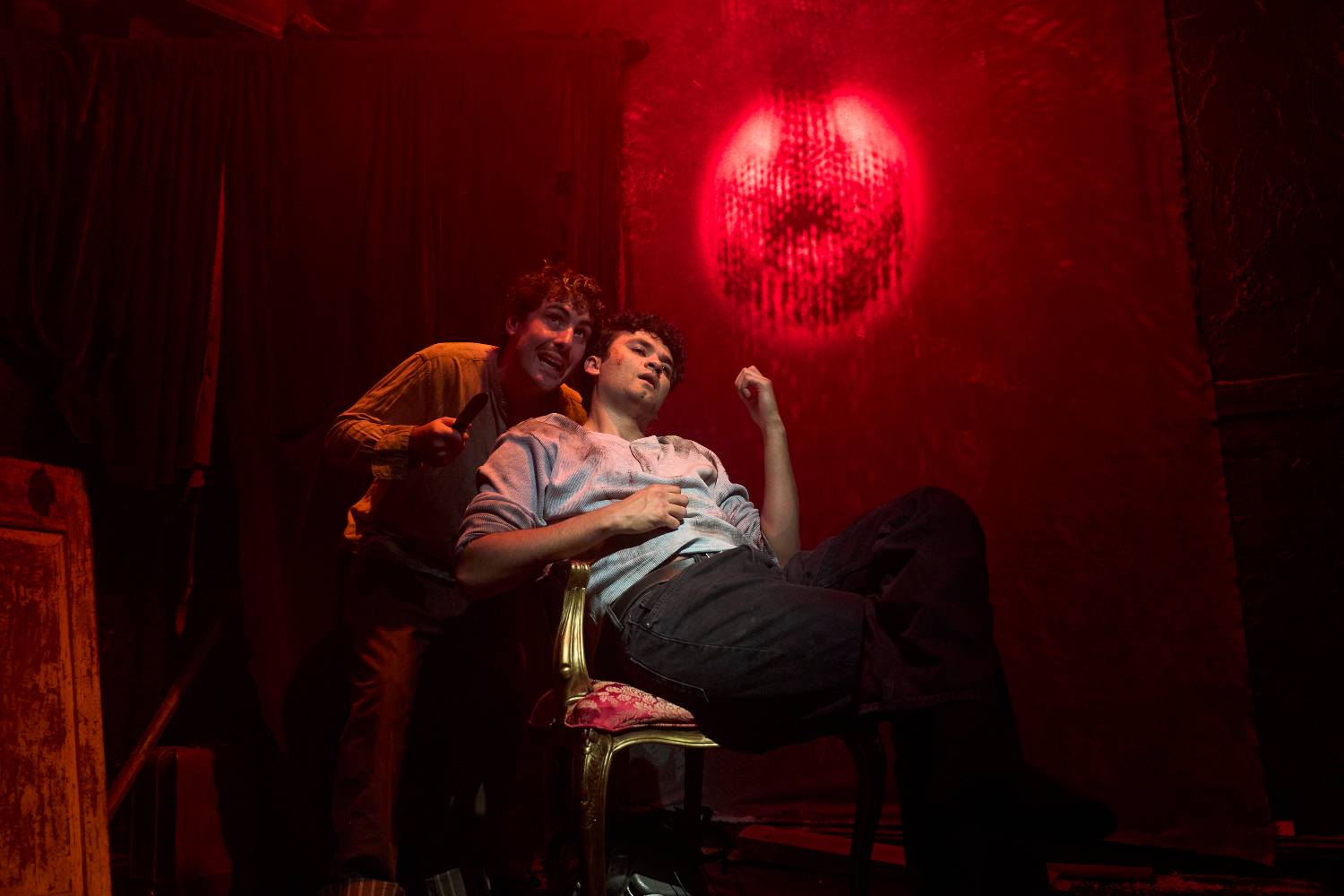
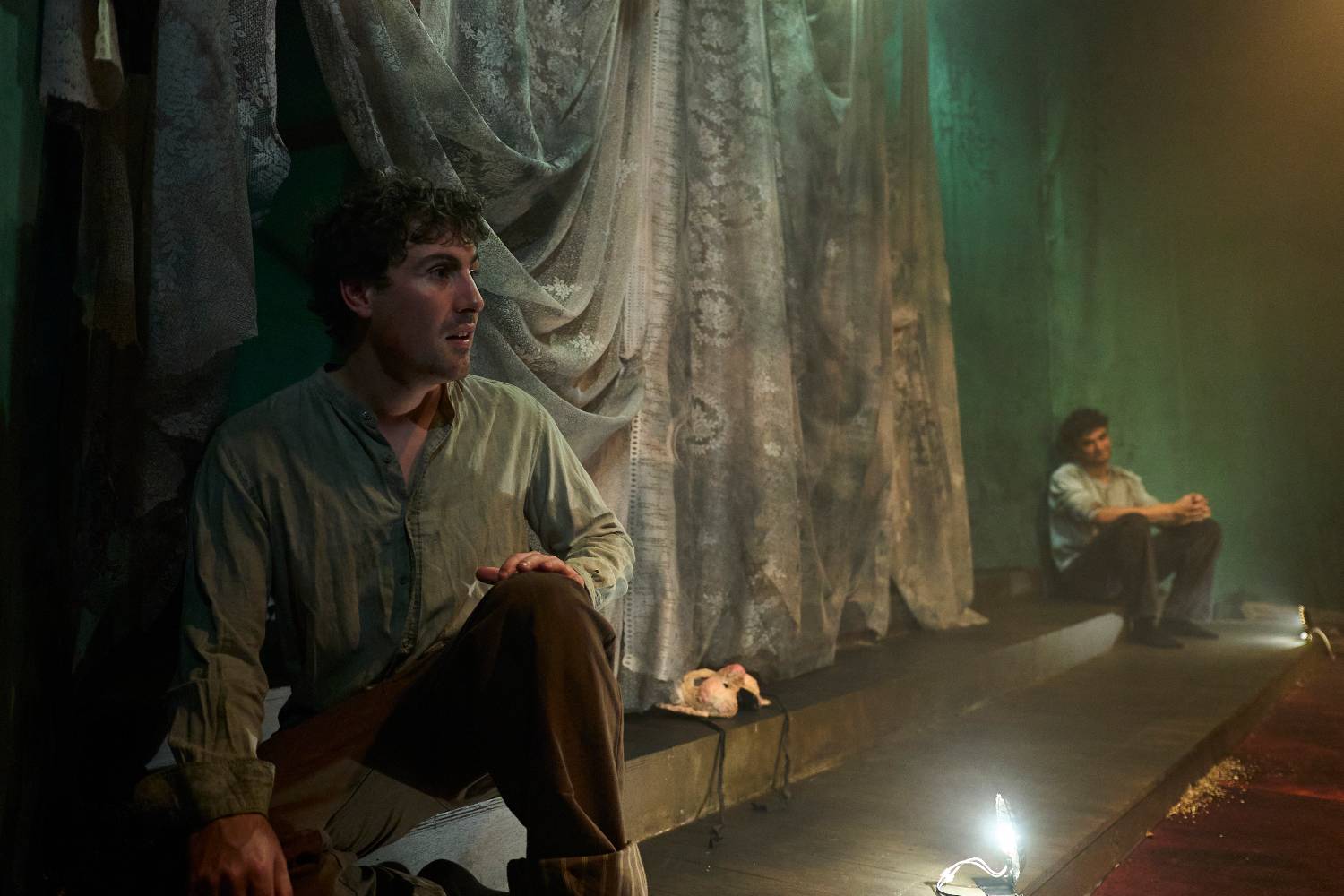
Goodnight Sweet Prince is a harrowing, deconstructed adaptation of Shakespeare's Hamlet. With Elsinore Castle under siege, a beleaguered Hamlet retreats into his happy place: a theatre within the castle walls, which is now half-ruined. As the world outside descends into chaos, he battles an unraveling mind, paralysed by uncertainties about his life, his future, and the madness of his reality.
Director Liesel Badorrek masterfully weaves the Bard's text together with her co-adaptors—who are also the two leading men, Raj Labade and Jack Twelvetree—focusing primarily on Hamlet and Horatio, whose roles the two actors alternate each night. The result is a fiercely focused, highly intelligent rework. It carries a profound respect for the source material that could only come from artists who know their Shakespeare inside out. This intense, tightly woven patchwork of text seduces the audience, pulling them deep into the psyche of theatre's most iconic character. In 2026, this production also shines as a powerful meditation on grief, mental health, and masculinity.
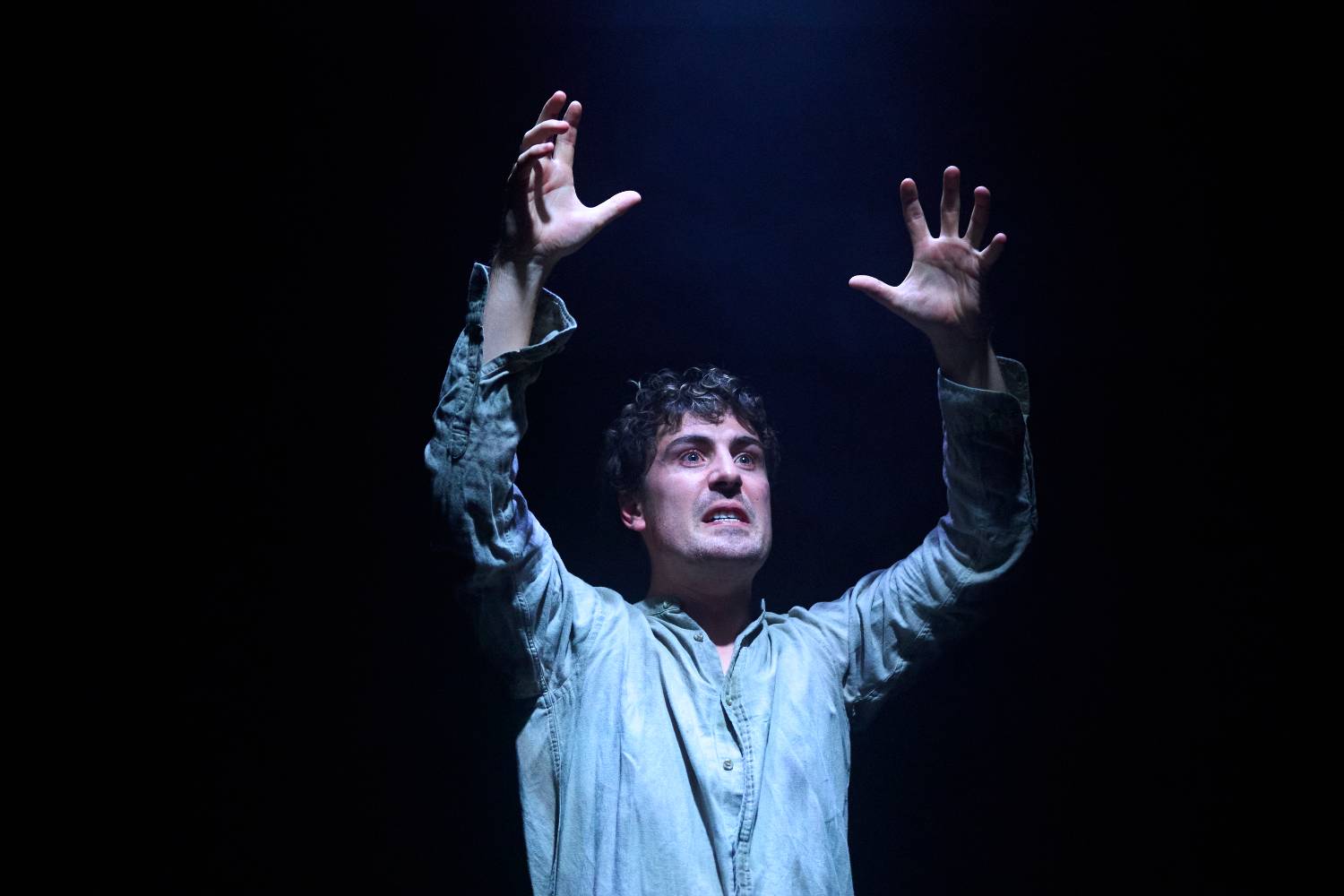
It takes remarkable talent to open a show with the most famous monologue of all, "To be or not to be." Jack Twelvetree, who played Hamlet on the night I attended, draws the audience in immediately with his sotto voce delivery. The intimate setting of the Old Fitz allows Twelvetree to communicate his lines with delicate nuance, yet his articulation is so precise that not a single syllable is lost. Through his commanding Shakespearean eloquence, his choice of dramatic pauses injects a distinctly contemporary energy into the text. There is a calculated, self-aware dramatic flair to his performance at times—a choice that perfectly mirrors Hamlet's own antic disposition.
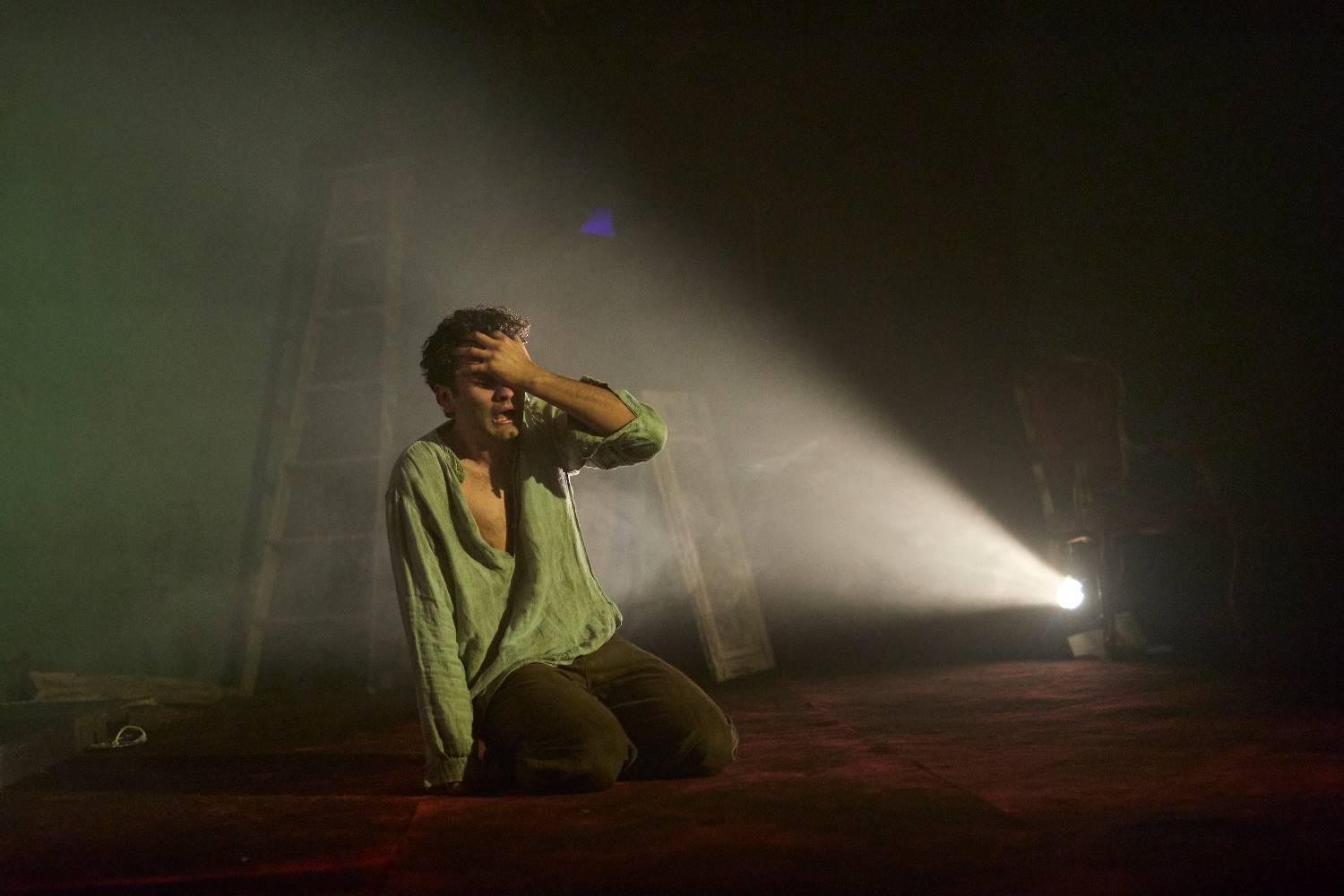
Very few young actors can transition with immense agility between Shakespeare and contemporary text and excel, but Raj Labade is undeniably an artist of that rare caliber. Late last year, he brought a new depth to Edmund’s bastardry in Eamon Flack’s production of King Lear at Belvoir, infusing the role with the distinct, authentic perspective of his own mixed-race identity. He then went on to wow audiences nationwide, acting, singing, and playing multiple instruments in the sensational homegrown musical My Brilliant Career. Here, when Hamlet first calls out Horatio's name, Labade delivers his opening response, "A piece of him," with a profoundness that carries a multitude of feelings. This moment instantly cements a deeply engaging chemistry between the two leads and sets the tone for the rest of the performance. While Labade provides welcome comic relief in multitasking through several minor roles, the emotional range and depth of his delivery as Horatio places him in a league of his own. His performance left me longing to return on an alternate night just to witness how he wields his remarkable gifts during Hamlet’s direct-address soliloquies.
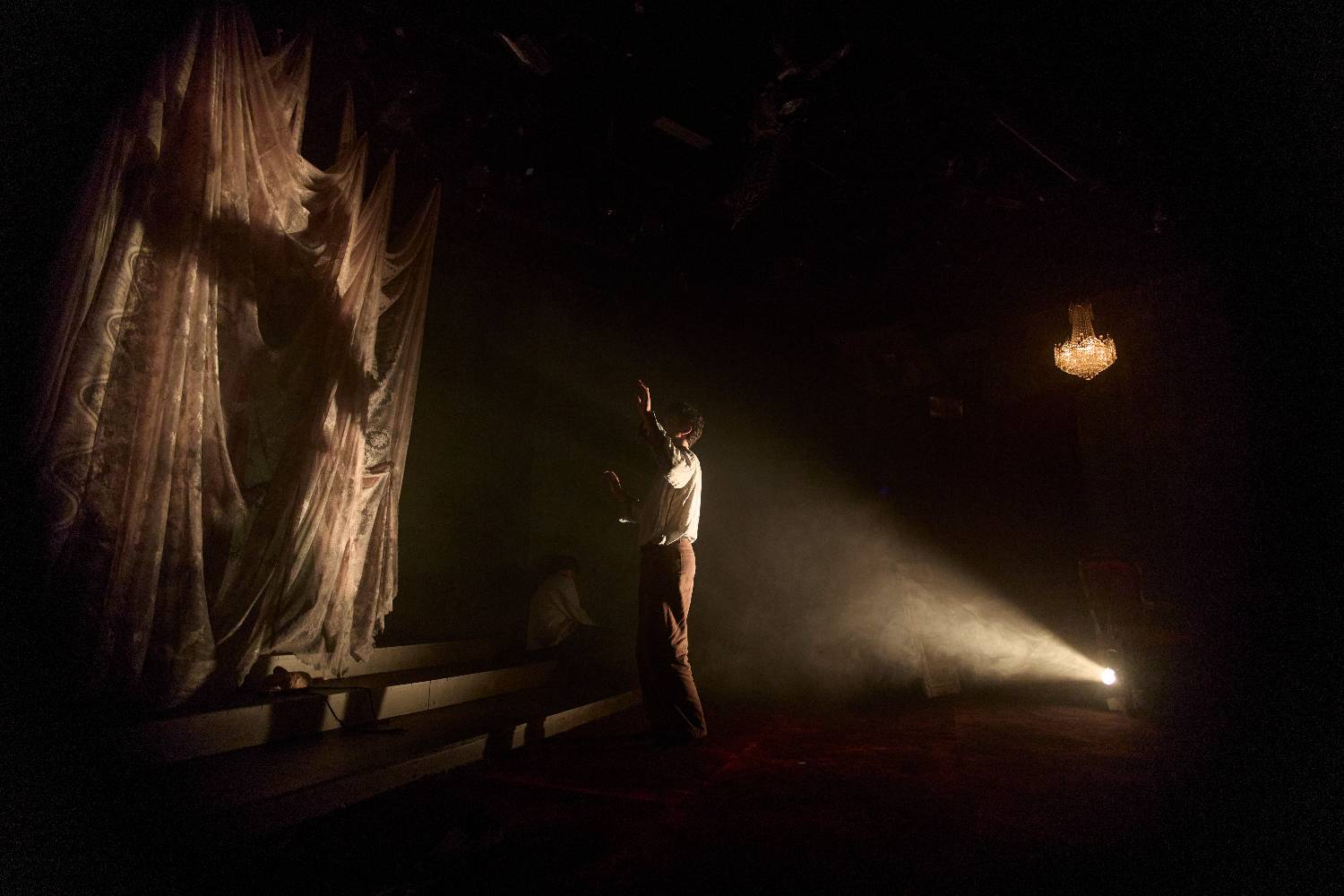
Of all the supporting elements these two actors could possibly need, Verity Hampson’s lighting stands out, combining cinematic close-up focus with stark theatricality to heighten their performances. Proving my opening point about the refreshing lack of pretension among Australian creatives, one of the nation's most prolific lighting designers doesn’t just show up to establish atmosphere—she illuminates the narrative these creators have concocted. Her design masterfully magnifies the kaleidoscopic chambers of Hamlet's mind, shifting effortlessly from pensive reflection to deep grief, and from touching honesty to pure madness. It is a collaboration on a grand scale that is utterly spellbinding to witness.
Keerthi Subramanyam's set design maximises every single inch of the confined space, physically manifesting both the literal disarray of the storyline and the Dalí-esque labyrinth of the prince's mind. Furthermore, the gravedigger scene is a mini coup de théâtre, pure and simple—a striking visual statement proving that truly great theatre can be achieved anywhere.
Goodnight Sweet Prince is a brilliant showcase of collective creativity—the exact kind that sets Australian theatre apart. It stands as a masterclass in both acting and design. While it may not be a performance that invites you to fully invest emotionally, nor should one expect it to given its structure, it is an undeniable intellectual triumph. As the show concludes with its poignant new ending, this Hamlet channels more than just the disillusionments of our fractured world. Witnessing so much artistry and conviction in one room makes one wonder if we are also collectively purging our frustration over the uncertain future of the arts and the artistic community itself. It is a timeless question channeled through a timeless piece of work, delivered by a company whose immense talent makes that very future seem remarkably bright.
production photos ©Campbell Parsons
