

When attending a performance, audiences are typically given a break of around fifteen to twenty minutes after the first act. We call this the "intermission." Many audience members think of it as little more than a chance to use the restroom or grab a drink, but in fact the intermission is a significant cultural institution shaped by the history of the performing arts and the practicalities of running a show. Far from being a simple rest period, it is a carefully considered device that takes into account the flow of the performance, the audience's engagement, the preparation needed by actors and crew, and the operational demands of the theatre itself. So when did the intermission first appear, and why has it remained a fixture in most performances to this day?
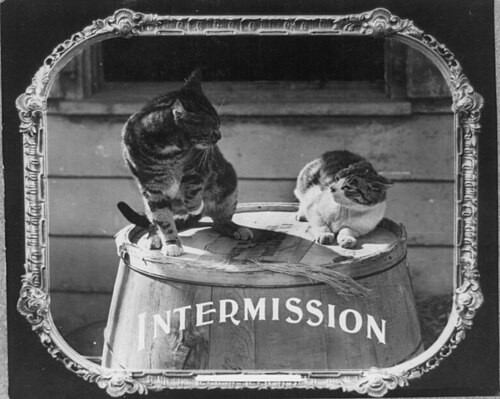
Intermission screen frame during a 1912 film.
The origins of the intermission can be traced back several centuries to European theatre and opera culture. After the Renaissance, performances grew steadily larger in scale and longer in duration, and works that could not easily be presented in a single unbroken stretch became increasingly common. Opera in particular often ran for three to five hours or more, and its stage machinery was extraordinarily complex. Because there were no automated staging systems of the kind we have today, every change of scene required stagehands to physically move large sets and props — a process that took considerable time. Breaks between acts arose naturally out of this necessity, and the practice eventually carried over into theatre and musical theatre, becoming a fundamental element of how performances were structured.
Scene changes remain one of the most compelling reasons the intermission still exists. Throughout a performance, dozens of backstage crew members work out of the audience's sight to prepare for the next scene. In large-scale musicals, enormous set pieces must be repositioned, lighting rigs reconfigured, and special-effects equipment checked. If all of this had to be accomplished without any pause in the show, the quality and safety of the production would suffer significantly. The intermission, then, is not simply a rest — it is an essential window of preparation that allows the performance to continue at its fullest.
Audience concentration is another major consideration. Human attention naturally wanes over time, and since musicals and operas often run for two and a half to nearly three hours, a mid-show break gives audiences the chance to reset and engage more fully with the second act. In works with a strong emotional arc, the intermission also allows the resonance of the first act to settle while building anticipation for what comes next. Many productions deliberately place their most dramatic scenes or showstopping numbers at the end of Act One, heightening the audience's curiosity before the break. This functions much like the "cliffhanger" device in film and television — a directorial technique designed to make audiences all the more eager for Act Two.
For performers, the intermission is equally vital. Performance is physically demanding work. Actors sing, dance, and act simultaneously, sustaining that effort under intense stage lighting for stretches of thirty minutes or more. During the intermission, they change costumes, touch up makeup, drink water to protect their voices, and mentally prepare for the scenes ahead. In productions that require multiple costume changes, the intermission is often the only realistic opportunity to make those transitions. For performers to carry Act Two with the same energy and precision as Act One, the intermission is not a luxury — it is a necessity.
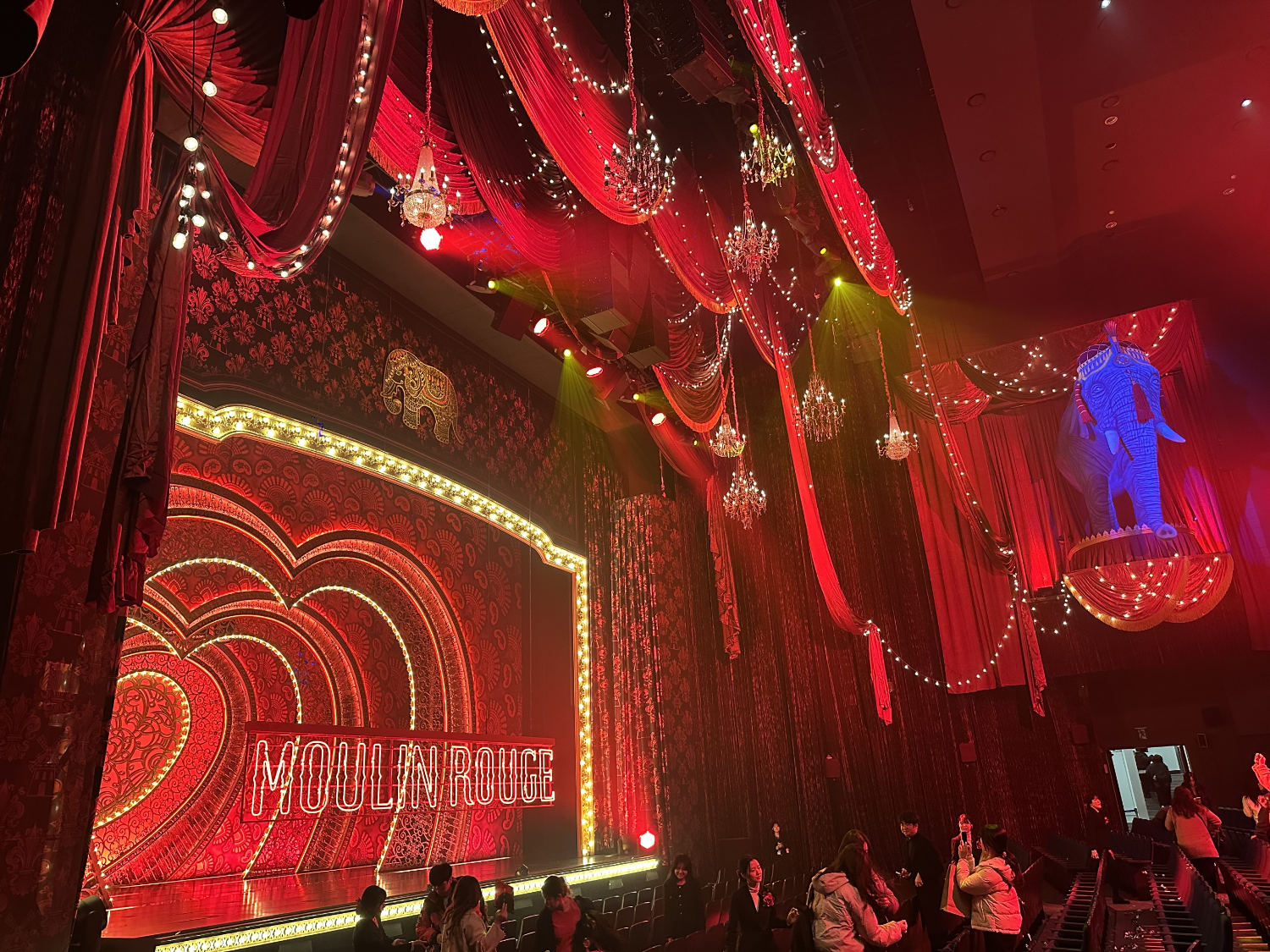
From an operational standpoint, the intermission also matters greatly to the theatre itself. During the break, audiences purchase drinks and snacks, browse programme books, and look over merchandise. This ancillary revenue makes a meaningful contribution to the running of many venues. Audiences also use the time to talk with their companions about what they have just seen, deepening their understanding of the work. Rather than simply pausing the show, the intermission functions as a social space that enriches the overall experience of attending a performance. In recent years, some theatres have gone further, offering exhibitions or photo opportunities during the intermission as part of a broader programme of audience engagement.
That said, performances without an intermission are becoming more common. Plays and original musicals running around ninety minutes often proceed without a break in order to sustain the audience's immersion — a deliberate directorial choice to keep the tension of the work intact. In large-scale musicals and operas, however, the intermission continues to serve an indispensable function. Ultimately, whether an intermission is needed depends on the scale and genre of the production.
The intermission, which we tend to take for granted today, is not merely a rest period — it is a piece of accumulated wisdom that the performing arts have developed over a long history. It began as a technical necessity driven by the demands of scene changes, but it has since become part of the fabric of performance culture, encompassing the audience's capacity for attention, the performer's physical condition, and the operational needs of the venue. The next time you attend a performance, try thinking of the intermission not as a simple "break" but as another kind of stage — one designed to make the production as complete as it can be. You may find that it opens up a richer way of experiencing everything the show has to offer.
