

Anyone who has visited a performing-arts venue has probably noticed that most seating areas fan out in a curved arc around the stage. This arrangement is widely used across all kinds of spaces — large theatres, studio theatres, and concert halls alike. Is it simply a matter of aesthetics? In fact, the fan-shaped auditorium is the product of centuries of refinement aimed at deepening audience immersion and improving the viewing environment. It is a remarkably rational design that takes into account sightlines, acoustics, and the connection between performer and audience.
The primary purpose of a fan-shaped seating layout is to give every audience member the best possible view of the stage. If seats were arranged in a straight line stretching far to either side, those sitting at the ends would be looking at the stage from an oblique angle, making it difficult to read an actor's expressions or follow their movement. When the seating fans outward, however, most seats face the stage directly, naturally narrowing the viewing angle between audience and performer. The result is a more comfortable experience of the full stage picture, with no risk of missing an actor's movement or facial expression.
The fan shape is also effective at reducing disparities in distance. If the same number of seats were arranged in a rectangle, those at the far sides could end up quite far from the stage; but because the fan configuration wraps the seating around the centre, the average distance to the stage is shorter. This is a crucial factor in creating a sense of immediacy. Audiences feel the actors' breathing and physical presence more closely, and the experience of being absorbed in the performance becomes that much more intense.
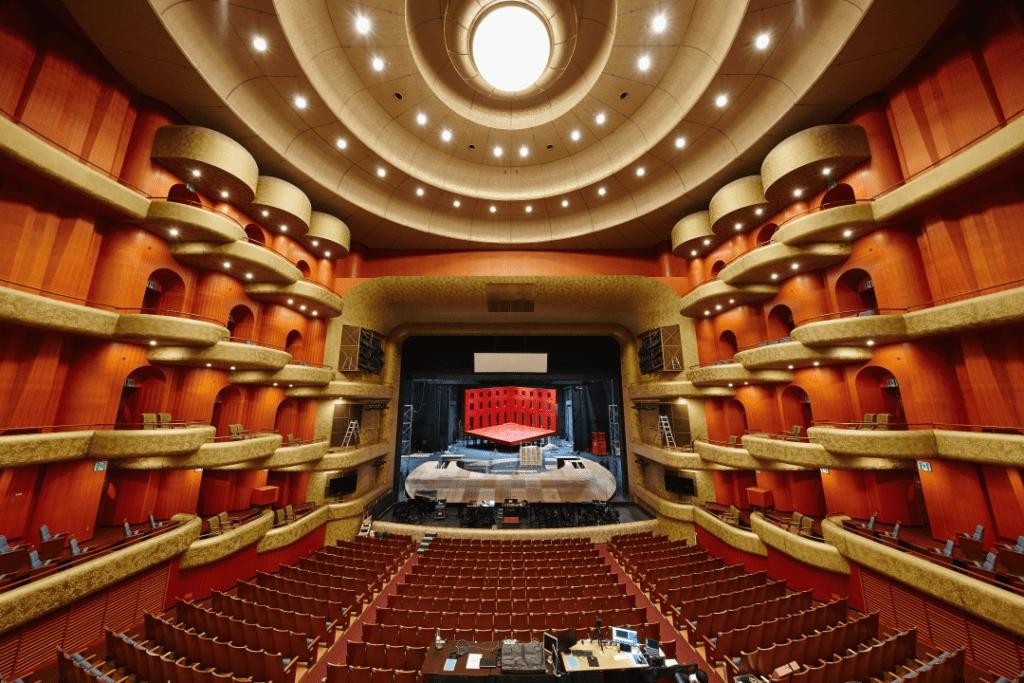
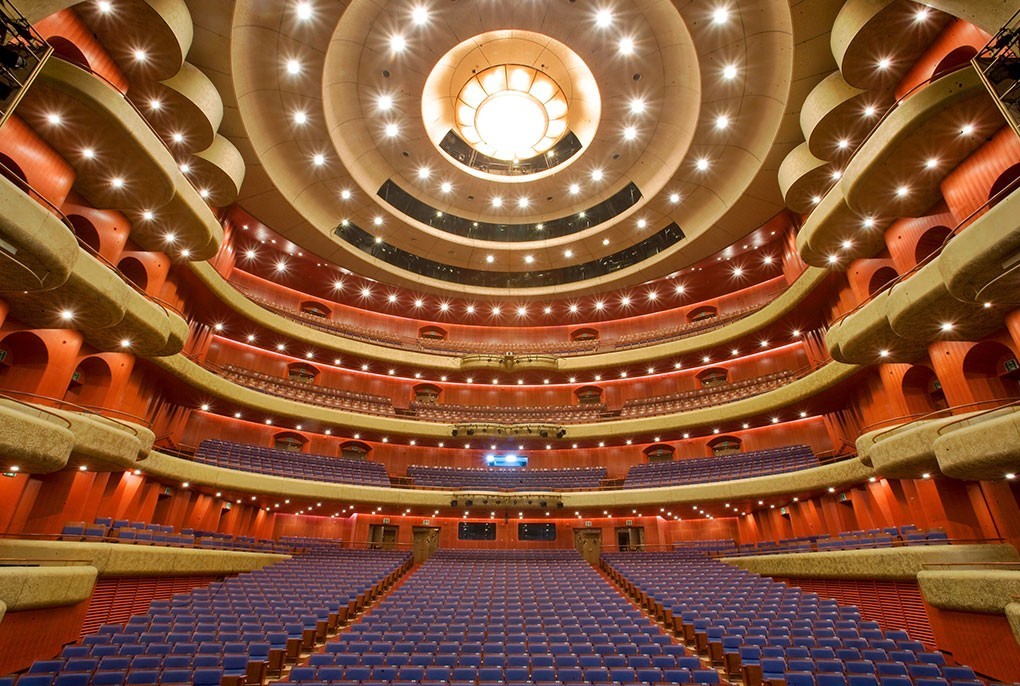
From an acoustic standpoint, the fan-shaped structure also offers significant advantages. The sound quality of a performance venue is not determined by the power of its speakers alone — the way sound reflects and travels depends on the shape of the walls, ceiling, and seating area. When the seats radiate outward from the stage, the actors' unamplified voices and the orchestra's playing are distributed relatively evenly throughout the house, reducing the risk of sound concentrating in certain zones or becoming too faint in others. Opera houses and classical concert halls in particular design the curves and rake of their seating with extraordinary precision in order to make the most of natural acoustics.
The psychological sense of immersion this creates for audiences is another important reason for the design. A fan-shaped auditorium directs everyone's gaze toward the same space, fostering an atmosphere of collective focus. The arrangement of audience members gathered around a central stage evokes the feeling of a single community sharing the same story together. This spatial configuration has a positive effect on performers as well. Actors can make natural eye contact with audience members across a range of directions and more easily sense the mood of the house. Laughter, applause, and other audience responses ripple through the entire auditorium, amplifying the energy of the performance.
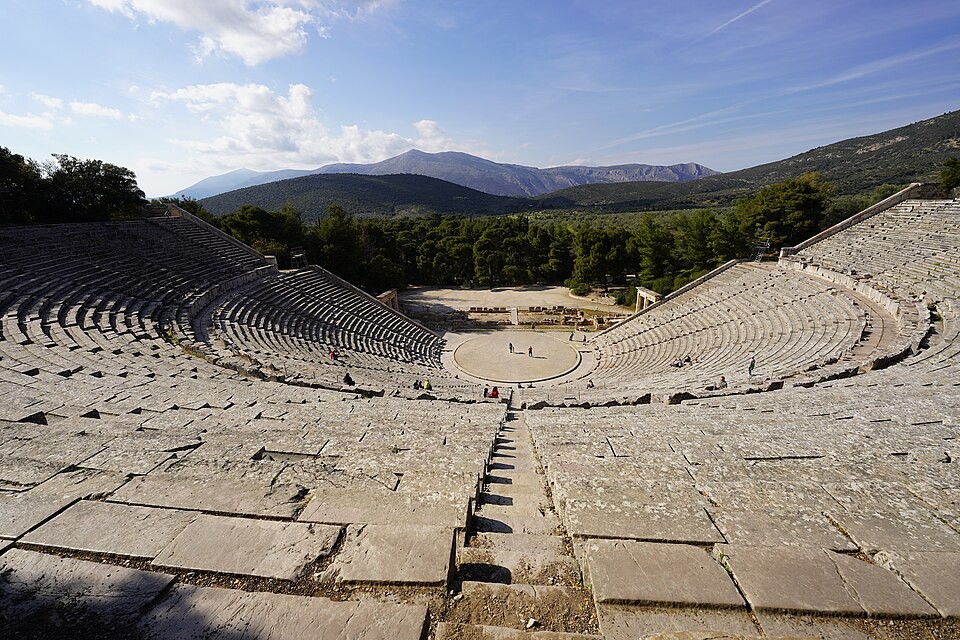
The origins of this seating structure can be traced back to the ancient Greek theatre. Those theatres made use of natural hillside slopes to create semicircular seating areas — a practical solution for allowing large numbers of people to see the stage clearly. It was precisely this structure that enabled thousands of spectators gathered in a single space to take in an actor's performance and voice with ease. From the Roman period onward, through to the modern performing-arts venue, the circular or fan-shaped auditorium has continued to evolve and has established itself as the fundamental form of the performance space.
Of course, not every venue uses a fan-shaped layout. Black-box theatres allow seating and stage to be configured freely, and fashion shows or experimental productions sometimes opt for a straight runway arrangement or seats facing each other from opposite sides. Yet most musical theatre, drama, and opera houses continue to adopt the fan shape as their default. It remains the configuration that provides the most reliable sightlines and acoustics across a wide range of genres, allowing large numbers of audience members to enjoy a performance comfortably at the same time.
The seats in which we settle so naturally when we attend a performance are far more than a simple arrangement of chairs. Embedded within them are centuries of accumulated history in the performing arts, advances in architectural technique, developments in acoustic engineering, and ongoing research into the audience experience. The fan-shaped auditorium is not merely an attractive design choice — it is the outcome of spatial thinking aimed at connecting performer and audience as effectively as possible, and it stands as one of the most important elements in conveying the full emotional impact of a live performance.