

Having seen both of Bubba Weiler’s plays in recent months, I am convinced that the intricate nature of doubt lies at the core of his storytelling. Weiler explores this theme with refined nuance, approaching heavy subjects through a quiet, lifelike lens. In both Well, I'll Let You Go and his latest work, The Saviors, doubt is a slow simmer, frequently overshadowed by life's noisier moments.
Witnessing the world premiere of Weiler's new work, I found myself grappling with my own doubt. Can two teenage actors inhabit and deliver complex characters that demand the questioning of faith, friendship, and the vicious cycle of life eight times a week? Weiler insists these roles must be age-authentically cast. Julius Rinzel (as Paul) and Ivan Howe (as Michael) are nothing short of excellent, and Atlantic Theater Company has set a nearly impossible standard of casting.
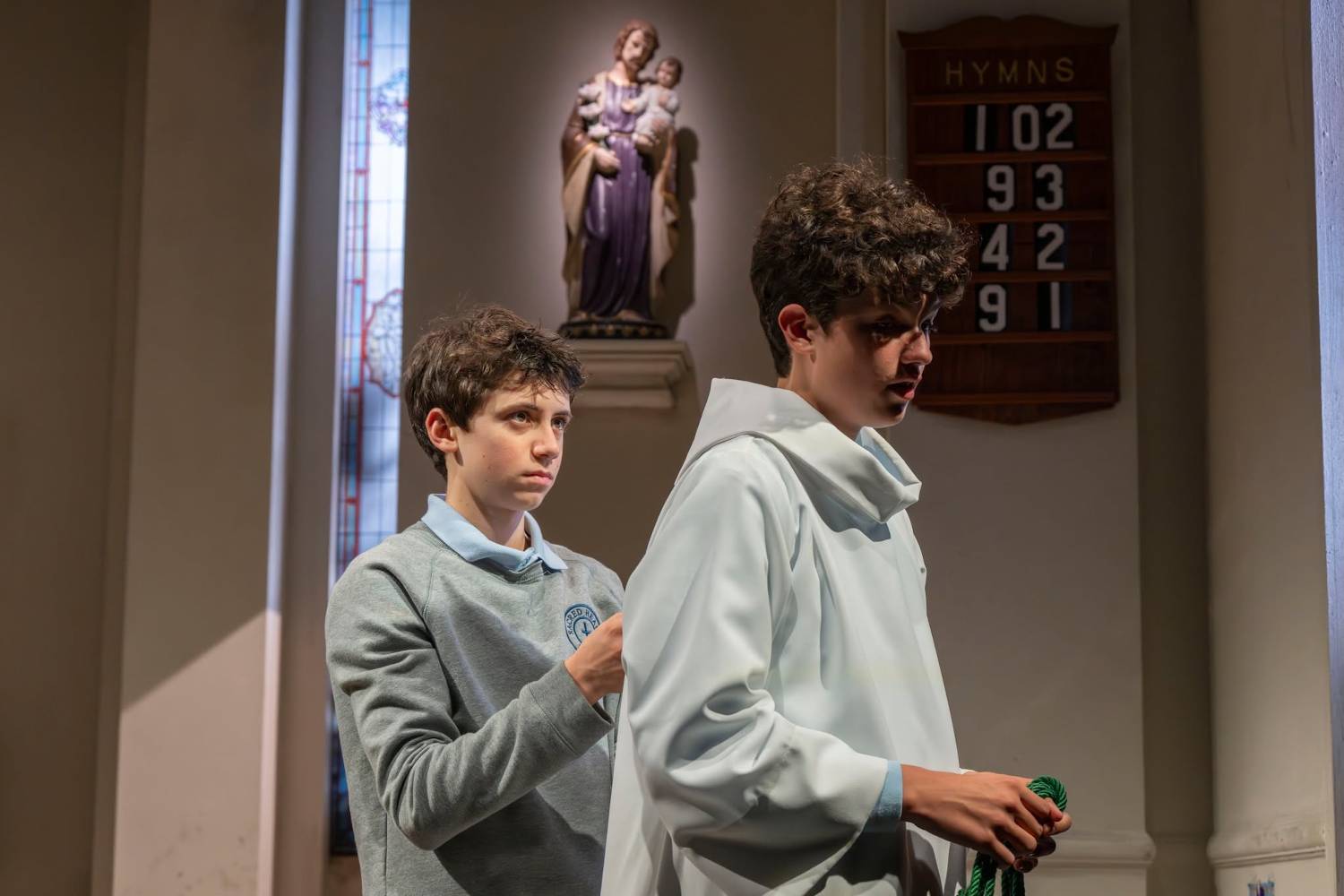
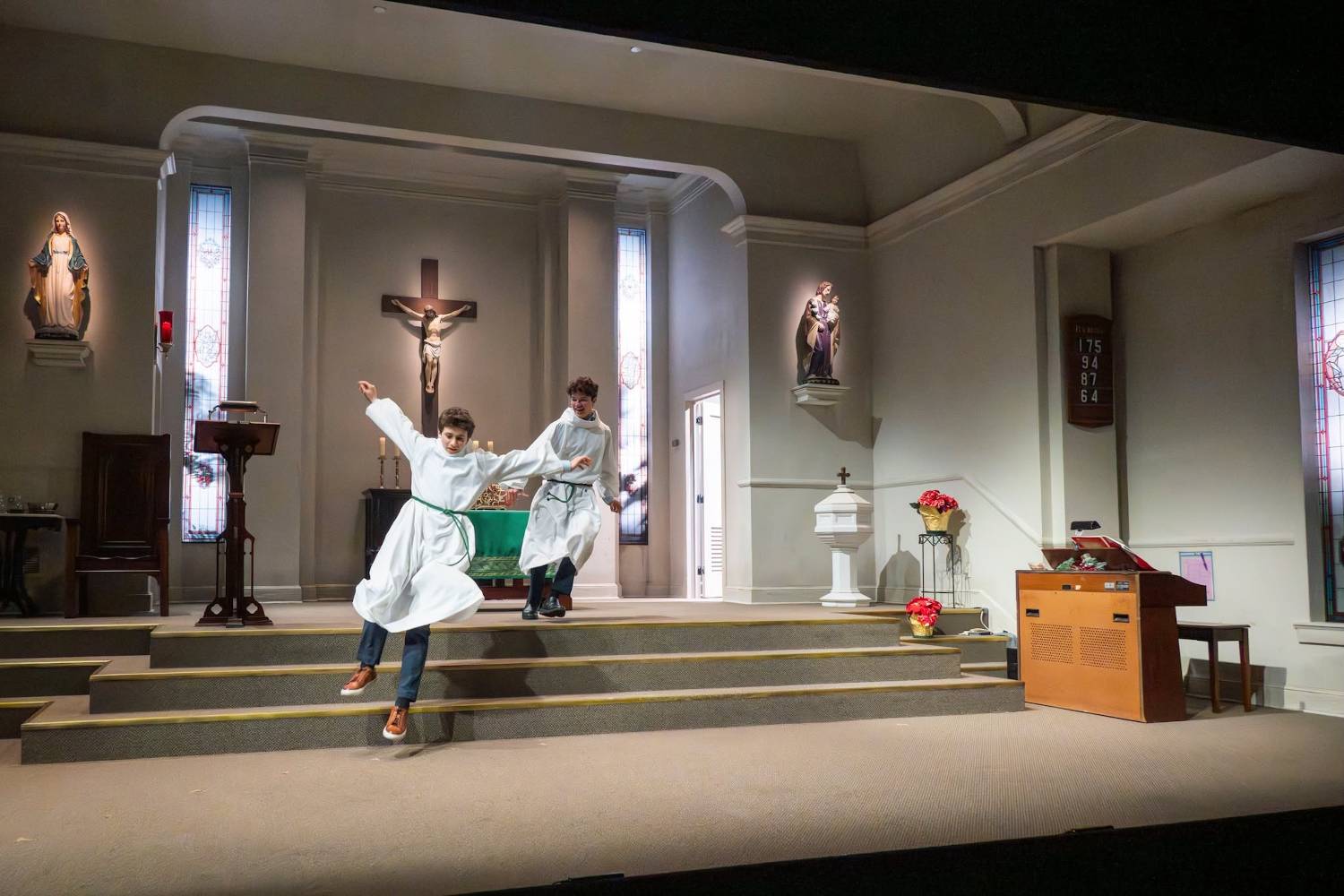
Michael and Paul are two altar boys on the precipice of confirmation and inseparable best friends. When Michael has a nightmare—no matter at what ungodly hour—he calls Paul, who always answers to calm him down. They navigate a highly routine existence in a small Midwestern town, walking a path paved by generations before them. They attend the same Catholic prep school and are expected to attend college just an hour away. Given this insular world, one can easily understand Michael's petrified reaction when Paul merely hints at wanting to go to college elsewhere. It is not that Michael fears change; as symbolised by the recurring scene transition where the boys busily swap out the hymnal number placards on the church board, he embraces change—so long as it is predetermined. At this pivotal stage, their friendship faces complex emotional hurdles. Does Michael's intense devotion suggest an identity more profound than a childhood bond, or is it a natural part of self-discovery? They are Gen Alpha, after all. Initially, the text conceals these underlying tensions through the boys’ playful chemistry. It is not until a drifter arrives seeking shelter from the cold winter nights that those frustrations are dragged to the surface, challenging their understanding of themselves and their community.
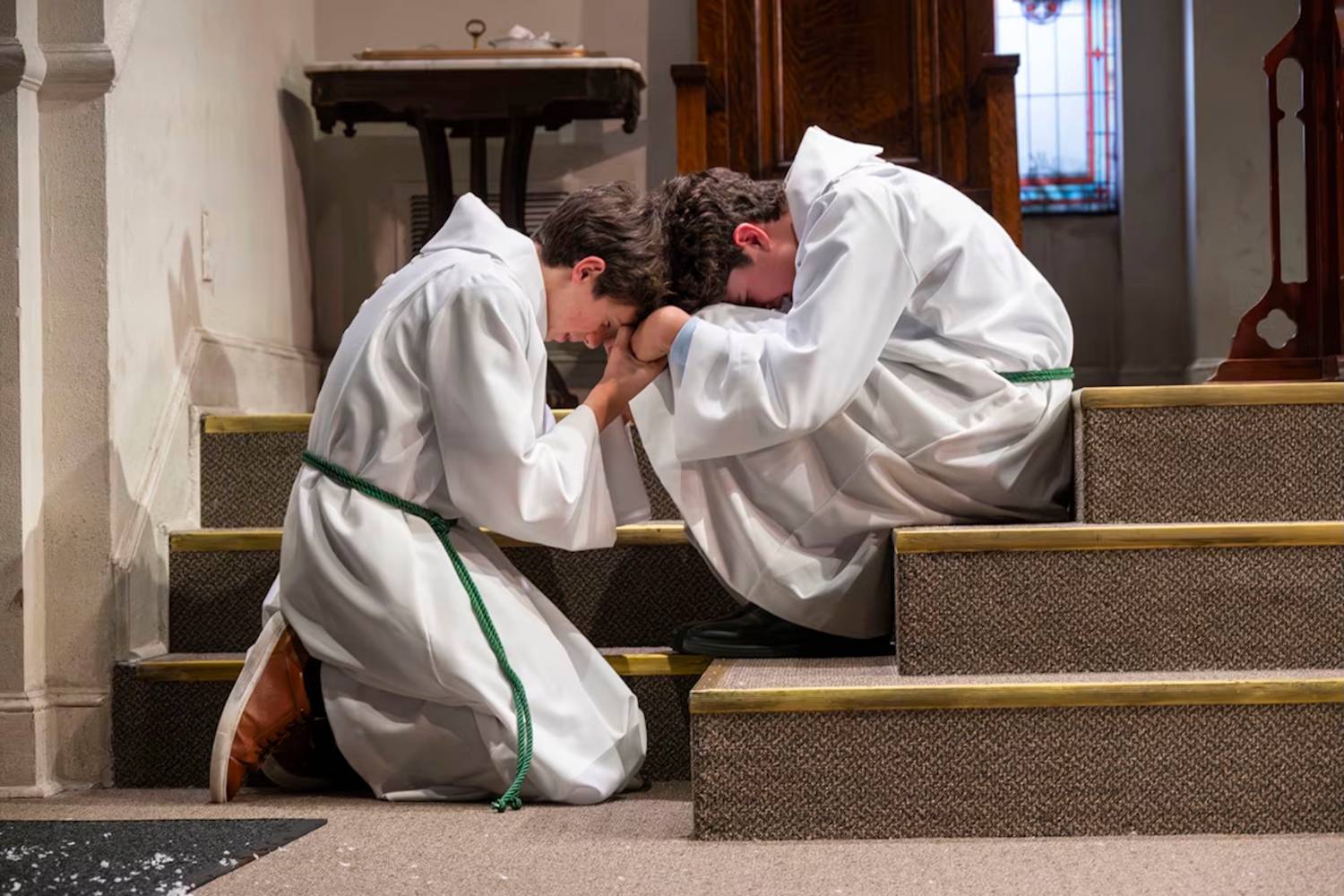
Ivan Howe proves to be a skilled actor far beyond his years, possessing note-perfect delivery and the charisma of a young movie star. He portrays Michael’s neediness with perfectly judged, convincing restraint. In contrast, Julius Rinzel's Paul brings a steeliness to the stage; despite the doubts he harbours, his performance shines through Paul's goodness and genuine care toward his friend. This creates a compelling dynamic with Howe’s character—the personification of a God's A+ student who recites Bible quotes as life-or-death mantras, only for us to discover later that his Christian charity comes with conditions. Watching these two talented performers feels like eavesdropping on real-life teenagers. Their naturally awkward body language combined with Weiler's dialogue helps the play eschew conventional theatrical boundaries to create a distinctly realistic, unexpected dynamic. One could argue that audiences might expect more overt drama, but this is where Weiler’s genius lies. He extracts poetry from the mundane through simple text that renders his characters devastatingly real. In his world, the unsaid is just as powerful as what is spoken aloud.
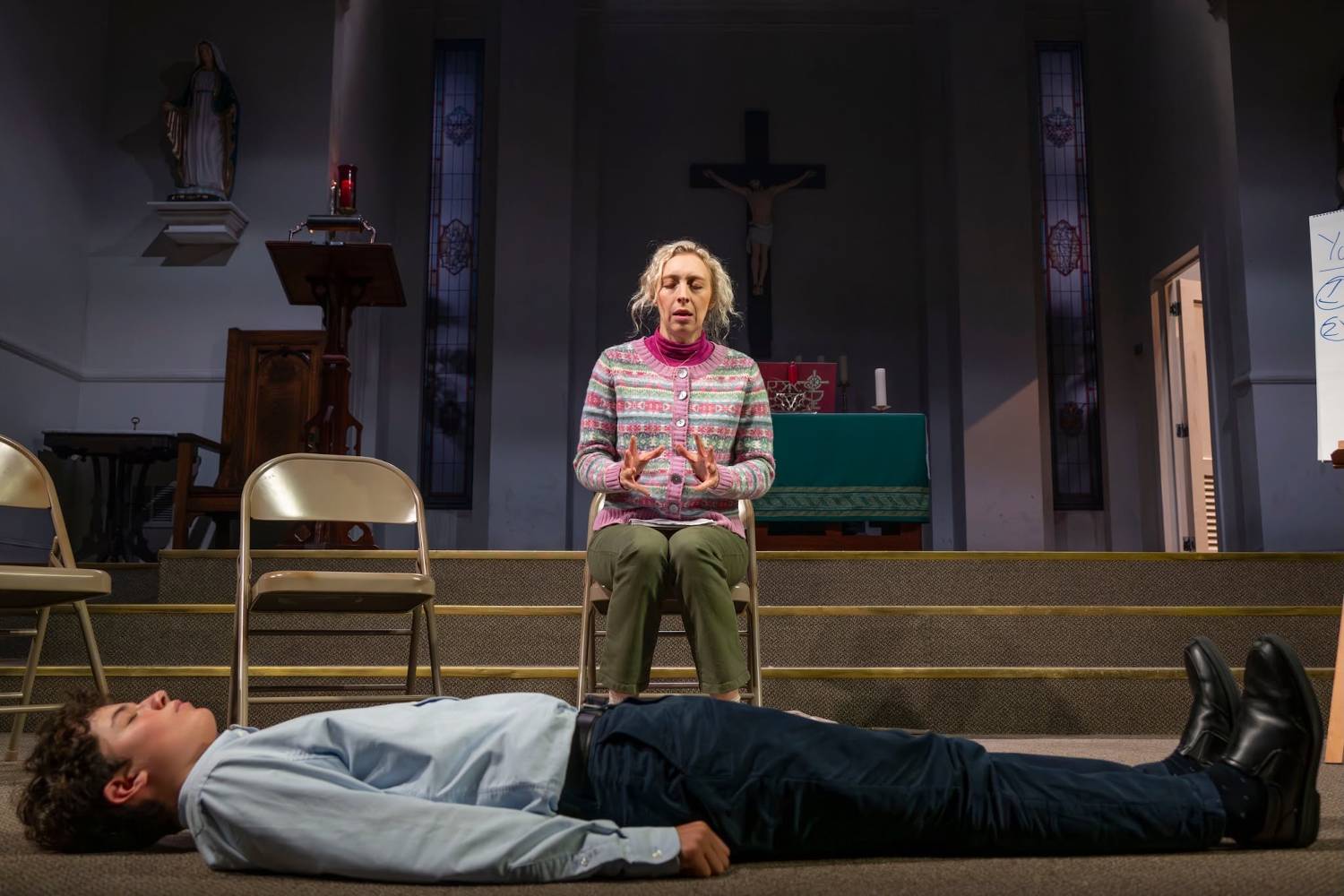
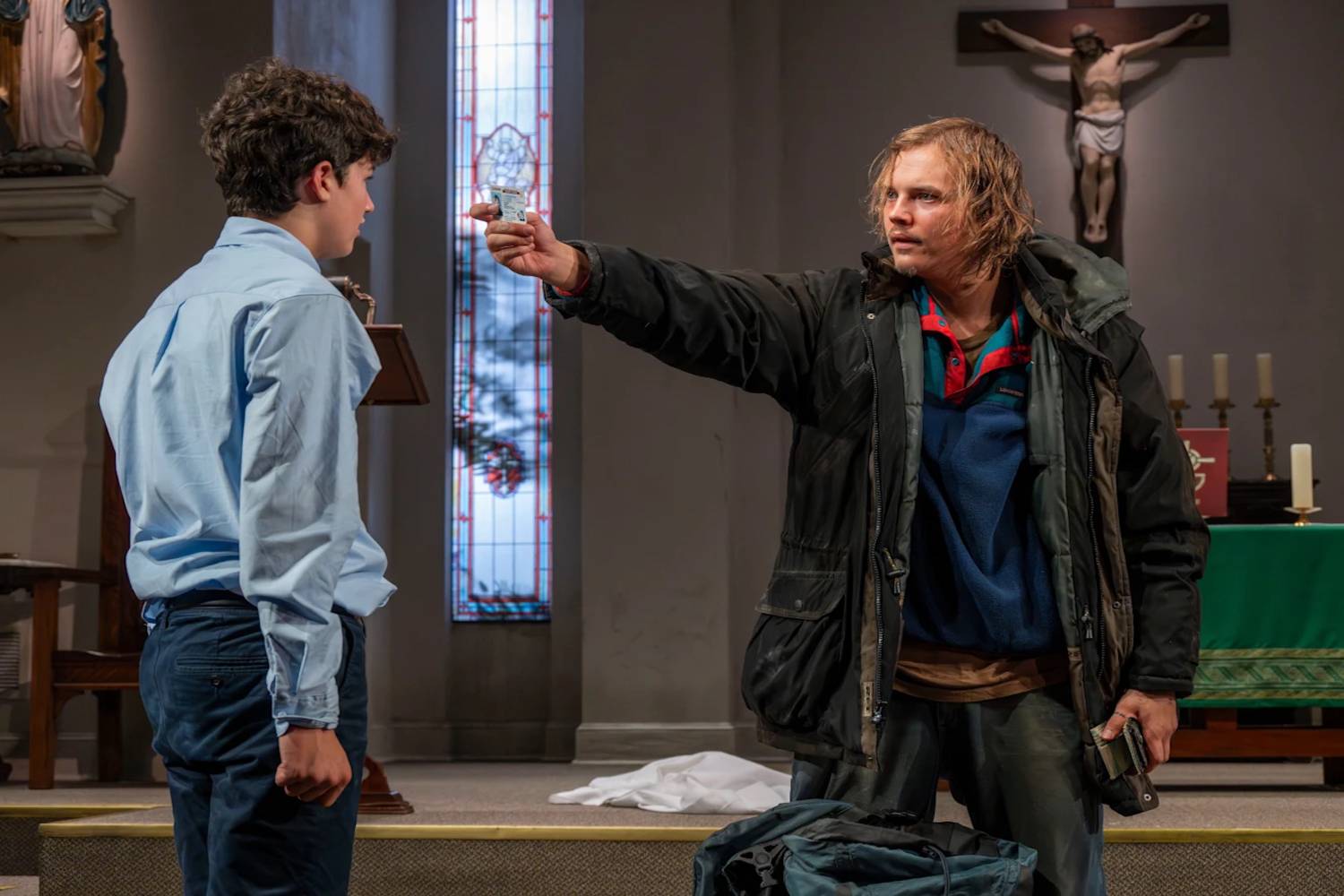
In contrast to the quiet naturalism of the teenagers, Michael and Paul's adult counterparts, Julian and Judy, deliver a more traditional theatrical impact. Making a compelling stage debut as the enigmatic wanderer Julian, Stanley Simons provides a gentle, brotherly vibe during his scenes with the boys, while expertly hinting at a dangerous angst when confronting the youth group leader, Judy. In his playbill bio, Simons charmingly notes that his 14-year-old co-stars already have more stage credits than he does. Meanwhile, the more veteran Crystal Finn delivers a standout performance as the quirky Judy, portraying her fierce dedication to the church as both a desperate form of redemption and a safe haven following a series of life tragedies. These four characters are well crafted to provoke questions about faith, illustrating why it is so desperately needed at certain crossroads in life—especially in the fractured world we live in—even if, ultimately, it is not for everyone.
The collaboration between Weiler and director Jack Serio—who also helmed Weiler's debut—is the production's magic ingredient. Even if one questions the age-accurate casting, it is undoubtedly Serio who has sculpted these remarkably authentic performances. His direction is fiercely performance-driven, and he always allows room for the text to breathe. Serio's recent work on two Samuel D. Hunter plays—another master of extracting poetry from mundane American heartland characters—clearly prepared him well for this creative partnership.
One could not ask for a more perfect venue than the Linda Gross Theater, housed inside a neo-Gothic former church building. David Zinn’s meticulously realistic sanctuary design integrates seamlessly with Serio's minimalist directing style. While Leah Gelpe’s sound design immerses the audience in the ambient sounds of a Mass upon entering, it is Stacey Derosier’s lighting design that truly shines as its own visual poem. Shifting through delicate shadows to mark the passage of time, Derosier's lighting masterfully sets the emotional temperature, foreshadowing the changing moods of the human drama taking shape in the sanctuary.
At that pivotal age, we all have childhood friendships we once believed would last a lifetime. It is also precisely when profound doubts begin to creep in—doubts that suddenly matter deeply, as they shape the person you become in the next stage of life. Would The Saviors work better as a memory play performed by mature actors? Or would it lose the very essence that the playwright intended? Despite these structural questions, there is absolutely no room for doubt when it comes to the boldness and artistry on display here. Weiler and Serio are exactly the kinds of theatre makers keeping the American stage thrilling today. Whether they continue to collaborate or forge ahead on individual paths, they have fully proven their brilliance. In their future, I have absolute faith.
production photos ©Arhron R. Foster
