

Even a single story yields different impressions depending on who is reading it. And even the same story can feel like an entirely different work depending on the form in which it is encountered. The musical In the Burning Darkness is based on a play by Spanish playwright Antonio Buero Vallejo. Premiering in 2023 to widespread acclaim and continuing through a 2025–26 revival, the production has offered a fresh interpretation of the source material through music and adaptation while preserving the original's philosophical core. This article compares the original play with the musical In the Burning Darkness, examining the changes that emerged through the adaptation process and what those changes mean.
Carlos and Ignacio
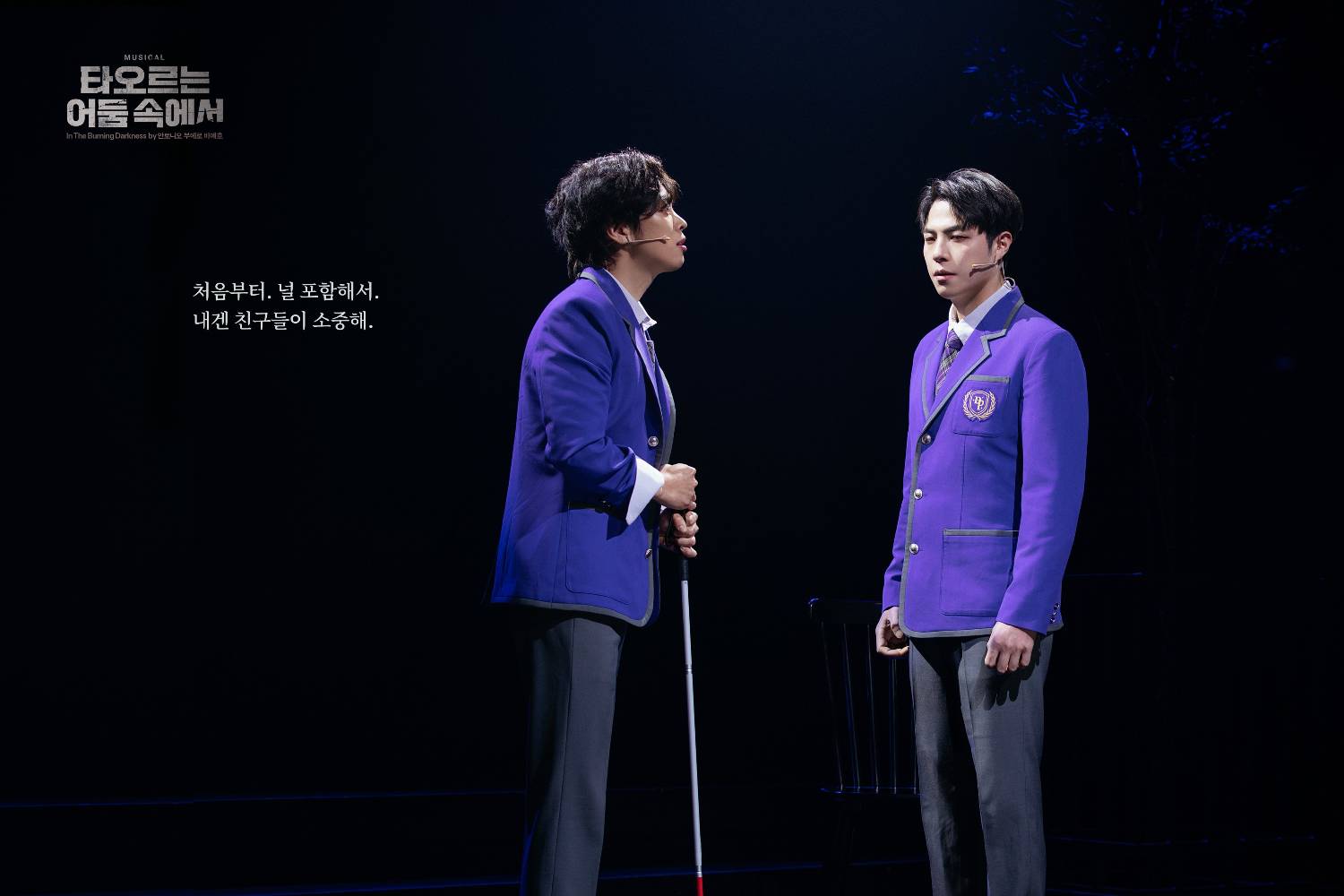
The protagonist of the original play is Ignacio, a new transfer student at the Don Pablo School for the Blind. The school's students have accepted their blindness and learned to lean on one another, but Ignacio views his disability in a negative light and challenges the school's tendency to look away from reality. He insists that the happiness found within the school is nothing more than hypocrisy and falsehood, and urges his fellow students to confront the truth of their situation.
God did not give us the ability to perceive things at a distance, and for that reason alone we are always beneath those who live out there in the world. The song the blind men used to sing at street corners in our parents' day — "There is no blessing like sight" — may not sit well with your easy, comfortable school life. But I think that song is far more truthful and precious. Because they were different from us. They did not make the foolish mistake of believing themselves to be normal.
Words like these from Ignacio shake the students' convictions, and the once free and peaceful Don Pablo School can no longer remain a safe space. What carries the greatest weight in the original play is Ignacio's ideology. He frames the peaceful world the blind students have constructed as "hypocrisy" and "falsehood," and relentlessly criticizes their attitude of turning away from reality. Throughout the work, Ignacio's long speeches and arguments take center stage, and the story unfolds around the question of how his philosophy affects those around him.
The musical, by contrast, shifts its focus away from Ignacio's ideology itself and toward Carlos, the figure who stands against it. Carlos, who upholds the school's order and embodies the "Spirit of Iron," initially opposes Ignacio more firmly than anyone. Yet as Ignacio's words gradually seep into him, his convictions begin to waver, and the musical traces this inner conflict and transformation with great care. This adaptation broadens the questions the work poses. Will one choose contentment and stability in the life one has, or press forward toward something better even at the cost of facing uncomfortable truths? Can one find the courage to question the systems and norms that surround them, and to step outside of them? Rather than offering a clear answer on either side, the musical sets the two worldviews in sharp collision and leaves the audience to wrestle with their own choices.
Miguelín and Carlos
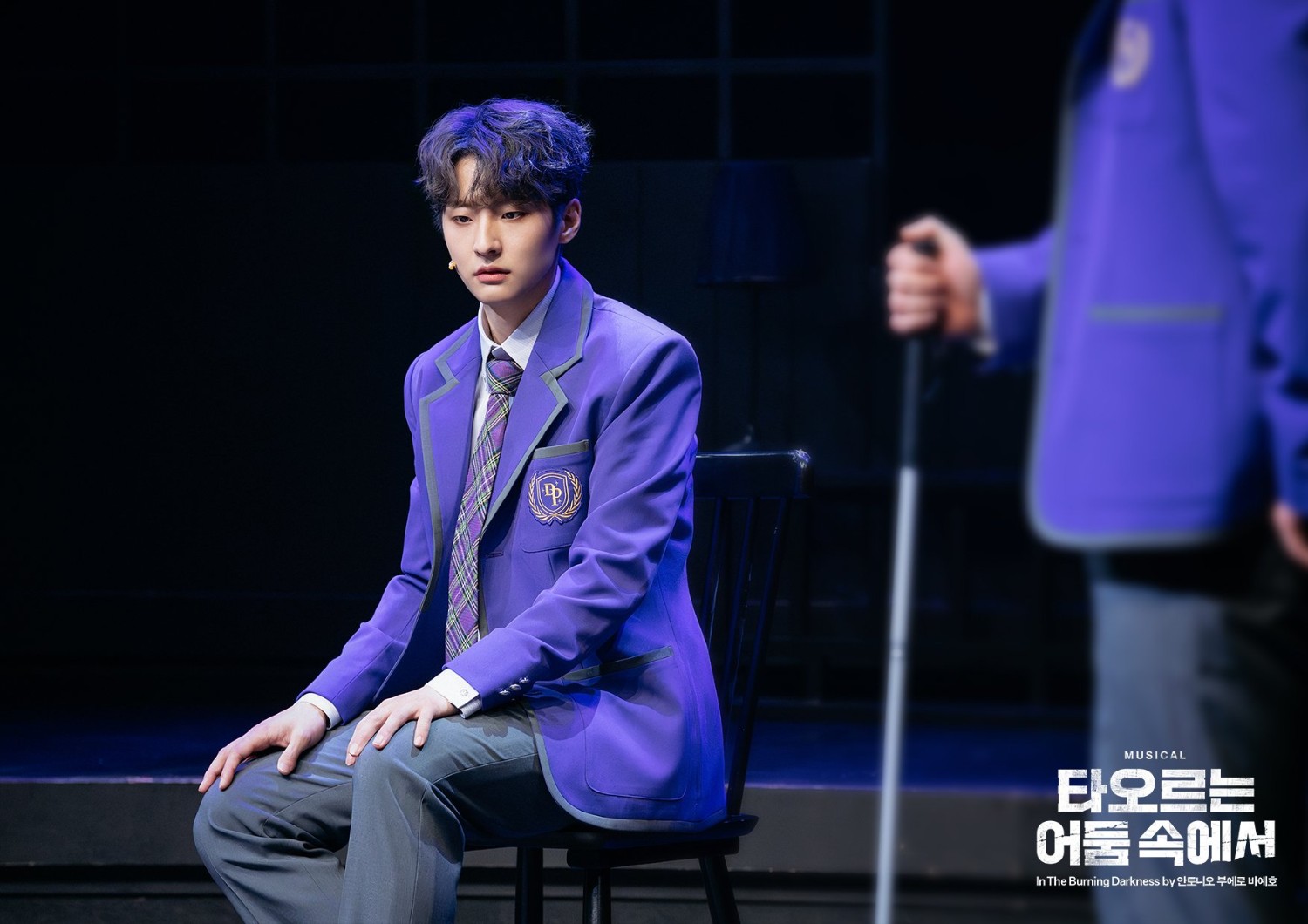
The play opens with the characters waiting for someone who has spent the school holiday experiencing the world outside. In the original, it is Miguelín who returns to the school. Because he has had direct exposure to the world beyond its walls, he is the first to empathize with Ignacio's perception of reality and is portrayed as someone who readily aligns himself with Ignacio's thinking — a setup that naturally explains why Miguelín is so susceptible to Ignacio's influence. In the musical, however, this role is transferred to Carlos. It is a striking shift: the very character who upholds the school's order and stands most forcefully against Ignacio is also the one who has experienced the world outside. This makes it possible to understand Carlos not as someone simply swayed by Ignacio's words, but as someone who already harbored doubts born of his own encounters with the outside world — doubts that Ignacio's presence brings to the surface. Ultimately, this adaptation lends far greater conviction to Carlos's inner conflict and transformation. It ensures that his change never feels abrupt, while also lending considerably more weight to the collision of the two ideologies in the latter half of the work, and to the choice Carlos ultimately makes.
Juana and Ignacio
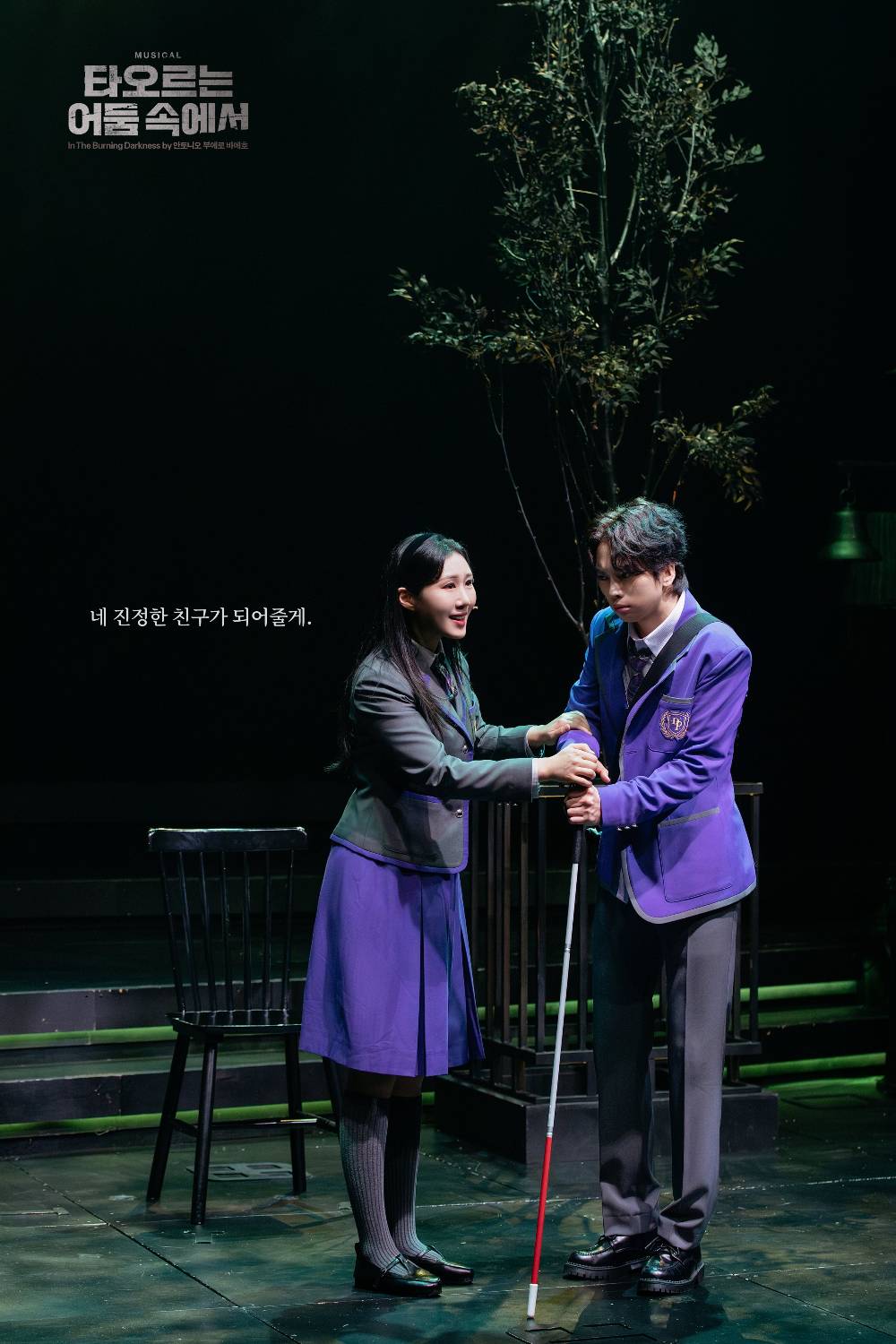
What I need is a "I love you" spoken with every part of you. "I love you, including your sorrow and your anguish. Not to live with you in a kingdom of hollow pleasures, but to share your suffering alongside you."
In the original, Juana tries to stop Ignacio from leaving the school by telling him, "What you need is a lover." In the musical, this is adapted to: "What you need is true love." This change also serves to soften some of the period-bound limitations of the source text. By replacing the word "lover" with the more universal value of "true love," the work expands its scope beyond any particular kind of relationship and speaks instead to questions of human compassion and understanding. It is an example of reinterpretation that preserves the original's core message while recasting it in a register that resonates with contemporary sensibilities.
Doña Pepita and Don Pablo
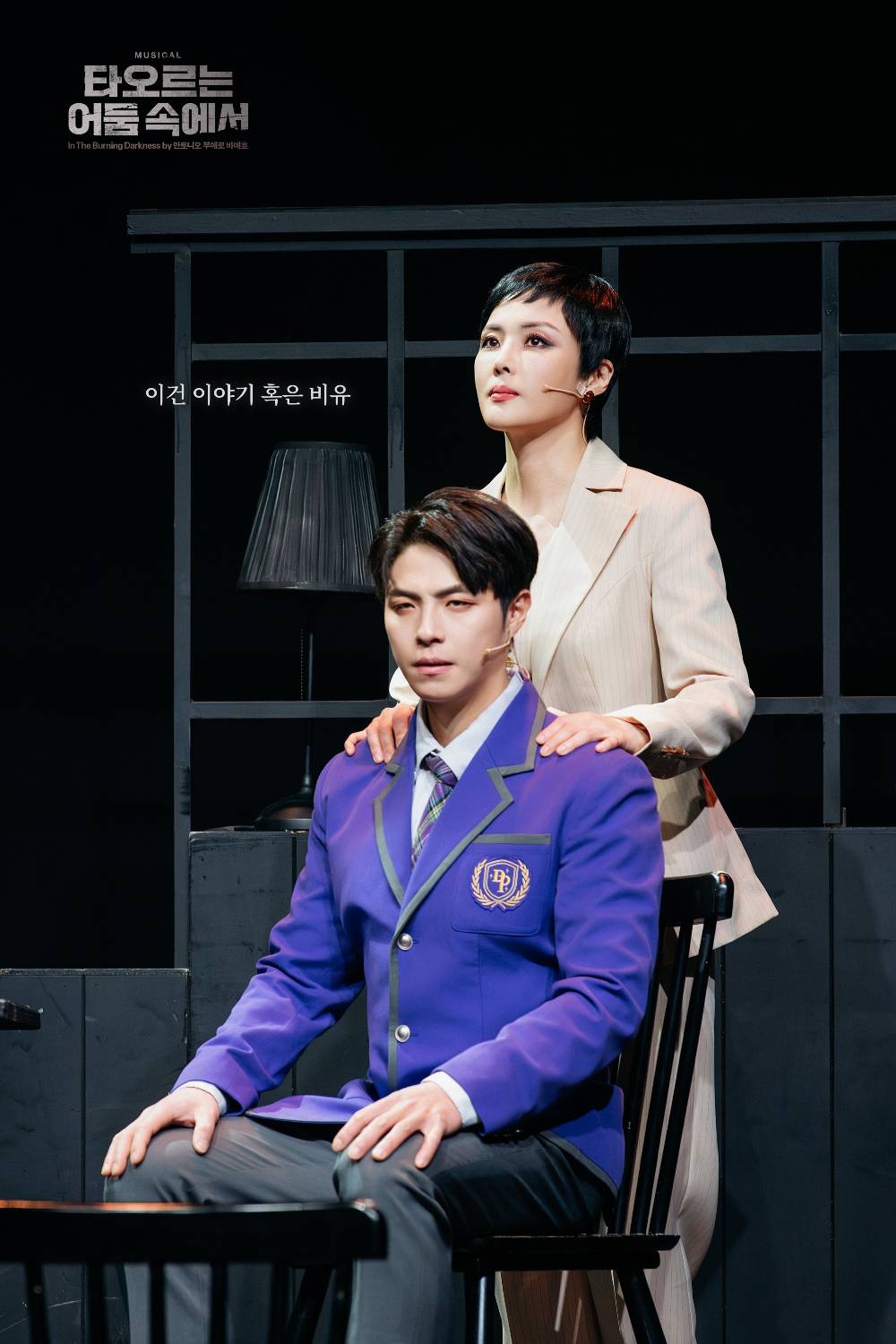
Another notable change is the absence of Don Pablo. In the original, the school's founder Don Pablo appears alongside Doña Pepita, but in the musical Don Pablo does not appear directly — his role is absorbed by Doña Pepita instead. This is not simply a matter of reducing the cast; it can also be read as a device that sharpens the work's message. The school relentlessly instills in its students the belief that, under the "Spirit of Iron," anything is possible and nothing is beyond reach. And yet the one who actually runs the school and serves as its representative is Doña Pepita — the only character with sight. This exposes the gap between the system that leads students to believe they can do anything and the reality of how that system actually operates. In other words, through this choice, the musical throws into sharper relief the contradiction between the ideals the Spirit of Iron proclaims and the reality that underlies them, as well as the inherent imperfections of the institution itself.
The Power of the Musical: Music
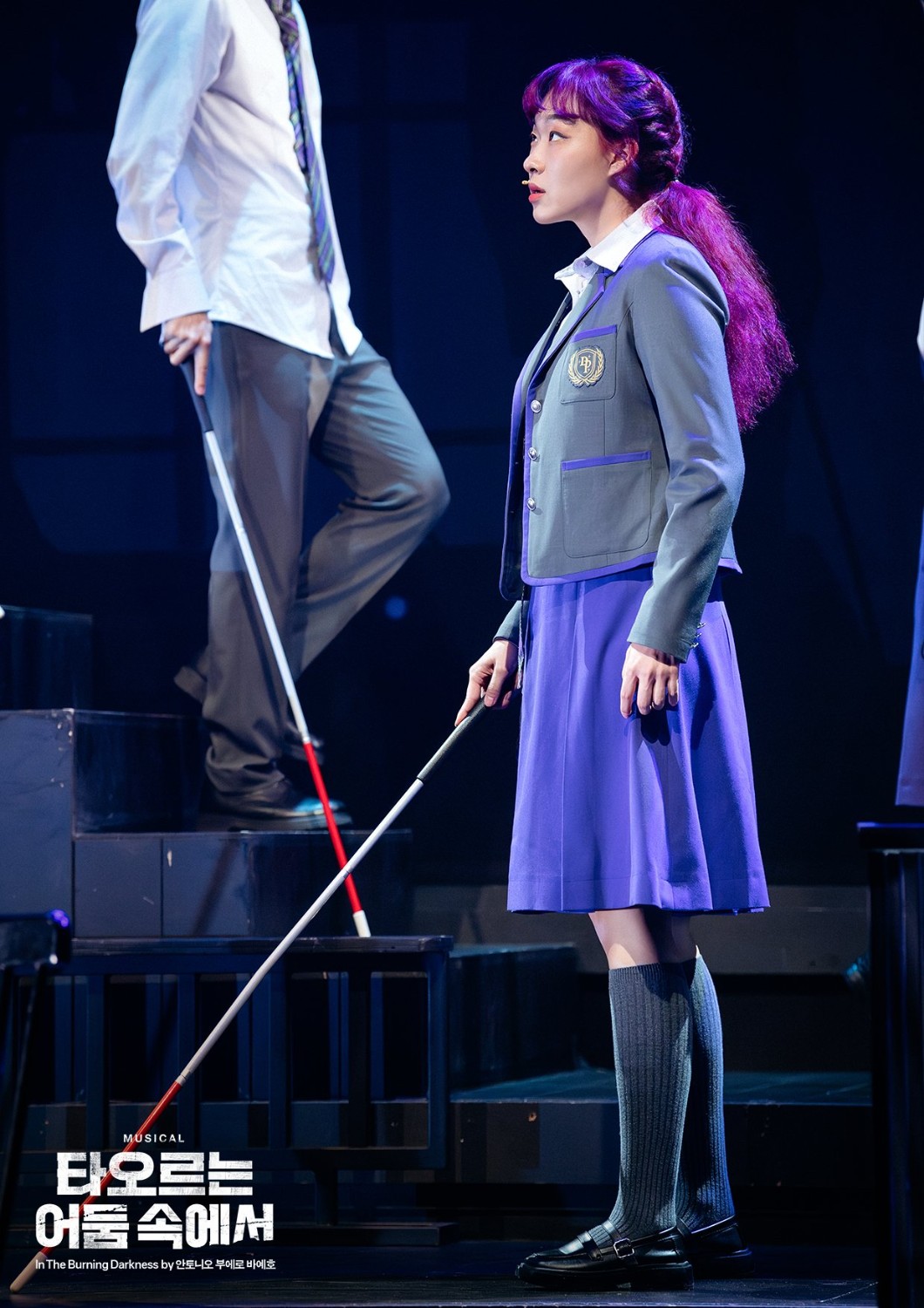
Where the play conveys its ideas through the characters' dialogue and monologues, the musical adds music and choreography to render those ideas in a far more three-dimensional way. The cane, which recurs throughout the production, is particularly striking — functioning not merely as a prop but as a symbol that tracks the shifting of ideologies. Early in the play, the cane belongs to Ignacio alone. But as students influenced by his thinking begin to pick up canes one by one, the object is transformed from a personal possession into a medium that embodies Ignacio's philosophy. Later, scenes in which the students use their canes in ensemble choreography, or close in around Carlos with them, generate a tension and visual impact that the play alone could never produce.
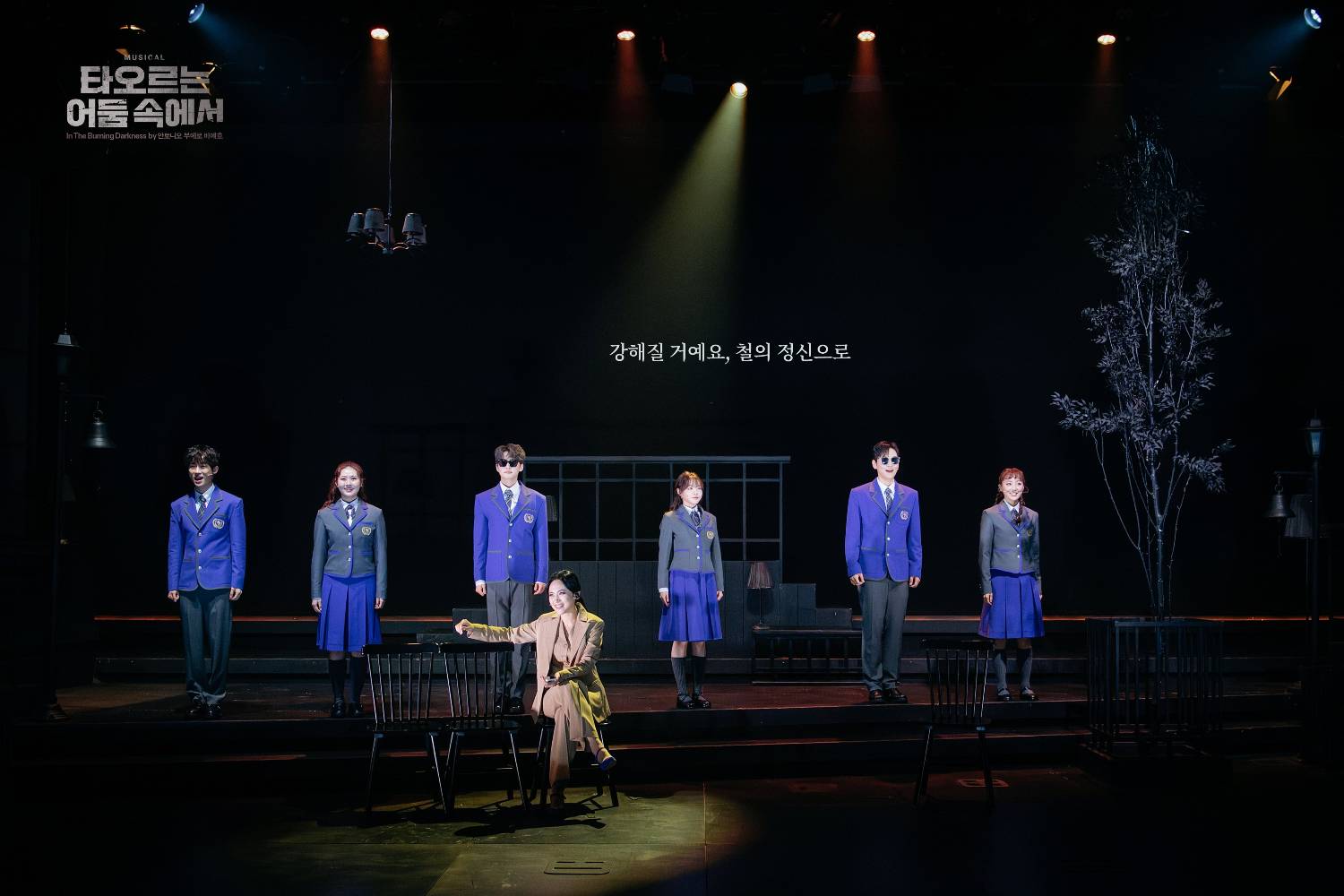
The musical numbers and ensemble choreography are equally effective in conveying the work's themes. A prime example is"Spirit of Iron,"which gives collective voice to the ideology the Don Pablo School espouses. The scene in which the students sing in unison, moving as one, powerfully embodies the order and discipline the school demands, as well as the conviction that "we can do anything." These moments take the ideas that were delivered through dialogue in the play and make them something the audience can see, hear, and feel directly — rendering all the more vividly the hold that the institution exerts over each individual within it.
When you come to the musical already knowing the original play, even a familiar scene, a single line of dialogue, or a small shift in a character's portrayal takes on new meaning as an act of adaptation. In the Burning Darkness is not a work that simply transfers the play to the stage — it is a work that rewrites, in the theatrical language of today, the questions the original first posed. That is precisely why the experience of encountering both the play and the musical together offers something that neither work alone can provide.
production photos©New Production