
〈Boom : Cosmic Human Symphony〉 and 〈Sak, Mang 02 – deathofDavid〉
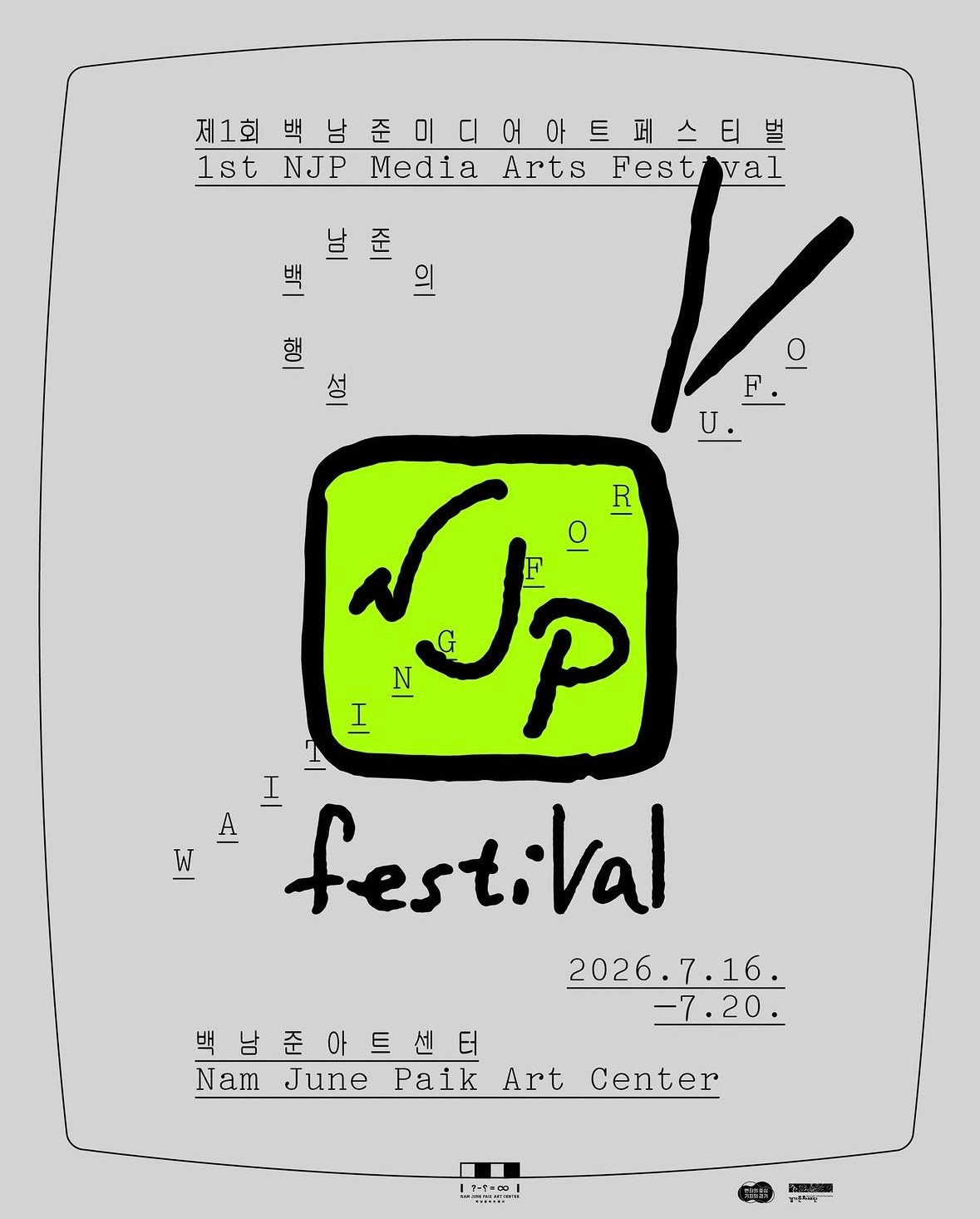
The 1st Nam June Paik Media Art Festival, inaugurated to mark the twentieth anniversary of Paik's death in 2026, presents itself as a new platform — one that sets his artistic spirit in motion as a living present rather than preserving it as a relic of the past. A festival that experiments with the culture of tomorrow by connecting art and technology, humanity and nature, the local and the global, it opened with two performances. One built the order of the universe into music; the other dismantled that order all over again. Though they spoke in entirely different languages, both works left behind a single shared sensation: not the sight of the moon, but the moon felt through the body.
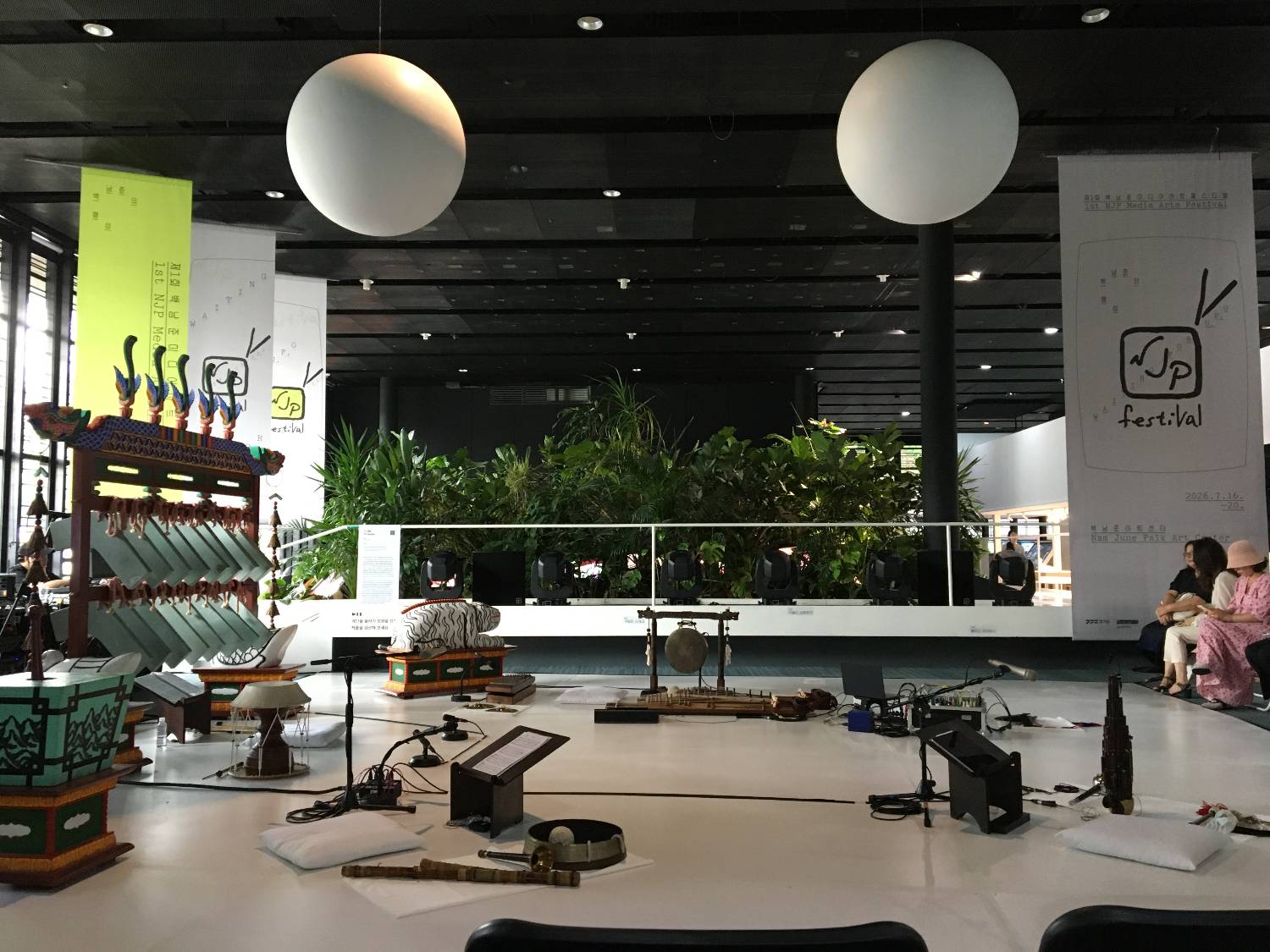
The first work, by Lim Yong-ju Future Sound Lab,〈Boom : Cosmic Human Symphony〉,fuses the philosophy of traditional music with contemporary electroacoustics to render an Eastern cosmology — yin and yang, the five elements, the seasonal nodes — into sound. The performance was structured in five movements: Yul (律), Sok (俗), Jeong (停), Rye (禮), and Hap (合). In practice, however, the boundaries between them were less distinct than continuous, the whole unfolding as a single long current. This could be read as intentional continuity, yet one was left wondering whether a slightly sharper articulation of each movement's individual character might have made the work's architecture more legible.
Even so, the sound the performance produced was genuinely new. Over an electronic bed that spread like the ambient score of a science-fiction film, the voices of traditional instruments — daegeum, janggu, gayageum, taepyeongso — were layered in one by one, conjuring a future that felt entirely familiar. The traditional was not absorbed into electronic music, nor was electronic music consuming tradition. The two worlds preserved their own grain while completing a single new sound together. The work made a persuasive case for the name "Future Sound" precisely because the attempt to let past and future coexist — rather than merely juxtapose them — came across as wholly natural.
The staging was equally striking. Two moon-shaped objects — almost the only objects on stage apart from the instruments — existed at first as simple white forms. As the performance progressed, light was gradually added, and they began to shift color in step with the flow of the sound. They were not elaborate devices, and it was precisely their restraint that allowed them to breathe so naturally alongside the music.
The venue for this opening performance, however, was somewhat limiting when it came to fully revealing the work's scenic aesthetic. Staged in the first-floor lobby of the Nam June Paik Art Center, the performance gained an openness that welcomed any passerby, but that same openness placed a ceiling on the immersion the work could sustain. The two moon objects, which held the eye throughout, are devices that come into their own — dramatically, unmistakably — when lit inside a darkened theater. Photographs from the CKL Stage production earlier this year show the moon's silhouette suspended in darkness, completing the cosmic atmosphere with far greater clarity. This is less a shortcoming of the work itself than a difference born of the open environment that an opening performance demands. If anything, the lobby setting allowed the performance to reach a wider audience and to announce the start of the festival in its own right. As someone encountering this work for the first time, it left behind a hope: to experience the world of "Boom" — resonance, reverberation — again someday, in full, within a theater where light and sound can do everything they are capable of.
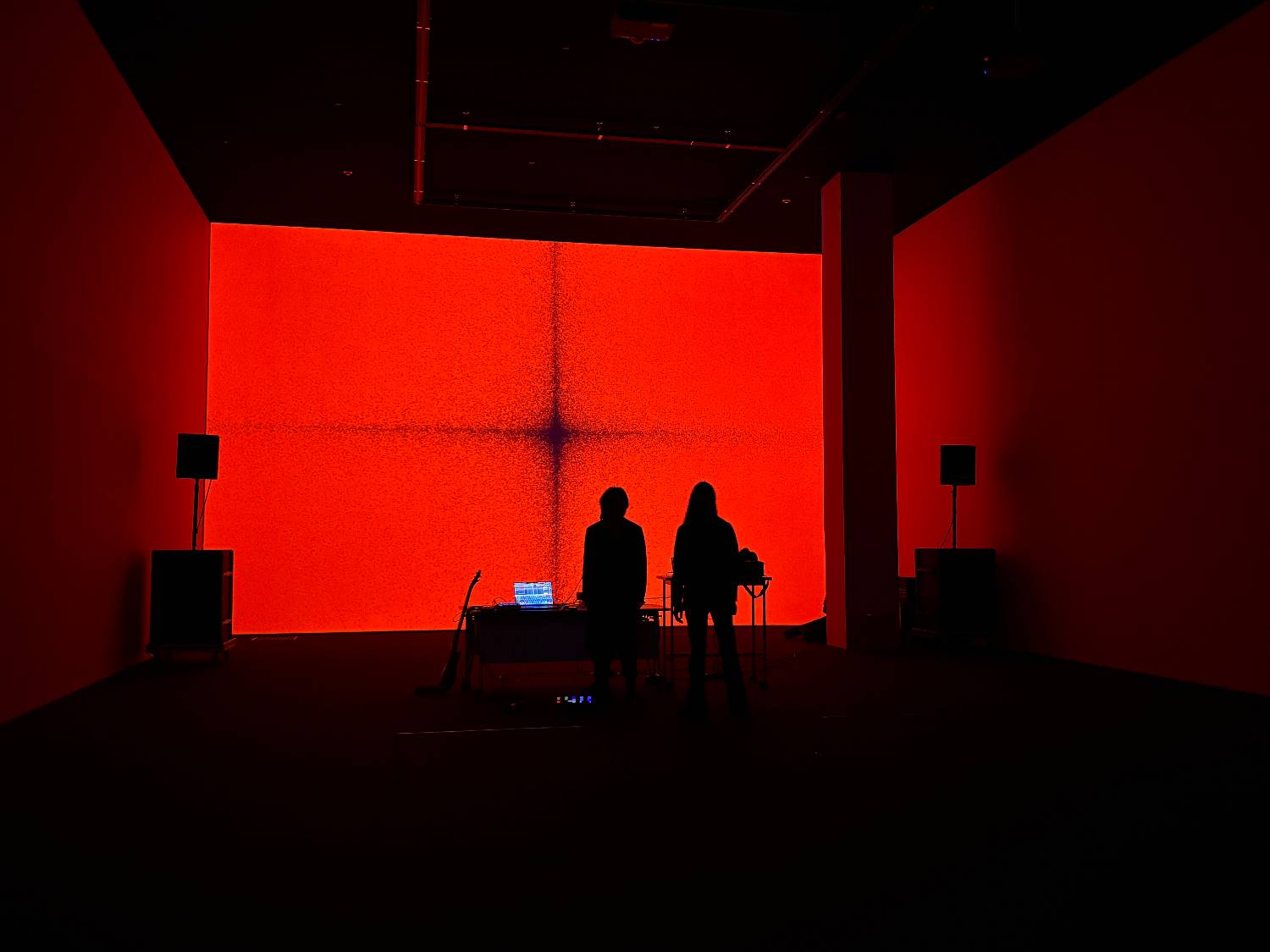
The second work,〈Sak, Mang 02 – deathofDavid〉,overturns the atmosphere entirely. Conceived as a companion piece to the exhibition Moons, it ambushes the audience mid-route through the gallery. A wall of red media art filling one side of an otherwise quiet space, the equipment arranged before it, and the lone silhouette of a performer — that was enough to transform the room from an exhibition hall into a planet that had crash-landed.
Once the performance began, the screen vibrated without pause. Images that started as light resembled planets and moons for a moment, then revealed the form of the David, then split apart like cells and scattered back into light. Distinct shapes appeared only to be immediately dismantled, then generated again, over and over. That ambiguity aligned naturally with the cyclical nature of the moon that the work was speaking about.
Above all, it was sound that governed this work. The program notes had warned of high-powered electronic noise, but the sound encountered in the room was far more intense than anticipated. The sharp noise did not stop at ringing in the ears — it traveled through the floor and into the whole body. Sitting on the ground during the performance, the vibration arrived in the body before it reached the ears, and in that moment a thought surfaced unbidden: if you could hear sound in outer space, wouldn't it feel something like this?
Sound, of course, does not exist in space as we know it. But this performance chose sensory imagination over scientific reproduction. The ear-piercing noise and the trembling images moved the audience from people gazing at the universe to bodies existing inside it. The "moon" the work proposed was no longer an object of contemplation but a sensation to be passed through physically. That experience connects naturally to the work's title: sak (朔), the new moon, and mang (望), the full moon. The moon endlessly repeats its cycle of birth and disappearance, and this performance, too, existed for a single day, a single showing, before it was gone. The very form of the performance resembled the lunar cycle, which made it an organic way to announce the opening of the exhibition Moons. The exhibition's theme, the performance's conceptual intent, and the images and sound that vibrated and dissolved all converged into a single sensation, leaving the audience with the experience of having felt the moon.
After watching both performances, moving through the exhibitions Moons andStars, Gua 卦made it even clearer that the opening performances had been something more than celebratory curtain-raisers. Neither performance explained the exhibitions, but both inscribed in the body a way of sensing them. Before ever entering the gallery, one's ears and body had already experienced "Nam June Paik's Planet." Paik spoke of the future through technology and art, but that future was always directed toward human sensation. The opening performances of the 1st Nam June Paik Media Art Festival likewise concentrated not on displaying technology but on unsettling the senses. What lingered in memory after the performances ended was not a particular scene or melody — it was the vibration that had passed through the body, the moon that slowly changed color as it followed the current of sound, and the sensation of a universe that flared into being for a moment and then was gone.
"What is art? Is it the moon? Or is it the finger pointing at the moon?
Letter from Binghamton, Nam June Paik, January 8, 1972