

Works that hold their value and move us no matter how much time has passed —classics.
What happens when the art of the past steps onto a stage?
Let's explore the world of artist musicals— productions that bring vanishing beauty back to life before our eyes and offer a window into the lives of those who created it.
Musical <Vincent van Gogh>
A musical that recreates the life of Dutch painter Vincent van Gogh through paintings, lighting, and video direction. Since its premiere in 2014, the production has run for six seasons through 2024 and toured regional venues, earning widespread love along the way.
The story begins with Van Gogh's younger brother Theo preparing a posthumous exhibition of his work. Drawing on the letters exchanged between the two brothers, the musical traces Vincent's life one chapter at a time.
The moment Van Gogh became a painter, his conflicts with family, the periods when he painted with the most furious intensity, the slow unraveling of his mind, and the final moments of his life — all of it unfolds like pages being turned, with Theo's story woven throughout as the constant presence behind every scene.
At both the opening and the close of the show, the contents of Vincent's letter return as a reprise number. The words are the same, but having witnessed Van Gogh's life firsthand, the experience of hearing them is entirely different.
A melody that felt cheerful and buoyant at the start comes back drenched in tears.
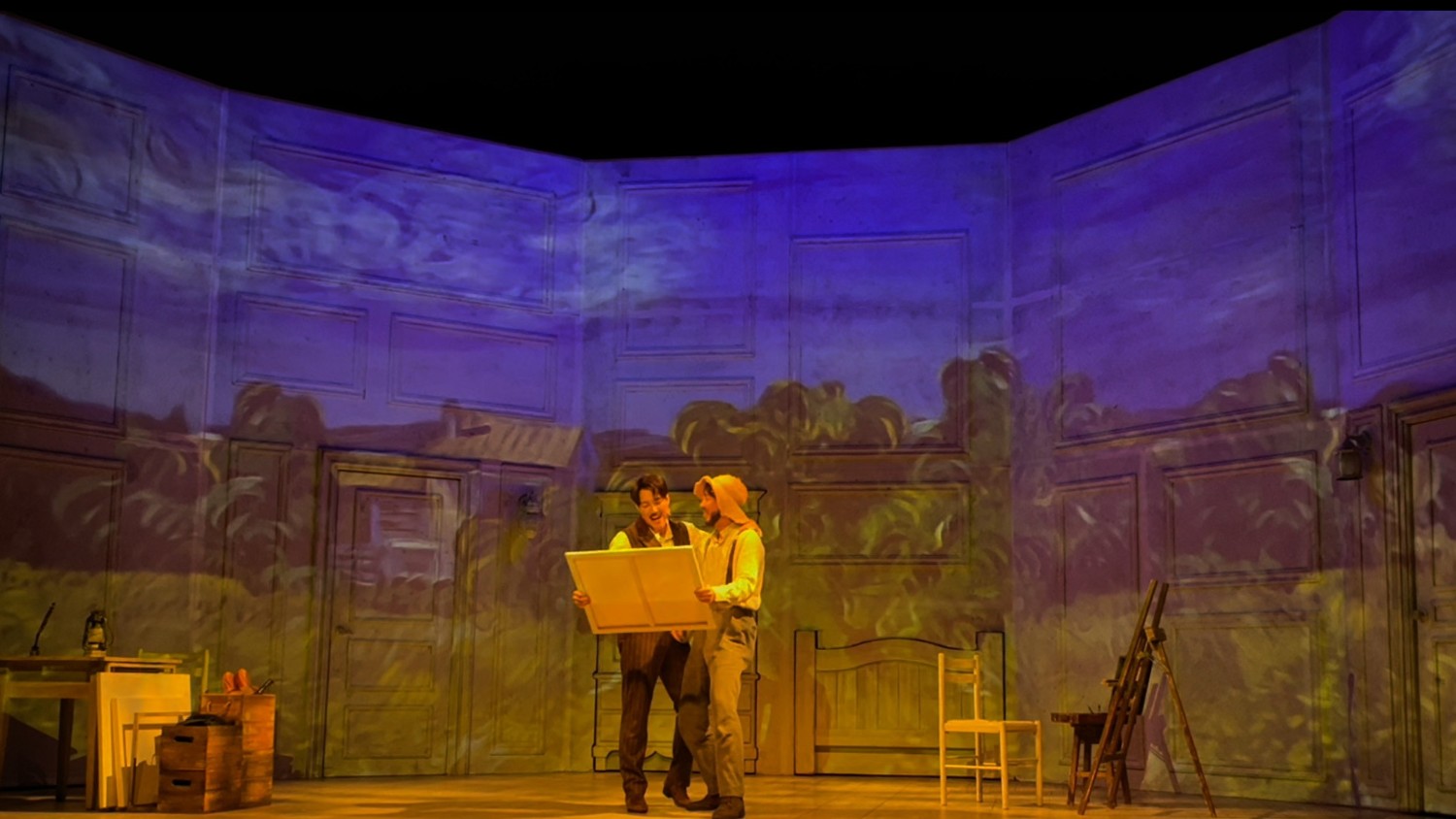
The base set is strikingly simple — bare white walls — yet what makes this production so memorable is the way 3D projection technology transforms those walls and the floor into vivid, three-dimensional tableaux drawn straight from Van Gogh's paintings.
The Potato Eaters, Sunflowers, his portraits, Almond Blossom, The Starry Night, Wheatfield with Crows— countless masterworks are fully recreated as the backdrop of the stage,
and paired with lyrical numbers and stunning visuals, the emotional power of Van Gogh's art is conveyed in full, drawing audiences deep into his world across 110 minutes.
People will remember me as a madman — and that's fine. The paintings will remain. (from the lyrics of M16, Musical <Vincent van Gogh>)
Musical <Rachmaninoff>
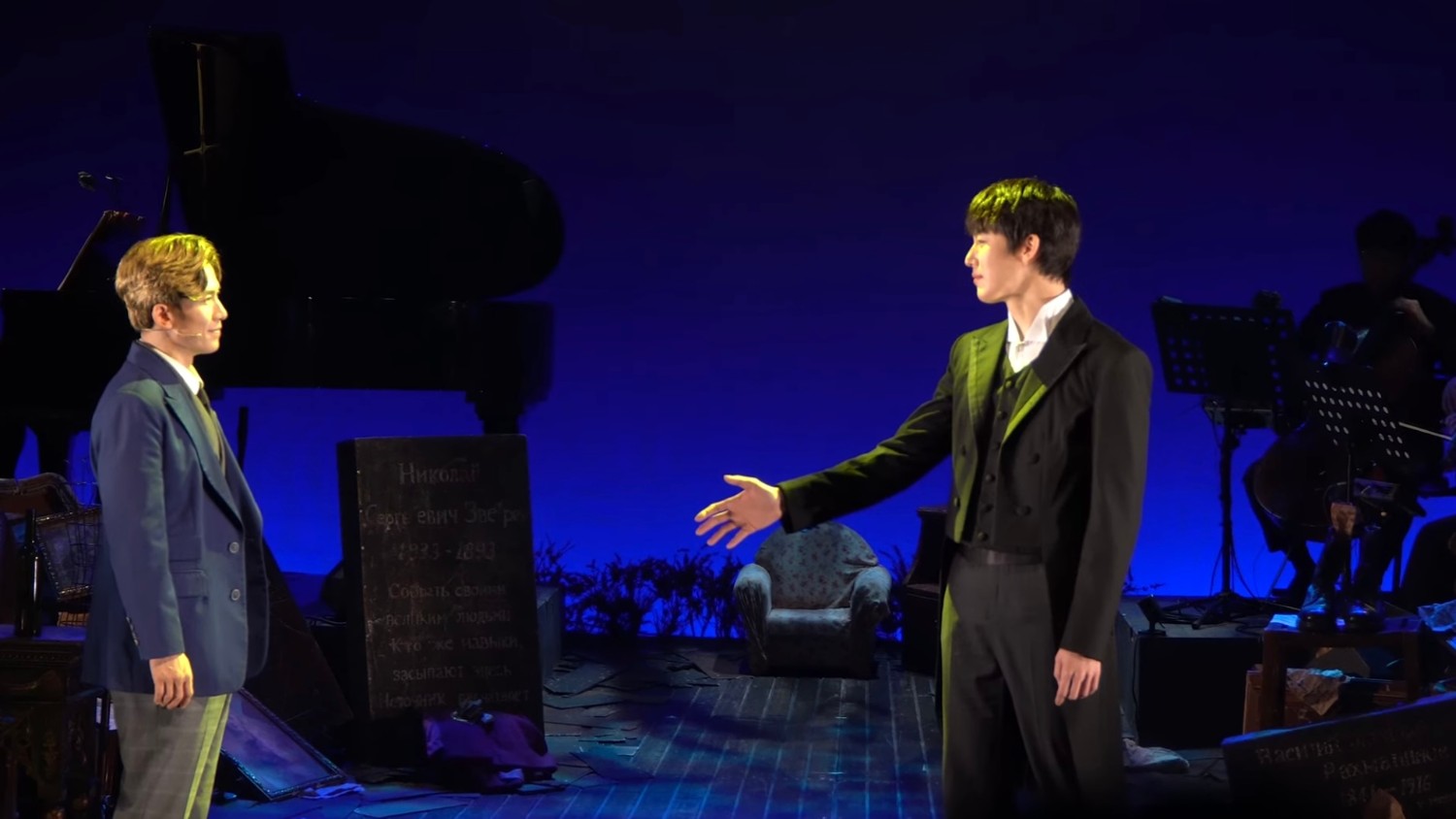
A musical about the life of composer and pianist Sergei Rachmaninoff . Since its premiere in 2016, the production completed its sixth run at the end of last year and has continued to draw a devoted following.
The story unfolds around Rachmaninoff — a brilliantly gifted composer of great promise — who retreats into seclusion after the catastrophic failure of his Symphony No. 1. At his brother's request, psychiatrist Dr. Nikolai Dahl comes to treat him, and together they begin to retrace the memories of Rachmaninoff's past in search of the source of his trauma.
At first dismissive and closed off, Rachmaninoff gradually begins to open up, stepping one foot at a time back into the past that has held him captive.
The audience is invited to feel it all alongside him: why he wrote the symphony, why he fell apart in his obsession with it, the wounds of his past, and the long road back to composing again.
Through the comfort the two men offer each other in that process, the audience receives those emotions in full.
The musical is adapted from real events and real figures, with its numbers drawing on melodies including Rachmaninoff's Piano Concerto No. 2.
After the curtain call has fully concluded, the pianist and orchestra perform a brief rendition of the concerto.
Piano Concerto No. 2 was the work that brought Rachmaninoff enormous success at the time, and it is widely known thathe dedicated it to Dr. Nikolai Dahl, the man who helped him find his way back— a fact that deepens the emotional resonance of the piece considerably.
Audience members already familiar with Rachmaninoff's music will find themselves recognizing the melodies in the numbers quite frequently throughout the show.
(The reverse holds true as well — if you go to hear an orchestra perform Rachmaninoff after seeing the musical, the music will feel like an old friend.)
Musical <Rachmaninoff> still has several regional performances remaining this year, and Rachmaninoff orchestral concerts are being performed at various venues as well — seeking them out together is highly recommended.
You are already someone who is loved. (from the dialogue of Musical <Rachmaninoff>)
Musical <L'art reste>
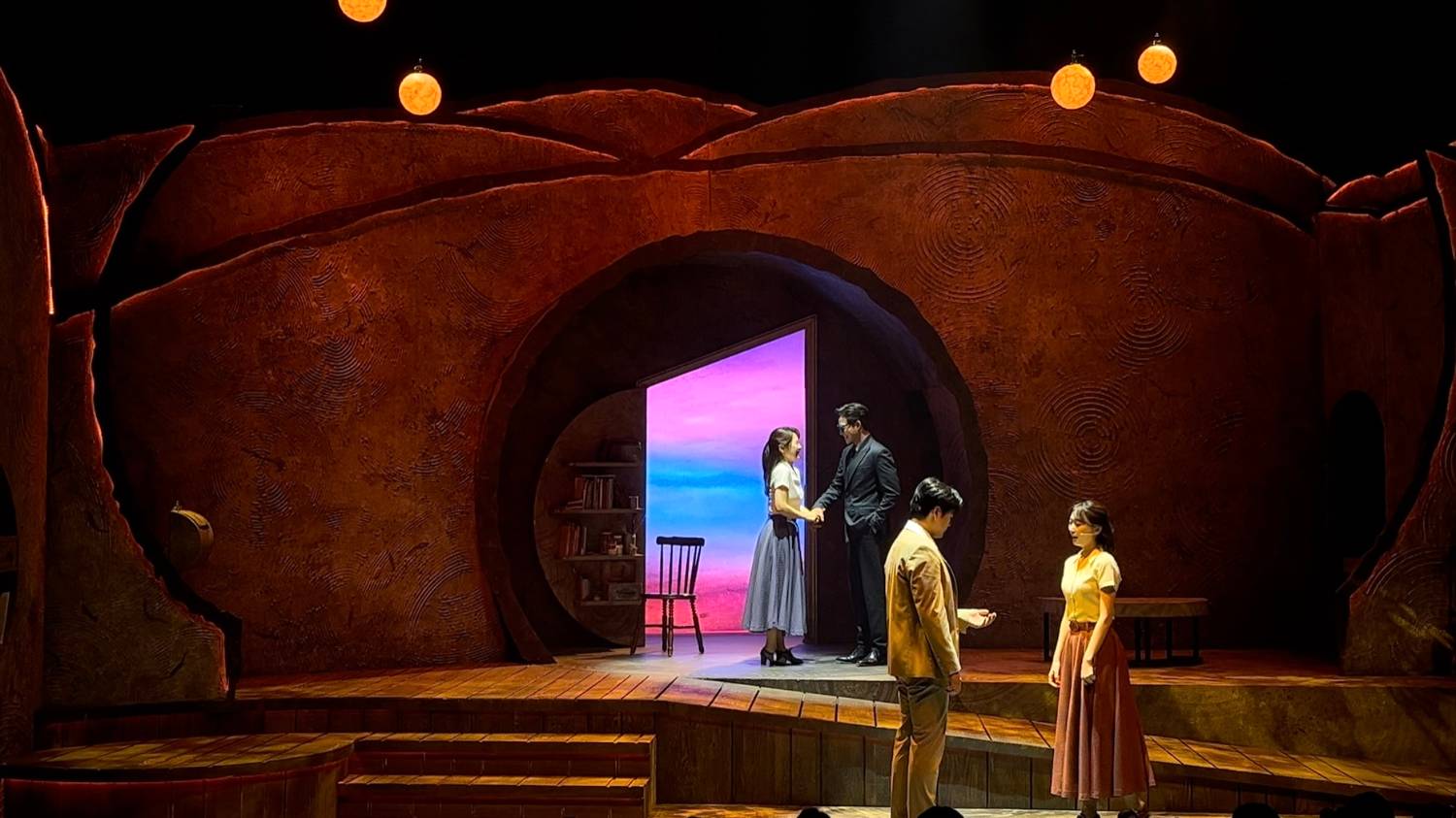
A work about Korean artists cannot be left out. The final production to introduce, Musical <L'art reste>, tells the story of Yi Sang, a poet of the Japanese colonial period, abstract painter Kim Whanki,
and Kim Hyang-an (born Byeon Dong-rim), the woman whose life was intertwined with both of theirs.
Scenes told from Kim Hyang-an's perspective show us an elderly woman on the threshold of death; scenes told from Byeon Dong-rim's perspective show us a young woman setting out on life's journey for the first time. Through these two vantage points, the musical presents the art and the stories that accompanied each moment of her life, moving step by step toward a single point of convergence.
The poetYi Sang, who shared her early life, was a literary figure of colonial Joseon who pursued a surrealist body of work.
Passages from Yi Sang's works —"Strange Reversible Reaction," "Wings," "Record of a Final Encounter"— can be found woven into the lyrics, and overlapping squares of light are used to evoke another of his works,"Architectural Infinite Hexahedron".
After Yi Sang's passing, the painterKim Whanki— who shared the later years of her life — was a pioneer of abstract artin Korea.
From the moment he first met her, through his years of artistic work in Paris, to the end of his life, the artworks he created are expressed through video and lighting.
The forms of his art — rendered in dots and lines — are mirrored in lighting that spreads and blooms as dots and lines across the stage, while signature works such as"Where, as What, Shall We Meet Again"are presented through video and the lyrics of the numbers.
In the course of the story, Kim Hyang-an looks back on the painful choices of her past, speaks with those she has loved, and comes to understand that all of it — every moment — has made her into art itself. As the people who walked beside her disappear one by one, she wrestles with the question of what remains when a person is gone, and slowly, she finds her own answer.
She offers comfort to her younger, hurting self, and at the same time trusts in the self that will keep walking her own path. Through her, the audience finds an answer to that question — and receives a comfort of their own.
People leave, but art remains. (Les gens partent, mais l'art reste) (from the lyrics of M21, Musical <L'art reste>)
It might be a good idea to start witha production currently in performance.
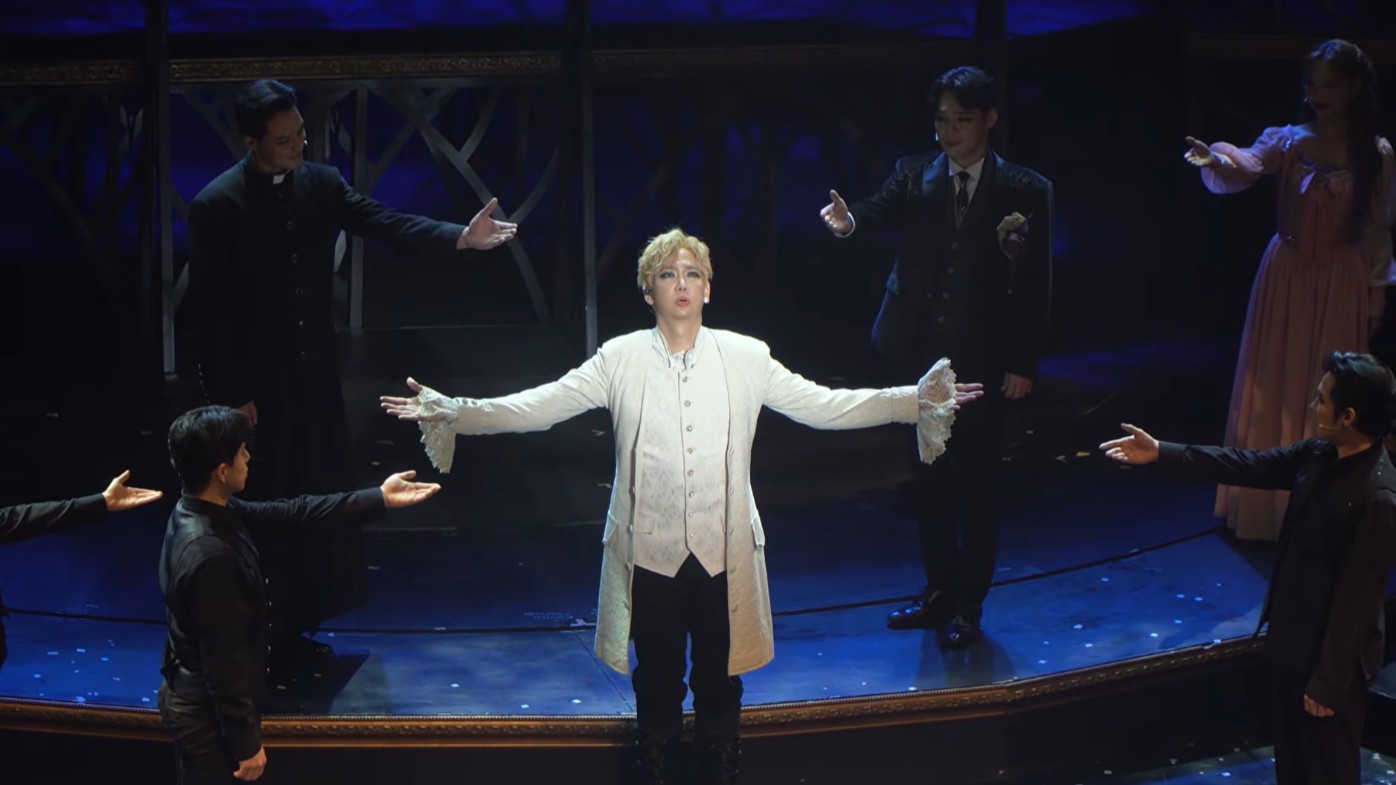
Currently running at the Main Hall of Hongik University Daehangno Arts Center,Musical <Paganini>explores the lesser-seen life of Niccolò Paganini, the violinist known as "the Devil's fiddler." It is a production defined by relentless scene changes, sweeping lighting, and above all else, the live violin playing of an actual violinist — a performance that overwhelms everything around it.
Also currently running at the Grand Theater of Sejong Center for the Performing Arts,Musical <Beethoven>takes as its subject the life of the composer we all know so well —Beethoven.
Finally, currently running at Yes24 Art One Hall 2,Musical <Stravinsky>portrays Russian composer Igor Stravinsky'sinner anguish over music and the realities of his life through a character called "Shoom" — the voice within — giving form to a wide range of emotions. It is also the final installment in Showplay's three-part biographical series on the Russian ballet company Ballets Russes, following <Nijinsky> and <Diaghilev>.
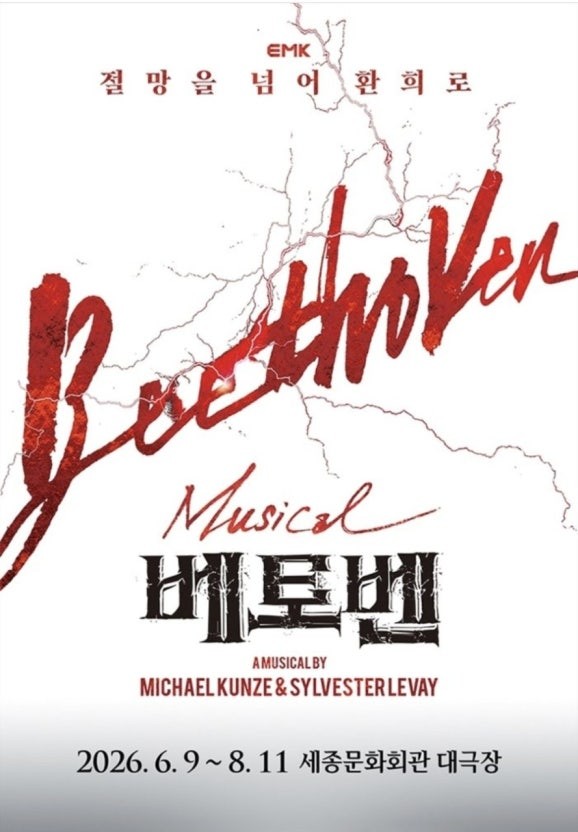
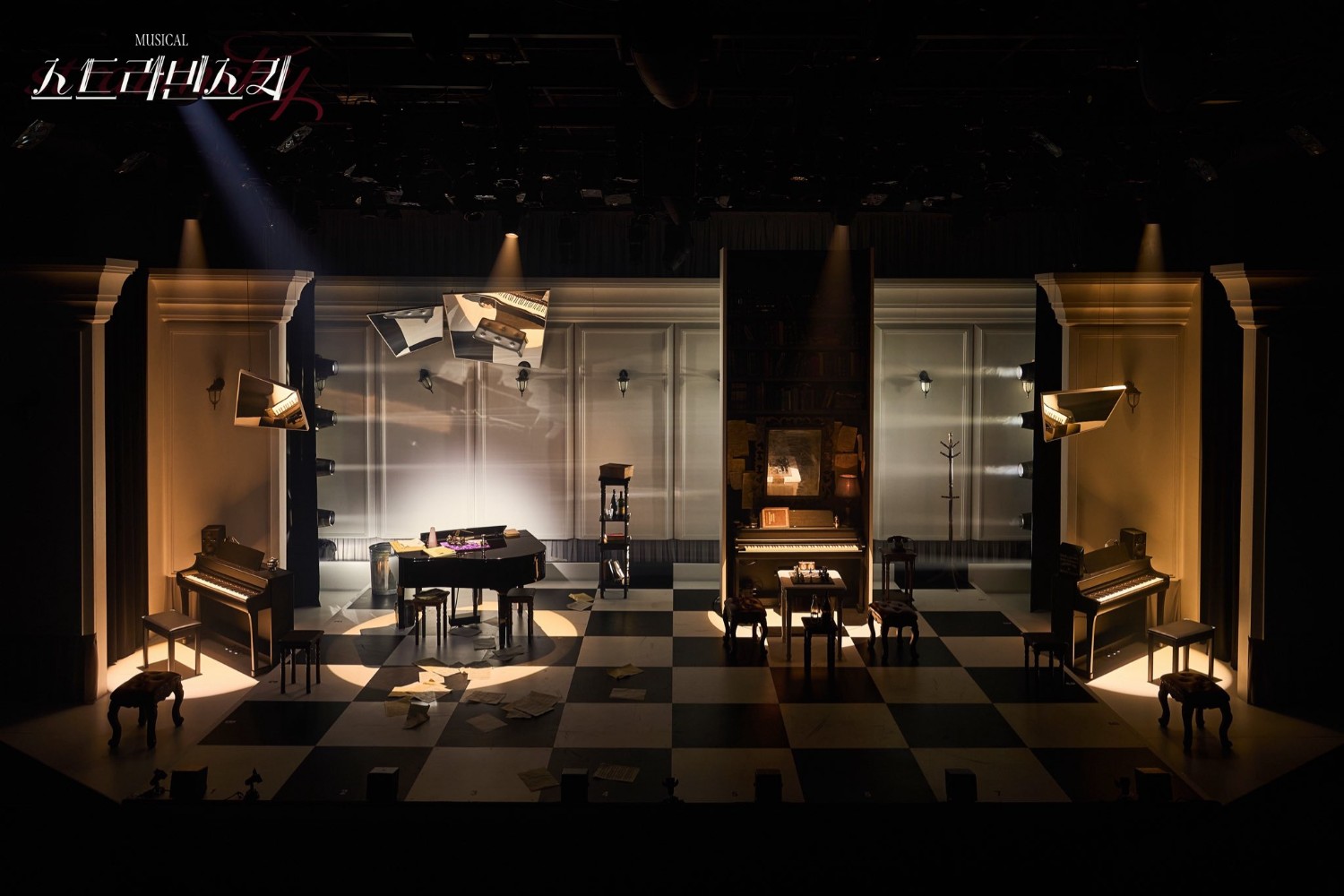
In the case of composers, the music they actually wrote is borrowed as the musical's numbers; in the case of painters, their works are projected onto the stage through lighting design —
art that once existed in the world is brought back to life on a stage in the present.
After seeing a production, seeking out the art itself — visiting a gallery, attending an orchestral concert — would make for a wonderful extension of the experience.
Beyond simple recreation, what makes artist musicals so compelling is that they take the visible and invisible dimensions of a single human life and unfold them as one complete dramatic work.
Rather than only the brilliant, luminous image we have always known, let us listen to the story of a person who lived as a human being— and hear what they have to say.
nnyoung
