
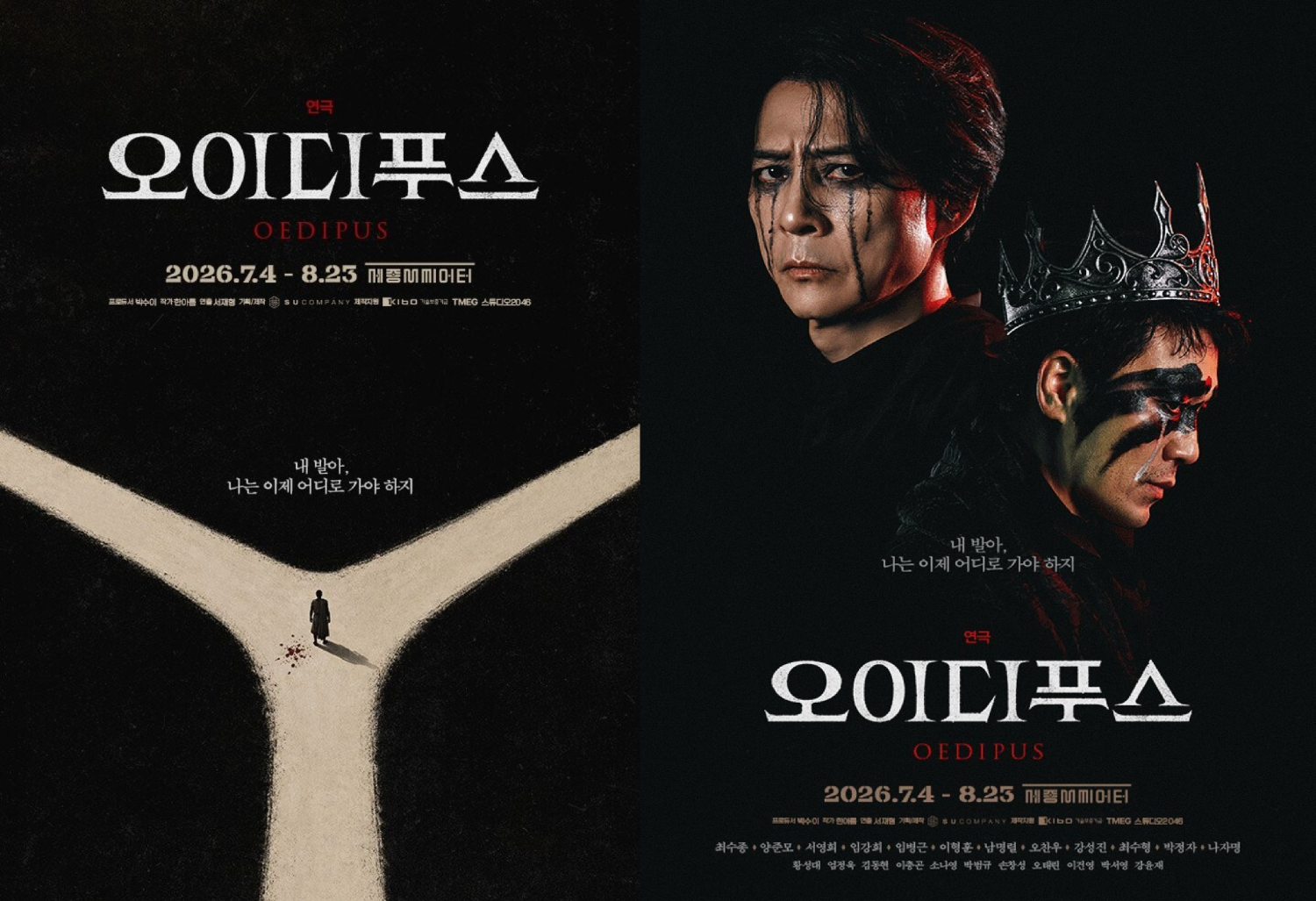
Oedipus is one of the most celebrated works in the classical Greek tragic canon. This year, it was also selected as the designated script for entrance examinations at two institutions: the Korea National University of Arts and Sejong University. Perhaps because the production offers a rare chance to watch accomplished actors up close, there were noticeably large group bookings from arts high schools and university theatre programmes.
Before the curtain rose, I walked into the theatre carrying a quiet curiosity: how would this towering, universally familiar classic be reinterpreted, and what, if anything, would be meaningfully different from what had come before?
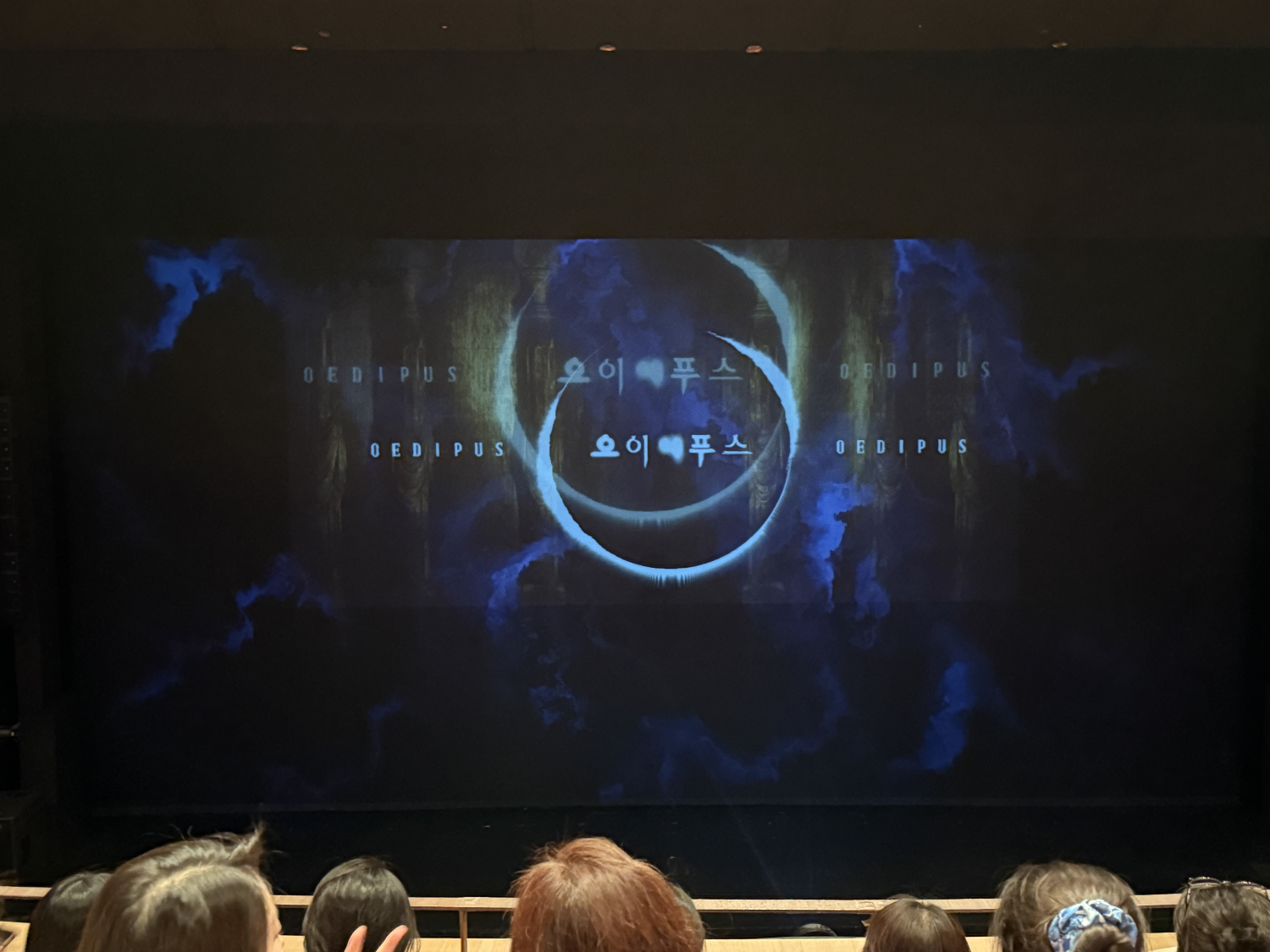
As the poster suggests, the "crossroads" is the central motif running through the entire production. Early in the play, the same lighting configuration seen in the poster floods the stage, and the Chorus Leader enters to announce the three diverging paths of fate — the moment the drama truly begins.
Watching from the centre of the second-floor seating made it easy to take in the lighting and staging at a glance and follow the flow of the play. The stalls at Sejong M Theatre have a relatively shallow rake, which can create some sightline issues, whereas the second-floor seats benefit from a steeper angle that makes for a more immersive experience.
I first encountered the "Oedipus complex" in a general-education course during my university years. What has stayed with me, however faintly, is the rough outline: a cursed child kills his father, falls in love with his mother and marries her, then, consumed by guilt, blinds himself. This production traces the life of King Oedipus in considerably finer detail, unfolding with care — and in chronological order — exactly how this tragedy came to pass.
#Coryphaeus
Also impressive was the production's faithful realisation of the Chorus Leader, a formal device of ancient Greek theatre. Whenever the narrative grew a little difficult to follow, the Chorus Leader would step forward and sharpen our understanding with lines such as "Jocasta — a woman who never ages." It was a pleasure to encounter this theatrical form again after so long, and at times the interjections felt almost like the cues of a Chinese opera or the exclamations of a pansori singer, adding a welcome layer of vitality to the drama.
#Mirror
The most memorable piece of direction was a scene in which the King and the Chorus Leader move in perfect mirror symmetry. What made it especially striking was the conceit that the Chorus Leader exists as a presence visible only to the audience, invisible to the other characters on stage.
Imagining the stage from a bird's-eye view, there was a striking moment in which the King and the Chorus Leader moved off to one side while Creon and the townspeople dispersed to the other — a 2:2 formation splitting left and right as they entered and exited. The lighting tracked these movements precisely, making the characters' fates and conflicts vivid and immediate.
← King + Chorus Leader ----
/ ---- Creon + Townspeople →
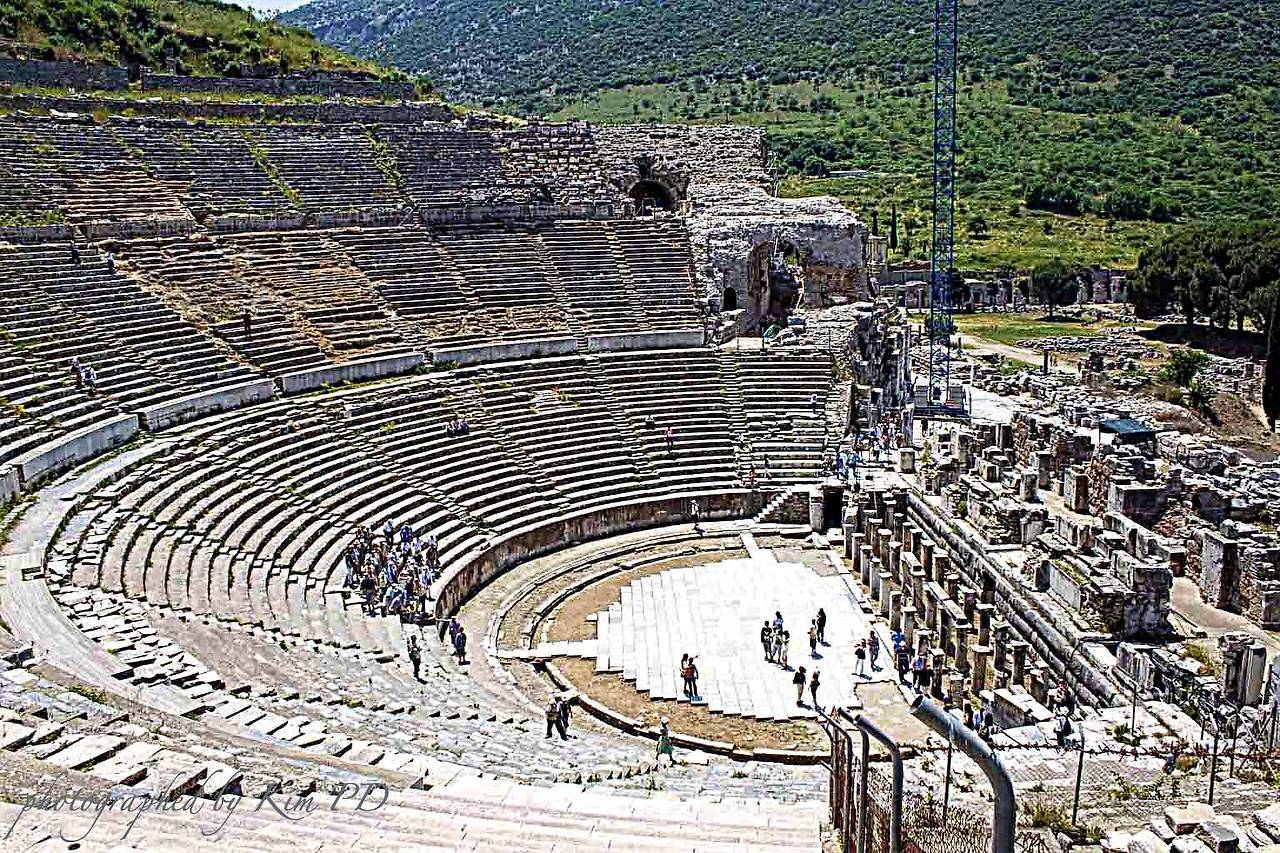
Watching with the ancient Greek amphitheatre in mind will allow you to enjoy this production all the more fully. Perhaps for that reason, I found myself thinking that rather than a conventional rectangular proscenium stage, the work might come into its own even more in an open, thrust-style space — somewhere like the Chungmu Art Center Black Box — where its distinctive character could breathe more freely.
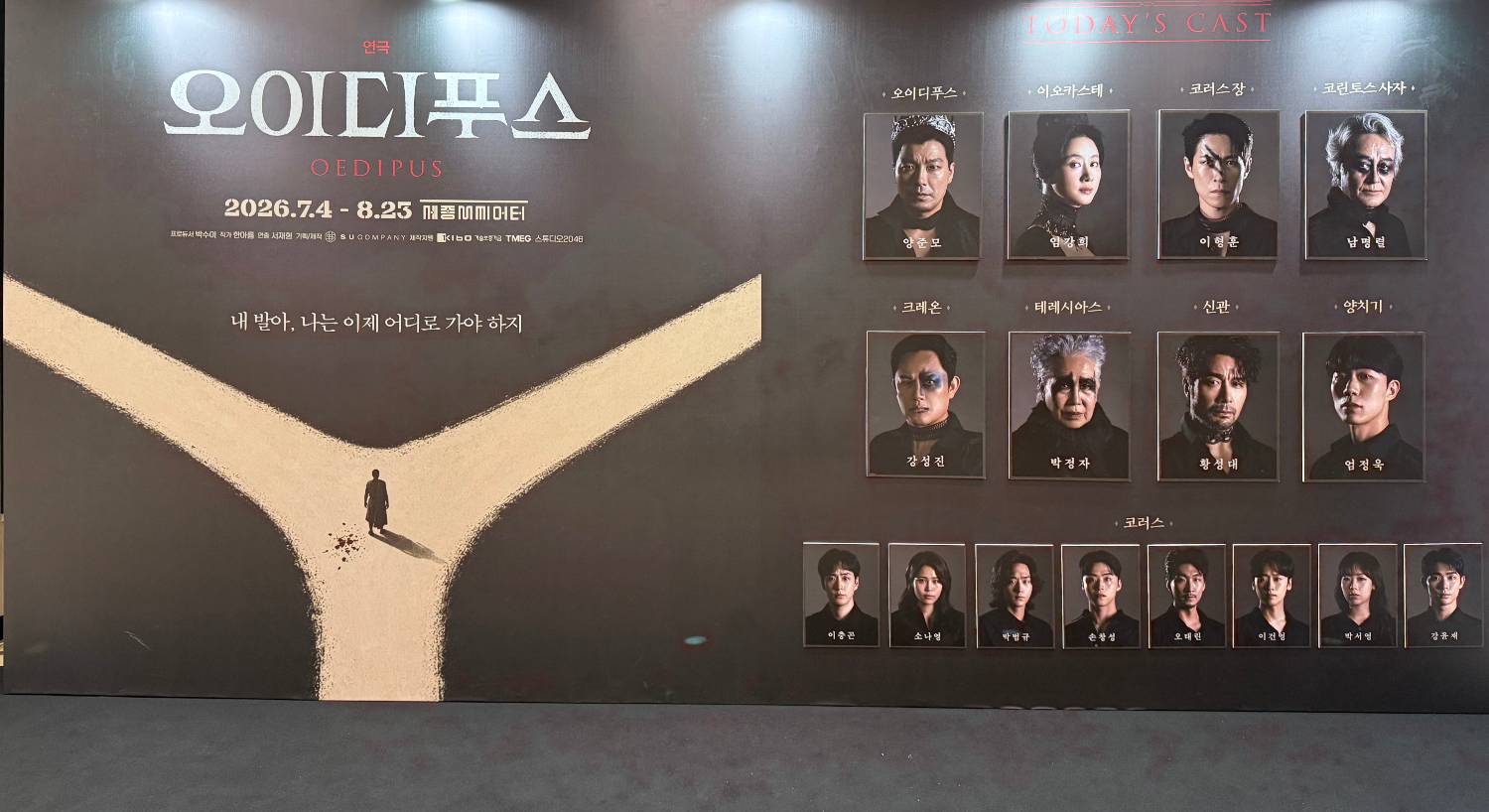
#Cast
Reinterpreting a widely known classic for a contemporary audience, and layering familiar characters with fresh readings — both must have been considerable challenges for everyone involved.
The actor playing Oedipus, Junmo Yang(양준모), left a strong impression on me in the musical The Man Who Laughs, and he was equally commanding here, holding the centre of the drama with total conviction. If you are deciding which performance to book, I would wholeheartedly recommend a show with Junmo Yang in the role. He embodied the king's authority and perceptiveness, his compassion for his people, and the anguish caught between all of these — he was, in every sense, the king himself.
Hyunghoon Lee(이형훈), as the Chorus Leader, was particularly wonderful to watch: he remained fully in character all the way through the curtain call, sustaining those graceful, deliberate gestures to the very end. Seeing the torrent of emotion and tears in the latter half of the play was genuinely heartbreaking.
Myungryul Nam(남명렬),as the Messenger from Corinth, made the most of every brief appearance, providing exactly the kind of seasoning a production like this needs. Given how dark and tragic the play is throughout, the pacing could easily have grown oppressive — but moments of levity were woven in at just the right intervals, making this a production you could laugh through as well as weep through.
I have seen small and mid-scale theatre productions in Daehangno fairly regularly, but this was my first experience of a large-scale play with a full ensemble chorus, and I was struck anew by the particular energy that comes from a large cast and the sheer scale of a big-stage production. If you want to be swept up in a storm of classical drama in the space of ninety minutes, I will close by recommending a visit to Sejong M Theatre.
Production photos ©Su Company
