

When you go to see a musical and take a close look at the casting board, you'll often notice the word "swing" written in small print next to the ensemble performers. Most of us know these performers simply as "covers" or "substitutes." But in many cases, people don't actually know what role they play within a production.
In truth, being a cover actor is no lightweight position — if anything, it demands the deepest understanding of the show and an exceptional level of care.
These days, there's a growing trend of emerging performers making their industry debut as swings, but make no mistake: it's a role that comes with enormous responsibility.
Today, I'd like to talk in earnest about the role and meaning of covers — the last puzzle piece of any production.
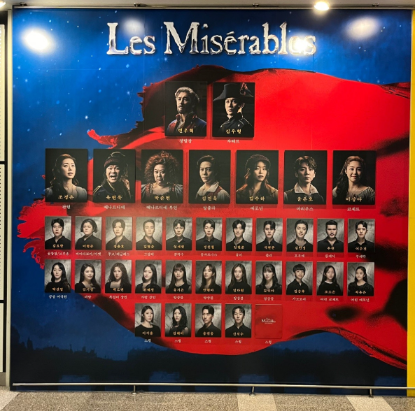
A cover is, quite literally, a performer who steps in and takes over a role when the originally cast actor is unable to go on due to an emergency or unavoidable circumstance. In recent years, double, triple, and even quadruple casting has become common practice, so it's relatively rare for a cover to be called upon for a principal role — but in the past, when single-cast productions were the norm, this happened with some regularity. I actually witnessed this firsthand at a 2024 production of Les Misérables, when one of the ensemble members had to withdraw for health reasons mid-run and a cover (swing) stepped in to deliver a remarkable performance.
Covers are broadly divided into three categories.
Understudy
An "understudy"is a performer who appears onstage in a different role (e.g., as part of the ensemble) during regular performances, but steps into a principal role when that actor is unable to go on. Often referred to simply as an "under," it's a role many theatregoers are at least somewhat familiar with.
In other words, an understudy performs a different role on a day-to-day basis, but is given the opportunity to go on when a vacancy arises in the role they're covering. One real-life example: in 2020, actor Lim Jeong-mo stepped in to perform the role of Van Helsing in the musical Dracula. In Korea, audiences tend to choose productions based on specific casting combinations, which means understudies don't get called upon as often — but on Broadway, where shows run daily, it's a perfectly common occurrence.
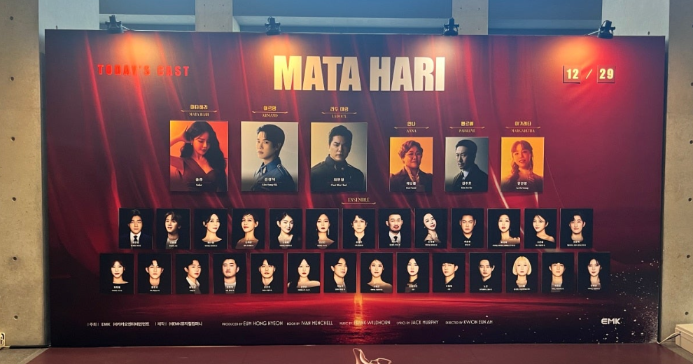
Swing
When an understudy moves out of their regular role to cover a principal, the vacancy they leave behind is filled by a "swing."
What sets a swing apart from an understudy is this: while an understudy prepares to cover a single specific role, a swing must be ready to step into multiple different roles at any given time, because there's no telling which part they'll be called upon to fill. That's precisely why it's such a demanding position — one that requires a performer who is equally proficient in acting, singing, and dance.
Alternate
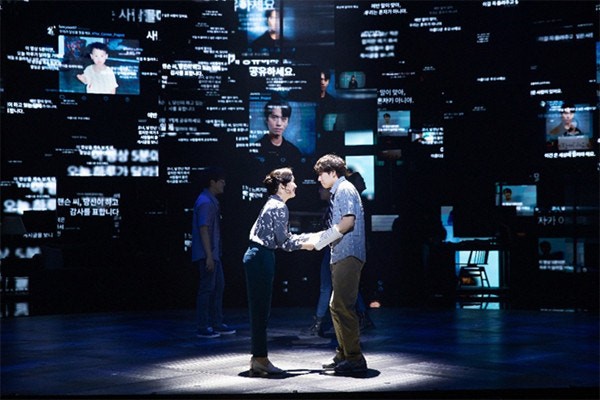
Unlike the understudy and swing, an alternate is a role that comes with a degree of guaranteed stage time. For instance, actor Kim Gang-jin, who was cast as a swing in the 2024 musical Dear Evan Hansen, simultaneously served as the alternate for the role of Jared — taking on both responsibilities at once.
Think of it this way: an alternate performs less frequently than the principal cast member, but their stage time is guaranteed. If a production runs for 50 performances, an alternate might appear in roughly 10 of them.
Depending on circumstances, an alternate can sometimes transition into a full principal casting. Kim Gang-jin being officially cast as Jared in the revival of Dear Evan Hansen is a perfect example of exactly that.
In this way, the role of a cover carries the significance of that final puzzle piece in a production — the piece that, when something doesn't quite fit, steps in to make everything whole.
I once heard a story. About ten years ago, during a run of the musical Phantom, the role of Christine Daaé suddenly became vacant. During rehearsal, the understudy covering Christine was working through the material when she reached a lyric from one of the show's signature numbers, "My Home" —
a line that goes something like: "I've waited a lifetime for this, I've whispered it over and over" —
and she broke down in tears. Because for her, that moment was exactly that: a chance to finally live out a dream, a new beginning she had been quietly waiting for all along.
There are, in fact, many performers who started out as covers and have since gone on to become beloved figures in the Korean musical theatre world. One of the most prominent examples is actor Hong Gwang-ho.
Hong Gwang-ho made his mark as the understudy for Chris in Miss Saigon, catching the attention of countless industry insiders — and eventually making his way to the West End, the very birthplace of musical theatre,
where he captivated audiences around the world in the role of Thuy. A cover role, then, is never just a cover. Every performer who takes on that responsibility carries with them an immense sense of duty.
The next time you're at a show and glancing over the casting board, I hope you'll take a moment to look beyond the ensemble listing — and pay a little extra attention to the names marked "swing" or "alternate."
And with that, I'll close this piece by looking forward to the day when the next new star makes their entrance.