
In 2026, the British touring production of SIX arrived at Düsseldorf's Capitol Theater as part of its German tour, where I encountered the musical once again. Transforming the stories of Henry VIII's six wives into an electrifying 80-minute pop concert battle, SIX has become a worldwide phenomenon. From the perspective of a student researching Public History—a discipline that brings history beyond academia and into everyday life—the musical stands as one of the most compelling examples of how history can be popularized while remaining thoughtfully represented.
What made this performance particularly memorable, however, was the person I experienced it with. A self-proclaimed "science student to the core," my companion first encountered SIX in the tenth grade. That single performance sparked an unexpected fascination with British history, eventually leading them to write an English research paper on the musical for the Abitur, Germany's university entrance qualification. Watching someone with no prior interest in history discover the Tudor period through popular culture—and then pursue that curiosity in an academic context—was, to me, one of the strongest and most inspiring examples of what Public History seeks to achieve. At its heart, Public History is about making history accessible beyond academic institutions, allowing the public not only to encounter the past but also to engage with it as active participants.
This principle is often described as shared historical authority:the idea that history should not remain the exclusive domain of scholars but become something that broader audiences can interpret, question, and make meaningful for themselves. My companion's experience is a vivid illustration of this principle in action, demonstrating the remarkable Public History value that SIX embodies.
From His-story to Her-story: Challenging the Master Narrative and Restoring Agency
Since the 1970s, historical scholarship has increasingly moved beyond the master narrative centered on powerful rulers and heroic figures. Instead, historians have turned their attention to the voices long excluded from traditional accounts—women, minorities, and other marginalized groups—through what is often described as history from below.
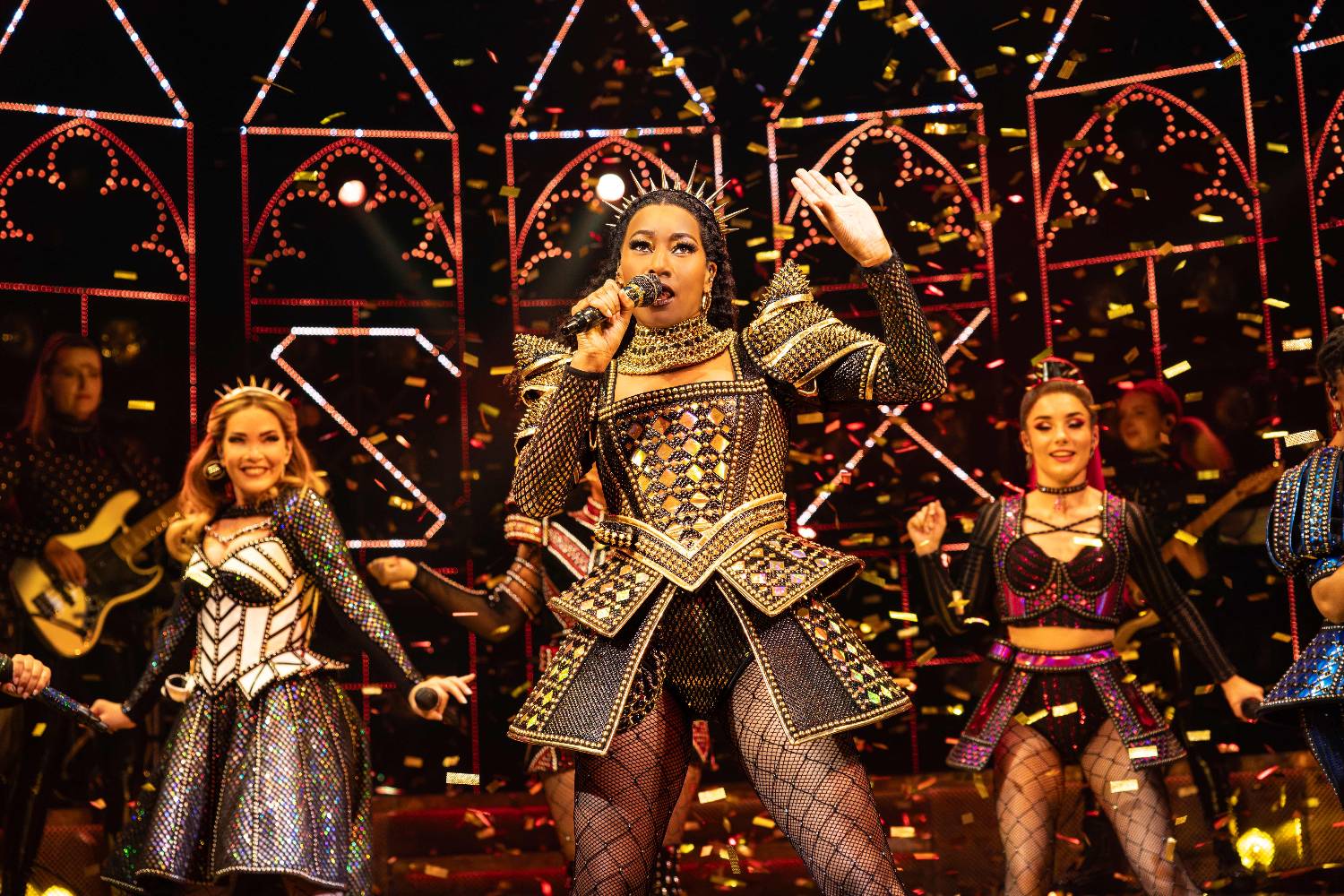
SIX brings this very shift to the stage. Rather than retelling the history of Henry VIII—the absolute monarch whose story has dominated popular memory—the musical deliberately pushes him to the margins. Instead, it hands the microphone to the six queens, women who have so often been reduced to little more than "Wife No. 1, 2, 3…" By allowing each queen to tell her own story, SIX transforms His-story into Her-story, restoring voices that history had long overshadowed. The familiar rhyme—"Divorced, beheaded, died, divorced, beheaded, survived"—summarizing the queens' tragic fates is remixed into a twenty-first-century anthem of girl power. A tragedy that unfolded five centuries ago becomes a celebration of resilience, restoring agency and identity to women whose stories had been erased beneath the weight of political power.
The Ethics of Representation: Turning Tragedy into Pop Performance
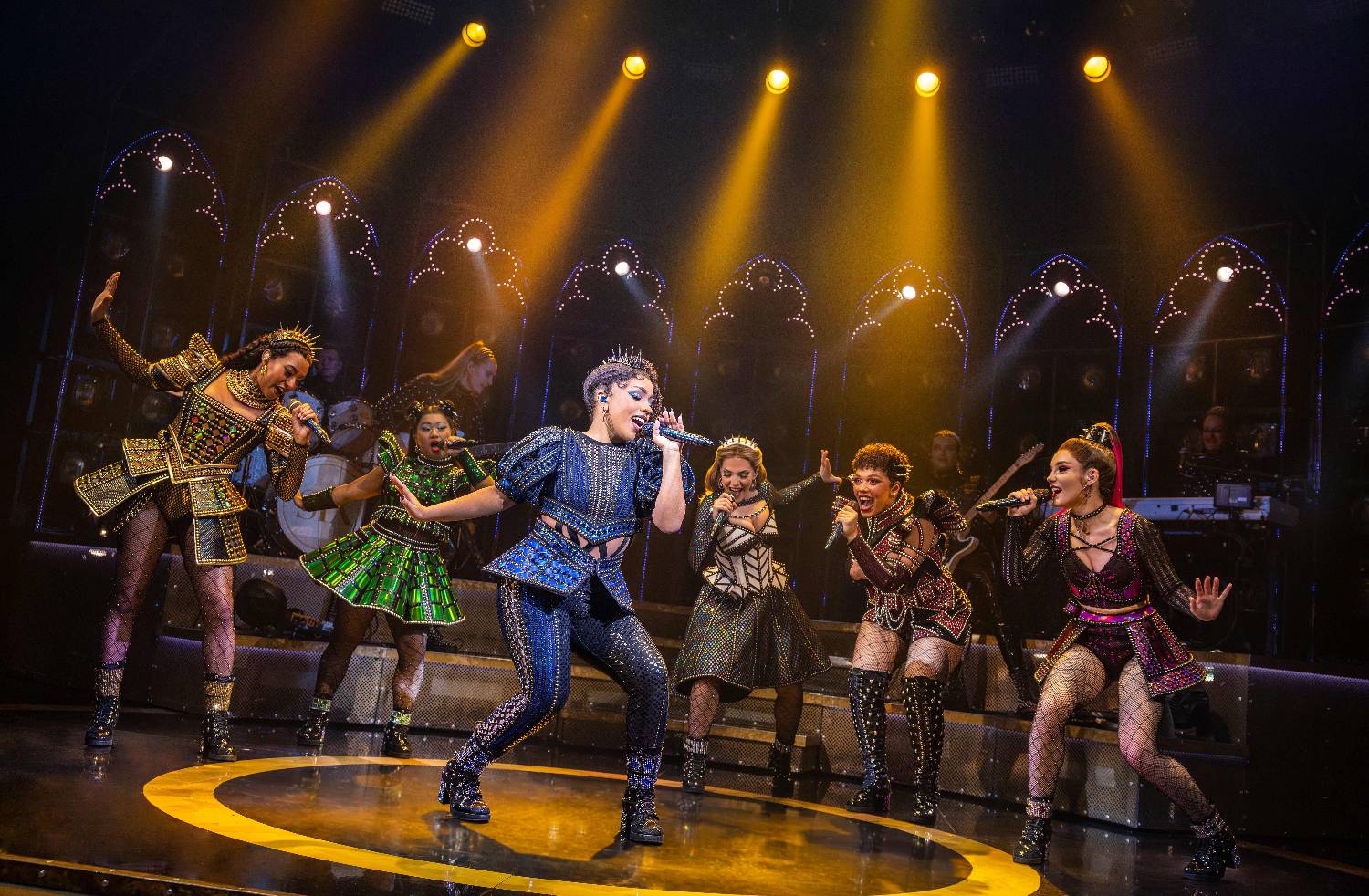
But can histories marked by execution and death truly be transformed into an exhilarating pop concert? The possibility that historical suffering might be reduced to entertainment is one of the ethical dilemmas Public History practitioners must continually confront. Yet SIX manages to avoid that pitfall entirely. Rather than crossing an ethical line, the production was praised by Germany's dpa news agency as "a feminist firework display that successfully celebrates the strength of women." Its success lies in where it places its focus. Instead of objectifying tragedy or sensationalizing violence, SIX reimagines its six queens through characters inspired by contemporary pop icons such as Beyoncé, Adele, and Ariana Grande. Their stories become narratives of empowerment, in which the women themselves reclaim control over lives historically defined by oppression. Equally significant is the musical's deliberate shift in perspective. The man responsible for the violence is stripped of narrative dominance, while the voices of the women who endured it move to the center of the stage. This change in viewpoint offers an important ethical model for historical representation, suggesting that the key is not whether painful history can be staged, but whose perspective the story ultimately privileges. Reconstructing dominant historical narratives from the margins is not only creatively refreshing; it also illuminates the blind spots left behind by conventional history, making the past richer, more inclusive, and ultimately more meaningful.
The Way of Bringing History to the Stage
The broader significance of this "History Remix" for Public History brings us back to the Abitur story. With its pop-star aesthetic and fast-paced 80-minute format, SIX attracts younger audiences and theater newcomers who might never have considered watching a historical musical. But the experience doesn't end when the curtain falls. Through Spotify, TikTok, and online fan communities, audiences continue engaging with the show's soundtrack, sharing performances, and, often without realizing it, teaching themselves about the Tudor dynasty.
German critics have recognized this achievement. Bayerischer Rundfunk described the musical as "a danceable double lesson in history and liberation," while the Süddeutsche Zeitung praised it with the remark, "If only every history textbook were like this musical!" By translating one of history's darkest chapters into the language of contemporary pop music, SIX demonstrates how thoughtful creative planning can inspire even those who once had no interest in history to step willingly into the past. It is a remarkable example of how entertainment can become a gateway to historical curiosity rather than a distraction from it.
History—LIVE!
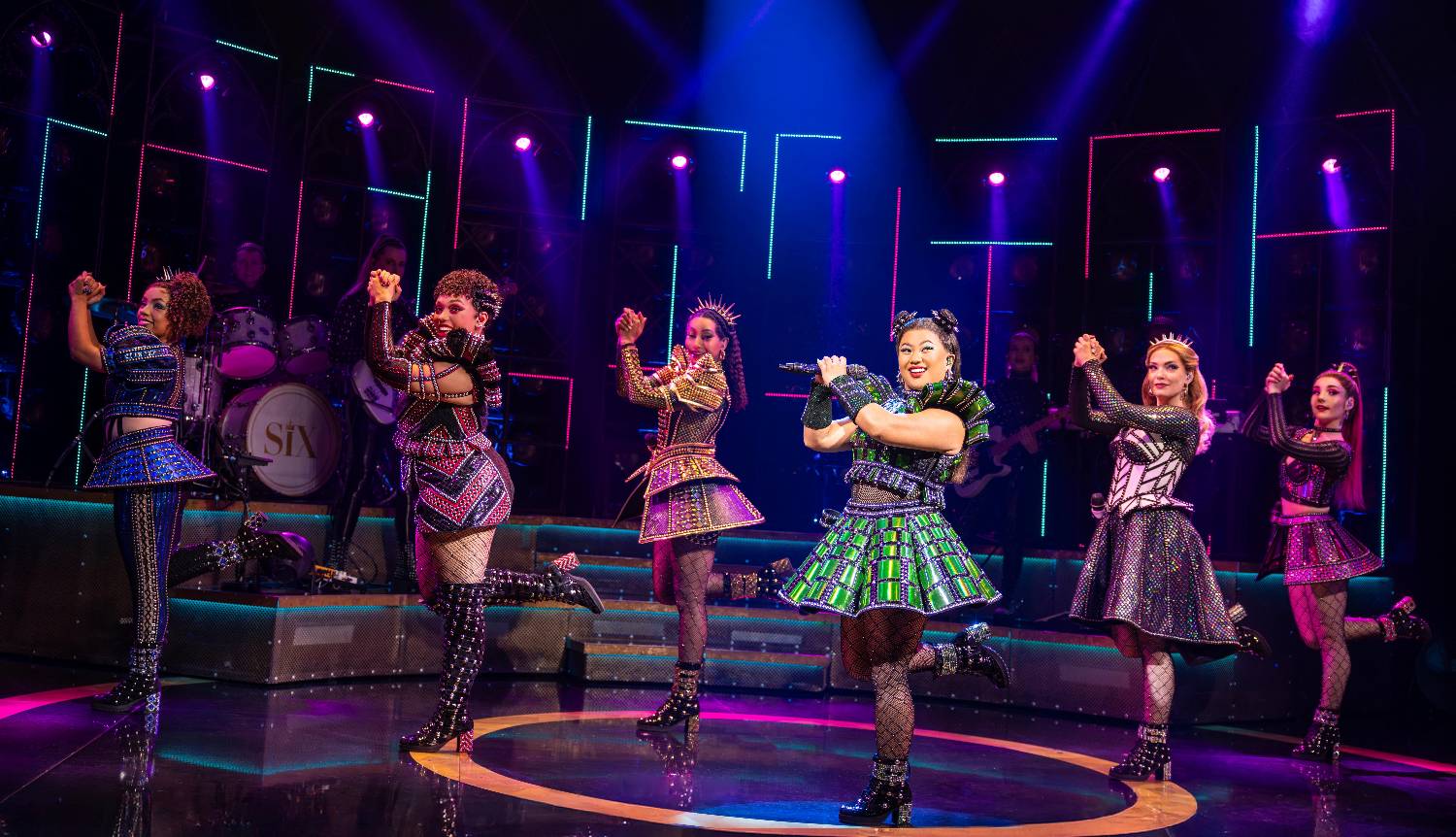
For Public Historians, SIX offers an important reminder: history is not an immutable, objective truth but a construct, continually reshaped through the interpretations of later generations and the changing contexts in which they live. The history presented to the public is therefore never the past itself—something ultimately beyond our reach—but an interpreted past. Rather than concealing this process, SIX embraces it. By presenting history not as a solemn textbook but as a vibrant pop concert, the musical openly reveals how its creators have transformed historical sources, reinterpreting and remixing the past through a contemporary perspective.
In this sense, SIX also serves as an outstanding example of Genetic Storytelling. Unlike traditional narratives that simply preserve the past, or exemplary narratives that reduce history to moral lessons, Genetic Storytelling acknowledges the differences between past and present while bringing the values of both into dialogue. Through this process, it generates new meanings that speak directly to contemporary audiences. The six queens remain firmly rooted in the historical realities of sixteenth-century tragedy, yet those historical facts are reimagined through twenty-first-century ideas of girl power and empowerment.
The result is not a distortion of history, but a new orientation that enables modern audiences to connect with the past in ways that feel immediate and relevant.
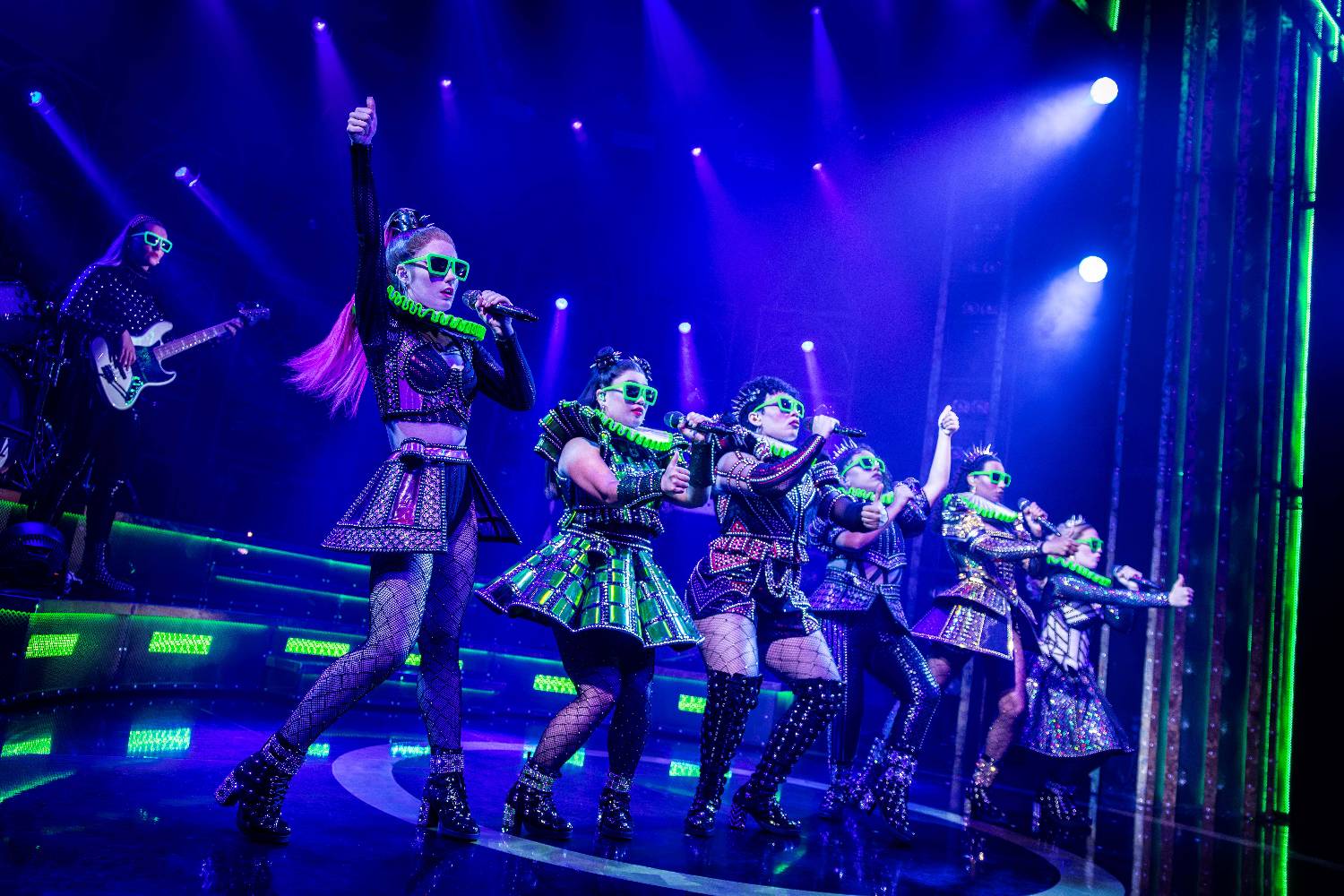
Public History scholar Marko Demantowsky identifies one of the defining qualities of successful Public History as its ability to open possibilities for individual reorientation while safeguarding democratic pluralism. SIX embodies precisely this principle. It dismantles the master narrative once monopolized by a single powerful man—Henry VIII—and restores, side by side, the distinct voices and identities of the six women history had long pushed into the background. In doing so, the musical demonstrates the extraordinary power of pluralistic historical interpretation.
Ultimately, SIX refuses to preserve history as a lifeless artifact sealed behind museum glass. On stage, the six queens shed the subordinate label of being remembered merely as someone's wife and reclaim the right to be remembered as individuals in their own right. From the perspective of a Public Historian, the musical offers a compelling answer to some of the field's most fundamental questions:
How should history be popularized? Through whose perspective should it be represented? And how can it continue to speak meaningfully to the present?
As the musical's unforgettable tagline boldly proclaims—
"Divorced. Beheaded. LIVE!"
History is not a dead text confined to the past.
It is a living conversation—constantly remixed, continually reinterpreted, and brought to life each time it meets a new audience.
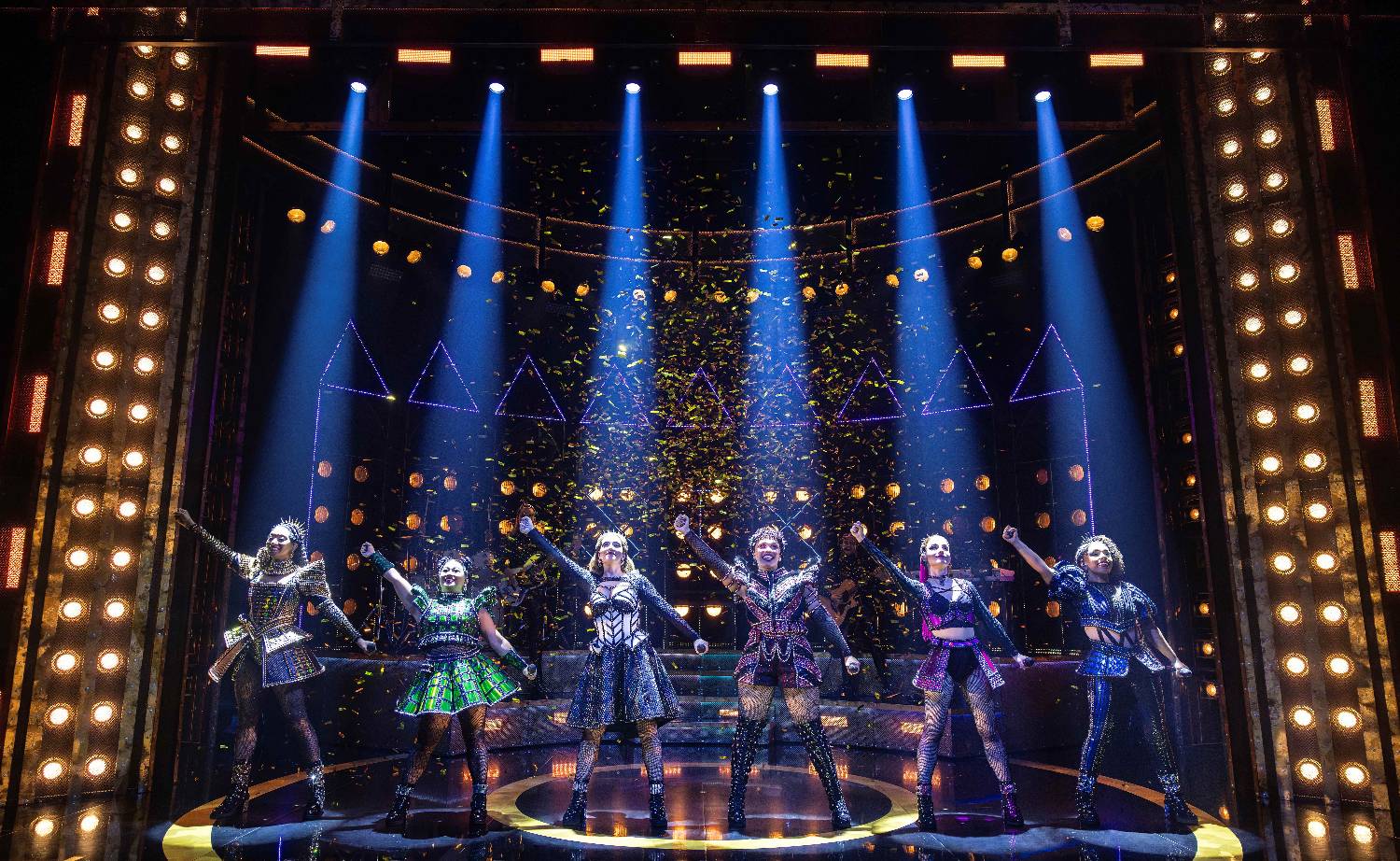
production photos ⓒPamela Raith
