
Dig into the history and behind-the-scenes stories of performing arts, and there is one Korean musical you are bound to encounter: <Laundry>. What began in 2005 as a modest two-week run in a small black-box theater has since grown into a mega-hit that has moved audiences not just in Korea but across all of Asia.
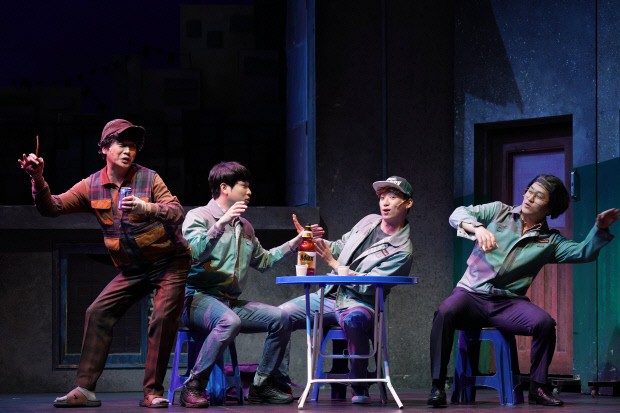
Without the hundreds of billions of won in capital, lavish production design, or star-driven marketing that Broadway takes for granted, this show crossed borders on nothing but the power of story and song. So how did a narrative rooted in the grinding daily lives of ordinary Seoulites and the sorrows of a Mongolian migrant worker — as Korean a story as any — manage to open the hearts of audiences around the world?
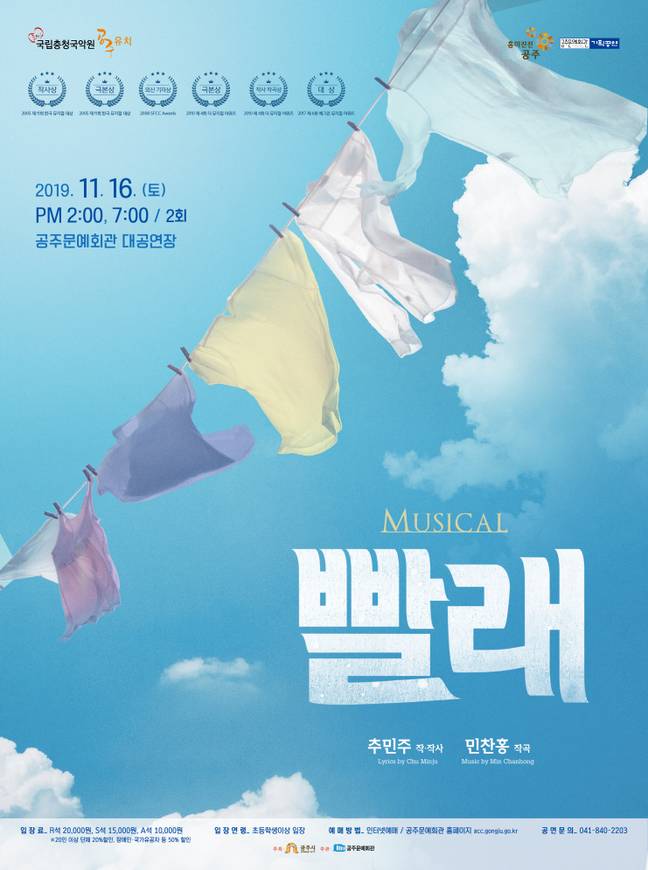
The first step came in 2012, in Japan. In what was quite an unusual move for a Korean small-theater musical at the time, the production signed a licensing deal with a Japanese producer and staged a fully Japanese-language run with local performers. There was no shortage of anxiety at first, apparently. Would Japanese audiences really be able to feel the world of a Seoul hillside neighborhood — or the plight of migrant workers in Korea — as something close to their own experience? But the show's central message — that doing the laundry means wringing out your grief and rinsing the stains from your dreams — turned out to have no borders. The need for comfort, after all, knows no nationality. The production earned rave reviews from Japanese critics, returned for multiple revivals, and through collaboration with prominent local theater companies left behind a successful model for localization.
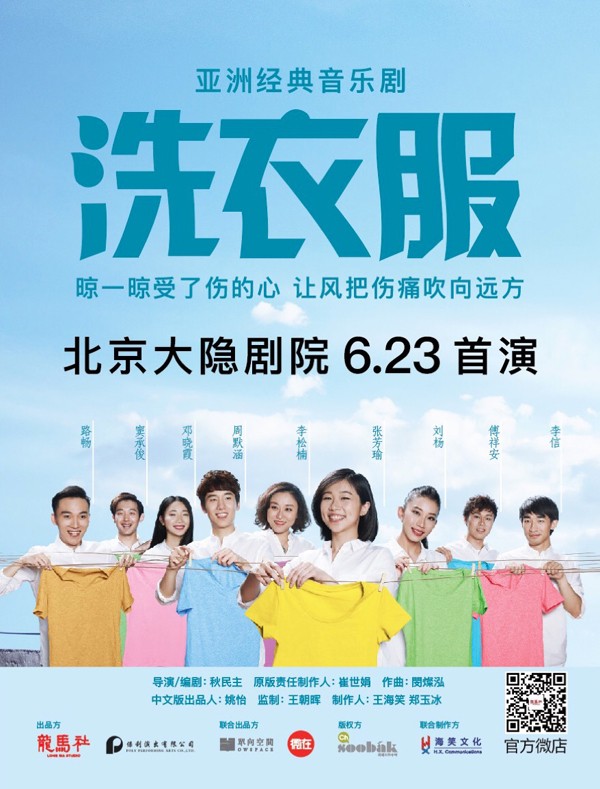
The next wave came from China. When the show first traveled there in 2016, it was as a touring production with Korean performers and Chinese subtitles, playing stages in Shanghai and Beijing. And it was a sensation. China was in the midst of rapid urbanization, and a generation of young people had left their hometowns to pour into megacities like Beijing and Shanghai — the so-called "Beijing drifters." They watched the show and wept. In the protagonist Na-young, who comes to Seoul to save on a deposit, they saw their own reality reflected back at them. A Chinese-language licensed production followed in 2017, and even during the period when cultural exchange between Korea and China had frozen over almost entirely, the show toured across China and proved, unmistakably, that the content itself had the power to carry it through.
Looking back at the history of <Laundry>'s global journey, one conclusion stands out clearly: the most local thing is, in the end, the most universal. This show demonstrates that even without grand theatrical spectacle, if you touch the loneliness intrinsic to human experience and the pain of a shared era with genuine sincerity, the barriers of language and culture come down more easily than you might expect.
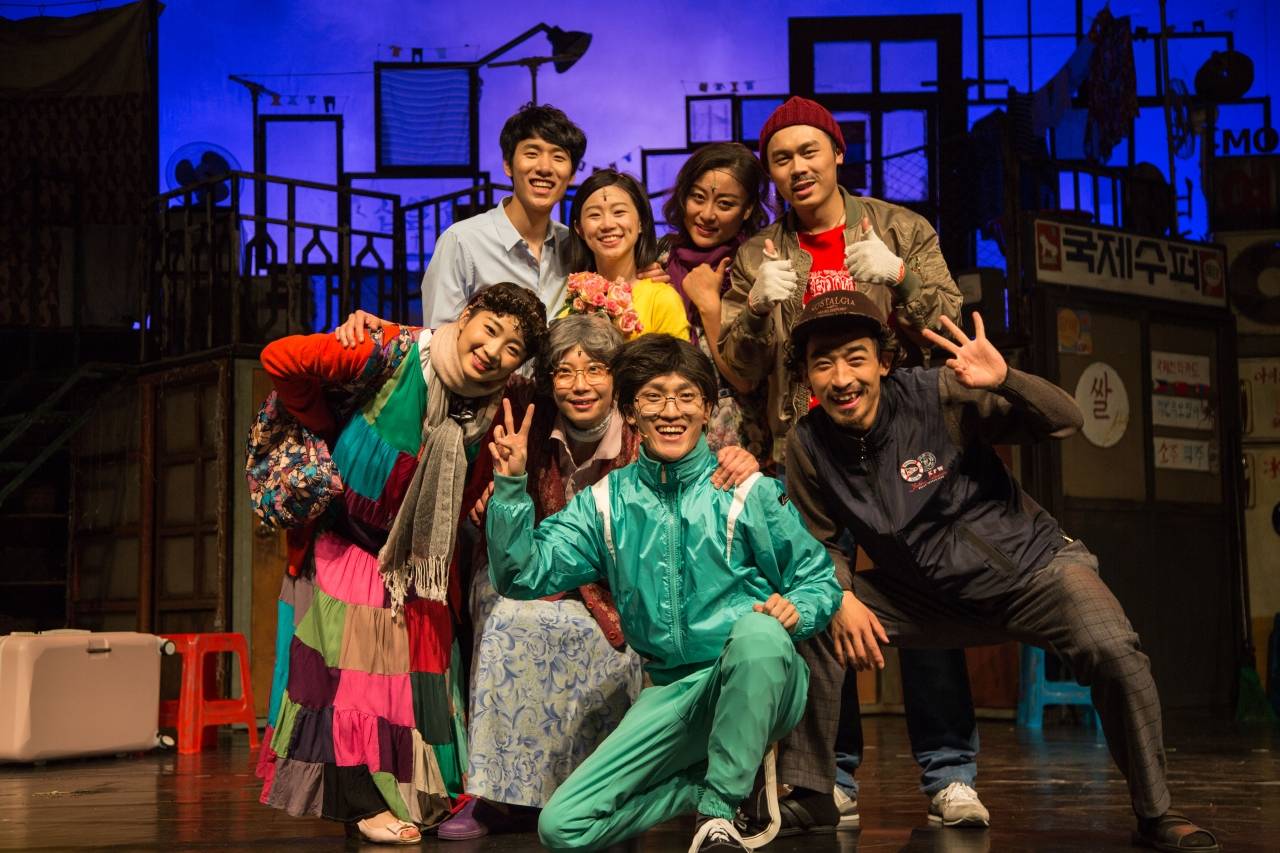
Having surpassed a cumulative audience of one million over nearly two decades, <Laundry> continues its long run — and its journey remains the warmest and most reliable compass for the many creators today who are asking themselves how to reach the world beyond their own borders.
![[취재파일] 중국에서 본 한국 창작 뮤지컬 '빨래'](https://kr-prod-api.hereweare.io/api/v2/articles/269/image/1926124)
