


Solemn music swells, and the citizens of Oz erupt in celebration over the death of the Witch. This is "No One Mourns the Wicked," the opening number of the musical Wicked. A number that seems to reveal the ending right from the start sounds entirely different to those who already know how the story truly ends — because the central question the show asks is compressed most powerfully right here. We took a closer look at what makes this number so extraordinary.
Dramatic Structure: The Opening as Foreshadowed Ending
Wicked's plot departs from a story most audiences already know: The Wizard of Oz, in which the Wicked Witch of the West is killed by a girl who arrives in Oz by tornado and accidentally splashes her with water. Familiar as the story is, hearing that death recounted through the voices of an onstage ensemble feels strangely unsettling. There is something deeply eerie about the way the crowd rejoices, cheers, and dances.
Opening with the ending and then flashing back to the past is a structure common enough in musical theatre. But Wicked goes a step further. Elphaba's death appears to be the conclusion — yet this ending is not told from Elphaba's perspective. The truth is still hidden. As the audience searches for that truth, they find themselves searching alongside the show for an answer to the question: how did she become the villain?
The Ensemble's Grand Music: Anxiety Beneath the Celebration
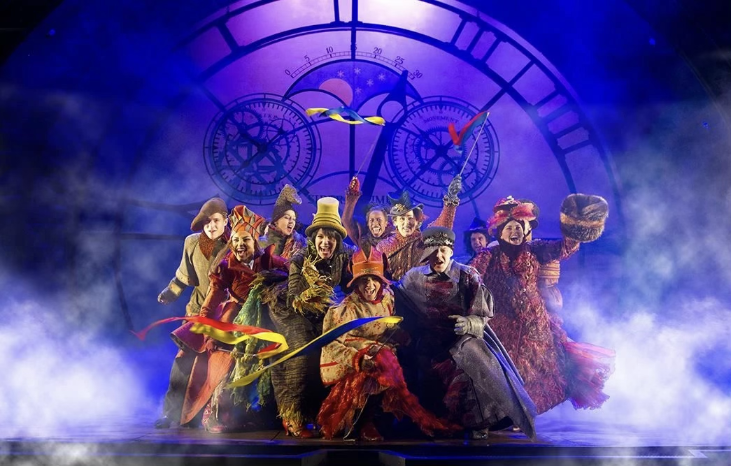
As the curtain rises, the citizens of Oz pour onto the stage and fill it completely. Having this many performers appear from the very first scene to overwhelm the audience is one of the pleasures unique to large-scale musical theatre.
Yet what the eye sees and what the ear hears are subtly at odds. Listen closely to the music playing beneath the dazzling bubble machines and lighting, and something feels slightly unmoored — bright and exhilarating on the surface, but somehow adrift. This appears to be the result of composer Stephen Schwartz layering two cheerful chords on top of each other. Each chord on its own sounds buoyant, but the moment they are stacked together, they produce a sensation that is simultaneously thrilling and faintly unsettling. The melody of this opening does not stop there. The introductory motif resurfaces in Act Two during "No Good Deed" — the passage where Elphaba calls out "Fiyero" for the second time — and again at the opening of "As Long As You're Mine." The musical seeds of Elphaba's later story are already being sown within the opening's jubilation. At the moment the citizens cry "Wicked!" for the final time, an unresolved note sounds in the lower register of the orchestra. On the surface it reads as the conviction that justice has prevailed, but when all those convictions converge at once, it begins to sound like collective hysteria. The audience's mind may be swept up in the celebration, but the body has already registered the unease.
Look closely at the ensemble's role in this scene and the message becomes clear. The declaration that "the Wicked Witch is dead" reveals Elphaba's condition — she cannot even be called by her name — and what sounds like background exposition is, in effect, an act of stigmatization. The structure itself, in which the same lyrics repeat and are varied, is the message. When people hear the same thing said over and over, they come to accept it as truth.
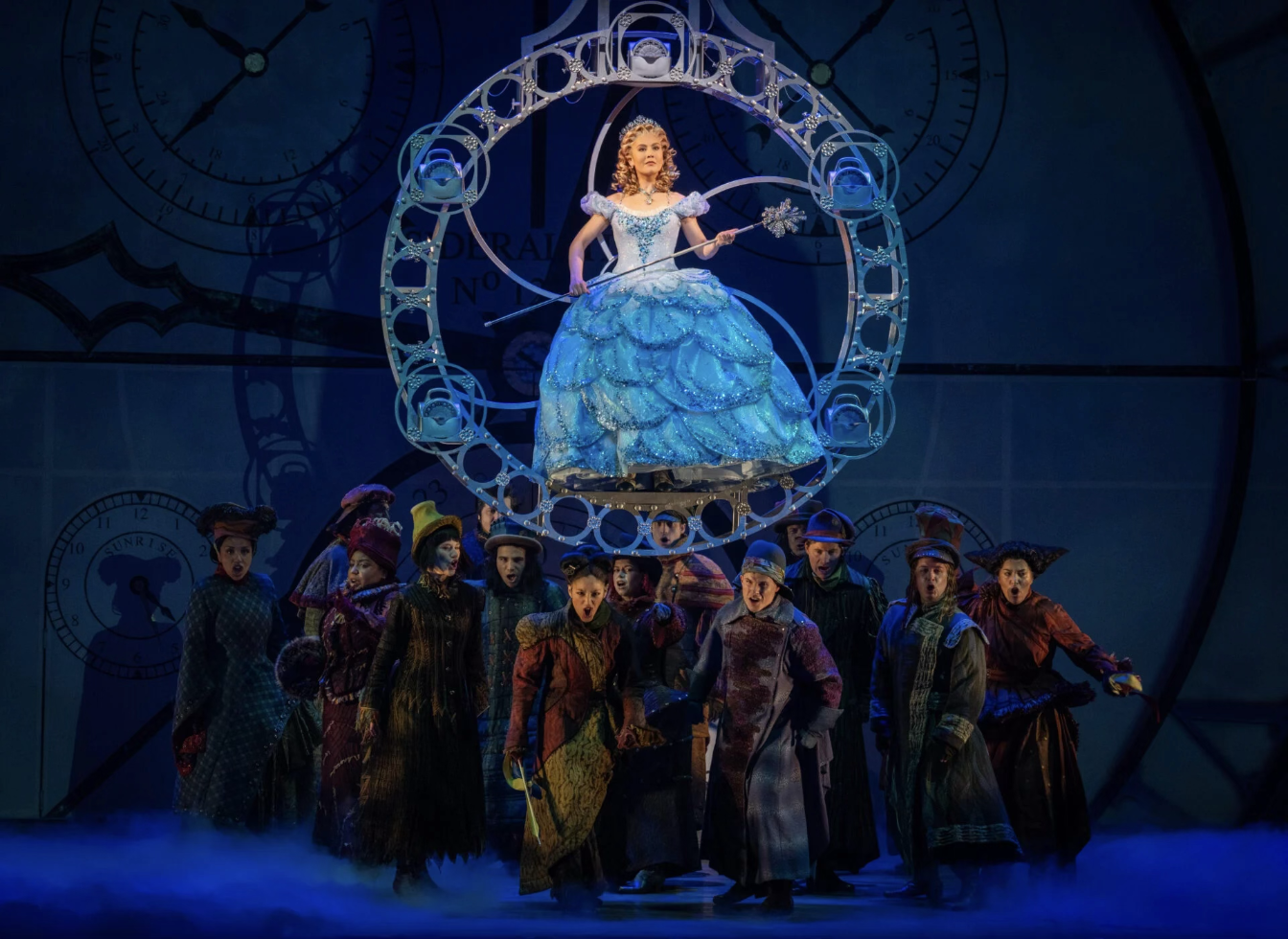
This dynamic is most sharply illustrated in Glinda's line: "And of course, from the moment she was born, she was — well — different." The instant Glinda says it, the entire citizenry recoils and cries out, "GREEN!" It is Glinda alone who first defines the child as "different from the rest," but it is the whole community that completes the stigma by shouting it together. And so the mark that will follow Elphaba for the rest of her life — simply for having green skin — is fixed right here. Worth noting, too, is that the person delivering this introductory verdict is Glinda herself, the very one who will later stand closer to Elphaba than anyone else.
Wordplay: The Reversals Hidden in the Lyrics
There are several moments of wordplay in this number that reward a second look.
The very first line of the opening — both as spoken dialogue and as lyric — is "Good news!" On the surface it simply means good news, but in this show "Good" is no ordinary adjective. As the story unfolds, Glinda earns the title "Glinda the Good." The fact that this word — the very word that will come to define her — first announces itself in the context of someone's death sets goodness and death in collision from the opening breath.
There is also a reading that finds a reversal embedded in the title and refrain, "No One Mourns the Wicked." On the surface it means that no one mourns the wicked — but shift a single comma and it becomes "No, One Mourns the Wicked": one person does mourn her. It fits too neatly to dismiss as coincidence, quietly pointing toward a character the audience has yet to meet.
The lyric "Woe to those who spurn what goodness they are shown" also deserves attention. "Spurn" carries a stronger charge than simple refusal — it implies contemptuous rejection, a kicking away. Did Elphaba spurn goodness, or did goodness spurn her first? In the lines just before, the citizens sing, "Goodness knows / the Wicked die alone." Here "goodness" becomes the grammatical subject that passes judgment on the wicked one's death. Goodness creates the isolation, then turns around and declares that isolation proof of wickedness. These two lines contain the entire architecture of the show in miniature.
The spoken line that appears midway through the number — "Are people born wicked, or do they have wickedness thrust upon them?" — distills the question the whole number is asking. The show poses it here at the outset, then goes on asking it for the rest of its running time.
Glinda's Expression: The Lie of Goodness
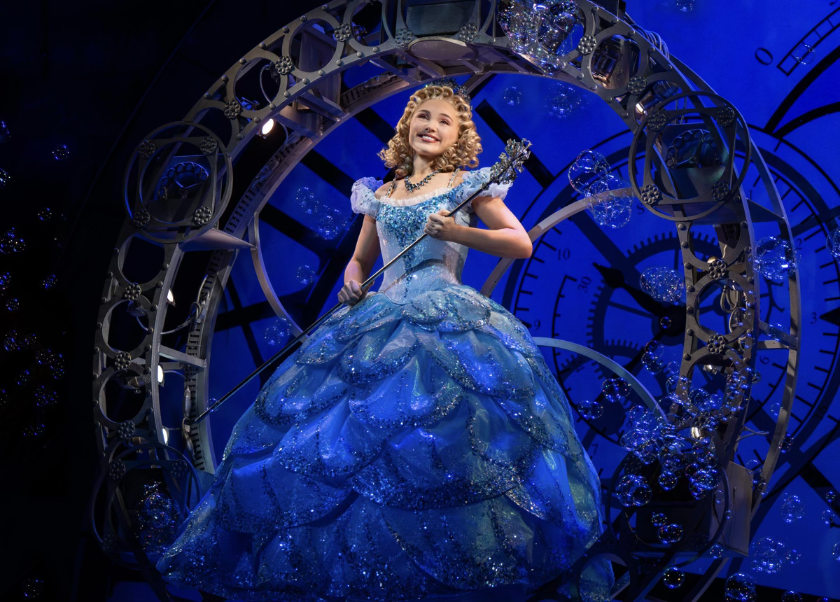
While the citizens celebrate together, Glinda descends on her bubble machine with a gracious smile. Wearing the mask of the "Good Witch" the crowd demands, she lies in a voice that trembles ever so slightly, insisting that she and Elphaba were nothing more than passing acquaintances.
This is where the show's central irony comes into focus. The very figure who embodies all the world's goodness — the first thing she does upon standing before the public is deceive and manipulate. She performs happiness to reassure the citizens, but behind that warmth and smile lie anxiety and guilt. She knows she played her part in the powerful narrative that branded Elphaba a villain.
The performance challenge in this scene is not about failing to smile when a smile is called for. It lies in those micro-moments of fracture that occur in the middle of smiling. Even as she waves to the crowd, when a memory of her friendship with Elphaba surfaces, the corners of her mouth tremble almost imperceptibly and her eyes waver. It signals that she, more than anyone, knows how hollow and hypocritical the "goodness" the crowd worships truly is. Saying only what the public wants to hear while letting a different emotion leak through in her expression alone, this opening also carries within it the weight of Glinda's own situation — left alone after losing both Elphaba and Fiyero.
What Remains with Us
"No One Mourns the Wicked" is counted among the most striking opening numbers in the history of musical theatre. The reversals hidden in the lyrics, the structure of the repeating chorus, a Glinda who appears warm while concealing her true feelings, and the undercurrent of unease running beneath the celebratory music — all of it is woven together. The scene in which the citizens rejoice over Elphaba's death is, paradoxically, a portrait of how thoroughly they are trapped inside a constructed story. On a first viewing, audiences naturally find themselves swept along with the cheering — but when they look back on this opening after the show has ended, the feeling it leaves behind is something altogether different.
The uneasy bass note beneath the celebration. The fracture behind the gracious smile. By the time the opening number ends, the audience finds itself standing, almost without realizing it, before the questions the show is about to ask. Who is it that draws the line between good and evil? Does something become truth simply because a crowd shouts it together? Was the one who was cast out truly wicked at all?
