

Seeing Shakespeare's beloved comedy A Midsummer Night's Dream at Shakespeare's Globe in London was the most unforgettable experience of this trip. The simple fact of watching Shakespeare in Shakespeare's own theatre made it special — but what lingered after the final curtain was something far greater than that.

What struck me most, above all else, was the theatre itself. In this open-air playhouse with its roofless sky, the play unfolded on the summer night's air. The actors commanded the entire house with nothing but their own voices — not a microphone in sight — while the orchestra, playing from the second-floor balcony, filled the space with an ease that felt entirely natural. The thought that audiences hundreds of years ago had experienced something very much like this made it feel less like watching a performance and more like living inside that era.
The undisputed highlight of the Globe was the standing pit. The distance between the groundlings right at the foot of the stage and the actors was close enough to reach out and touch. The performers made constant eye contact with the audience, spoke directly to them, and pulled them bodily into the action. When Puck fell in love with a single audience member, the whole house dissolved into laughter; when audience members were brought up onto the stage for an impromptu audition or to assist the actors, the boundary between performance and reality collapsed entirely. The audience were no longer simply observers of a story — they became characters in it, co-creators of the play itself.
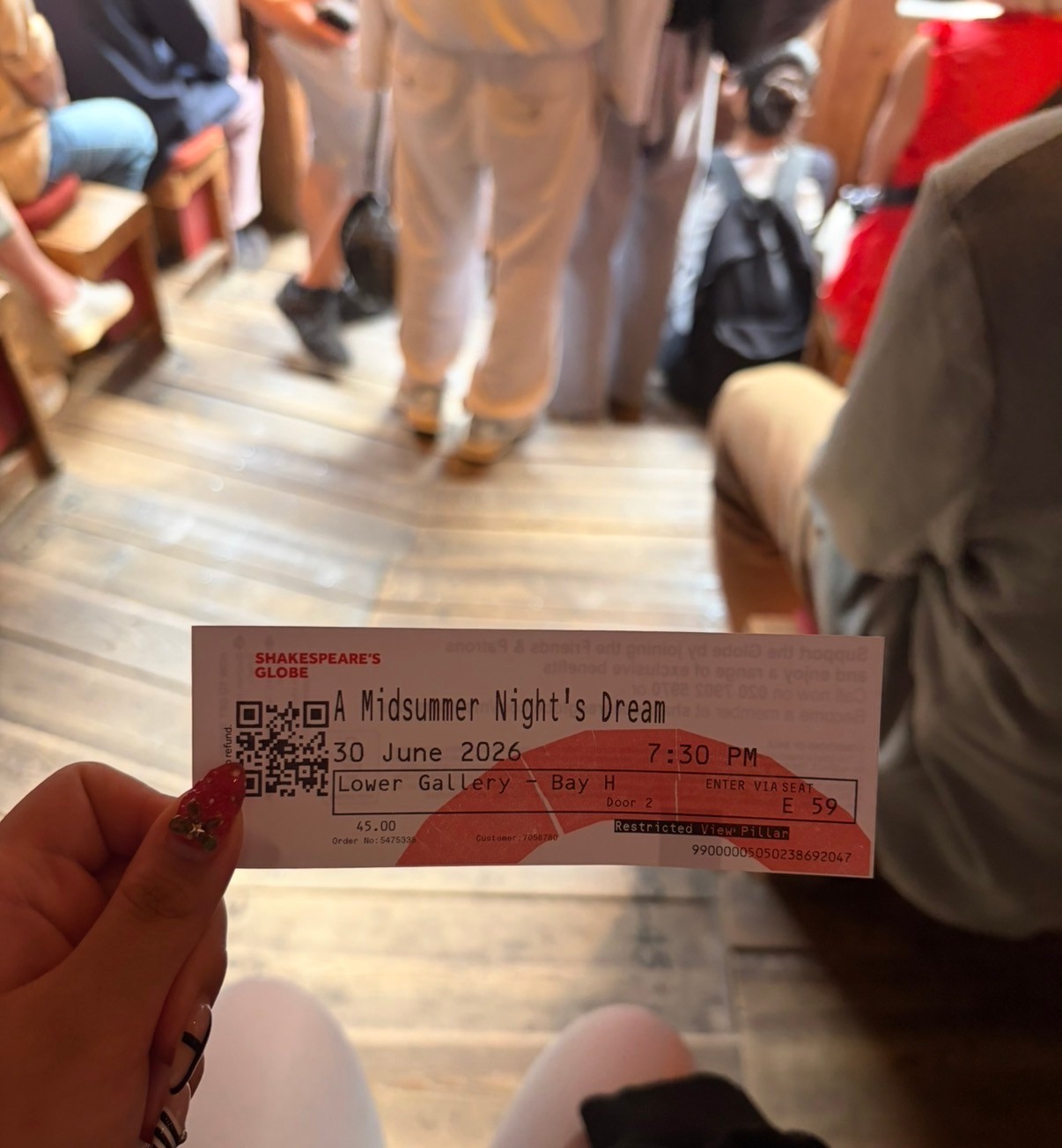
The play's own material suited this approach with remarkable precision. A Midsummer Night's Dream delights in depicting how impulsive and absurd human love can be, working through the magic and illusions of the forest and the loves that keep shifting and crossing. The way desire pivots in an instant, the cycle of jealousy and misunderstanding — it all looks like broad comedy, yet it ultimately reveals that neither love nor human beings are ever perfectly rational. The cast layered in bold physical comedy, rapid-fire delivery, and deadpan improvisation, producing a kind of laughter so contemporary it was almost impossible to believe the play was written more than four hundred years ago.
What will stay with me longest is that the night I saw the show was, in fact, a real summer night. The forest magic unfolding beneath an open sky felt less like a set designer's creation and more like something completed by the actual season and the actual air. And at the very end, when the actors sent a cascade of soap bubbles drifting out over the audience as the performance closed, it truly felt like waking from a dream.
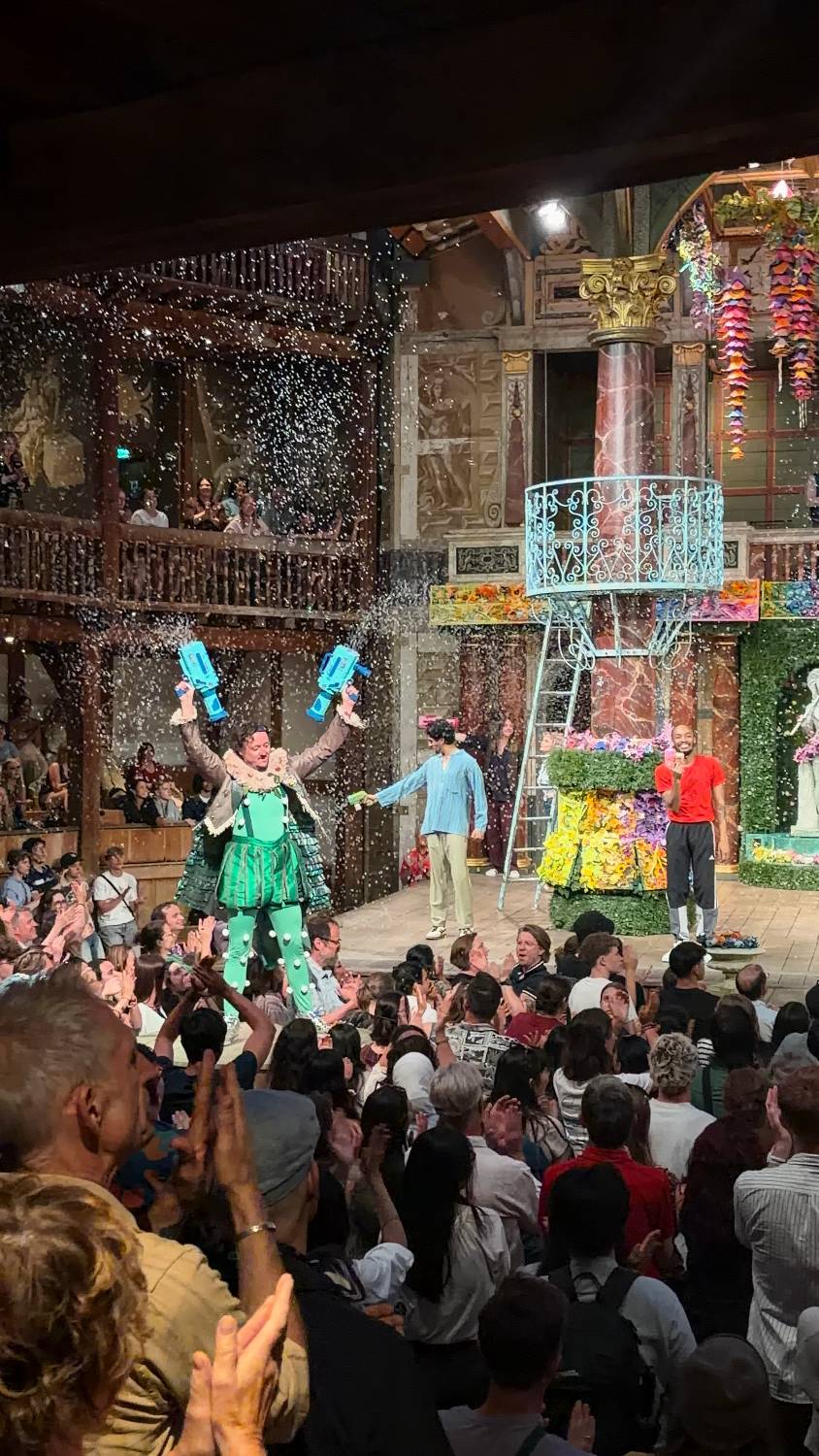
The Globe's A Midsummer Night's Dream was not simply a recreation of a Shakespearean text. It was a living festival in which actor and audience, reality and fantasy, past and present all tumbled together in a single space. It was an unforgettable summer night — one that confirmed, firsthand, that the laughter and sense of liberation Shakespeare sought to give his audiences through comedy are still every bit as vivid and alive more than four hundred years on.
