

For anyone interested in German theatre or opera, the term Regietheater is likely familiar. In German, Regie means stage direction. But what exactly does "director's theatre" mean, and how does it differ from conventional theatre? This article explores the concept of Regietheater through the lens of opera.
Regietheater refers to a production style that rejects the literal reproduction of a composer's score and stage directions in favor of a performance shaped by the stage director's personal interpretation and artistic vision. In this framework, the Regisseur (stage director), rather than the conductor or even the composer, holds primary authority over the production's overall artistic conception.
Until around 1800, musical theatre centered largely on world premieres. Composers and audiences shared the same historical and cultural context, which meant they also shared common theatrical conventions and aesthetic expectations. This shifted during the nineteenth century with the emergence of the repertory theatre system. As theatres began regularly reviving works from previous generations alongside newly composed operas, productions became detached from the historical circumstances of their creation. Social values, aesthetic sensibilities, performance practices, stage technology, and even instrument construction had all evolved. As the temporal gap between composition and performance widened, interpretation became essential. Within this new theatrical landscape, the stage director emerged as a major artistic authority, working alongside the conductor to shape the aesthetic concept and performance style of a production.
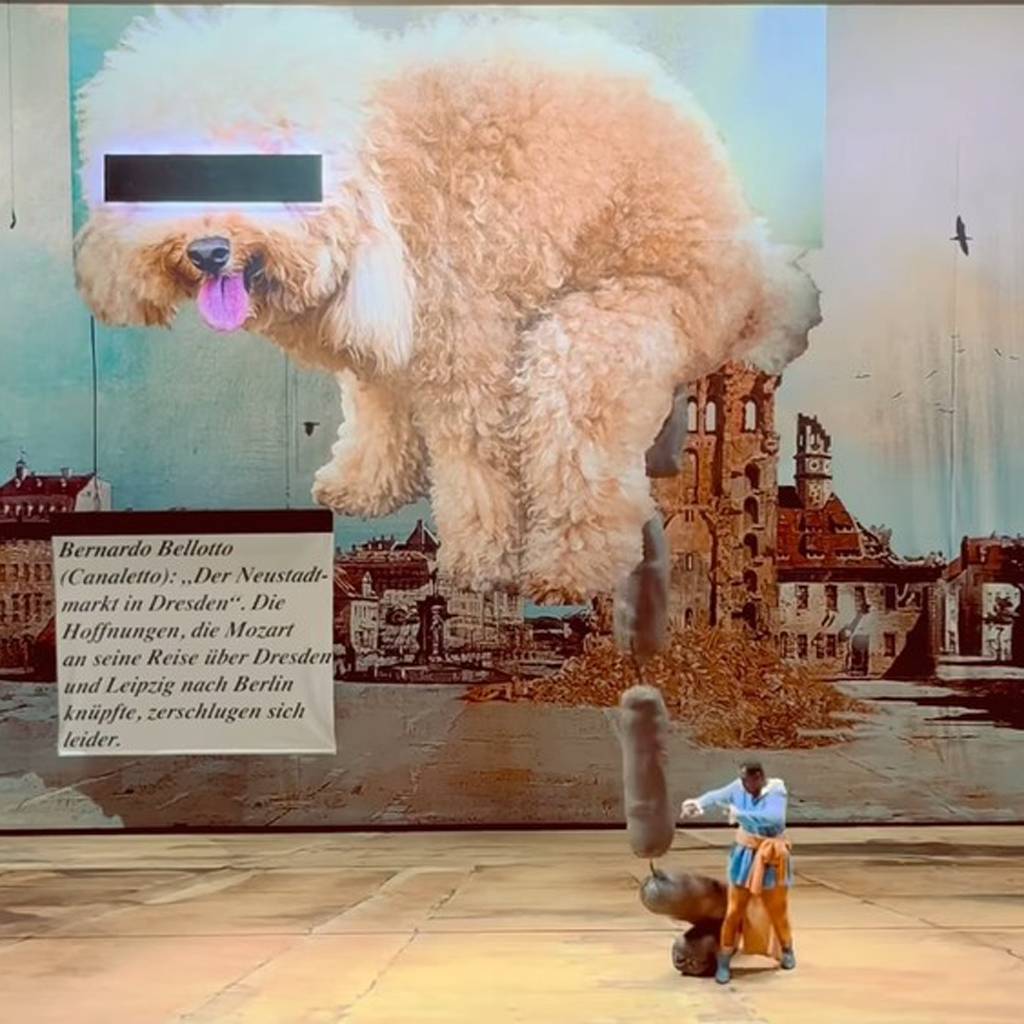
<The Magic Flute> (2026), Musiktheater im Revier, Production: Nora Krahl, © Musiktheater im Revier
: Although Mozart's score specifies that the protagonist is pursued by a snake, this production replaces it with dog excrement.
This provocative staging choice attracted considerable public attention.
Regietheater vs. Werktreue. The concept most commonly contrasted with Regietheater is Werktreue. Derived from the German words Werk (work) and Treue (fidelity), the term translates to "fidelity to the work."
Werktreue prioritizes realizing the composer's score and stage directions as faithfully as possible. The stage director is expected to preserve the emotional, comic, and tragic intentions embedded in the piece without distortion. Costumes, set designs, and acting styles are reconstructed based on historical research, allowing audiences to experience a performance that closely mirrors the era in which it was created.
Regietheater, by contrast, treats the libretto and musical score merely as the starting point for a new artistic creation. Directors routinely relocate the time and place of the story, introducing personal interpretations and contemporary political or social commentary regardless of the composer's original intent. Portions of the work may be omitted, expanded, or rewritten.
Proponents argue that this approach keeps centuries old repertoire from becoming mere museum pieces, allowing opera to remain a living art form that actively engages with contemporary society. Here, the stage director is no longer just an interpreter of the composer's wishes, but a second author who actively recreates the work.
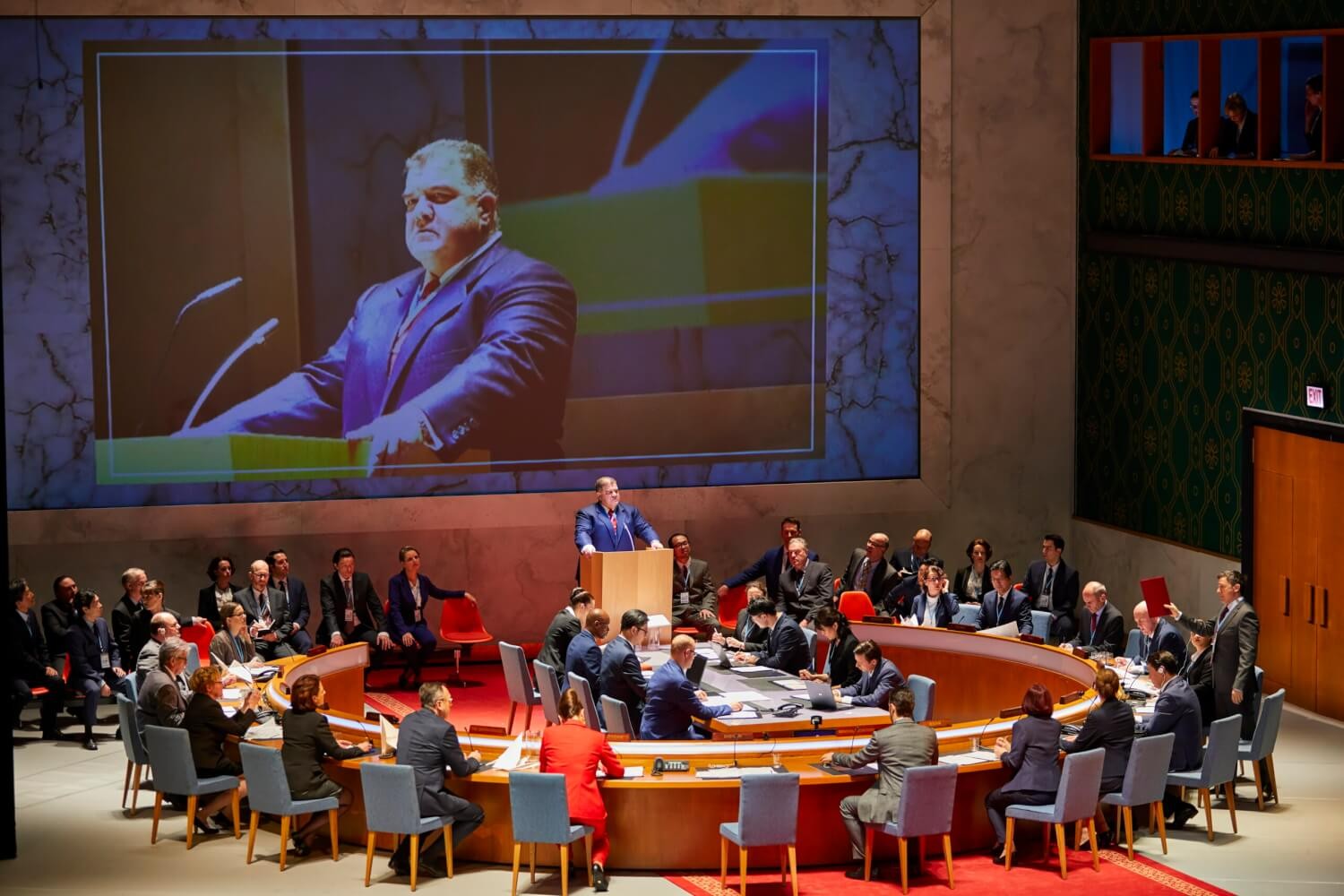
<Nabucco> (2019), Hamburgische Staatsoper, Production: Kirill Serebrennikov, © Brinkhoff/Mögenburg
: While under house arrest for criticizing the Russian government,
Serebrennikov directed Nabucco by sending handwritten production notes from his apartment.
By drawing sharp parallels between ancient Babylon and contemporary Russia,
the production condemned Putin's authoritarian rule and political repression before an international audience.
So, how did Regietheater become the dominant paradigm? The dominance of Regietheater in the German can be attributed to three main factors. Post-war historical reckoning, the influence of the Bayreuth Festival, and Germany's unique public theatre system.
During the Second World War, the Nazi regime systematically appropriated German classical art, including the operas of Richard Wagner, as tools for nationalist propaganda. After the war, many German artists felt that presenting the classical repertoire through traditionally grand, sweeping, and aesthetically beautiful productions risked perpetuating the cultural legacy that National Socialism had exploited. This critical reassessment gave rise to an unconventional approach that sought to deconstruct canonical works and reexamine them through a critical lens.
A defining turning point occurred at the 1951 Bayreuth Festival. Wieland Wagner, Richard Wagner’s grandson, stripped away the monumental helmets, historically detailed costumes, and naturalistic scenery that had defined previous productions. Instead, he utilized an almost empty stage, minimalist scenography, and expressive lighting. These productions are widely regarded as the catalyst for modern, abstract Regietheater.
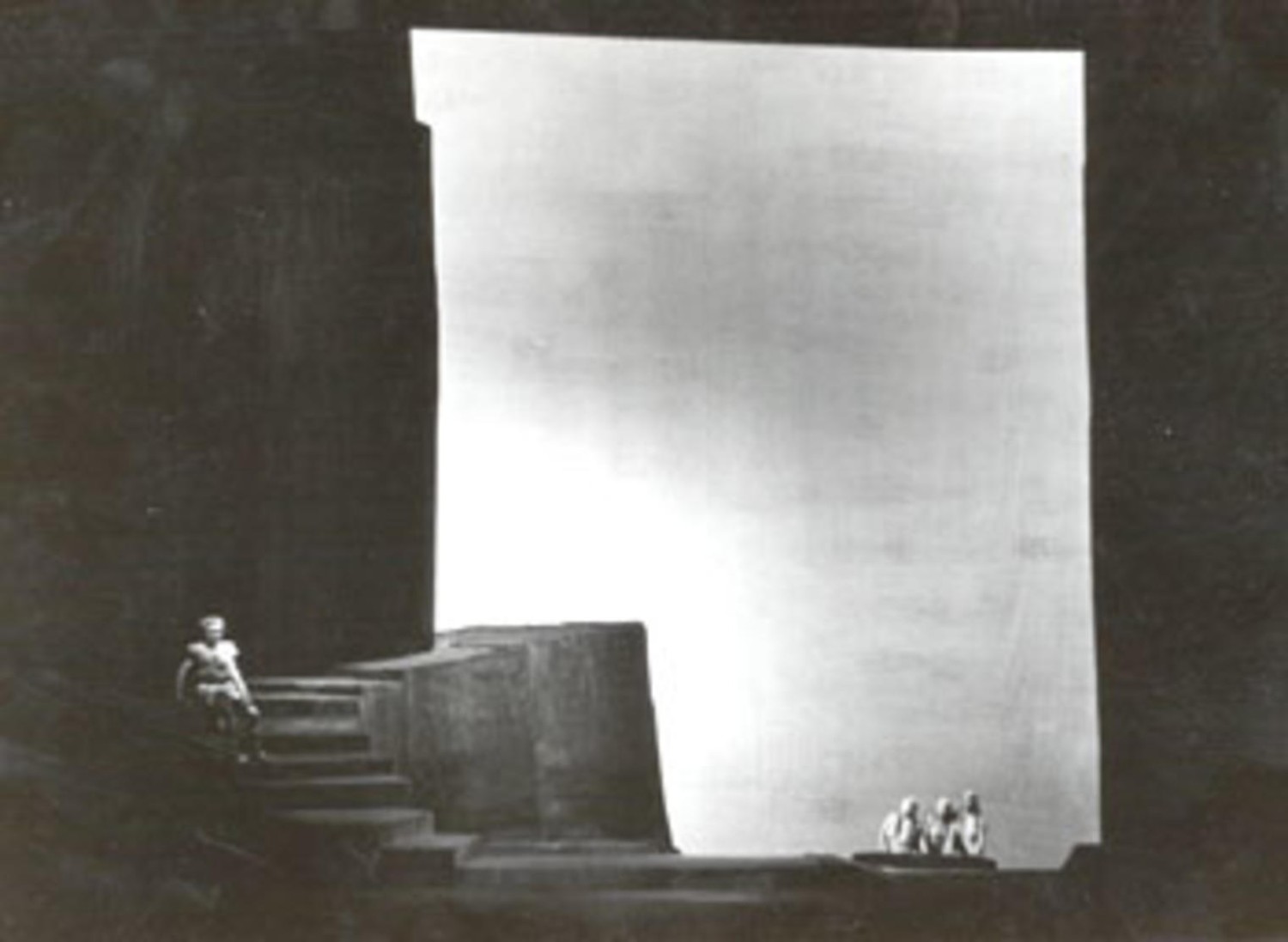
Stage Designs by Wieland Wagner, Bayreuther Festspiele (1951) © Bayreuther Festspiele
The Bayreuth Festival subsequently became the primary laboratory for innovative operatic staging. Because the festival exclusively presents Wagner's ten canonical operas, every new production faces the intense challenge of generating a fresh interpretation of works that have already been performed for over a century.
Germany has the world's highest density of publicly funded opera houses and theatres. During the 2023/24 season, German theatres received approximately €3.26 billion in public subsidies, with government funding accounting for roughly 80-85% of their operating budgets. This financial safety net allows houses to pursue artistically ambitious, experimental productions without relying strictly on commercial success or box-office revenue. The evolution of Regietheater has therefore been directly sustained by Germany's robust system of public cultural funding. (Source: Deutscher Bühnenverein, Theaterstatistik 2023/24)
Despite its massive artistic influence, Regietheater faces substantial criticism. Detractors argue that excessive visual spectacle often distracts from the musical essence of the opera, and that highly intellectualized interpretations risk alienating general audiences. Others point to productions where extreme directorial demands compromise the singers' vocal performance or personal dignity. Furthermore, recurrent tropes, such as setting every opera in contemporary business suits or relying on gratuitous nudity, have themselves become predictable clichés, leading critics to argue that theatrical provocation has become formulaic.
In response, many contemporary opera houses strive to strike a balance between the authority of the conductor and the authority of the stage director. Dramaturgs review productions to ensure that reinterpretations remain meaningfully grounded in the source material, while pre-performance talks and educational programs help audiences navigate stagings. Increasingly, directors are moving away from shock value for its own sake, focusing instead on nuanced interpretations that build genuine connections between canonical works and pressing contemporary social issues.
If you were attending an opera tonight, which approach would you prefer. A historically faithful Werktreue production or a radically reinterpreted Regietheater staging? Today, virtually every German opera house incorporates Regietheater into its core repertoire. Nevertheless, many companies continue to preserve and revive long-running, traditional productions through the practice of Wiederaufnahme (revival).