

The Hidden Side of a Classicist
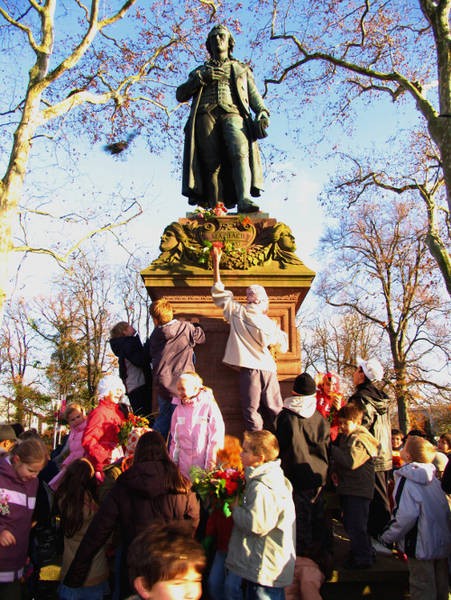
Today, we remember Johann Christoph Friedrich von Schiller as a major literary figure of Weimar Classicism, often mentioned alongside Johann Wolfgang von Goethe, and as a “dignified and rational” great writer of the classical tradition. However, his actual life was far removed from the noble, composed image of the poet preserved in statues. In 18th-century German artistic history, there were few writers who were as heavily oppressed by power, pursued, and forced into a desperate struggle with physical pain as Schiller. The fierce will to freedom and subversive energy that run through Schiller’s works were never abstract products born in a study. They were the result of oppression and deprivation that the author himself experienced with his entire body. In this article, I aim to trace the extreme and destructive personas created in his works through three trajectories that Schiller had to pass through: “controlled youth, a life as a fugitive, and a struggle with illness.”
Extreme Split Personality Born from a Controlled Youth: Military Academy and The Robbers (Die Räuber)
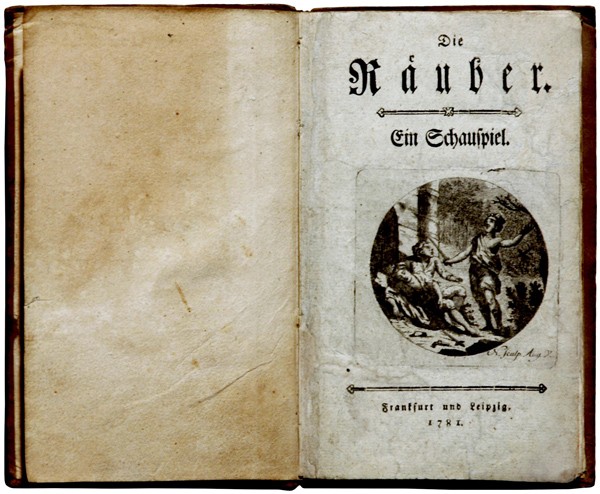
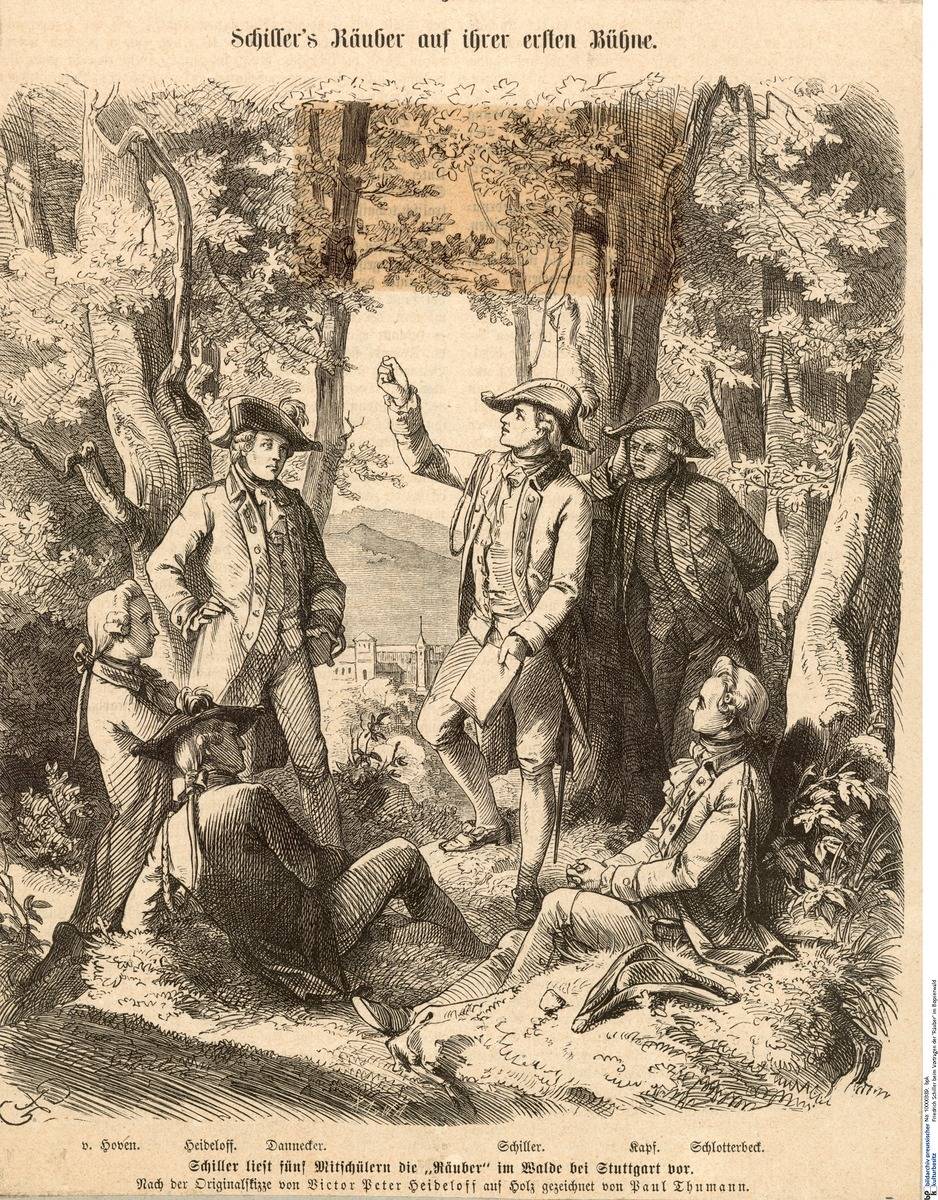
The destructive figures appearing in Schiller’s early works originate from his suffocating youth. As a boy who originally wished to study theology and become a pastor, Schiller was forced by Duke Karl Eugen of Württemberg to enter a military academy, where he was made to study medicine against his will and imprisoned within strict discipline and control. In that place where even literature was forbidden, he secretly read Shakespeare and Rousseau, building up suppressed rage. Through his first play The Robbers (Die Räuber), he split his inner resistance into two extreme personas and threw them onto the stage. At the core of this work is the motif of “patricide (Vatermord)”.
The two sons of Count Moor, Karl and Franz, represent Schiller’s divided self. If Karl Moor is a blind idealist who claims to save the oppressed but does not hesitate to commit horrific violence and slaughter, then Franz is a cold materialist who mocks morality and religion while attempting to usurp power. These two “monsters” are the dramatized result of Schiller’s repressed psychology, formed under extreme despair and cynicism within a controlled life. Franz Moor attempts to starve his father, the old authority, and asks:
“When my father created me, did he think of me? Why should the father be sacred simply because he gave life?”
This question is not merely a crime of impiety, but a provocation against the “sacred and inviolable authority” of absolutism and the old patriarchal system. The destructive actions of the two brothers, who attempt to destroy the old authority (the father) and seize freedom themselves, are entirely the dramatization of a suppressed psyche that wanted to hold its own destiny within a strictly controlled life. Schiller himself later described The Robbers as a “monster born from an unnatural mating of obedience and genius, without knowing the real world”, stating that the destructive nature of the characters was the result of the pathological environment of the military academy.
Life as a Fugitive and Resistance Against the System: Escape and Intrigue and Love (Kabale und Liebe)
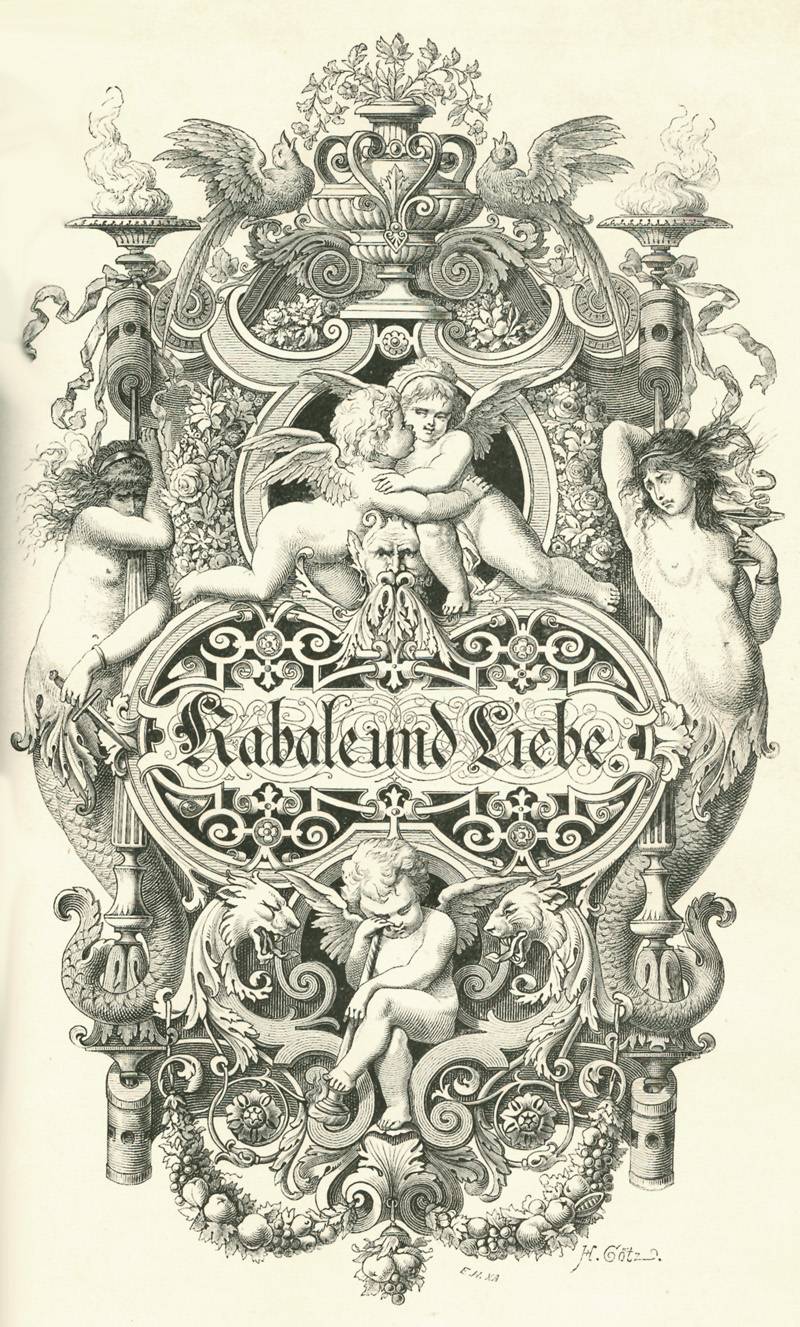
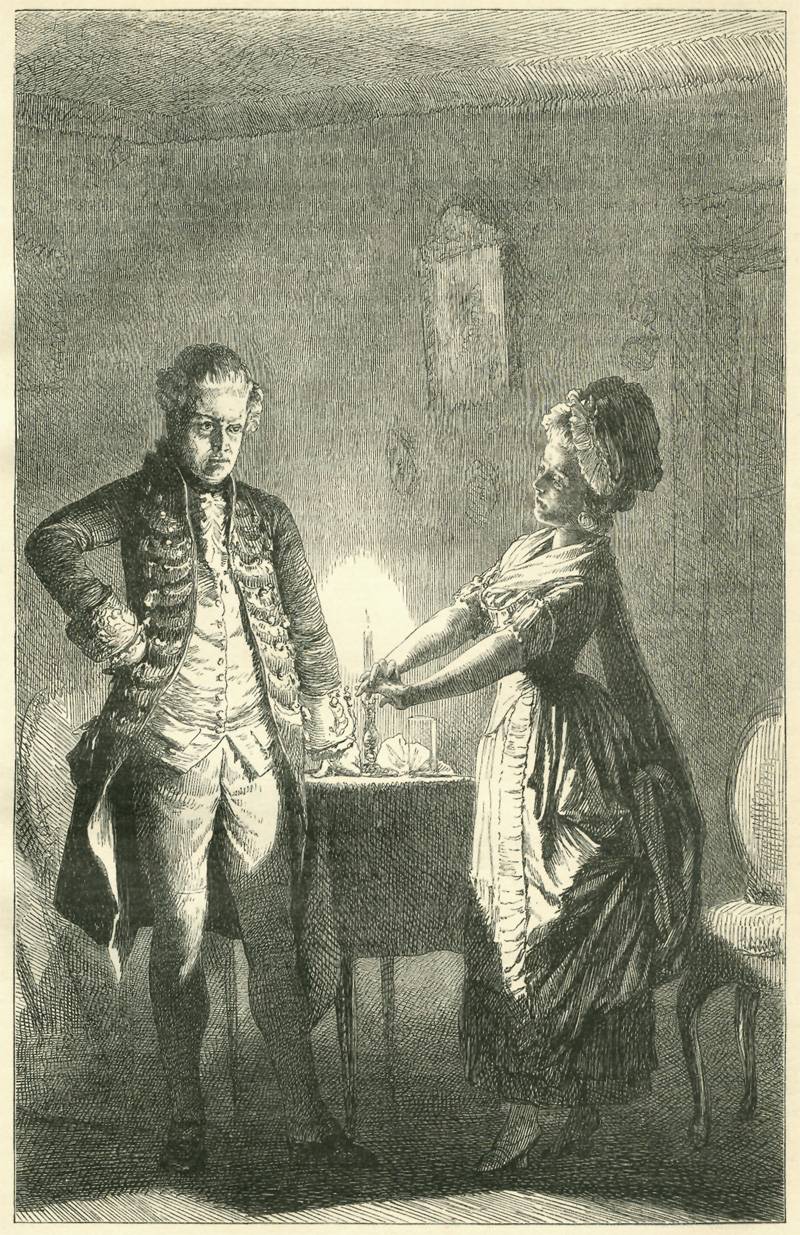
Even after the record-breaking success of The Robbers, Schiller’s life did not escape oppression. Because he went to Mannheim without permission from his ruler to attend the premiere, he was sentenced to two weeks of detention and a ban on writing anything except medical texts. A life without writing was equivalent to death for him. Eventually, in September 1782, Schiller carried out an escape together with his friend Andreas Streicher. Abandoning his stable position as a junior military doctor, Schiller had to move between Mannheim, Frankfurt, and other places, living in hiding. Even in intense anxiety, he continued writing while hiding in the estate of Henriette von Wolzogen in Bauerbach, Thuringia. It was during this fugitive period that he completed the bourgeois tragedy Intrigue and Love (Kabale und Liebe), which denounces the corruption of aristocratic society and the barriers of the class system.
In this work, the love between Luise, a commoner, and Ferdinand, a nobleman, collides with the massive barriers of political intrigue and class structure, ultimately leading to destruction. Through protagonists who are trampled by the violence of the ruling class yet still choose death in order to preserve their pure values, Schiller demonstrates his own resolute will of resistance—choosing to become a “fugitive carrying a pen” rather than submitting to princely power.
Collapse of the Body and Spiritual Freedom: Late Classical Masterpieces
If the young Schiller fought against external power (the duke), the middle-aged Schiller had to fight an unavoidable internal enemy: illness. After suffering severe pneumonia in 1790, he lived the rest of his life in pain from coughing blood and chronic disease. What is interesting is that as his body collapsed, the moral and spiritual sublimity of his characters became even more radiant. In works from this period such as Maria Stuart (1800) and William Tell (1804), the characters no longer end in destruction or uncontrolled rebellion as in The Robbers. For example, Mary Stuart, sentenced to execution, does not collapse in front of fate. Instead, she chooses inner freedom and walks calmly toward the execution site. This is a dramatization of Schiller’s own struggle—who, even as his body weakened, never gave up his will to create. For Schiller, the downfall of characters no longer meant simple tragedy or emptiness. It came to signify the victory of human dignity: the ability to preserve spiritual freedom under any cruel fate.
Schiller on the Contemporary Stage: Deconstructing the Classics
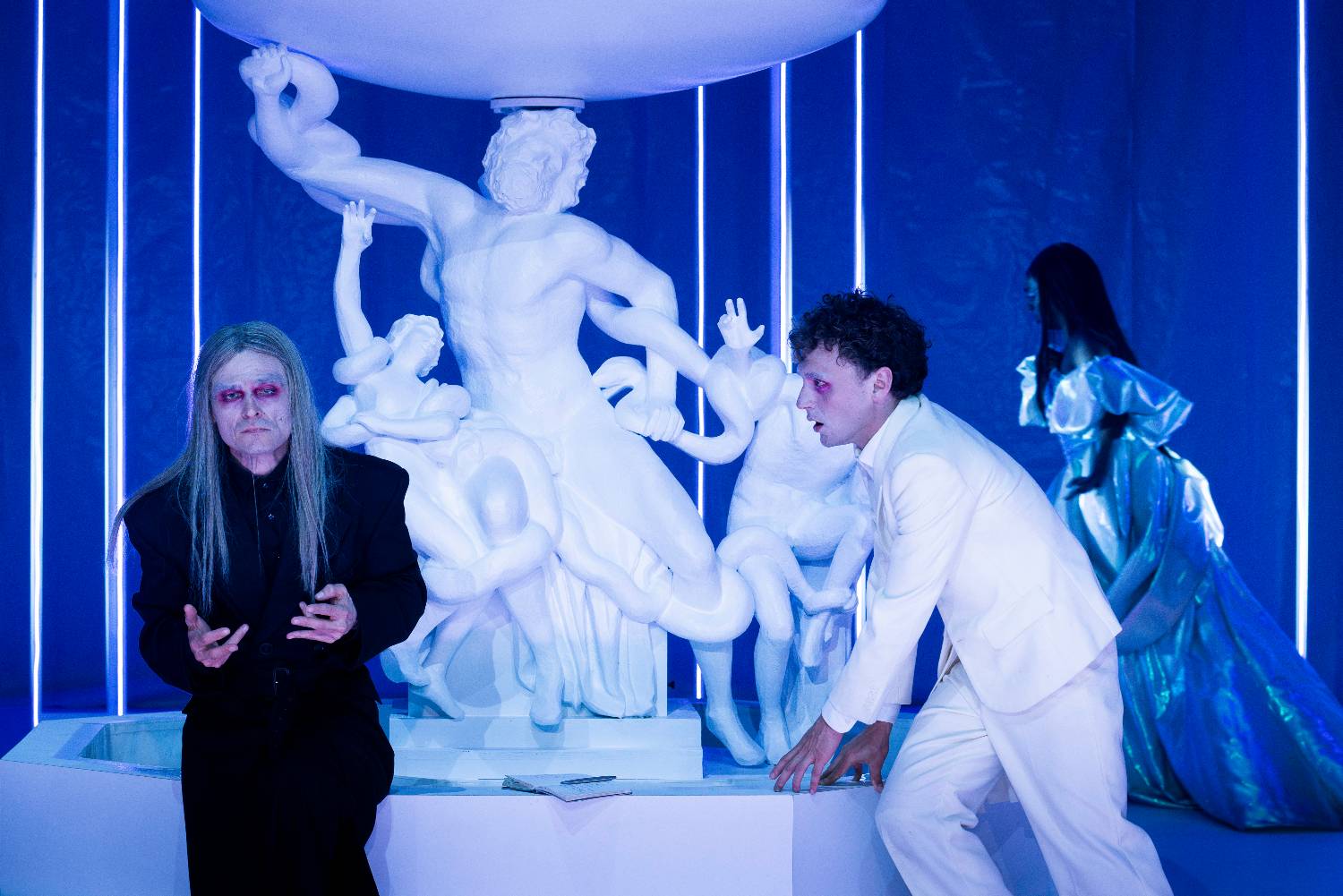
More than 200 years later, contemporary theatre does not simply reproduce Schiller’s works as romantic heroic stories. Instead, it moves toward a sharp dissection of the power structures hidden within them. For example, the 2026 production of The Robbers directed by Lucia Bihler at Schauspielhaus Bochum demonstrates the peak of such reinterpretation. The stage is set not in a noble castle but in ruins filled with construction debris and scaffolding, and at the center stands a Laocoön sculpture that visualizes the helplessness of patriarchal authority.
Furthermore, the female character Amalia—who in the original text moves passively between two men—is expanded into a massive female chorus, transforming the play into a narrative in which women resist and unite against male-centered violence. This becomes an attempt to dismantle the blind romanticism and “toxic masculinity” of the classical text and reconstruct it through a contemporary lens.
Violence Does Not Produce Peace
“Des Menschen Wille, das ist sein Glück.”
Schiller’s sentence summarizes his life and work. Here, “happiness” does not mean comfort or peaceful stability, but rather the “free will” of a human being who does not compromise even in the face of harsh fate, and continues to choose and act. To fully understand Schiller’s works, one can never separate them from the context of oppression and suffering that dominated his life. The discipline of the military academy, the tyranny of the duke, and lifelong illness formed a triple prison in which his body was strictly controlled. Yet it was precisely through his refusal to stop writing, and his willingness to constantly break limits on stage, that his true liberation—and happiness—was achieved.
However, Schiller also pointed out that the sublimity of resistance, when stripped of morality, can transform into horrifying violence. In The Robbers, Karl Moor’s band of robbers, who initially claim to help the oppressed, eventually becomes a brutal terrorist group responsible for the deaths of 83 people, including innocent children. Schiller warned that no matter how noble the justification, uncontrolled violence can never produce peace and will ultimately end as a self-destructive tragedy. Today’s German theatre does not romanticize the rebellion in The Robbers, but instead asks: “Should we celebrate this rebellion, or fear it?”
This insight feels especially weighty today. Across the world, far-right populism is rising, new structures of oppression are being subtly reorganized, and extreme forms of regime overthrow are being incited. We are entering what can be called an “age of great hatred,” where exclusion and violence are easily justified. In this age of fragmentation and extremism, we must remember—more urgently than ever—that what Schiller risked his life to proclaim on stage as “true freedom” is not blind explosion or destruction. Rather, it is the dignity and responsibility of human beings that must be preserved even under extreme conditions.
