
[Theater / Art hall History]
"Das Land ohne Musik."
'The land without music'— this was once a cutting remark levelled at British musical culture.
Britain's industrial and imperial might was formidable, yet it was widely perceived as lagging behind continental Europe — particularly the German and Austrian traditions — when it came to music. At a time when names like Bach, Beethoven, and Wagner stood at the very centre of European musical history, Britain faced the challenge of nurturing its own musical culture and bringing classical music to a broader audience.
Classical music in that era was not the accessible, open culture it is today. Concert tickets were expensive, concert-hall etiquette was strict, and the threshold was simply too high for working-class or middle-class audiences to cross comfortably. For a long time, classical music was regarded as the refinement of the upper classes — an authoritative, prestigious culture that felt somewhat remote to the general public.
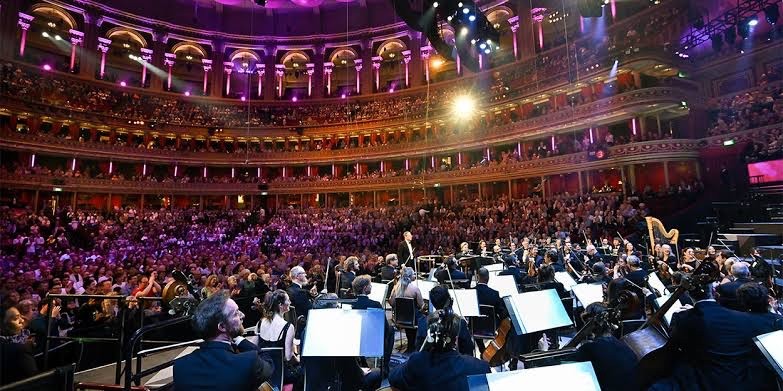
Then, in 1895, a new kind of concert emerged in Britain that began to change this atmosphere.These were the Promenade Concerts, the forerunner of today's BBC Proms. The aim was to transform classical music from the preserve of a privileged few into a culture that far more people could share and enjoy. Audiences could listen to music in a freer, more relaxed atmosphere, and gain access to high-quality classical performances at relatively affordable prices. In this way, the Proms became a pivotal turning point in the history of British classical music.
The focus of this article, however, is not the birth of the BBC Proms itself. The history and background of the Proms will be explored in greater detail in a later piece.
At the centre of this article is the space that became the iconic stage for that festival: the Royal Albert Hall.
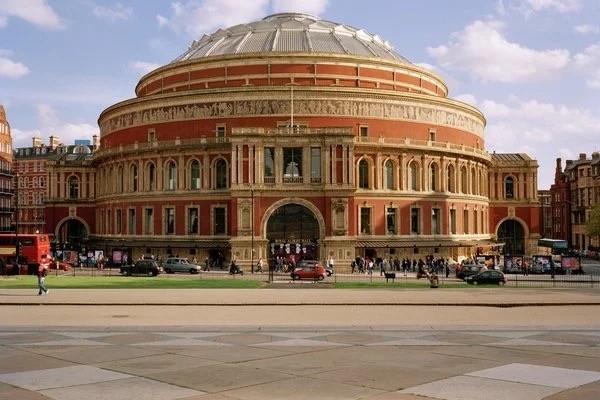
The Royal Albert Hall is Britain's foremost concert venue, located in South Kensington, London, and has now stood for more than 150 years since its opening in 1871. Built to honour Prince Albert, the husband of Queen Victoria, it was never conceived as a mere performance space. It was envisioned as a public cultural institution encompassing the arts, science, education, and popular culture — and in the years that followed,it has played host not only to concerts but to lectures, exhibitions, sporting events, award ceremonies, political speeches, and a wide range of public gatherings, bearing witness to some of the most significant moments in British cultural history.
The Royal Albert Hall holds a particularly special place in British classical music culture as the principal home of the BBC Proms since 1941. When the Queen's Hall — the Proms' original venue — was destroyed by bombing during the Second World War, the festival moved to the Royal Albert Hall and began writing a new chapter of its history there. From that point on, the Royal Albert Hall became not merely an old building, but a living concert hall where countless audiences have experienced and revelled in classical music firsthand.
London's great red oval building, the Royal Albert Hall, is far more than a structure that has simply endured for 150 years. It is a cultural space that has continually redefined its own role as each era has passed. Classical concerts, popular music performances, live film screenings, sporting events, award ceremonies, and the BBC Proms — it has welcomed an extraordinary range of genres and audiences, and continues to do so to this day.
So how has the Royal Albert Hall managed to sustain itself for more than 150 years?
The answer lies not simply in its historical significance.It is because the Royal Albert Hall has preserved its traditions while continuously adapting its purpose to meet the demands of each new age.Let us now explore how the Royal Albert Hall was built, what kind of space it was conceived to be, and how it has managed to remain a living concert venue to this day.
1. The Victorian Age and the Dream of a New Cultural Space
To understand the history of the Royal Albert Hall, we must first look at the spirit of the Victorian age. The Victorian era — spanning from Queen Victoria's accession in 1837 to her death in 1901 — was a period of sweeping political, economic, social, and cultural transformation in Britain. Following the Industrial Revolution, the rapid migration of people into cities drove remarkable economic growth, but it also brought new social challenges: poverty, labour disputes, educational inequality, and urban sanitation problems.
Running through British society at this time was a powerful conviction that education and culture could produce better citizens. The arts and sciences were seen not merely as knowledge or leisure pursuits, but as vital instruments for advancing society and improving the lives of ordinary people. The Royal Albert Hall was born directly out of this cultural climate.
In other words, this venue was not simply a place to hear music —it was a space that embodied the Victorian cultural ideal of bringing the arts and sciences to the wider public.
2. The Legacy of the Great Exhibition: The Birth of the Royal Albert Hall
The origins of the Royal Albert Hall lie in the Great Exhibition of 1851, held in London. This vast event brought together the industrial, scientific, and artistic achievements of the world under one roof, and Prince Albert was one of its driving forces. The Exhibition was a tremendous success, and its profits were channelled into developing the South Kensington area into a hub of arts, science, and education.
This district would later come to be known as 'Albertopolis.' Today, South Kensington is home to the Victoria and Albert Museum, the Science Museum, the Natural History Museum, the Royal College of Music, and Imperial College London — and the Royal Albert Hall was built as an integral part of this cultural quarter.
The Royal Albert Hall was created to commemorate Prince Albert, but it was never intended as a simple memorial. It was built with the express purpose of serving as a 'Hall of Arts and Sciences' — as its full official name, the Royal Albert Hall of Arts and Sciences, makes clear. True to that name,the space was conceived not solely for musical performance, but as a multifaceted cultural venue embracing the arts, science, education, industry, and public events alike.
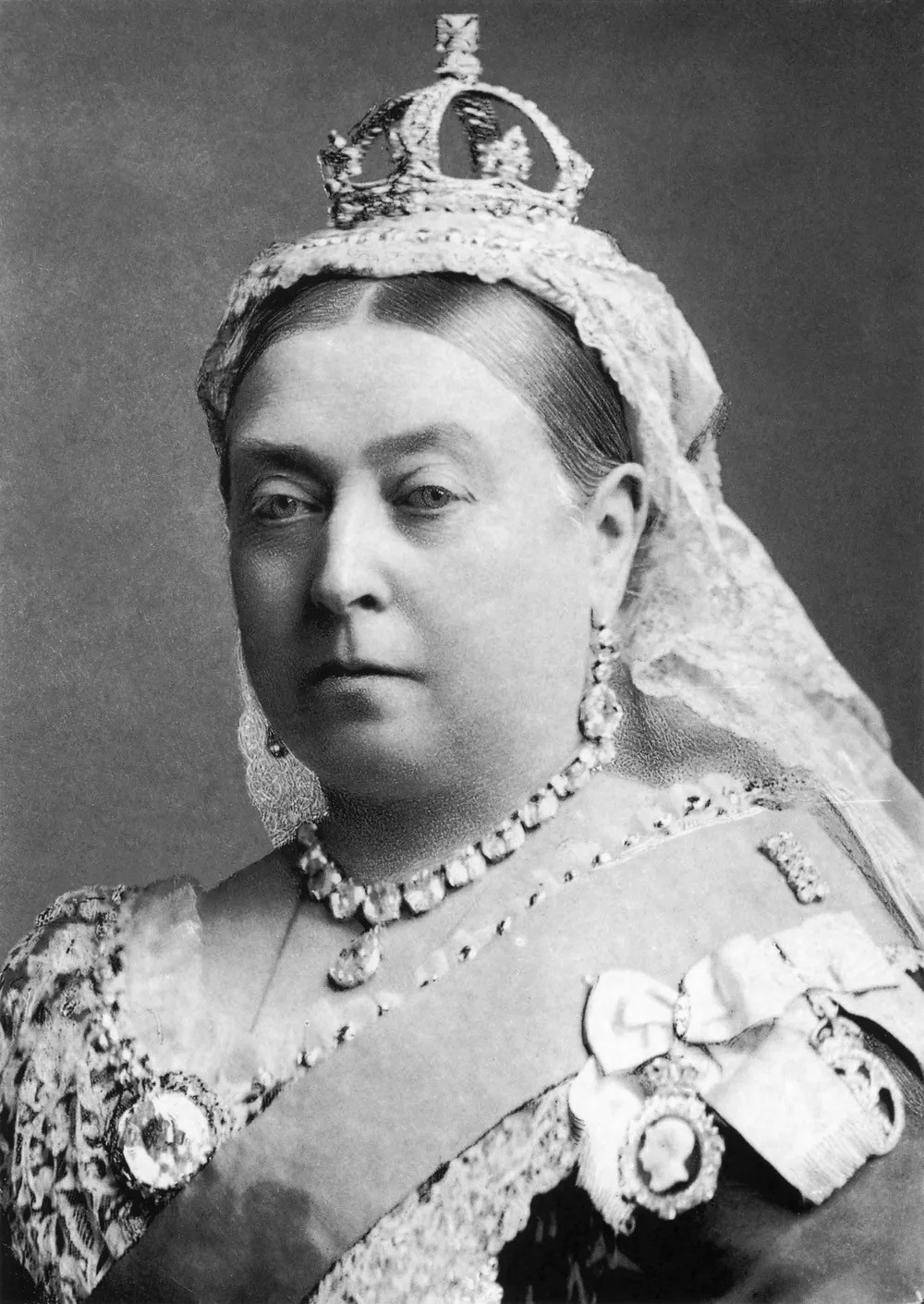
Construction began in 1867 and the Hall opened in 1871. Queen Victoria named the building after her late husband, Prince Albert, as a tribute to his memory, and so the Royal Albert Hall came into being as a space that embodied the cultural ideals of Victorian Britain.
3. The 999-Year Seat: The Unusual Method That Made the Hall Possible
One of the more fascinating aspects of the Royal Albert Hall's creation is the way its construction was financed. It was not built on a secure financial footing from the outset. The profits from the Great Exhibition and public funding alone were insufficient to complete such an ambitious venue, and additional funds had to be found.
The solution was the sale of seat debentures. Before the Hall was completed, patrons were offered the right to use specific seats in exchange for contributing to the building fund. These were not short-term tickets but long-term rights lasting 999 years — making them, in effect, a unique form of seat ownership that could be inherited and traded across generations.
To this day, a number of seats at the Royal Albert Hall remain in the hands of private individuals or organisations who hold these rights — a direct continuation of the original funding model. This detail reveals something important: the Royal Albert Hall is not simply a public institution built by the state, but a distinctive space shaped by the intersection of nineteenth-century British patronage culture, public fundraising, and the particular structures of venue management.
4. What Kind of Space Was the Royal Albert Hall?
The reason the Royal Albert Hall has endured for more than 150 years is that it never remained merely a monument. It began as a symbolic building honouring Prince Albert, but over time it has functioned as a living cultural space by continually opening its doors to a diverse range of genres and events.
Within its walls, the Hall has hosted classical concerts, opera, ballet, popular music concerts, jazz, rock and pop performances, live film screenings, sporting events, award ceremonies, lectures, charity galas, and school and community events. From popular music artists such as the Beatles to world-renowned classical performers, politicians, scientists, and civil rights activists — an extraordinary range of figures has passed through this space.
The breadth of this programming speaks to the essential character of the Royal Albert Hall. It has never been a closed venue dedicated to a single genre, but rather a place where the arts and sciences, popular culture and public discourse, have all converged.
The strength of the Royal Albert Hall, in other words, does not rest on its image as a 'traditional classical concert hall' alone.On the contrary, it is the flexibility to embrace audiences of many eras and performances of many genres that has been the key to this space's enduring survival.
5. A Beautiful Building, but Not a Perfect Acoustic
The Royal Albert Hall makes a powerful impression from the outside. Its red brick, elliptical form, vast dome, and the terracotta frieze encircling the exterior have made it one of London's most recognisable landmarks. The frieze, depicting 'The Triumph of Arts and Sciences,' is a further reminder that the Royal Albert Hall was built not as an ordinary concert hall but as a space dedicated to the advancement of the arts and sciences.
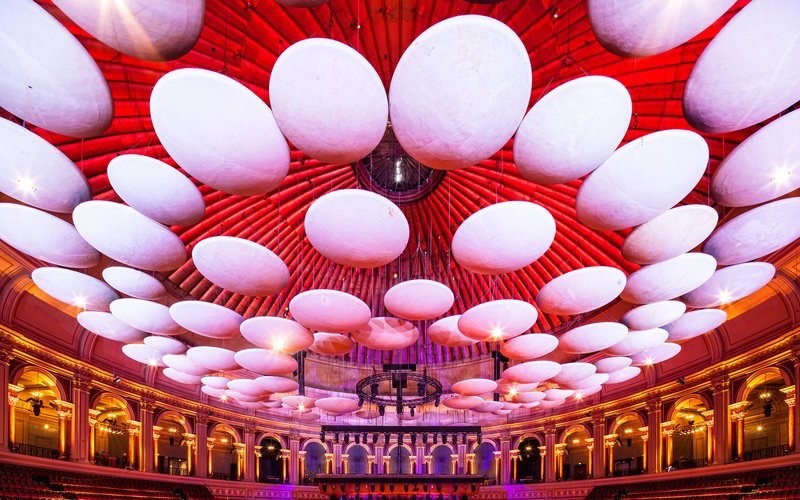
Yet this beautiful building did not offer a perfect acoustic environment from the start. The Royal Albert Hall has long been criticised for its sound.The vast dome and elliptical structure caused sound to reflect and reverberate, producing echoes that were a particular disappointment in classical music performances.
Several rounds of acoustic improvement were undertaken to address this problem, and in 1969 a series of circular acoustic diffusers was installed beneath the ceiling. Commonly known as the 'mushrooms,' these devices represented the most notable attempt to improve the Hall's acoustics. Further upgrades to the sound system have continued since, allowing the Royal Albert Hall to preserve its historic character while adapting to the demands of contemporary performance.
This points to an important quality of the Royal Albert Hall. It is not a perfectly preserved relic of the past, but a space that has acknowledged its imperfections and worked to correct them — continually evolving to meet the standards of the modern concert environment.
6. The Secret of 150 Years: Balancing Preservation and Change
Let us return to the question posed at the outset. How has the Royal Albert Hall managed to sustain itself for more than 150 years?
The answer lies in the balance between preservation and change. The Royal Albert Hall is a Grade I listed building — one of the most protected structures in England, recognised for its outstanding historical and architectural significance. Yet this space has not simply been preserved. It has continued to evolve: upgrading its facilities, expanding its programming, and finding new ways to welcome new audiences with each passing era.
The Royal Albert Hall is an exceptionally active venue, staging a vast number of performances and events every year. It accommodates an extraordinarily wide range of programming — from the BBC Proms classical music festival to popular music, opera, ballet, live film screenings, sporting events, award ceremonies, and educational programmes.
This genre-spanning flexibility is one of the most important reasons the Royal Albert Hall has remained a living concert hall to this day.
The BBC Proms, in particular, has played a central role in establishing the Royal Albert Hall as a symbolic home of British classical music culture. The Proms did not begin at the Royal Albert Hall. They started at the Queen's Hall in 1895, but when the Queen's Hall was destroyed by bombing during the Second World War, the festival moved to the Royal Albert Hall in 1941. This event marked a decisive turning point not only in the history of the BBC Proms, but in the history of the Royal Albert Hall itself.
From that point on, the Royal Albert Hall became the central stage of the BBC Proms — a place where the public's passionate enthusiasm for classical music is renewed, year after year. The sight of audiences standing to listen, cheering together, and experiencing classical music as a festival has only deepened the symbolic power of the Royal Albert Hall as a space.
The values that the Royal Albert Hall and the BBC Proms share are clear. Both are grounded in a commitment to public access and education — a belief that the arts should not remain the preserve of a privileged few, but should be opened up to as many people as possible. If the Royal Albert Hall began as a public cultural space for the arts and sciences, the BBC Proms began as a music festival dedicated to bringing classical music to a wider audience. It is precisely because these two histories came together that the Royal Albert Hall has been able to become something more than a concert hall — a truly symbolic home of British classical music culture.
7. Closing
The 150 years of the Royal Albert Hall are not simply the lifespan of an old building. It began as a Victorian cultural ideal — a monument to Prince Albert — but over time it has expanded its identity to encompass classical concert hall, popular music venue, live film performance space, and the setting for sporting events and national occasions.
Ultimately, the reason the Royal Albert Hall has survived to the present day is not merely that it has preserved the past.It is because it has transformed that past into something today's audiences can continue to use and inhabit.Tradition, when it stands still, becomes a museum piece — but when it meets its own time and finds new purpose, it becomes living culture. The Royal Albert Hall is a space that demonstrates precisely this truth.
From the next article onwards, I intend to look more closely at the BBC Proms. The BBC Proms is one of the most compelling case studies in music management, encompassing all of its core elements: branding, audience development, cultural policy, and digital transformation. In the articles ahead, I will analyse how the BBC Proms — a classical music festival — has sustained public interest and passionate engagement for more than 130 years, examining it through the lens of music management.